Assouline recasts chess, backgammon and three other games as display-ready pieces in walnut, leather and brass, priced from $450 to $2,500.
Games designed to stay on display
Assouline is bringing its publishing aesthetic to the game table. The Library Collection: Game Room treats five familiar pastimes as interior objects, using walnut, leather and brass to give each set a presence beyond the time spent playing. The games retain their everyday purpose, but their finishes and storage details are designed to make them worth leaving out.
That premise speaks to a familiar tension in home design: useful objects often disappear into cupboards when they’re not in use, while decorative pieces can be too precious to handle. Assouline’s answer is to combine both roles in objects meant to be played with and displayed. The idea is straightforward, though the success depends on whether the materials feel practical after the first impression wears off.
The collection spans chess, backgammon, tic-tac-toe, dominoes and playing cards. Across the lineup, red, camel, brown and stone tones tie together materials including pebbled and inlaid leather, brushed brass, heavyweight aluminium and soft polysuede. That consistent palette gives the sets a place in a study or living room without changing the rules of play.
There’s a useful distinction here: the games themselves are familiar, so the design work falls largely on materials, proportion and storage. That keeps the collection legible to anyone who already knows how to play, while giving the pieces a visual identity that fits Assouline’s book publishing. (And this is the part most people overlook.) The cases and drawers matter as much as the boards because they determine whether the sets can stay tidy between games.
Designer: Assouline
Chess and backgammon lead the range
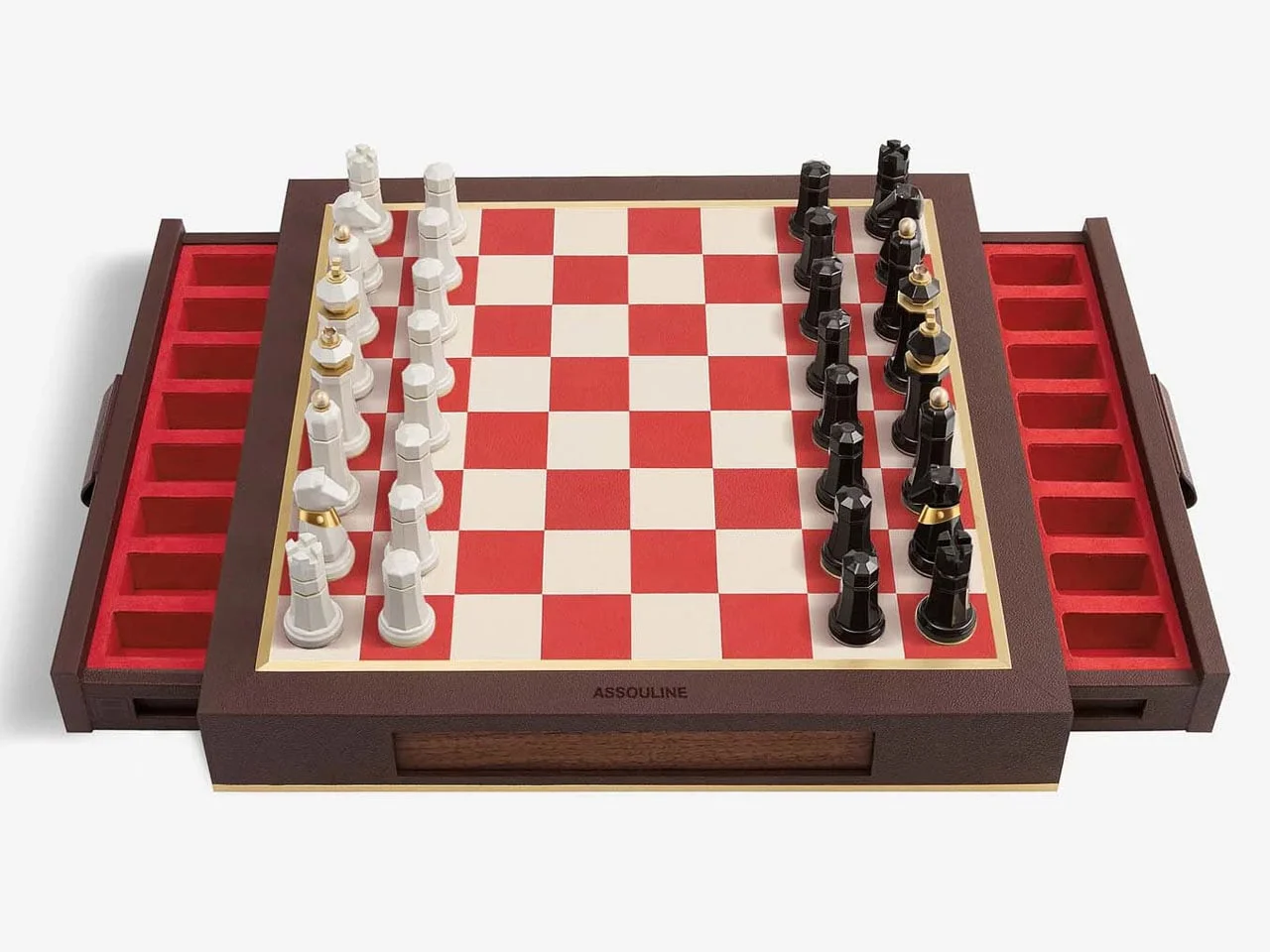
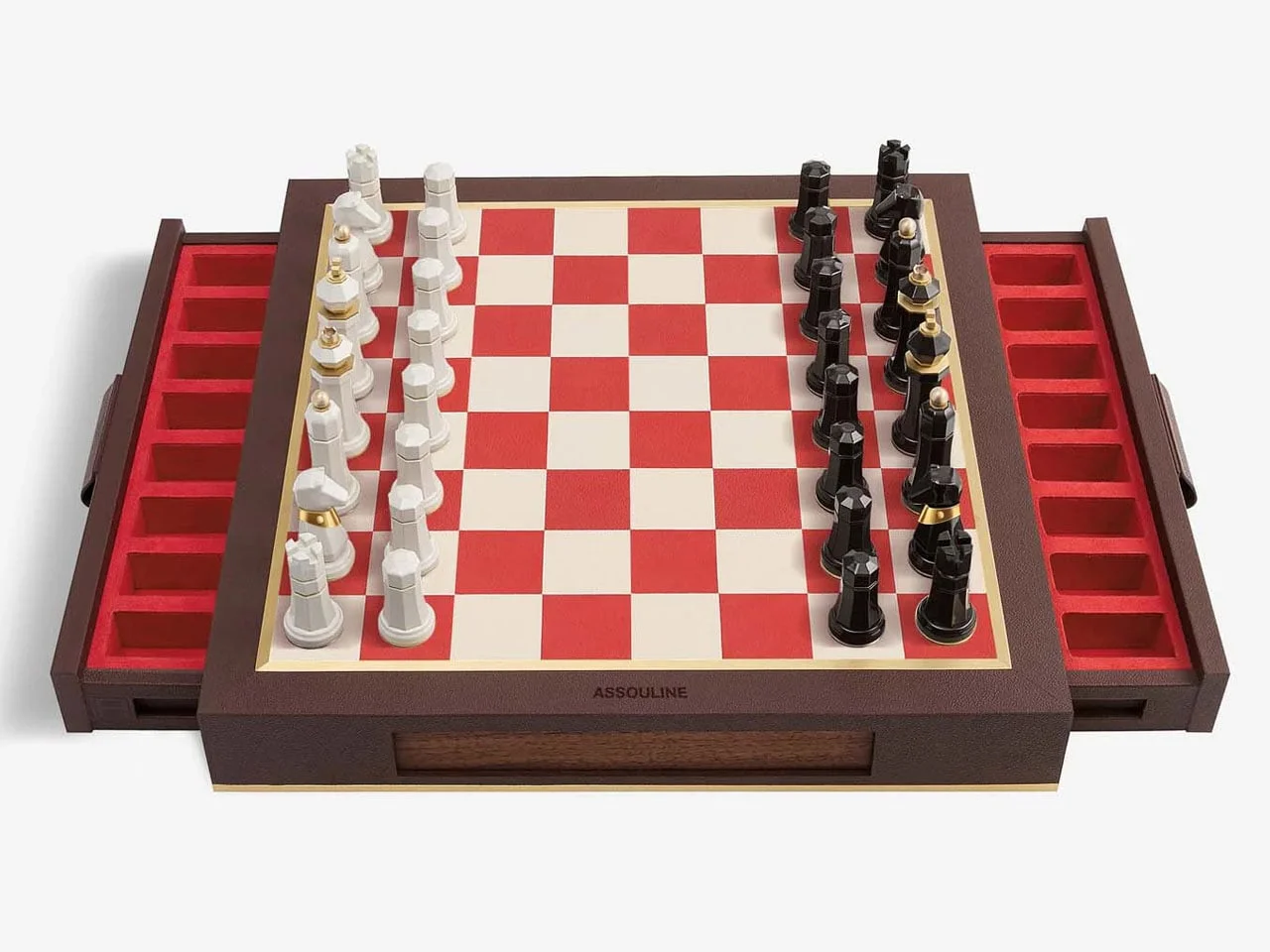
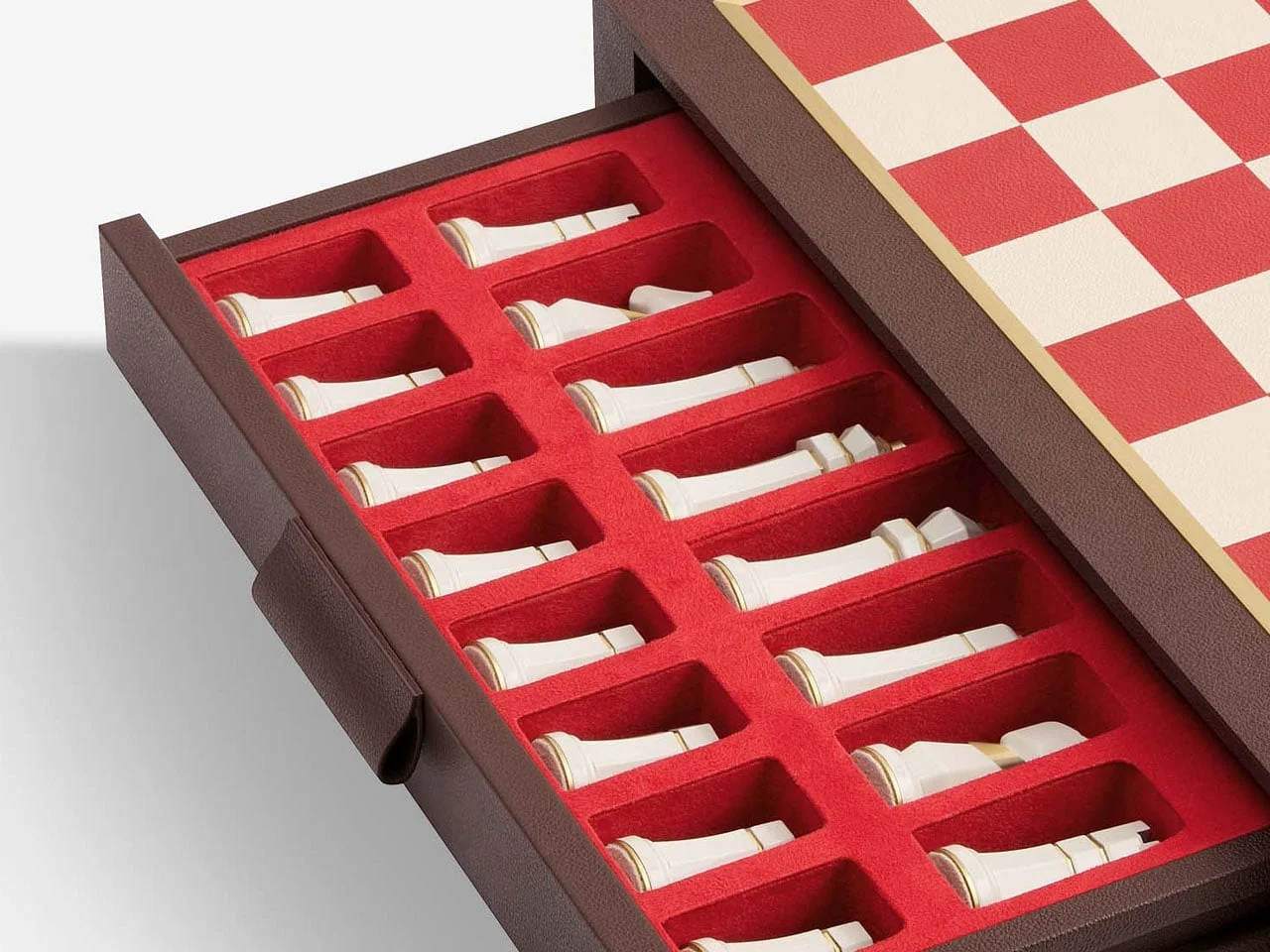
At $2,500, the Empire Chess Set is the collection’s most expensive piece. Its walnut board has a brushed brass border, a pebbled leather playing surface and removable drawers for the pieces. Polysuede underlays finish the storage compartments, while the heavyweight aluminium chessmen carry brass accents. The queen’s crown takes cues from visual motifs associated with artist Jean-Michel Basquiat.
The chess set layers materials that serve different visual and practical roles: walnut gives the board its structure, leather defines the playing area, and the drawers keep the pieces close at hand. That attention to storage is more than a finishing touch. A set intended to sit in a living space needs a way to keep its components together and its surface orderly when a game ends.
The Basquiat reference adds a distinct point of authorship to an otherwise classic format. It’s a small detail, but a useful one: the collection needs recognisable cues to distinguish it from conventional luxury game sets. The available description points to the queen’s crown specifically, rather than suggesting that the entire set adopts the artist’s visual language.
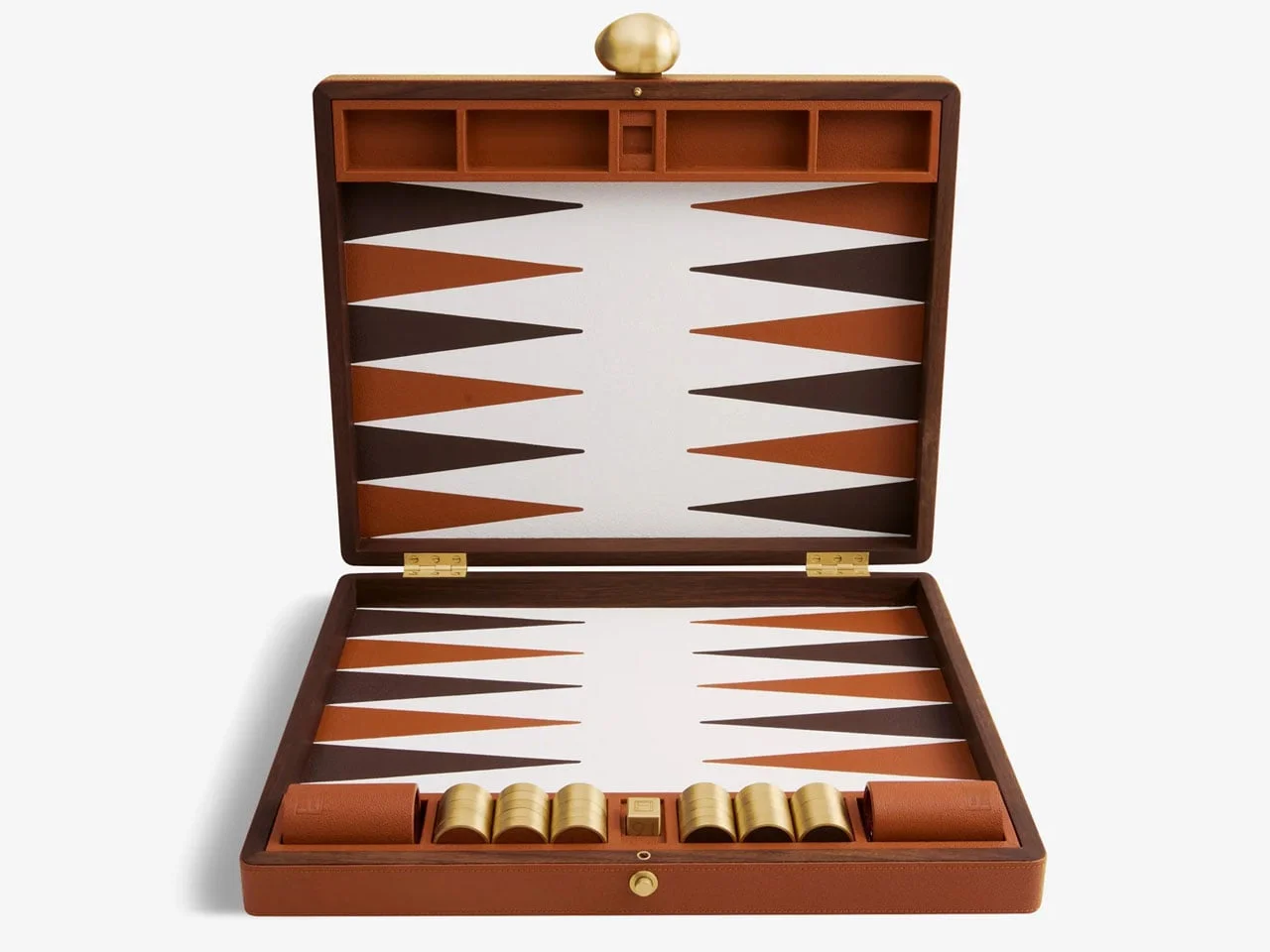
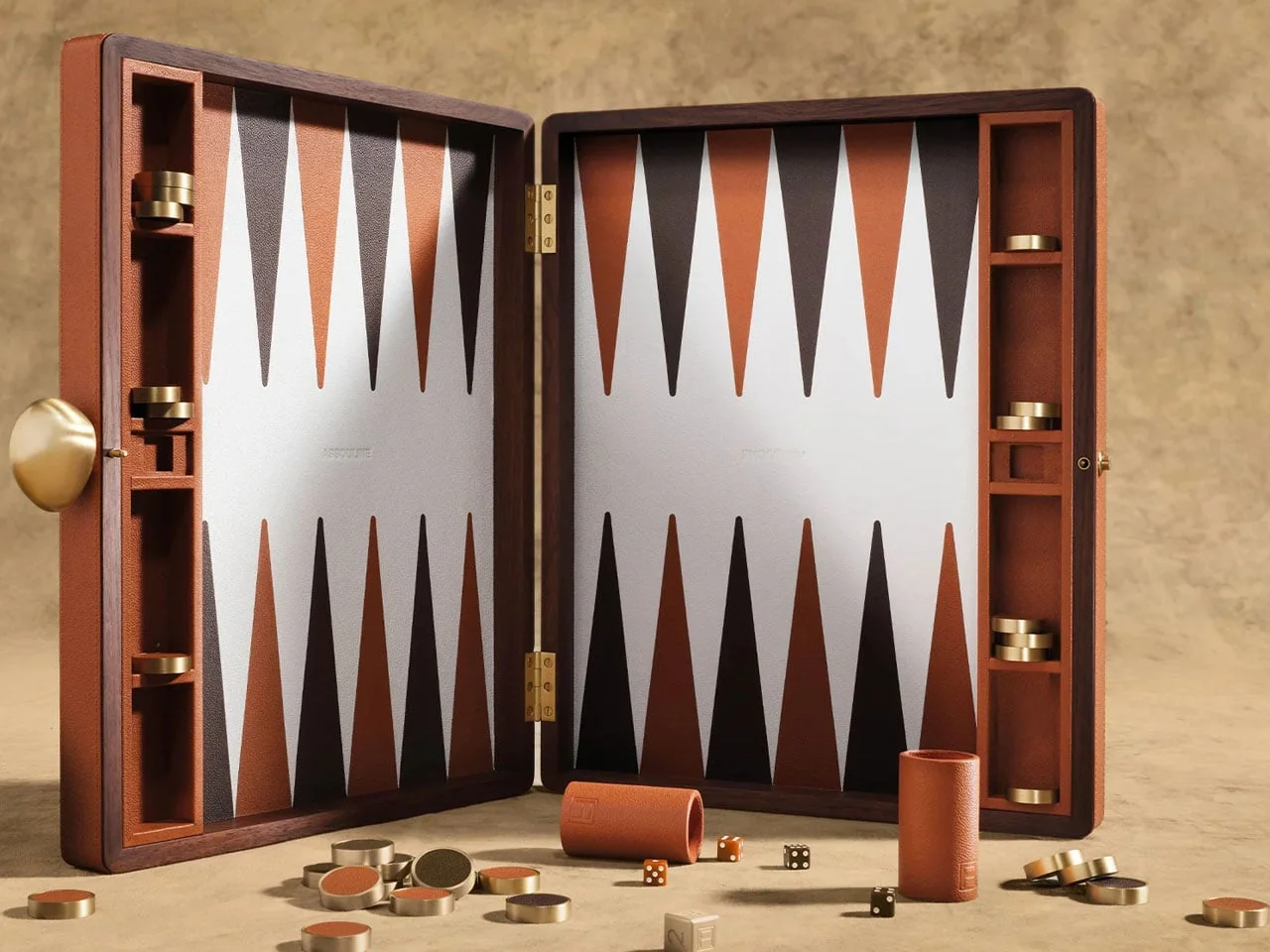
The Pebble Backgammon Set costs $2,250. A solid walnut case surrounds its inlaid leather board; leather-wrapped checkers get brass detailing, and the dice are hand-painted in Assouline’s signature colours. Here, the material choices turn a compact game into a tactile object that can sit comfortably on display.
Backgammon already lends itself to a contained, case-based format, and the walnut shell makes that relationship part of the design. The leather board and wrapped checkers add texture where players handle the pieces, while the painted dice provide a smaller accent. Those details support the display premise, although the price places the set firmly in the category of a considered decorative purchase.
Small details connect games to the publisher
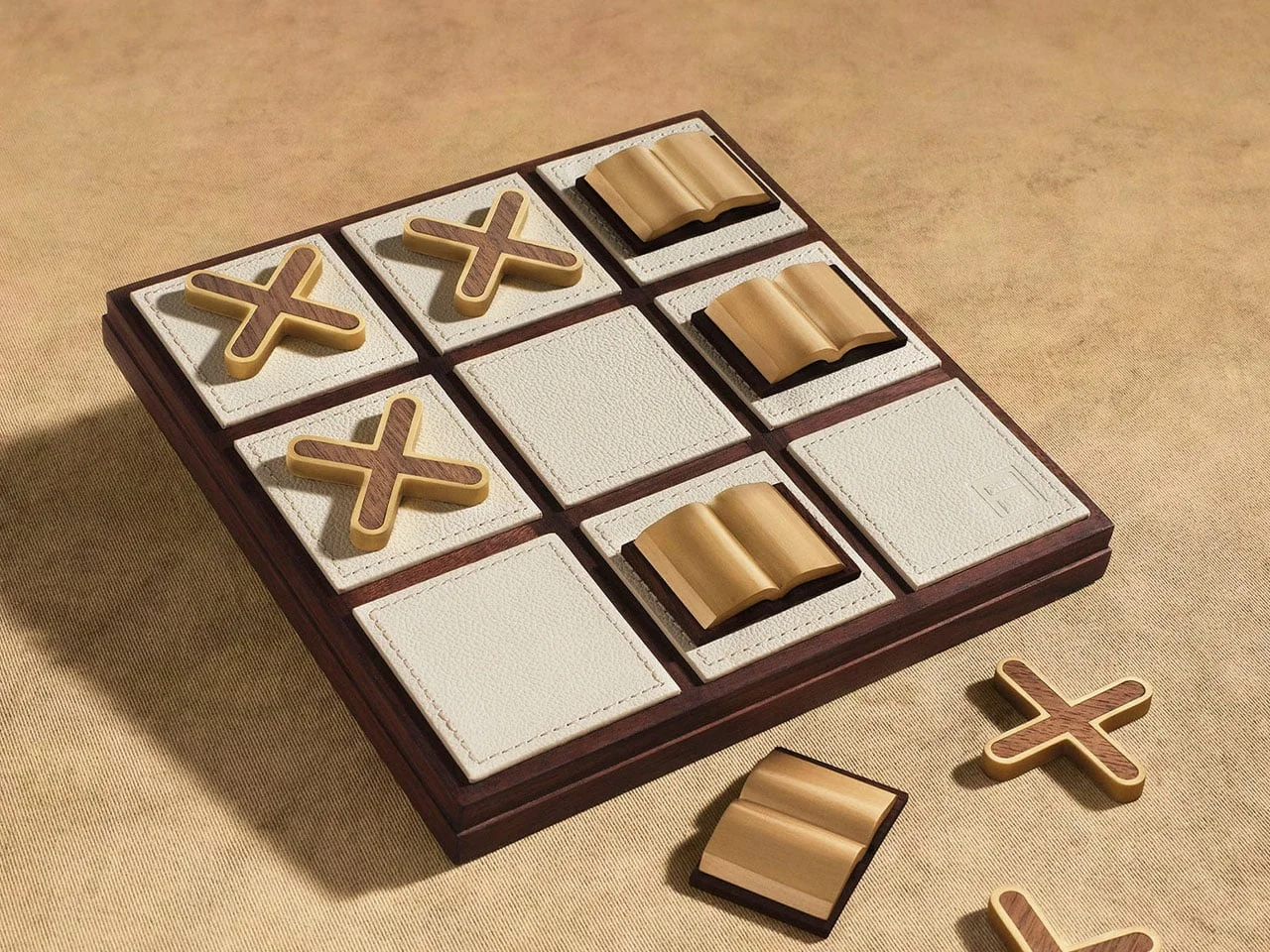
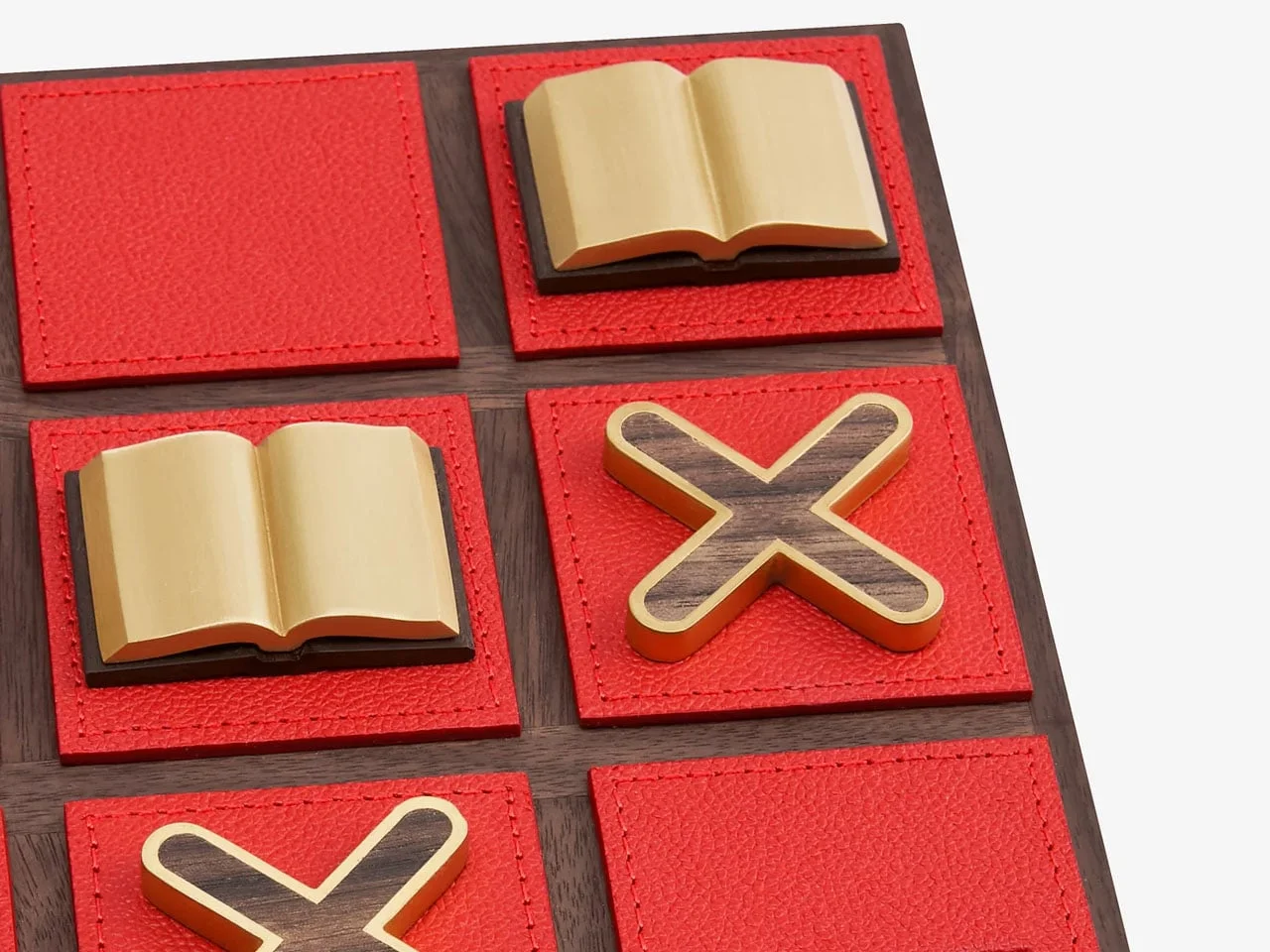
The $750 Library Tic-Tac-Toe Set uses walnut and pebbled leather. Its markers mix wood and brass, while the O pieces are shaped like miniature books—a direct nod to Assouline’s publishing business.
That book motif gives the simplest game in the lineup a clear link to the company behind it. Tic-tac-toe needs few components, so the design has little room to hide behind complexity; the marker shapes do much of the storytelling. A small, readable reference is more effective here than a change to the familiar play pattern.
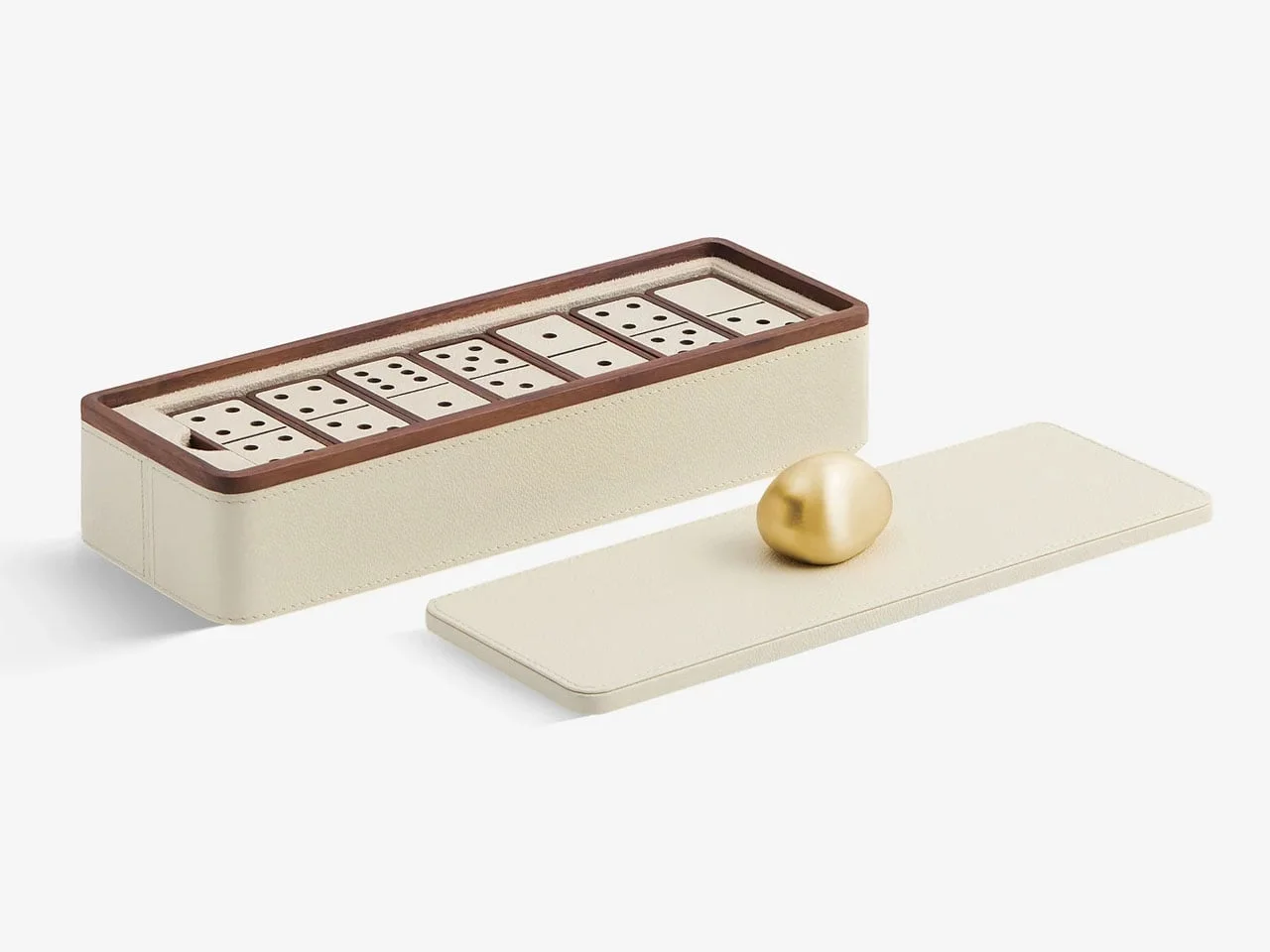
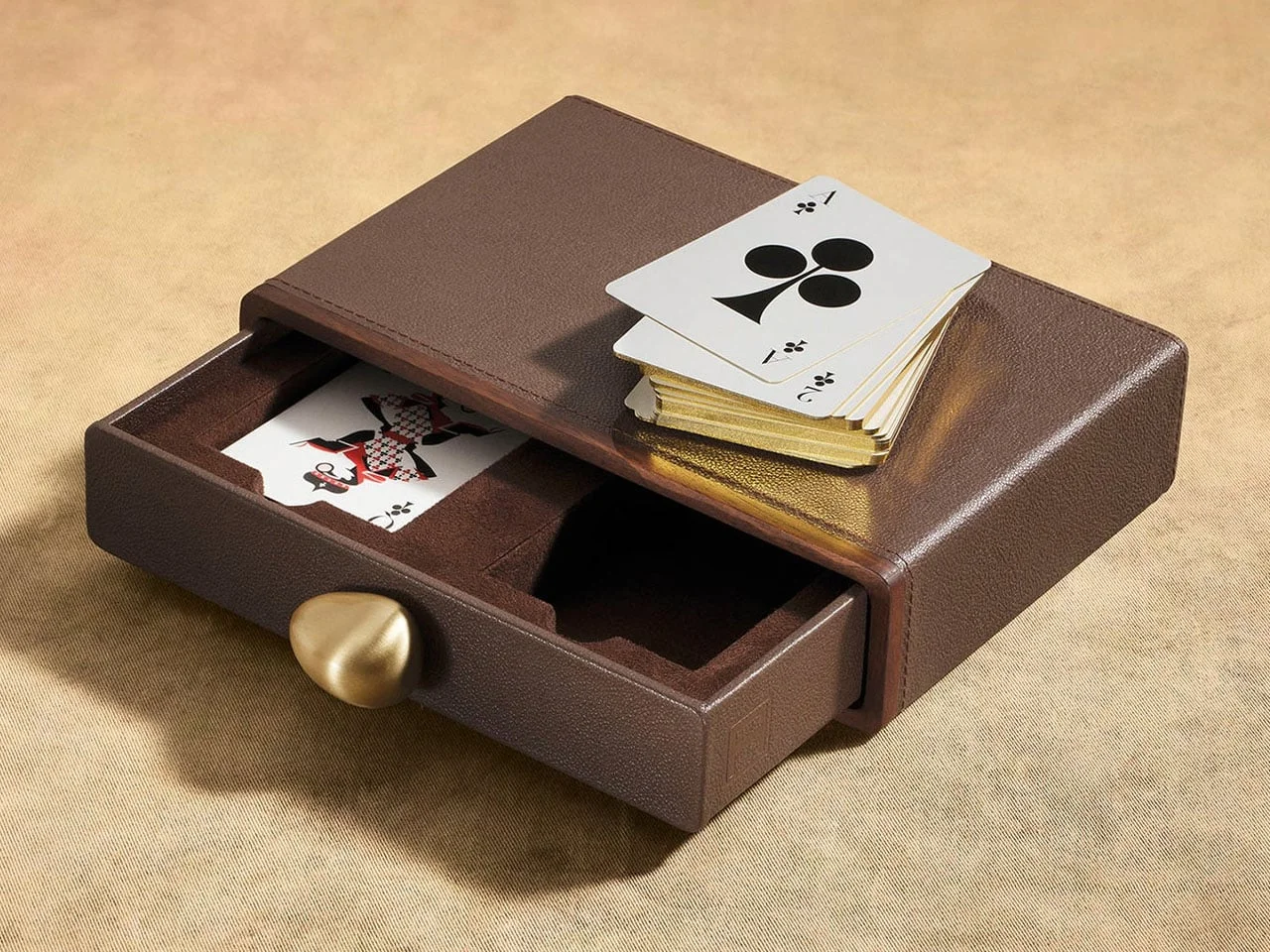
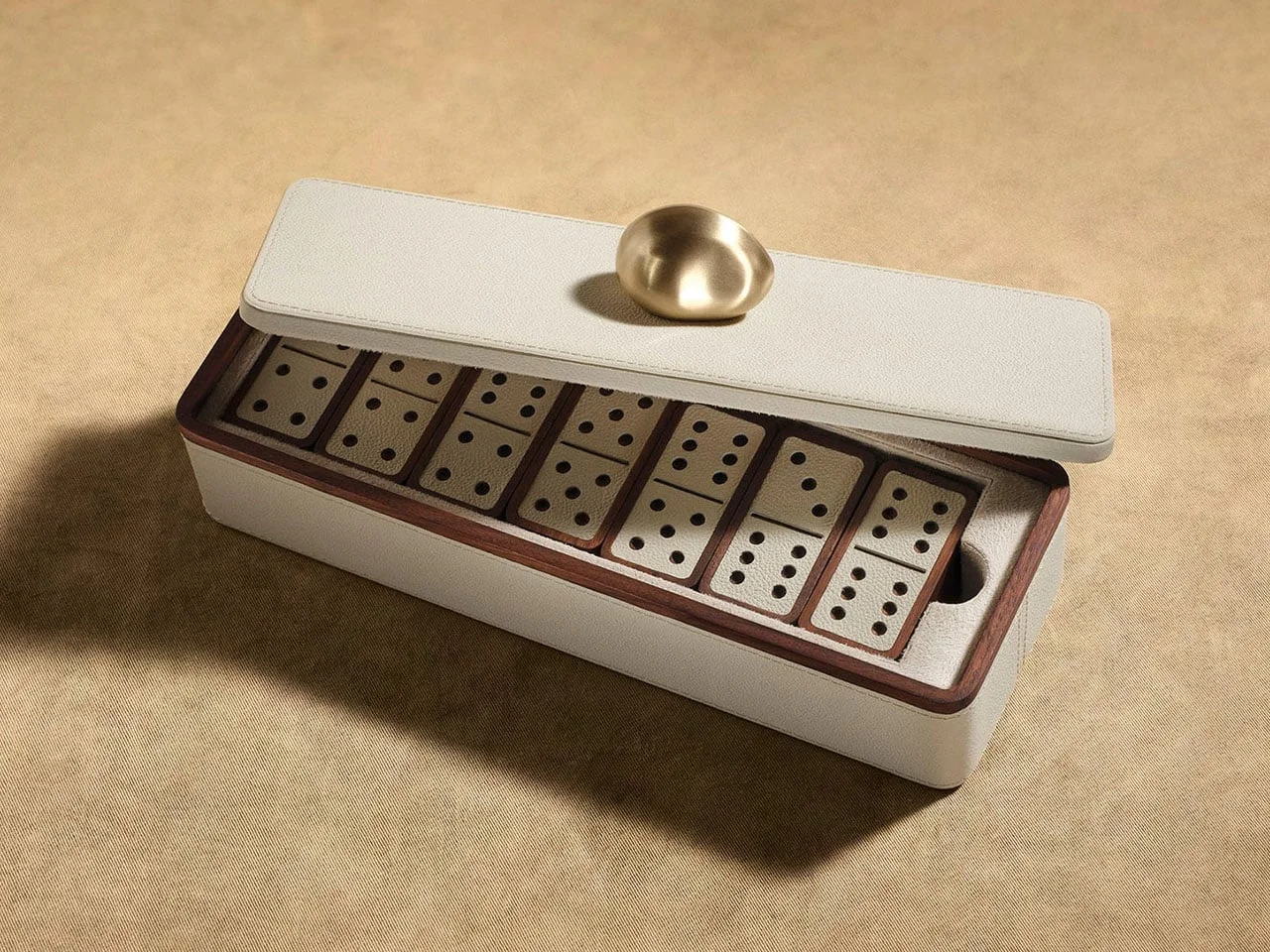
At $650, the Pebble Domino Set pairs oversized leather-inlaid tiles with walnut frames and recessed walnut pips. Its storage box has a pebble-shaped brass handle. The $450 Pebble Playing Card Set takes a more graphic approach: two gold-gilded decks use Didot typography, and their illustrated jokers show characters juggling books. A sliding leather case holds both decks.
The dominoes and cards show two different ways to apply the collection’s visual language. The domino set emphasizes material and touch, while the card set relies on typography, gilding and illustrated jokers. In both, storage is part of the presentation: the domino box has its sculptural handle, and the card case slides over two decks. The playing cards are the least expensive entry point, though their design still makes them feel like part of the same family.
What the collection says about design and play
The collection ranges from $450 to $2,500 and is available through Assouline’s online store. Its appeal rests on a clear idea: familiar games can serve as decorative objects between rounds, with the craftsmanship and material choices carrying the same weight as play.
This is more significant than it looks as a design exercise, because the objects have to work in two settings: during a game and at rest in a room. A beautiful case can make a set easier to display, but the underlying value still depends on whether its pieces are comfortable to handle and its storage is convenient. The descriptions establish the materials and details; they don’t tell us how the sets feel after repeated use.
If you’re working in this space, the collection offers a practical lesson in how a familiar product can be reframed through finish and presentation without changing its basic function. That said, the luxury positioning narrows the audience. At these prices, the purchase is likely to depend on how much a buyer values the object as part of a room, not simply how often they play.
Here’s the thing: the design proposition is strongest when each detail serves both identity and use, as with drawers for chess pieces or a case that holds two card decks. Where the collection lands for individual buyers will depend on the balance they want between play and display. A handsome set, ready between rounds.
The post Assouline turns classic board games into luxury interior objects with The Game Room Collection first appeared on Yanko Design.



Discussion
Sign in to join the discussion.