Board pairs a 24-inch touch display with battery-free pieces, bringing hands-on play to games such as Chop Chop and Strata.
A console designed for the table
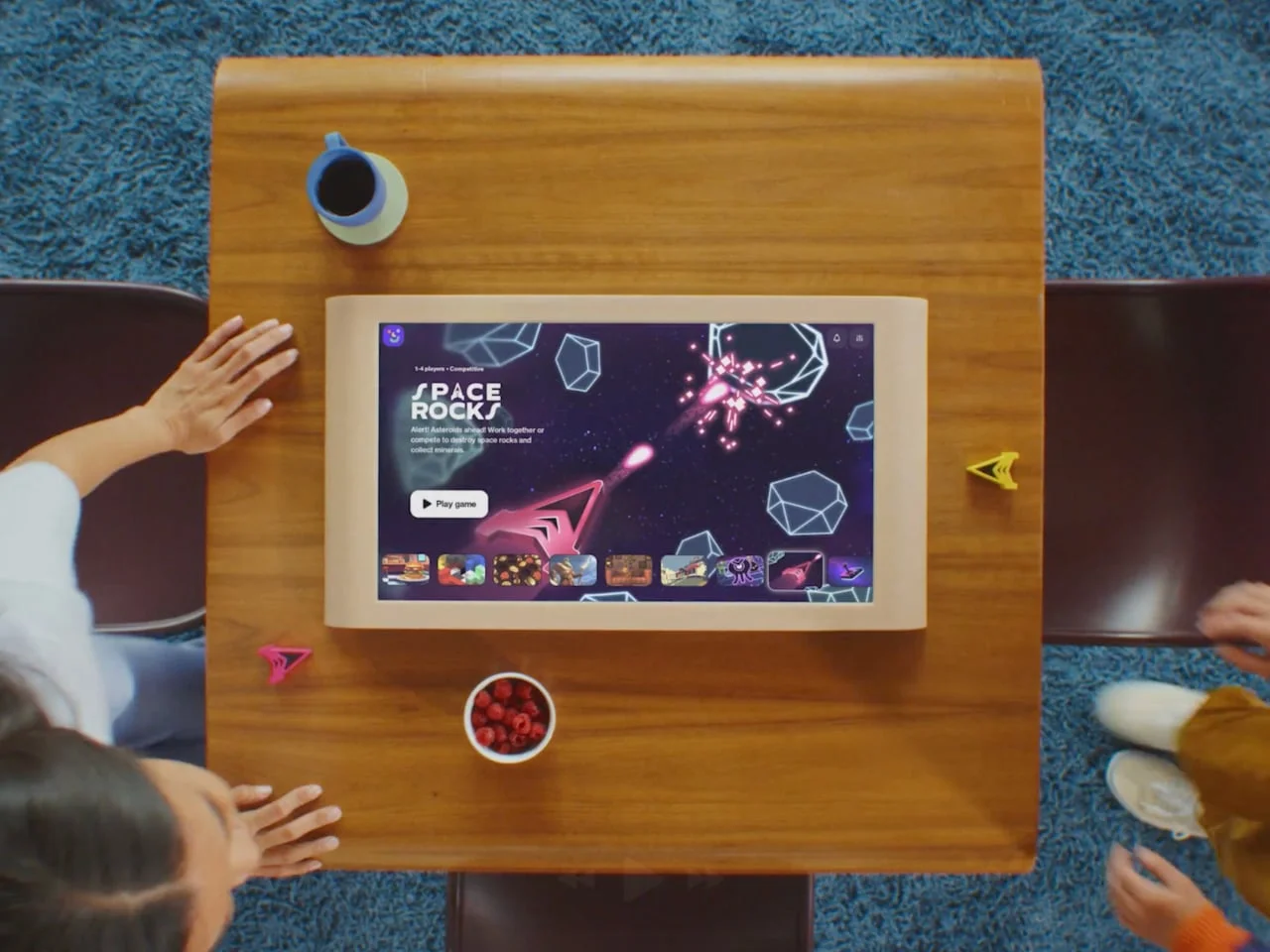
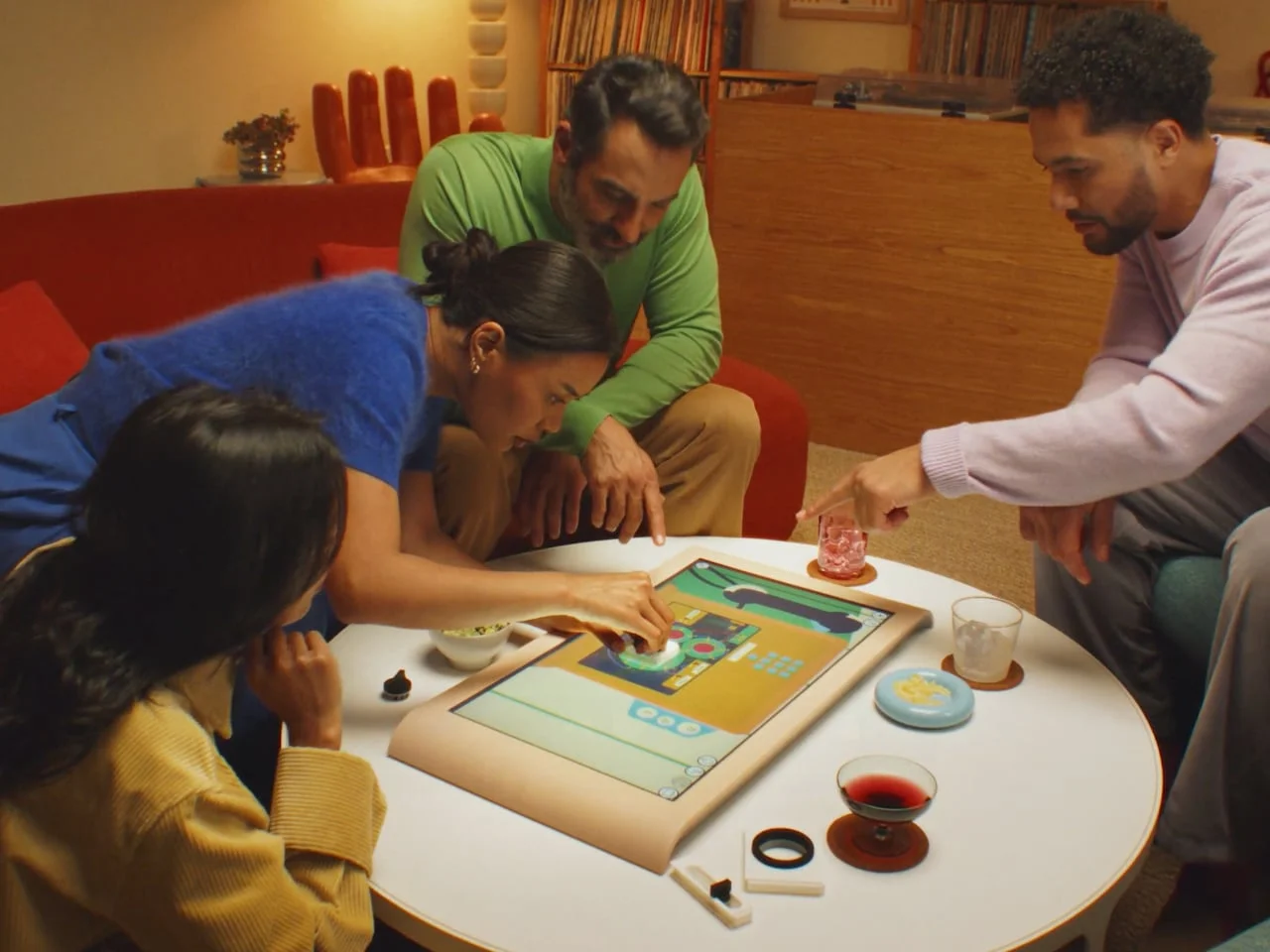
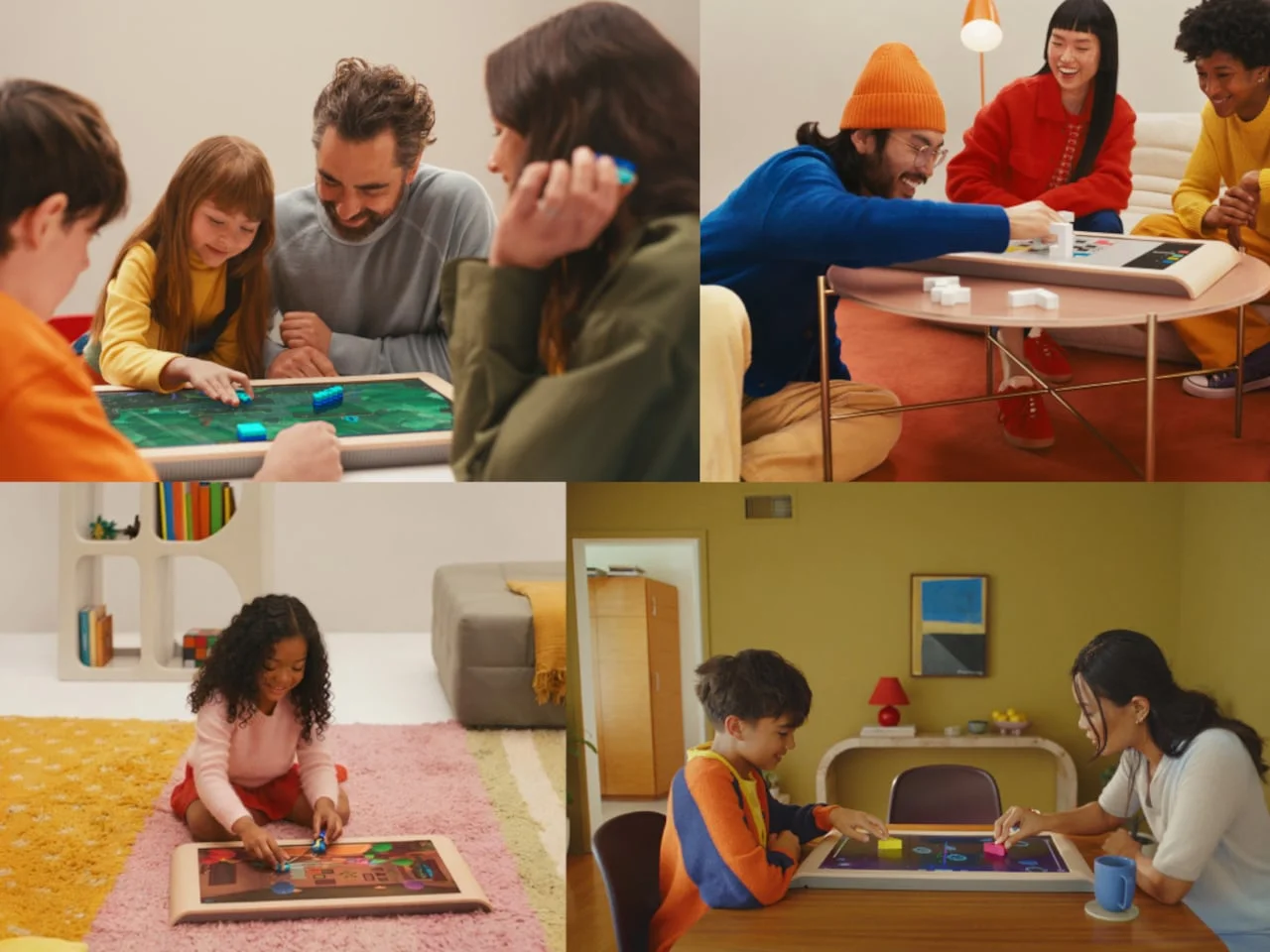
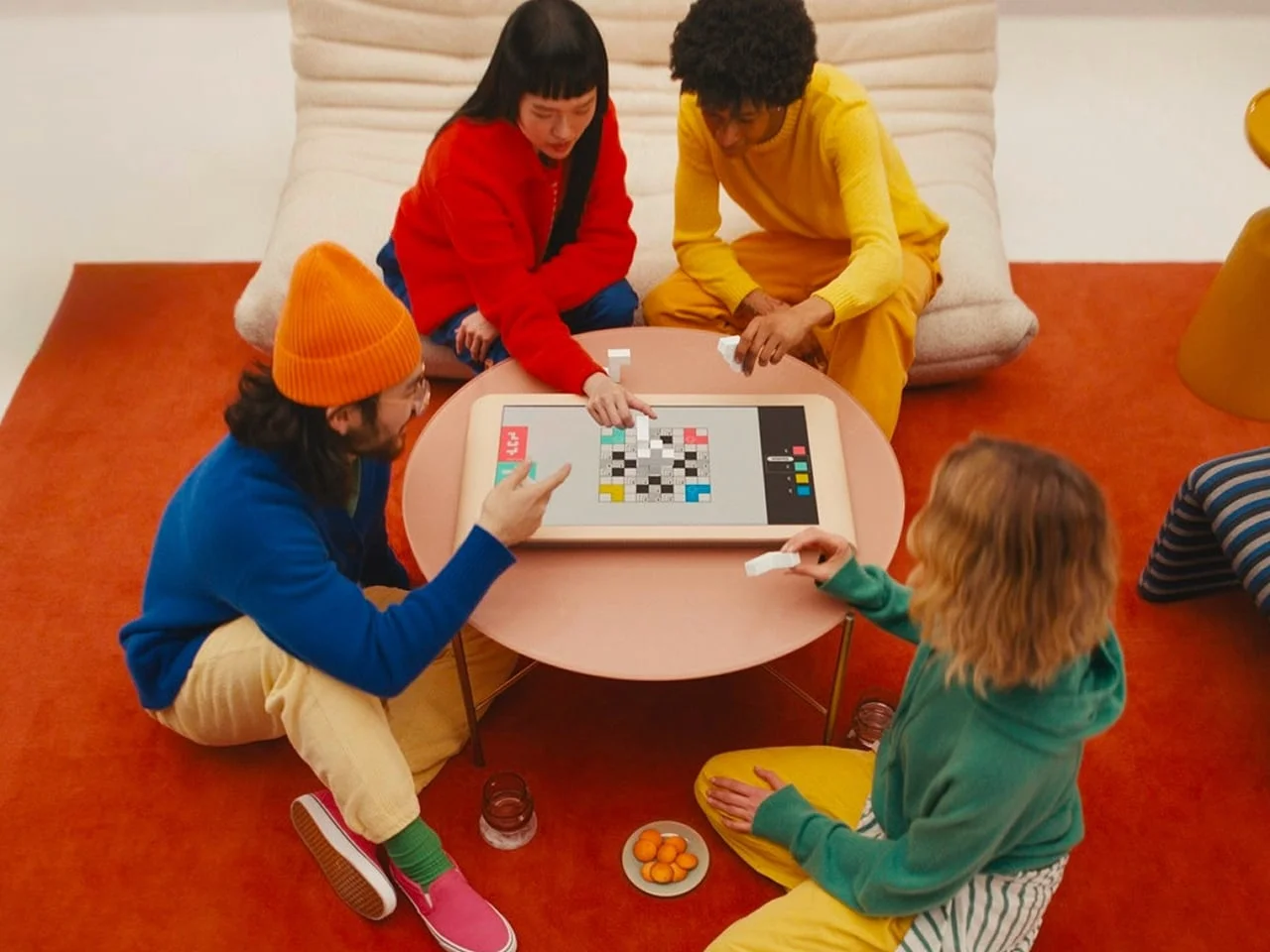
Board’s central idea is simple: give players physical objects to move across a shared screen. The 24-inch tabletop console uses small pieces—including toy utensils, spaceships and robots—as controllers, making hands-on interaction the starting point for its games. That changes the feel of play: players gather around one display and act on the same surface, rather than each holding a separate gamepad.
There’s an immediate appeal to that setup. Objects can make a game’s actions easier to understand at a glance, and passing a spoon or block across the table gives players a physical role in what’s happening on screen. But the format also makes the software do more work. This is more significant than it looks: the pieces have to feel connected to the game’s rules, or the novelty of moving toys around could wear off quickly.
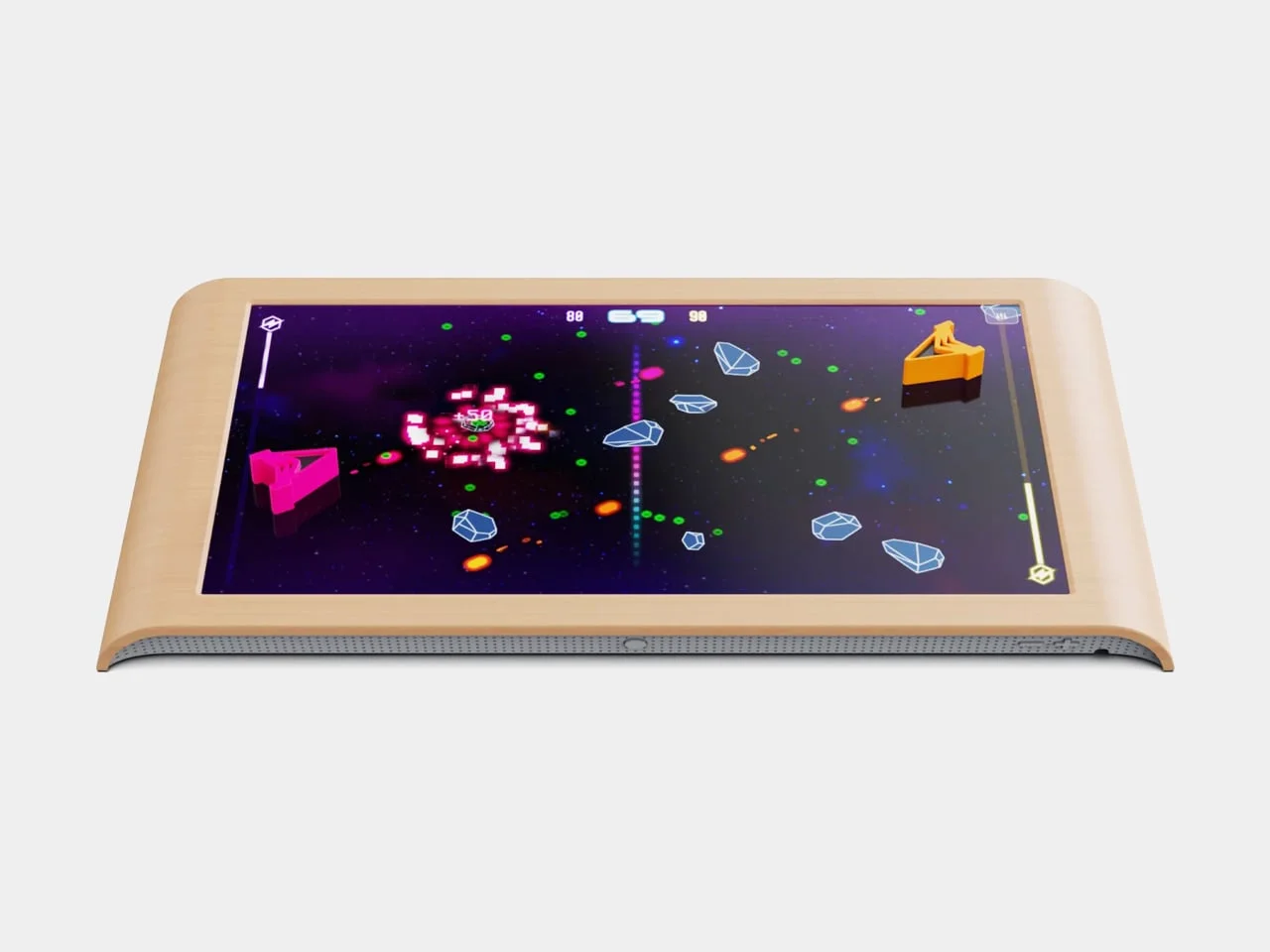
The console is built for a table, not a lap. Its wood-finished frame measures 25.7 inches wide and 1.5 inches thick, with rounded corners and curved edges that lend it the shape of a serving tray. The screen sits flat, leaving room for several players to reach in from different sides. That shared access is central to the design, but it comes with a practical constraint: the console needs a place to stay set up.
Designer: Board
How the pieces work
The objects don’t need batteries, sensors or internal electronics, according to Board. Each has a conductive pattern on its base, which the touchscreen detects using capacitive sensing—the same broad approach found in phones and tablets. That lets a plastic spaceship or toy spoon act as a controller without charging or pairing, reducing the setup each piece requires.
Board calls its recognition and tracking system PieceSense. It identifies each piece and follows its position and rotation, with machine learning running on the console itself. This lets games respond to how players place and turn objects, rather than treating every piece as a simple touch point. Board also says the system is designed to ignore accidental palm contact, a practical requirement when several people lean over the same display.
There’s a limit in Board’s developer guidance: very fast movements can interrupt tracking. That’s a detail with consequences for game design. If a title depends on quick gestures, tracking interruptions could make the physical control feel less dependable; slower actions may be a better fit for the system. The pieces don’t need power. The software still has to keep up.
Games built around touch
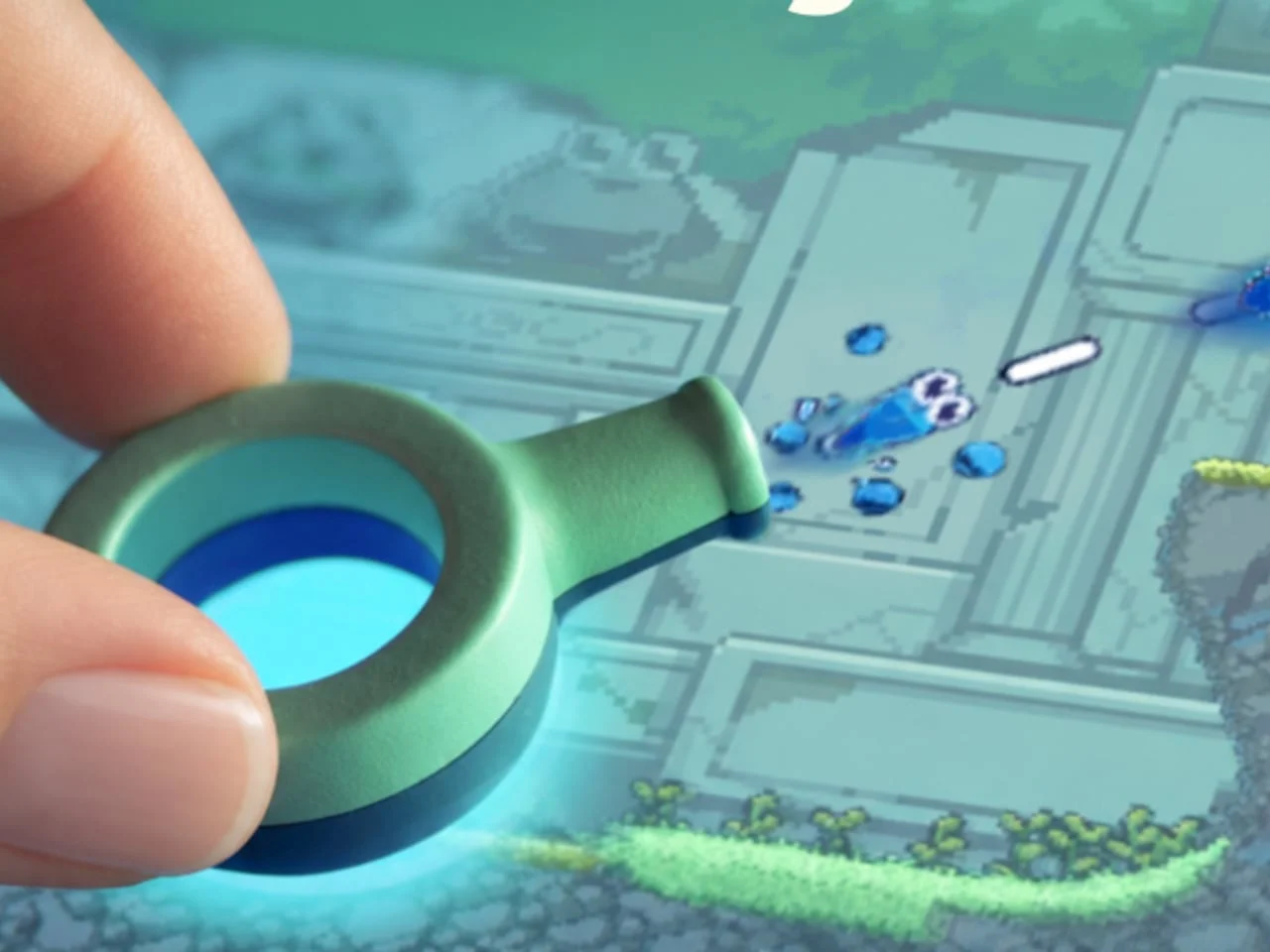
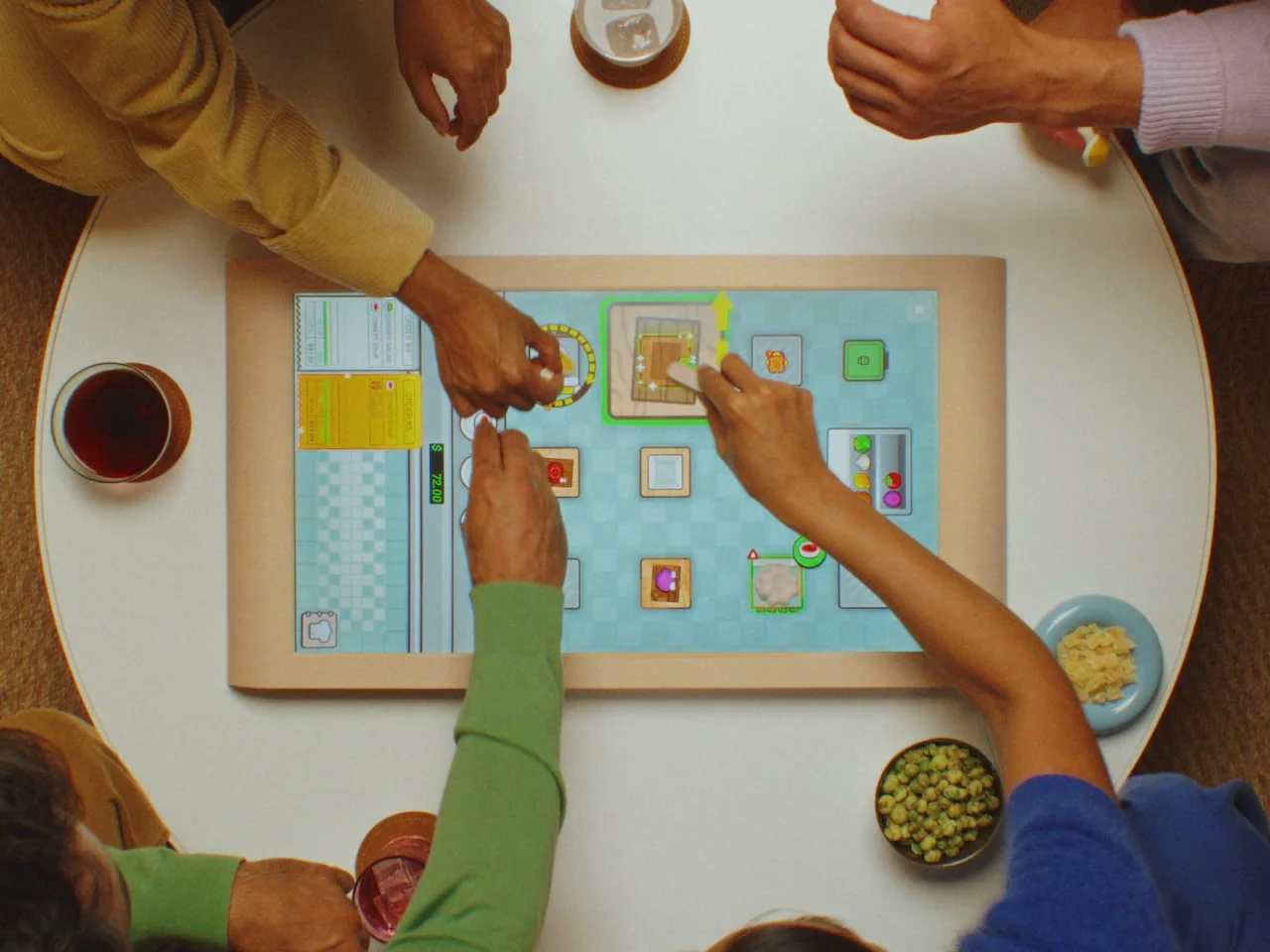
Chop Chop ties its controls to familiar kitchen actions: players use a small knife to slice and a spoon to stir. The utensil becomes part of the game’s logic, rather than a decorative stand-in for a button. Passing tools around the table adds a shared physical task that others can follow, making the action visible to everyone playing.
That kind of design can make a game easier to read socially: players see what another person is doing with the tool, as well as the result on screen. It can also create friction if the pieces are awkward to reach or if the game’s pace doesn’t suit a group taking turns. The idea works best when the physical action adds something that tapping a screen or pressing a button wouldn’t.
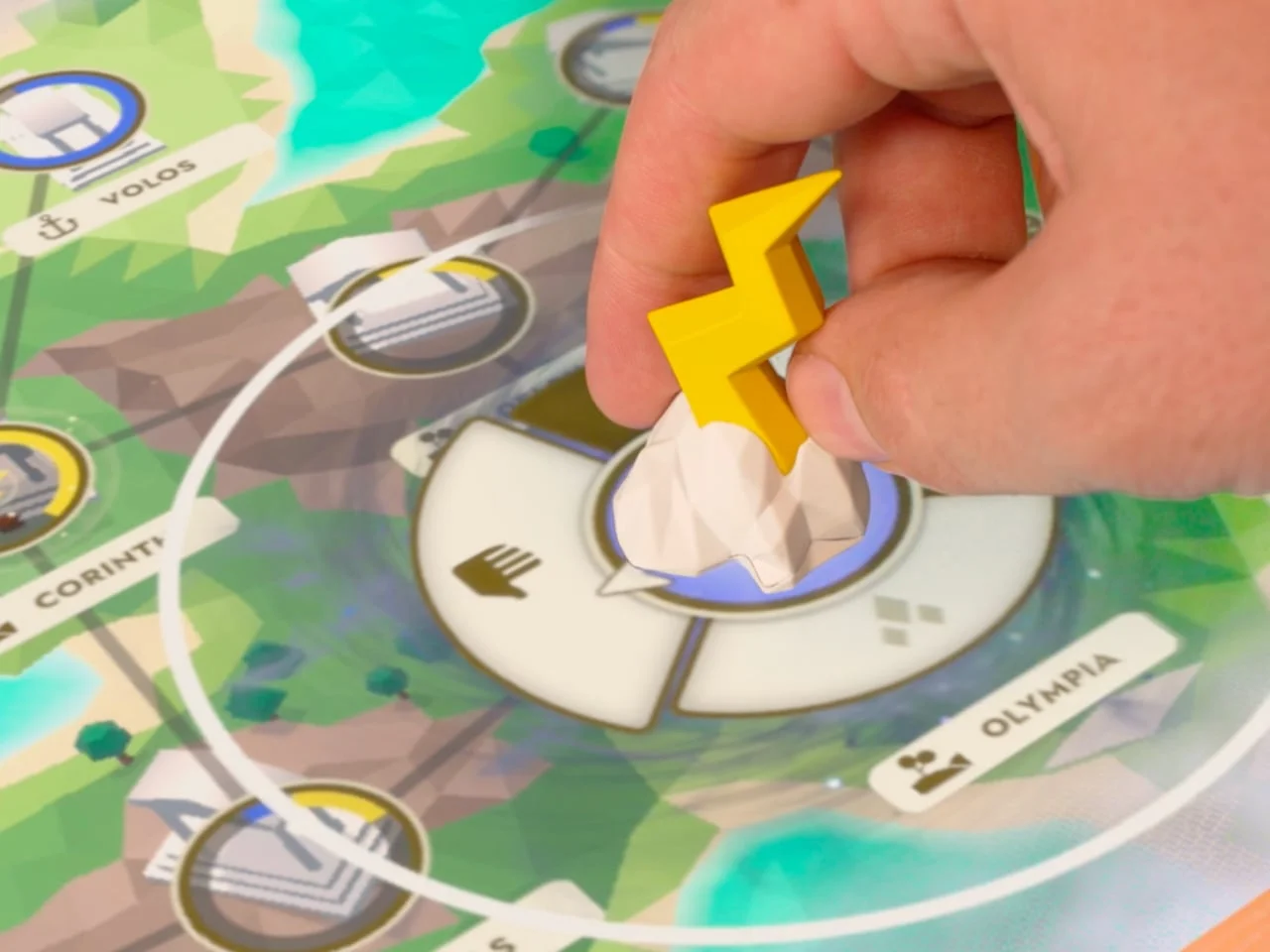
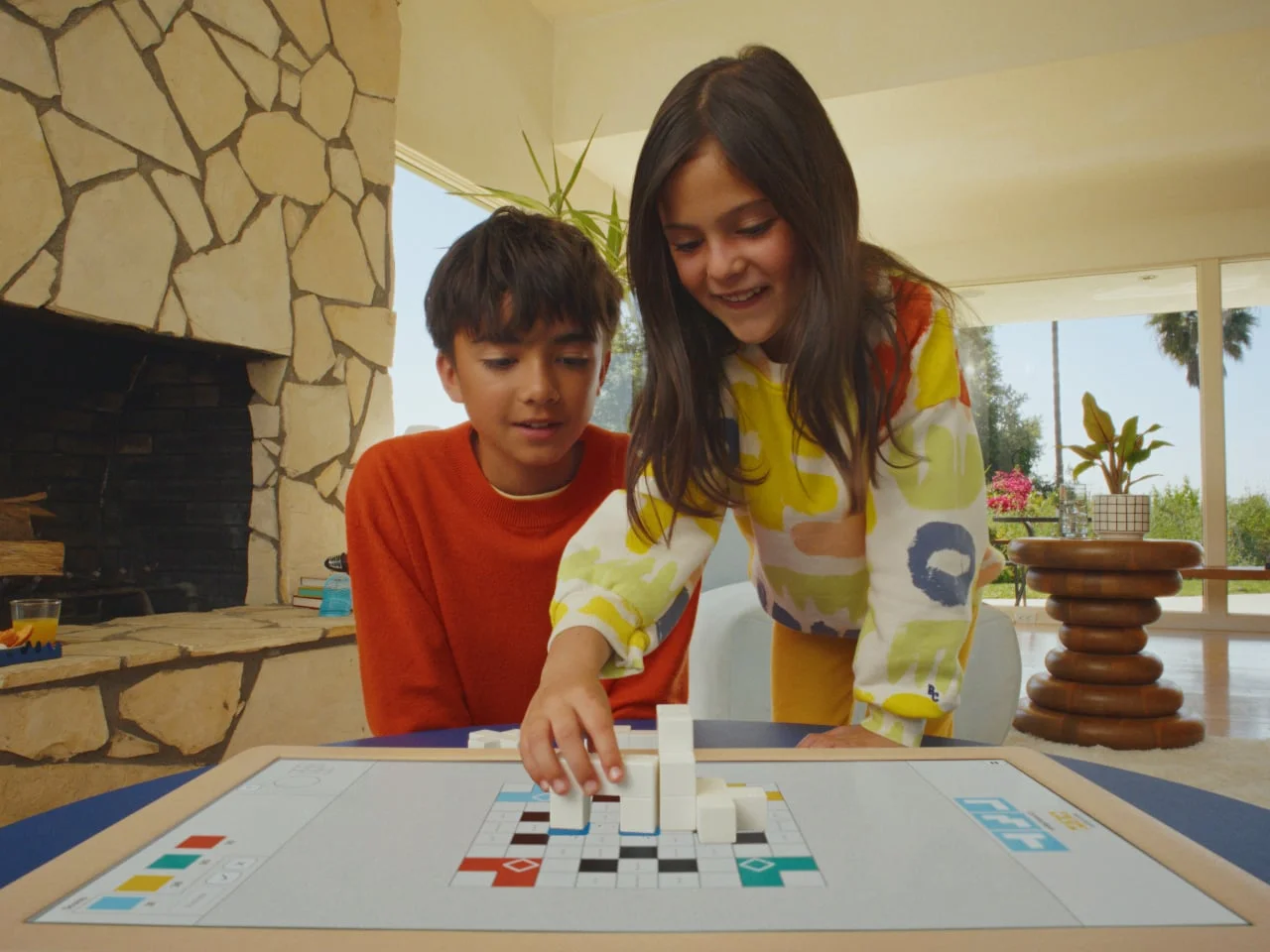
Strata uses pieces differently. Its chunky blocks stack upward as players build and claim territory, adding height to the play space instead of simply marking positions on a flat screen. This gives the physical pieces a role in shaping the game area, and it suggests how different titles could make use of the same display in distinct ways.
Each title can reshape the board and give players a new way to use the pieces. That variety matters because the console’s appeal depends on more than its screen or frame: the games need to keep giving players reasons to pick up the objects. And this is the part most people overlook: a collection of pieces also needs storage between sessions. The tactile approach adds something to play, along with something to put away.
Price and setup
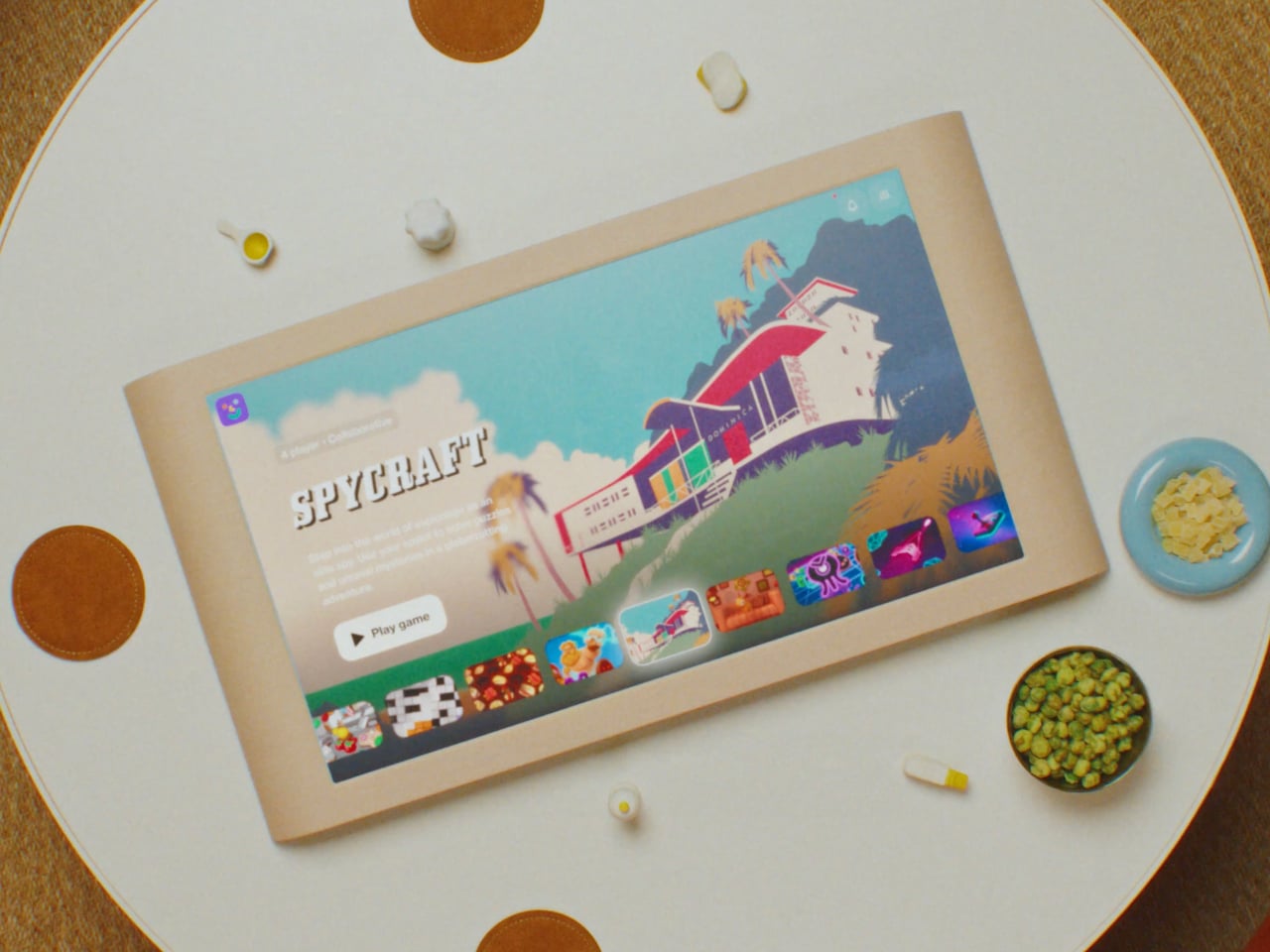
Board lists the console for $339 in the US, discounted from $399. Seven games and their pieces are included, with no required subscription. Additional titles cost from free to $34.95. The included games give buyers a starting library, though the range of prices for later titles means the cost of adding to it can vary.
Games download directly to the console, but physical pieces arrive by mail, so expanding the collection can take longer than a digital purchase. That split highlights a trade-off built into the product: software can be delivered quickly, while a game that depends on new objects also depends on shipping them. If you’re working in this space, that’s a useful reminder that physical controls shape the buying and setup experience as much as the play itself.
The console also needs a wall outlet, which will shape where it fits in a living room. Its dimensions and power requirement make it a tabletop fixture, not something players are likely to move casually between rooms. Here’s the thing: a shared screen can make gathering around feel natural, but only if there’s a suitable table and enough room for people to reach it.
What will determine its staying power
Board’s strongest design choice is making the screen a shared surface where players move objects, watch one another’s actions and reach across the same table. That gives the console a clear identity. Its longer-term appeal will depend on whether the games make the pieces useful in different ways and whether tracking holds up during real play, especially when several hands are near the display.
That said, the concept has a credible starting point in games where physical actions match what players see on screen. Chop Chop’s utensils and Strata’s stackable blocks show two distinct ways to connect objects with play. The open question is whether future titles can sustain that variety without making the collection harder to store or the setup more involved than the game warrants.
Board is asking players to make room for a new kind of shared gaming device, both on the table and in the routine of play. The design makes its case through touch and group interaction; the software will have to keep making that case after the first few games.
The post Board’s Tabletop Console Uses Toy Spoons and Spaceships Instead of Gamepads first appeared on Yanko Design.

Discussion
Sign in to join the discussion.