Satoshi Itasaka's FLAT/FORM challenges conventional flat-pack furniture by emphasizing longevity, repairability, and easy disassembly.
Redefining Relationships with Furniture
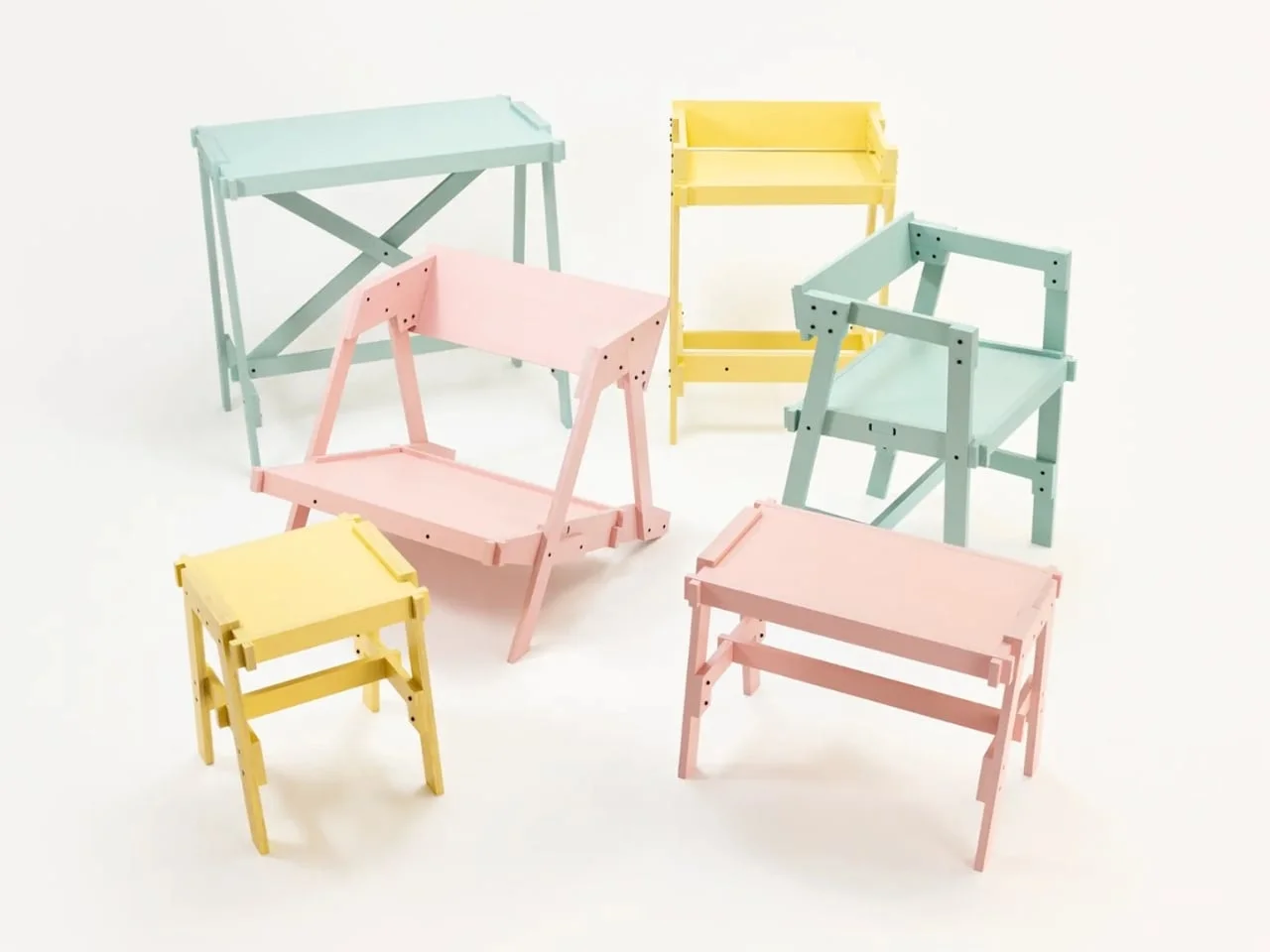
Flat-pack furniture has its merits, particularly for ease of initial setup, but the real test arises when it comes time to move, dismantle, or repair. Satoshi Itasaka's FLAT/FORM collection tackles these challenges head-on. Its design employs simple bolts and nuts, enabling easy assembly, disassembly, and transport, thus redefining our relationship with furniture beyond the first day it is brought home. These practical elements directly address common pain points in furniture ownership, like the hassle of moving or the inevitable wear that occurs over time.
The Lifecycle of Furniture
Itasaka's approach prompts a deeper consideration of furniture's lifecycle. A dining chair, for example, isn't just a one-time purchase; it often travels through various living spaces, adapting to different needs over time. The design of FLAT/FORM acknowledges this ongoing journey, integrating functionality into its aesthetic appeal instead of leaving future adaptability to chance. This perspective urges buyers to think beyond immediate desires and recognize the importance of versatility, highlighting the need for furniture that is built to outlast its initial environment.
Thoughtful Material Selection
At the core of the collection is the material choice: 15-millimeter-thick veneer panels crafted from over a century-old Japanese cedar. Sourced from the Miyazaki-based forestry company GROWTHRING, the wood adds a distinctive character while also maintaining a straightforward assembly process. Each piece, including a dining chair and a low table, begins as flat panels, allowing the rich wood grain to come to the forefront while ensuring that the construction remains transparent and easy to navigate. The transparent assembly does more than aid in construction—it actively contributes to the visual narrative of each piece.
This clarity in design is refreshing, as it doesn’t attempt to disguise its assembly mechanisms. The visible connections enhance the construction's sense of purpose, making it an integral part of the furniture's identity. This gives the pieces a strong visual presence without losing individuality, ensuring that the Japanese cedar remains the focal point of attention. In a market awash with overly-polished designs, the authenticity of FLAT/FORM stands out.
Sustainability Concerns
However, using older cedar raises pertinent issues about sustainability. While a rich material history can lend aesthetic appeal, it doesn't automatically equate to environmental responsibility. It’s a complex issue. On one hand, the use of storied materials like cedar honors traditional craftsmanship; on the other, it poses questions about the preservation of resources. FLAT/FORM's promise lies in its practical approach to furniture ownership: these pieces are designed to be deconstructed, easily transported, and repaired throughout their lifetime, rather than seen as disposable after their initial use. This pragmatic perspective arguably holds more significance than broad environmental claims. Yet, one has to wonder whether this style of furniture can indeed foster long-term ecological benefits, or if it just sidesteps larger issues with a focus on functionality.
The Realities of Moving
Moving is often a stressful endeavor, and furniture shouldn't add to that burden. With the use of familiar bolts and nuts in FLAT/FORM, users can approach assembly and disassembly confidently. While not every relocation is guaranteed to be smooth, this design acknowledges the reality that people do move and often need furniture that can move with them. The dimensions of both loft apartments and sprawling homes often change as people transition through various life stages; FLAT/FORM is designed with that versatility in mind.
Comfort and Practicality
Nevertheless, experiencing the chair's comfort is essential before making any definitive conclusions. While the design promises ease of assembly and material quality, real-life usage—especially during long dinners—can significantly influence one's impression of the piece's longevity. Questions about pricing and durability, particularly regarding wear and tear in a lively household, remain pertinent for any furniture designed for extended use. Comfort and aesthetics must go hand-in-hand to justify the investment, leading potential buyers to assess personal preferences alongside practical considerations.
The Shift in Perspective
FLAT/FORM, however, successfully shifts the focus of flat-pack furniture. While convenience upon delivery is undoubtedly beneficial, the ease of ownership throughout the furniture's lifespan may yield even greater value. A table that can transition smoothly from one environment to another, without complicating the moving process, is a concept often overlooked by buyers who prioritize aesthetics alone. More importantly, these considerations are vital in a culture that frequently undervalues functional design, forcing consumers to reevaluate what they truly want from their purchases.
Future Outlook: Designing for Longevity
Ultimately, the strongest idea within FLAT/FORM is the recognition that furniture deserves a sustainable future. This design doesn't need to be complex to make that point. By utilizing straightforward materials like flat cedar panels and standard fasteners, Itasaka poses an important question: What if the arrival of a new piece represents just the starting point for thoughtful design? If you're working in this space, this question challenges conventional norms and pushes the idea of furniture ownership into new territory. It’s a question worth exploring as we prepare for the next delivery to our homes.
The post Designing Flat-Pack Furniture for Lifelong Use first appeared on Yanko Design.

Discussion
Sign in to join the discussion.