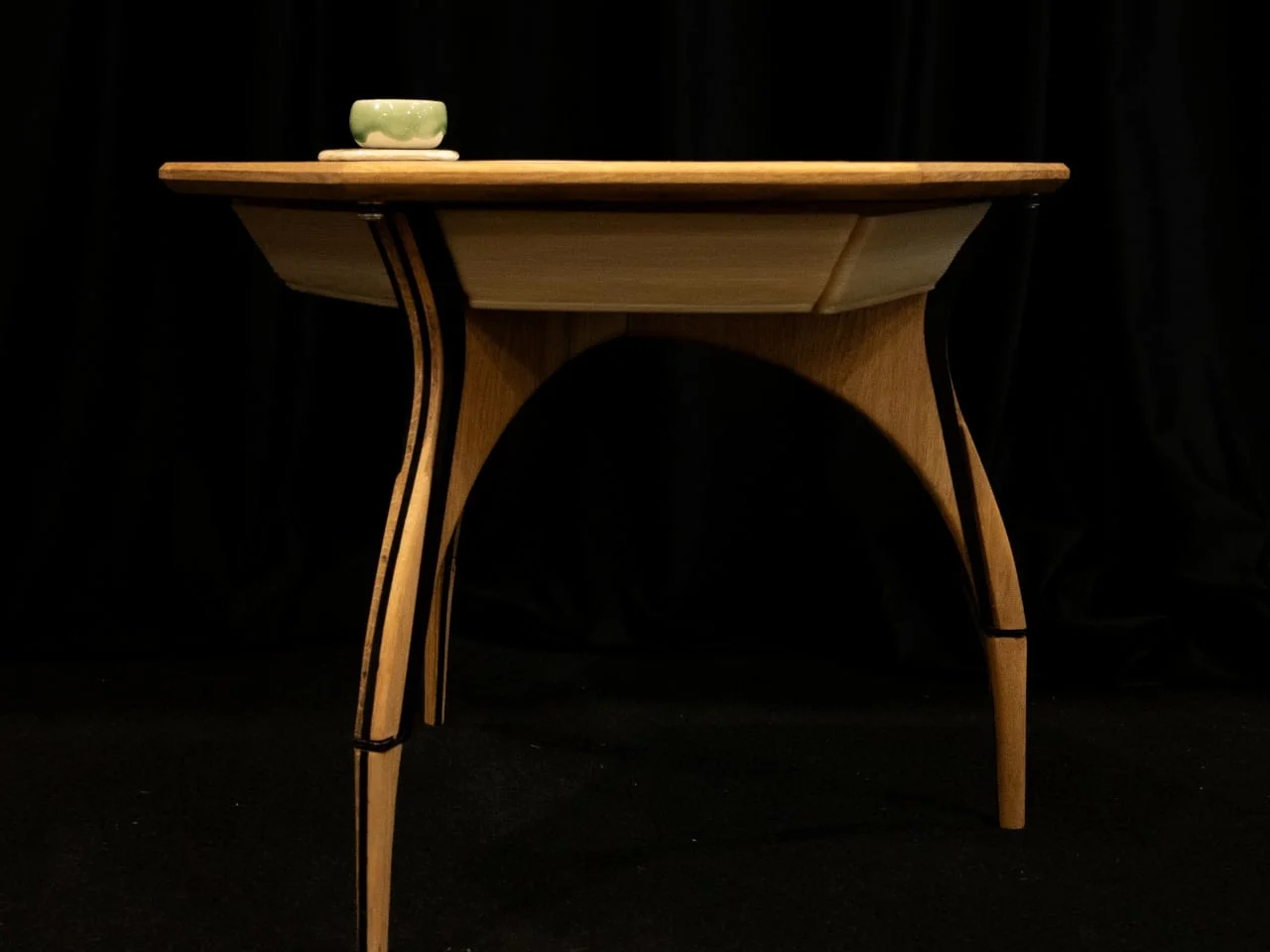
Romanian studio mkt’s LUMVIA pairs a solid oak frame with 24 swappable mosaic tiles and 3D-printed triangular drawers.
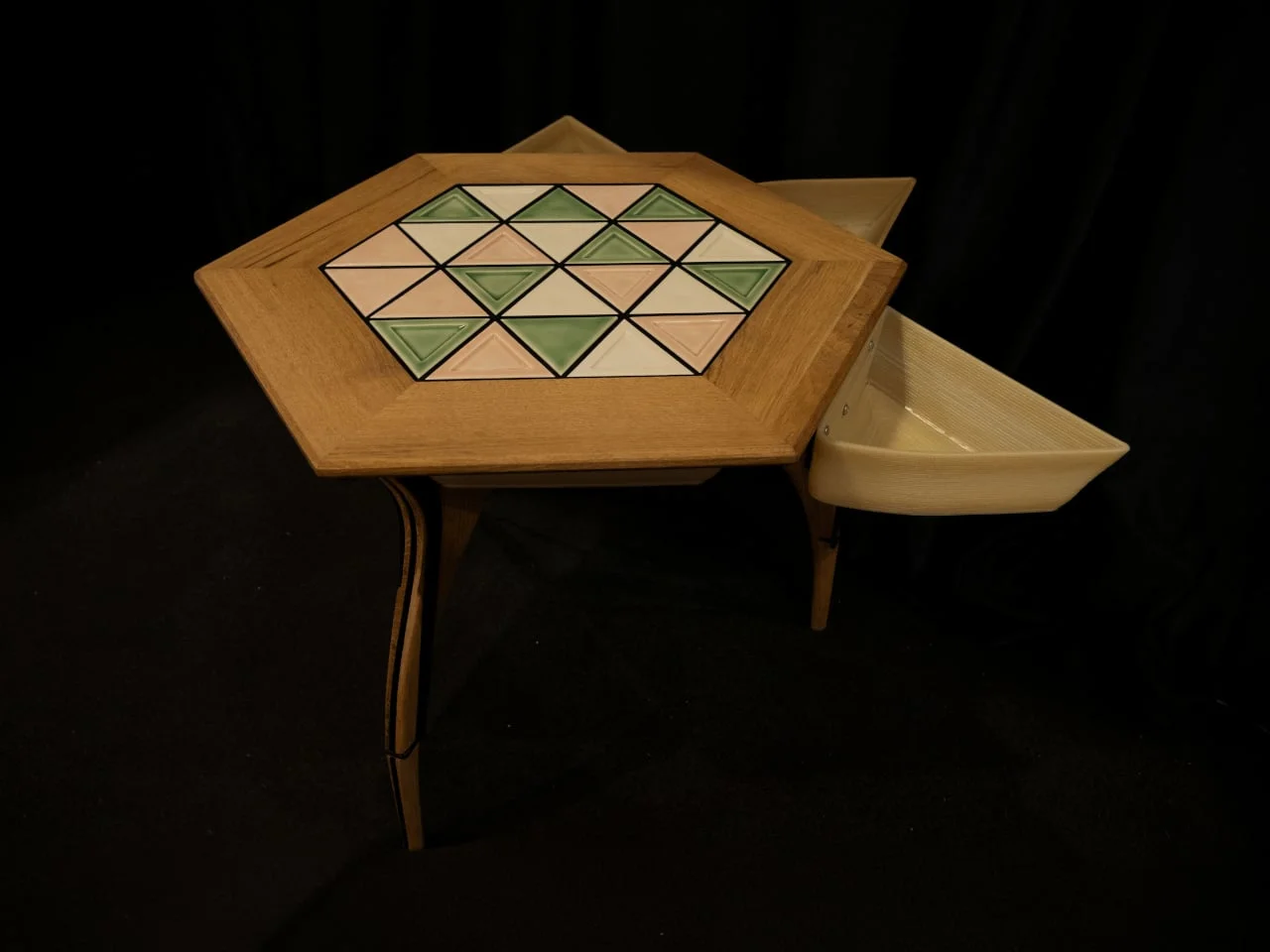
LUMVIA treats a coffee table’s surface as something owners can revise, not a finish they have to live with indefinitely. The prototype from Romanian design studio mkt combines a solid oak frame with removable mosaic tiles, plus hidden drawers shaped to echo the pattern overhead. Its appeal rests on a useful idea: make customization part of the furniture’s construction, while keeping storage close at hand. That changes the table from a fixed decor choice into a small system owners can adjust as their room and tastes shift. The idea is persuasive; the harder question is whether the parts stay practical after the novelty wears off.
A mosaic built for rearranging
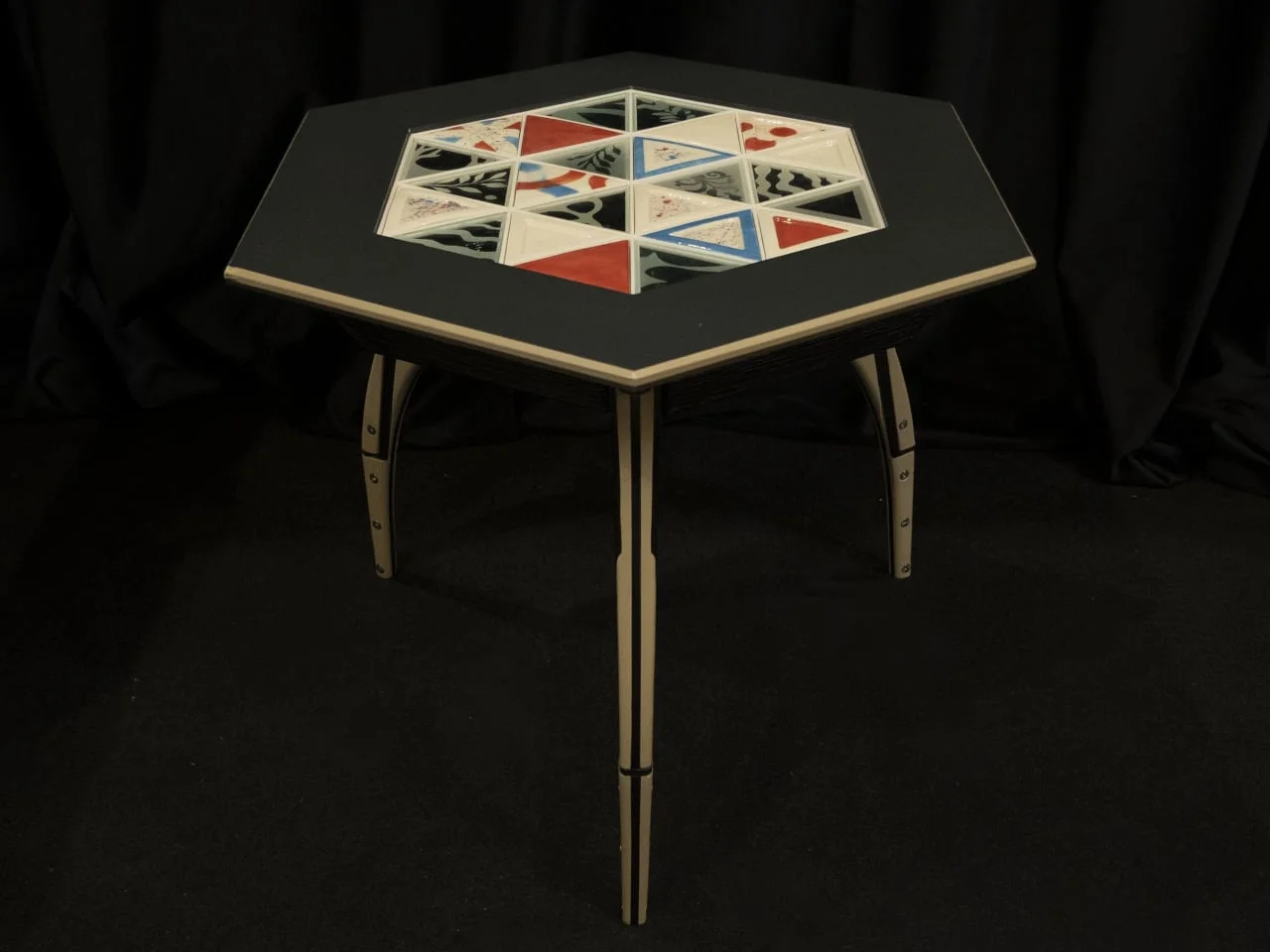
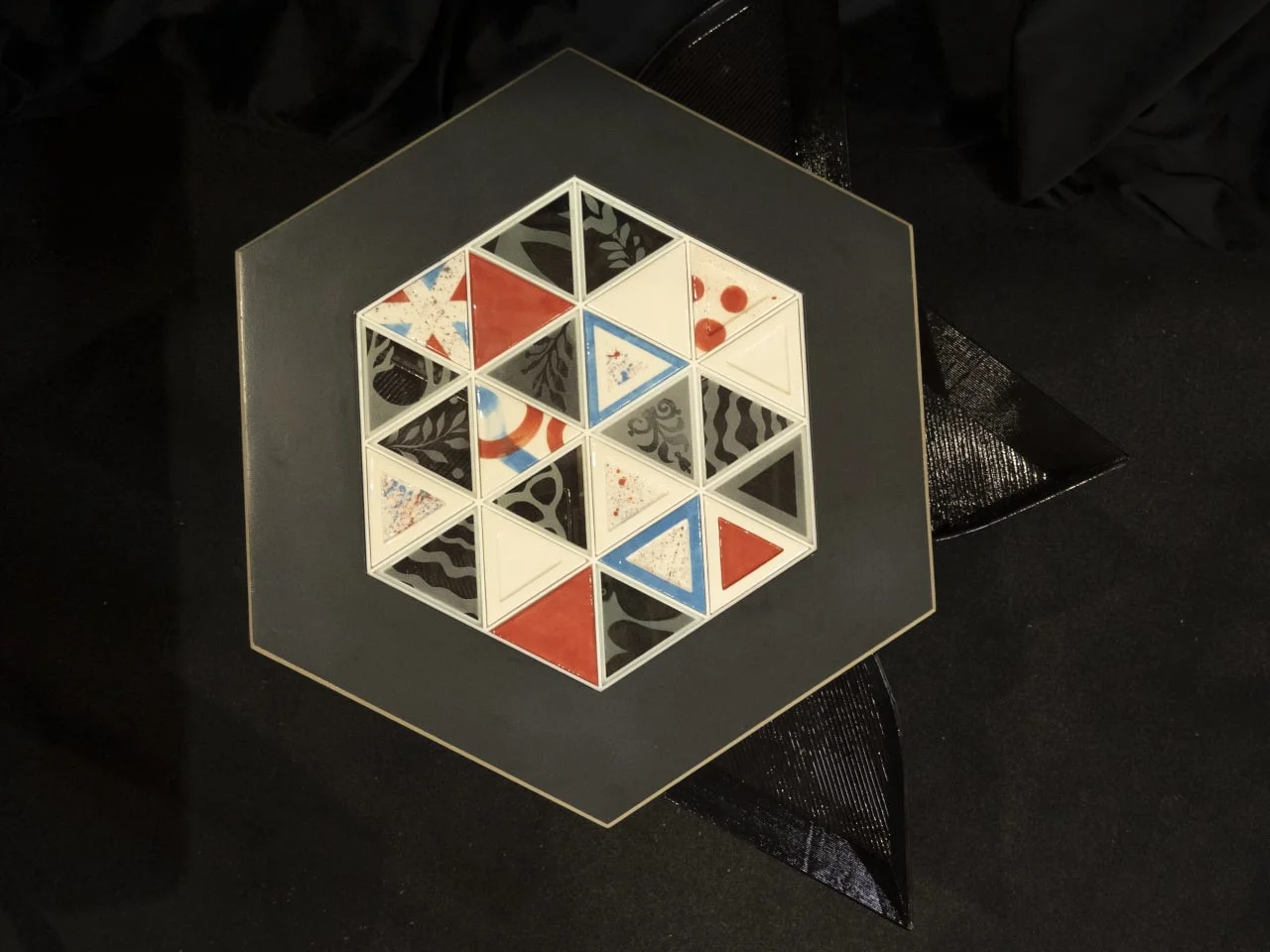
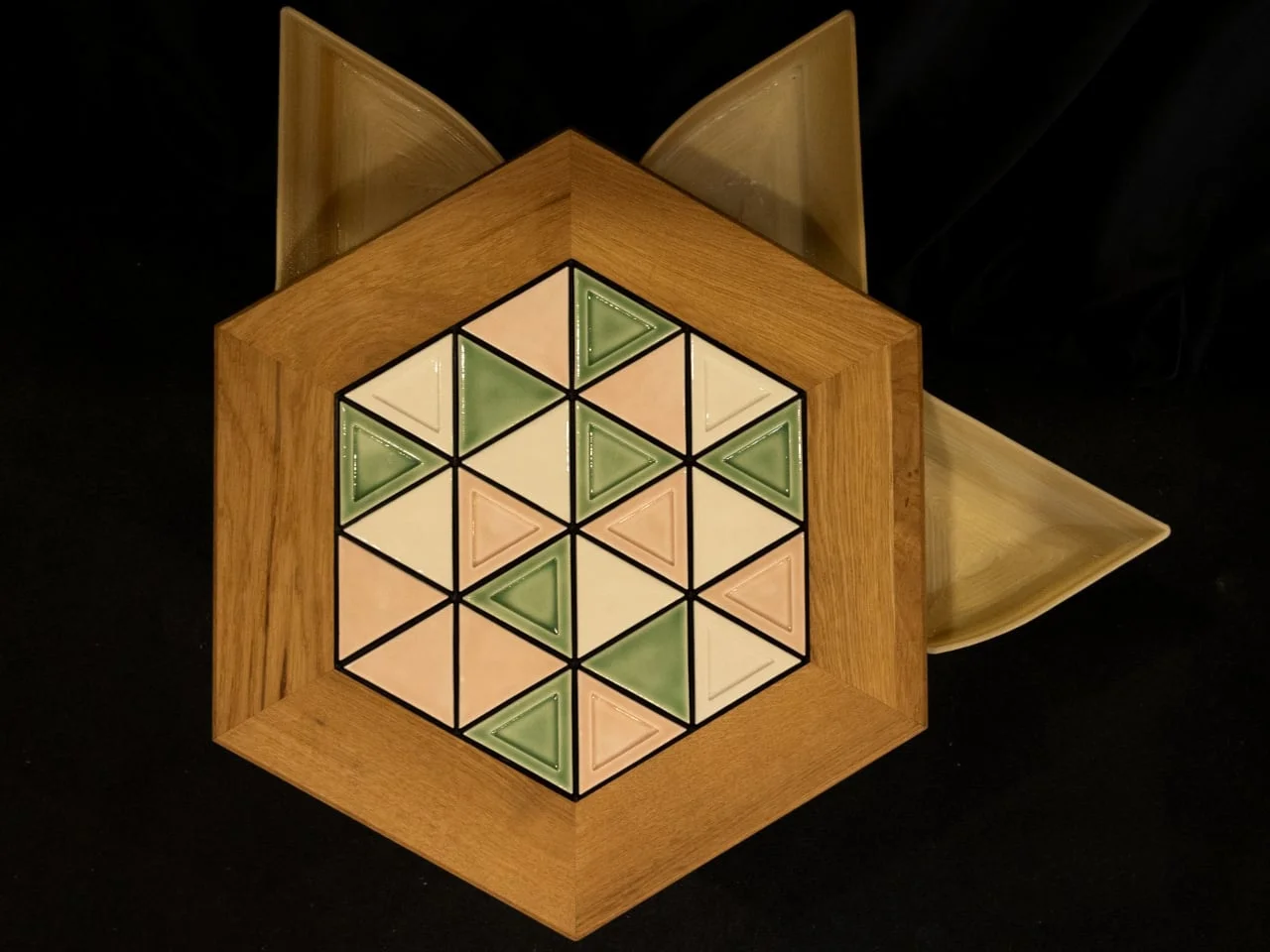
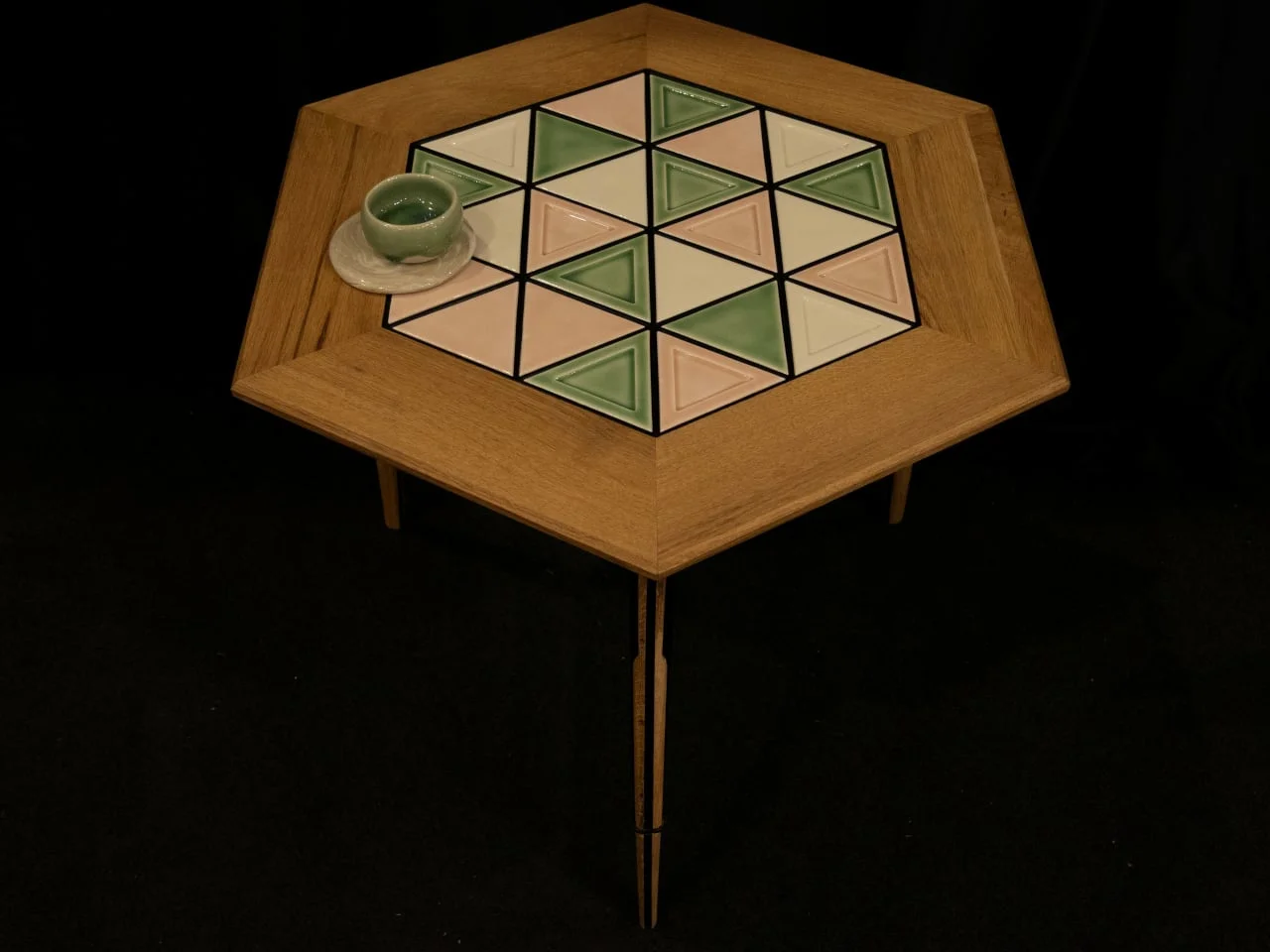
The tabletop is hexagonal, framed in wood and divided into 24 triangular tiles. That fixed geometry gives the surface visual order while leaving room to change its color and material mix. Owners can arrange similar shades into a quieter pattern or set contrasting pieces against one another for a more prominent focal point. The shape also gives the table a strong visual identity, so customization happens within clear limits rather than across an open-ended surface. That constraint may help the finished arrangement feel composed, though it also means the design’s variety depends on the available tile combinations.
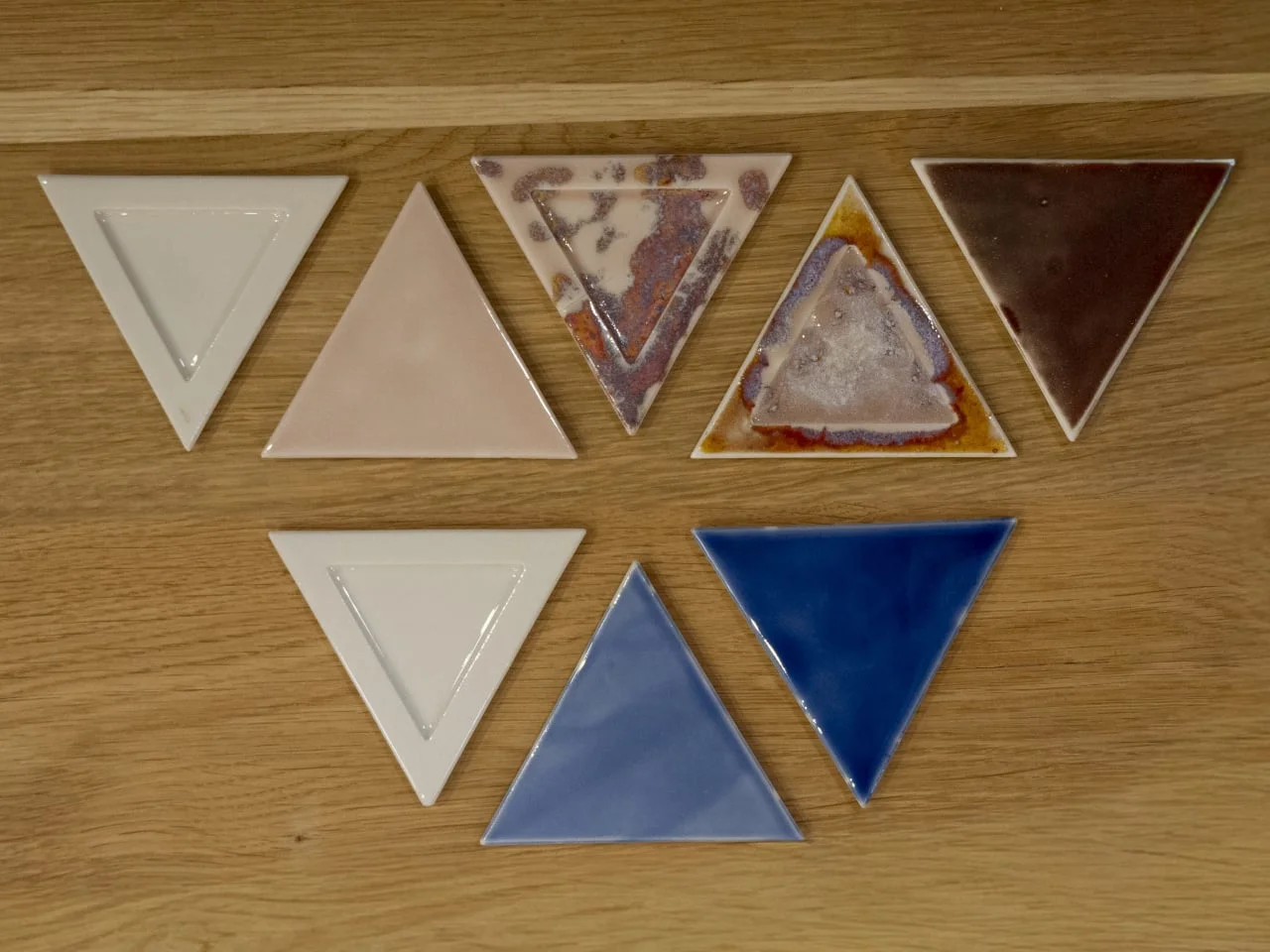
mkt offers ceramic and glass tile options, along with black or white separators between pieces. Those lines affect the overall look: black emphasizes each triangle, while white reduces the contrast. Some tiles also have recessed triangular details; others are plain, adding texture to the choices alongside color and material. Together, these options make the grid itself part of the visual design, rather than treating grout or spacing as an incidental detail. A restrained arrangement could let the oak frame carry more of the character, while stronger contrasts would make the tiled top the room’s main accent.
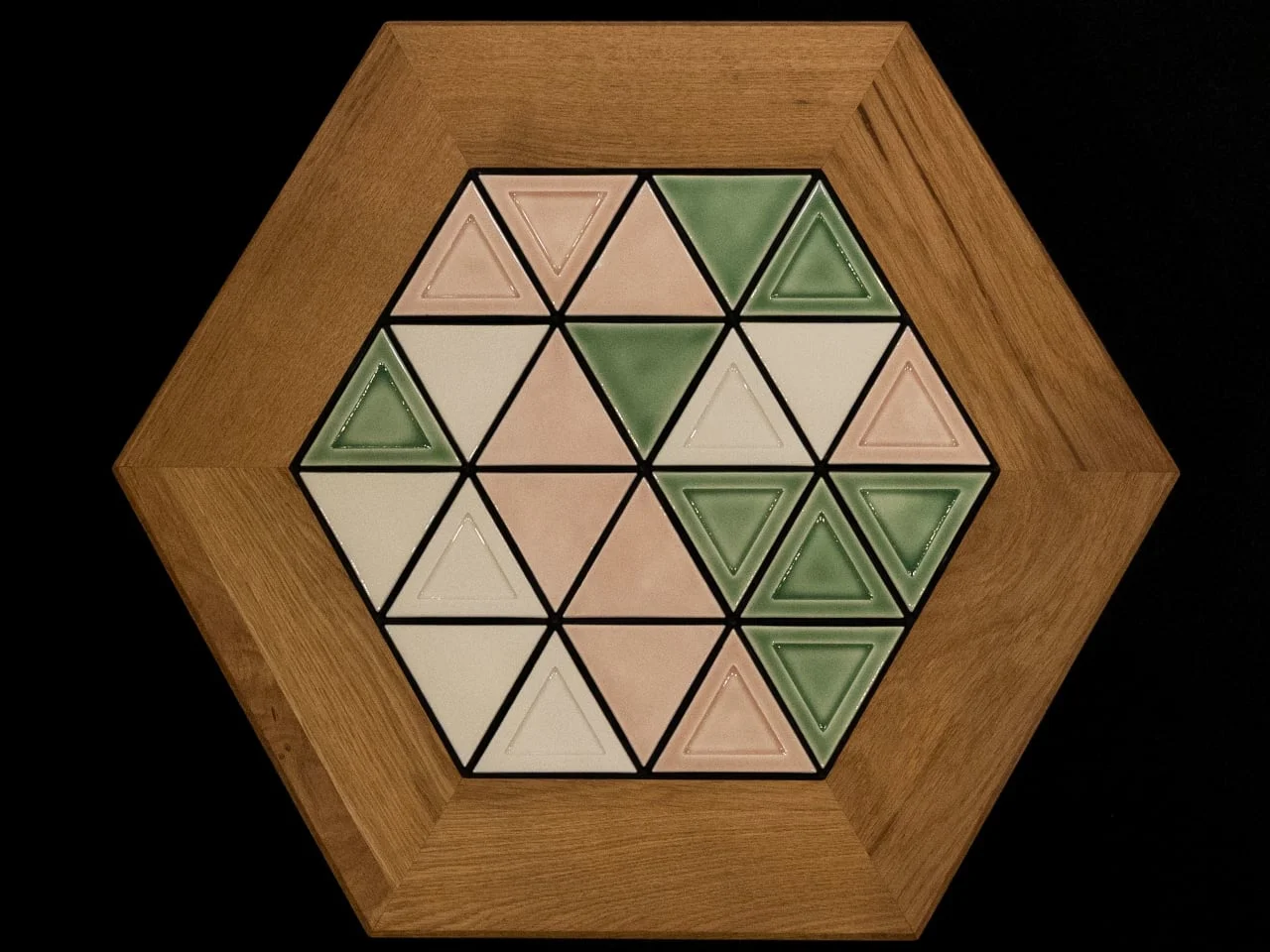
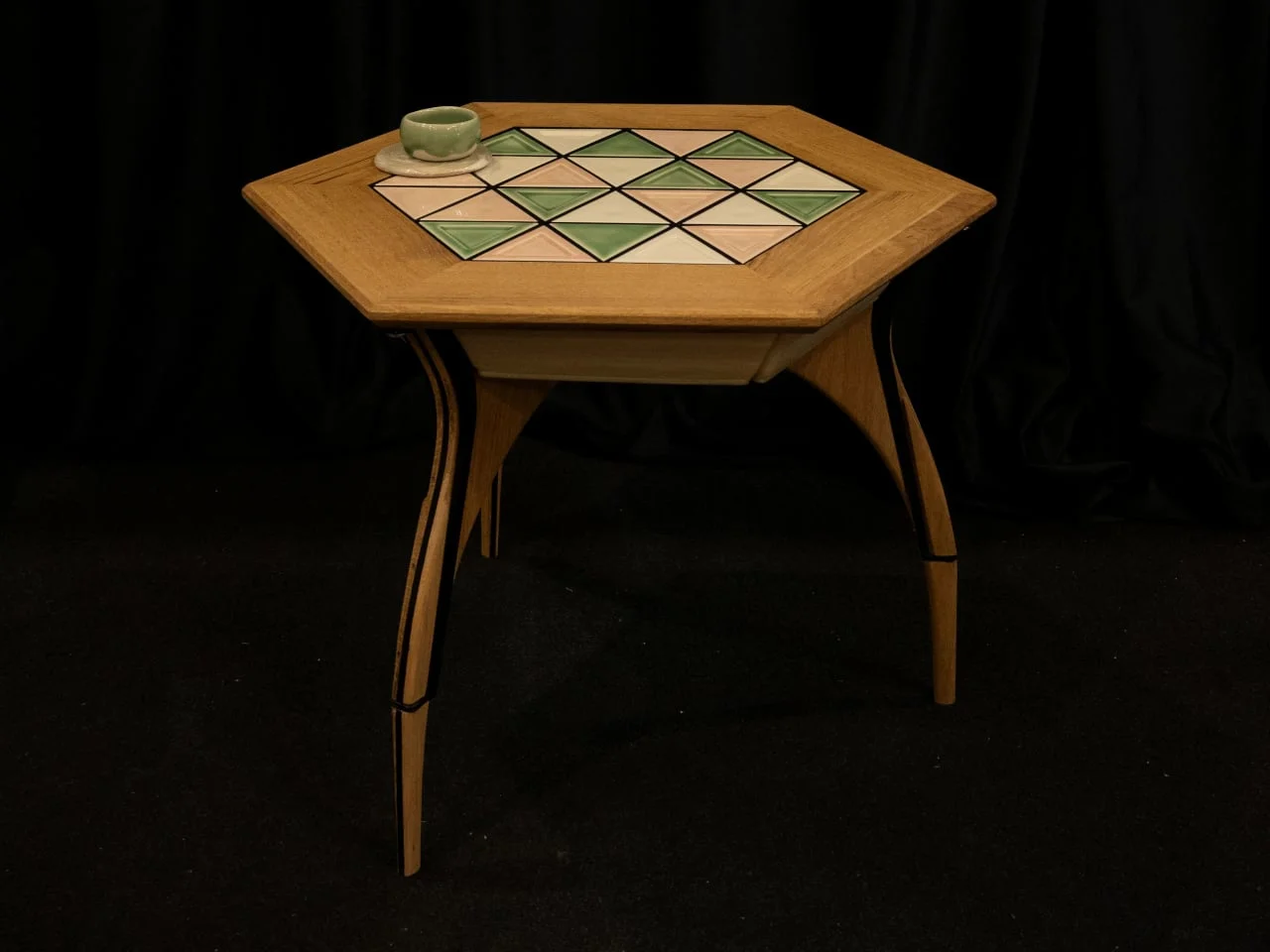
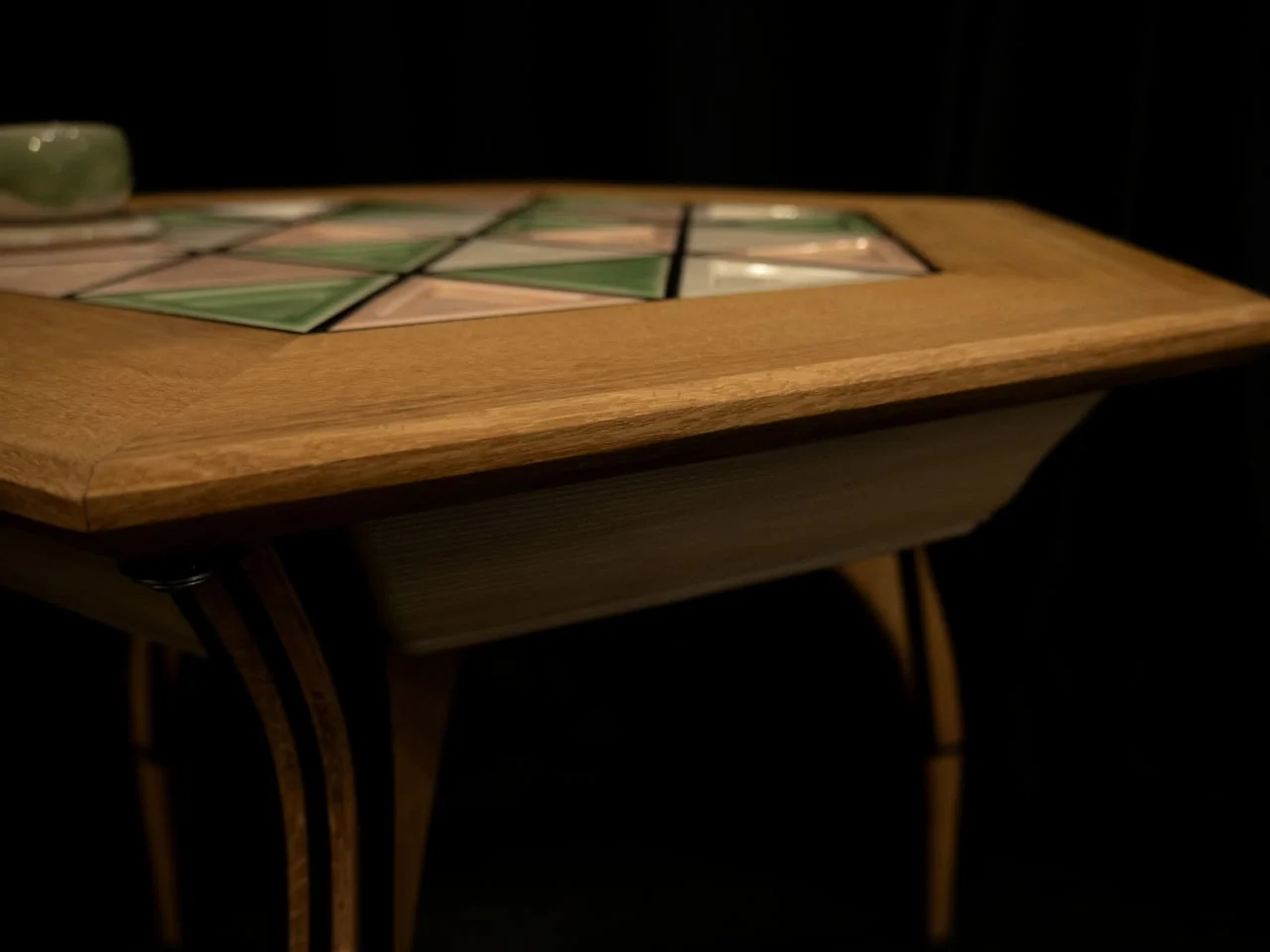
Removable pieces could make the table easier to adapt when a room’s furnishings change. A different rug or sofa might call for a calmer or bolder arrangement, and LUMVIA lets owners alter the surface without replacing the table. The concept turns a long-term decor choice into one that can be revisited. This is more significant than it looks: many furniture products offer personalization at purchase, then lock the owner into that choice. Here, the possibility of rearranging the tiles makes customization an ongoing feature, although the value depends on how easy the pieces are to remove and reinstall.
That flexibility also has a practical limit. Owners need to settle on a pattern that works with the table’s fixed shape and the room around it, and loose tiles need somewhere to go while the surface is being changed. Still, the central proposition is clear: the table’s appearance doesn’t have to be settled on delivery day. It can become part of how the object is used over time.
Storage follows the same geometry
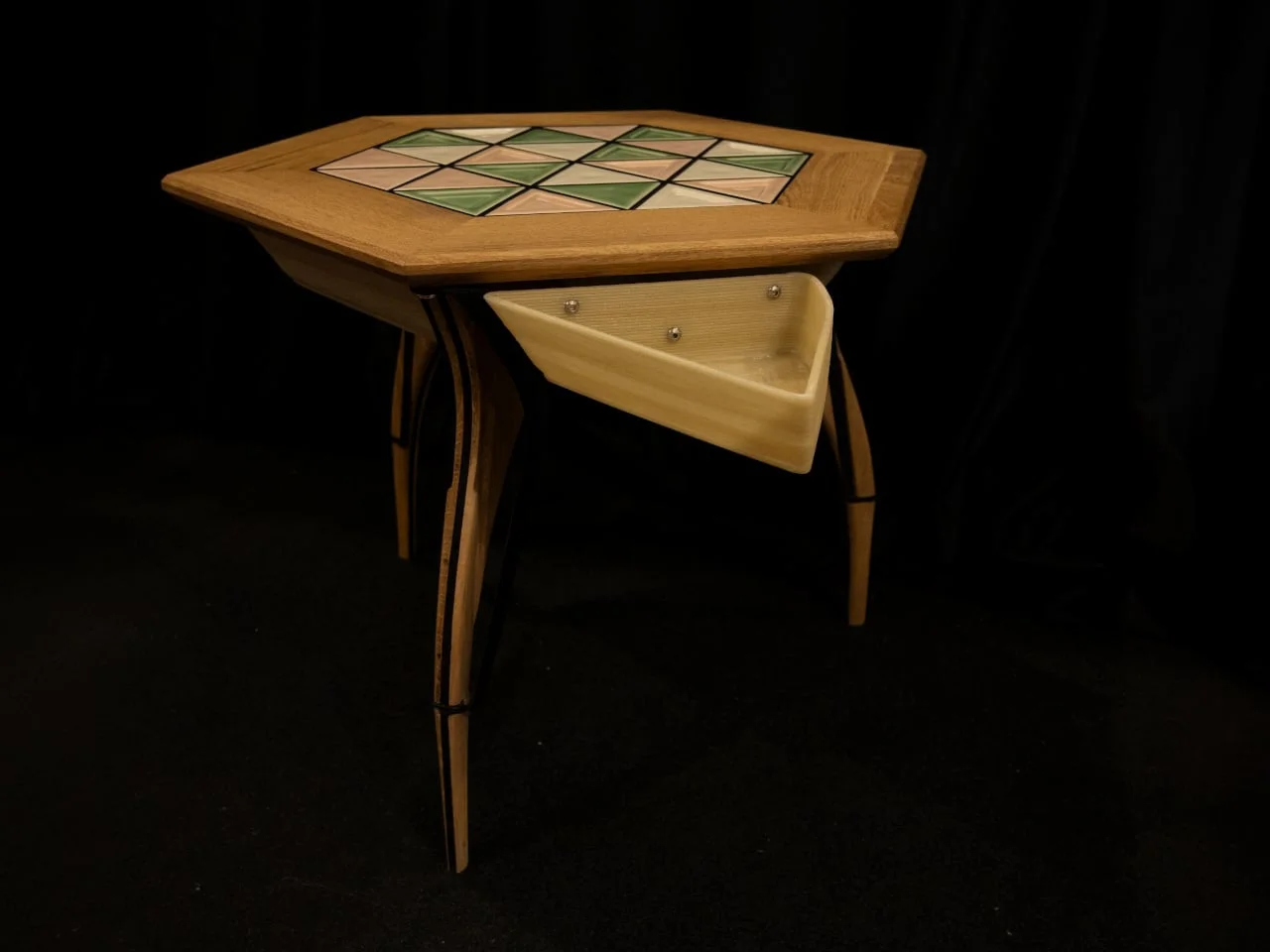
Below the tabletop, triangular drawers carry the mosaic’s shape into the table’s storage. They offer space for small items that might otherwise gather on the surface, though their angular interiors may limit what fits comfortably. The drawer design favors a consistent visual language over the flexibility of a conventional rectangular compartment. That tradeoff is visible in the concept itself: the storage feels integrated with the top, but its unusual shape could make it less accommodating for everyday objects with awkward dimensions.
For a coffee table, even modest storage can help keep remotes, coasters, or other small items within reach and out of sight. The available description doesn’t specify drawer capacity or how the compartments open, so those details remain unanswered. If you're working in this space, that’s the kind of information that separates a compelling rendering from furniture that earns a permanent place in a living room.
The drawers and the grid that supports the tiles are 3D-printed. That puts digital fabrication to work in the table’s structure, not only in its appearance. It also suggests a way to produce components with shapes that would be less straightforward to make using standard rectangular joinery. mkt also shows a wood variant with interlocking wooden tiles, giving the surface another material direction without ceramic or glass. The contrast between these versions raises a useful design question: how much of the table’s character comes from the replaceable pattern, and how much comes from the material and feel of the pieces themselves?
Everyday use is the next test
For a table meant to hold coffee cups, the practical details matter as much as the visual system. The tile surface needs to stay stable and handle ordinary spills, while the recessed pieces may make cleaning and use different from a flat top. Those qualities will help determine whether the mosaic works as daily furniture as well as a customizable display. The joints between tiles deserve particular attention: small gaps can shape how crumbs, liquid, and dust collect, while a surface made from separate pieces may feel different under a cup or a book than a single slab.
There’s a balance to strike. A surface with enough texture to make the pattern legible can also ask more of the person cleaning it, and a removable component is useful only if it stays securely in place during ordinary use. The prototype description doesn’t establish how the table performs on those points. For now, the images and configuration options make a case for the concept’s visual range, while day-to-day handling remains an open question.
LUMVIA is still a prototype, not a mass-produced product. Its configurator includes an option to select extra tiles, which could support future pattern changes; spare pieces will also need storage when they’re out of use. That option hints at a longer relationship between owner and object, but the experience will depend on whether replacement pieces remain easy to organize and fit. A modular table can extend the life of its appearance, though the underlying frame and moving parts still need to hold up.
What the concept says about adaptable furniture
LUMVIA’s broader proposition is that customization can continue after purchase. That’s an appealing response to furniture’s usual compromise: buyers choose a finish once, then keep it even when their rooms change. Here, the surface can be revisited without discarding the frame, and the hidden storage gives the design a second everyday function beyond display. The concept’s strongest promise is clear: a table whose appearance can evolve with its owner, provided its modular surface proves dependable in everyday use.
And yet. The design’s success won’t come from variety alone. It will depend on whether the tiles are easy to change, whether they stay stable, and whether the angular drawers prove useful enough to justify their distinctive shape. Those are ordinary tests, but they’re the ones that decide whether modularity becomes a habit or remains a feature owners admire from a distance.
The post LUMVIA Coffee Table Prototype Pairs a Customizable Mosaic With Hidden Drawers first appeared on Yanko Design.

Discussion
Sign in to join the discussion.