HMD’s Nokia 2360 Flip offers remote contact management and family controls, but its 2G-only radio puts long-term usability in doubt.
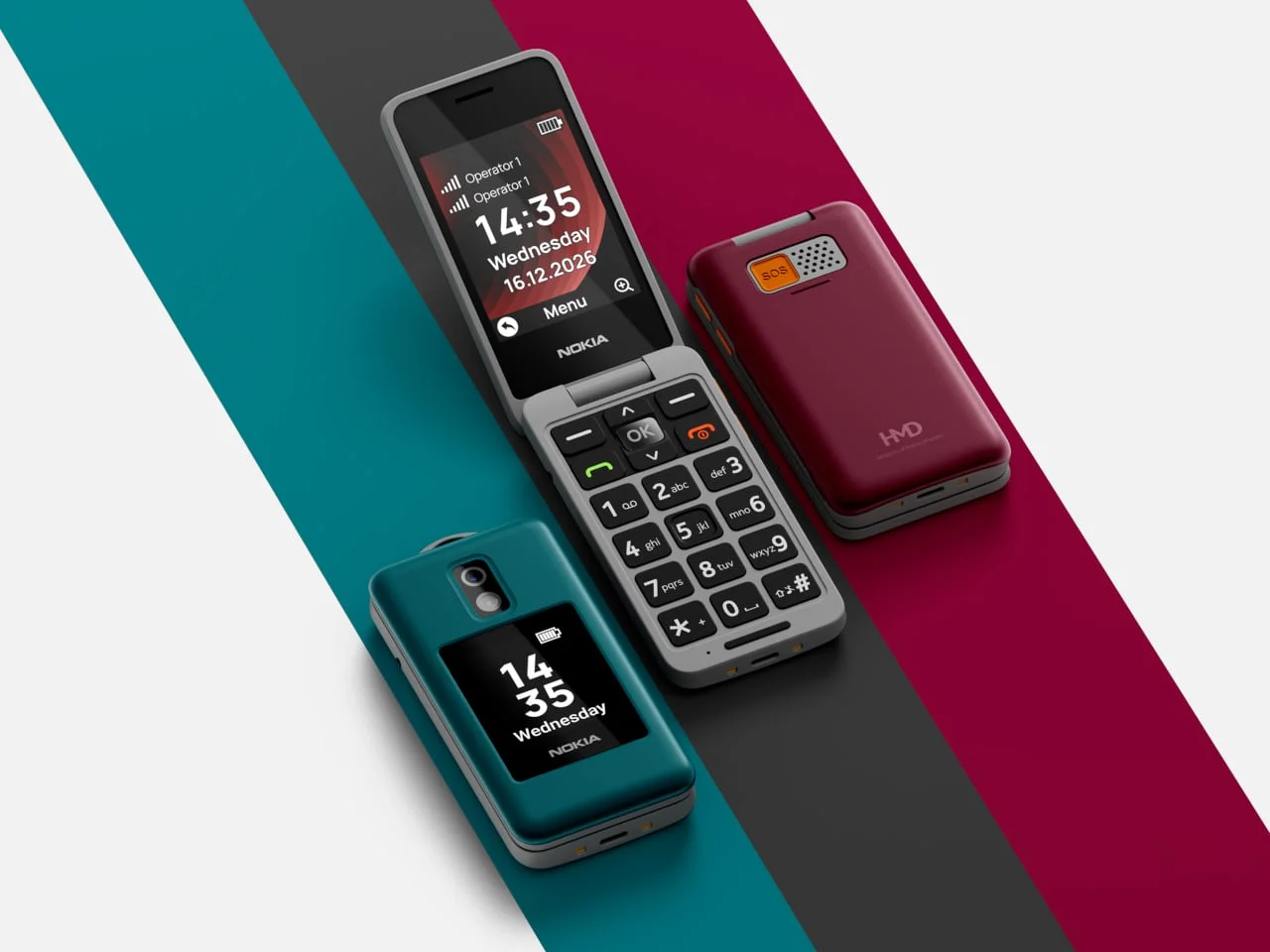
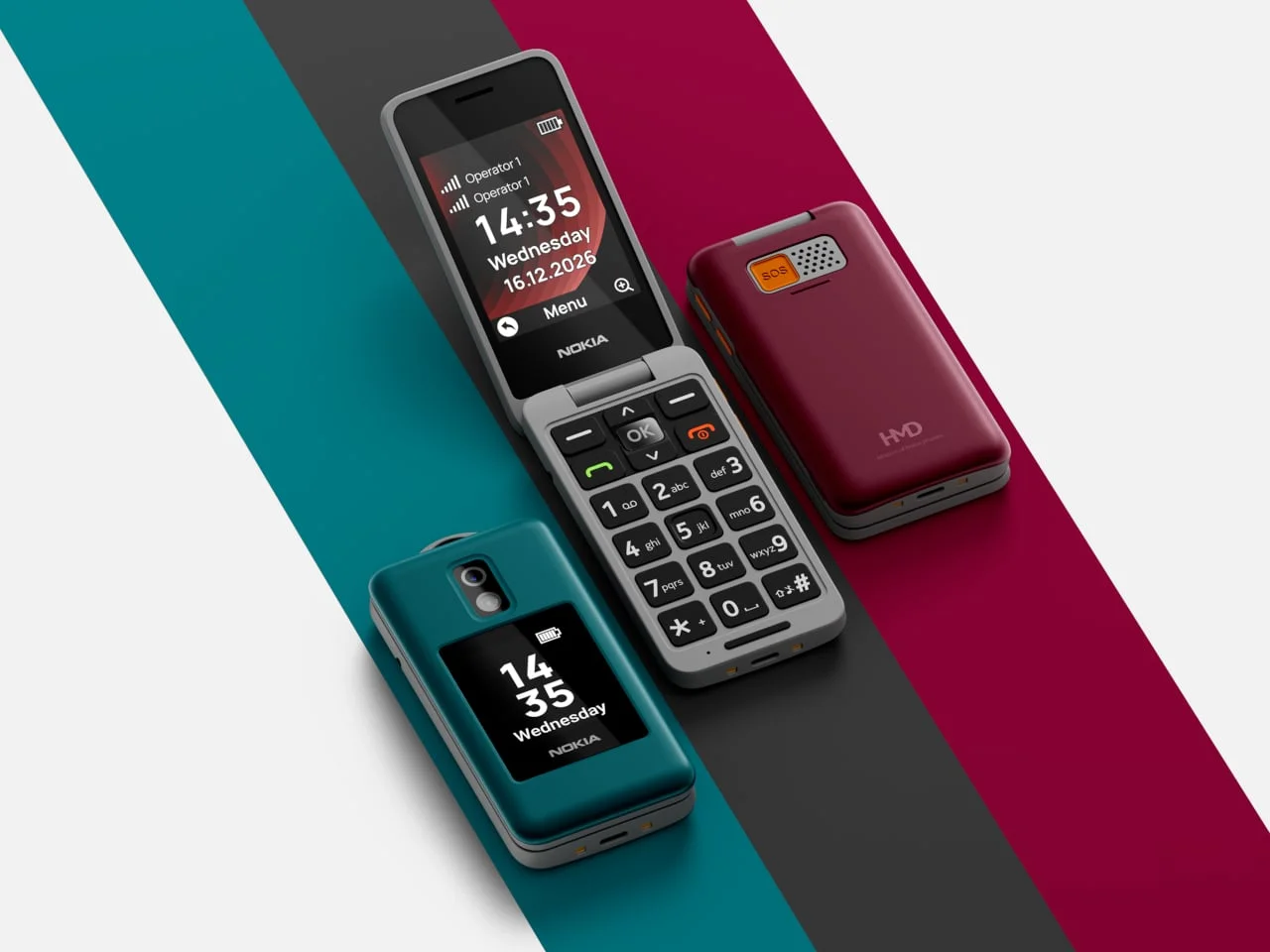
The Nokia 2360 Flip pairs family-friendly controls with a network limitation that could define its lifespan. HMD has designed the clamshell for people who want straightforward calls, remote help with setup, and fewer routes to distracting features. That’s a clear brief: make the phone manageable for a relative without turning it into another smartphone to maintain. But its 2G-only radio makes reliable service depend on networks that are already disappearing in some markets.
A simpler phone, managed from afar
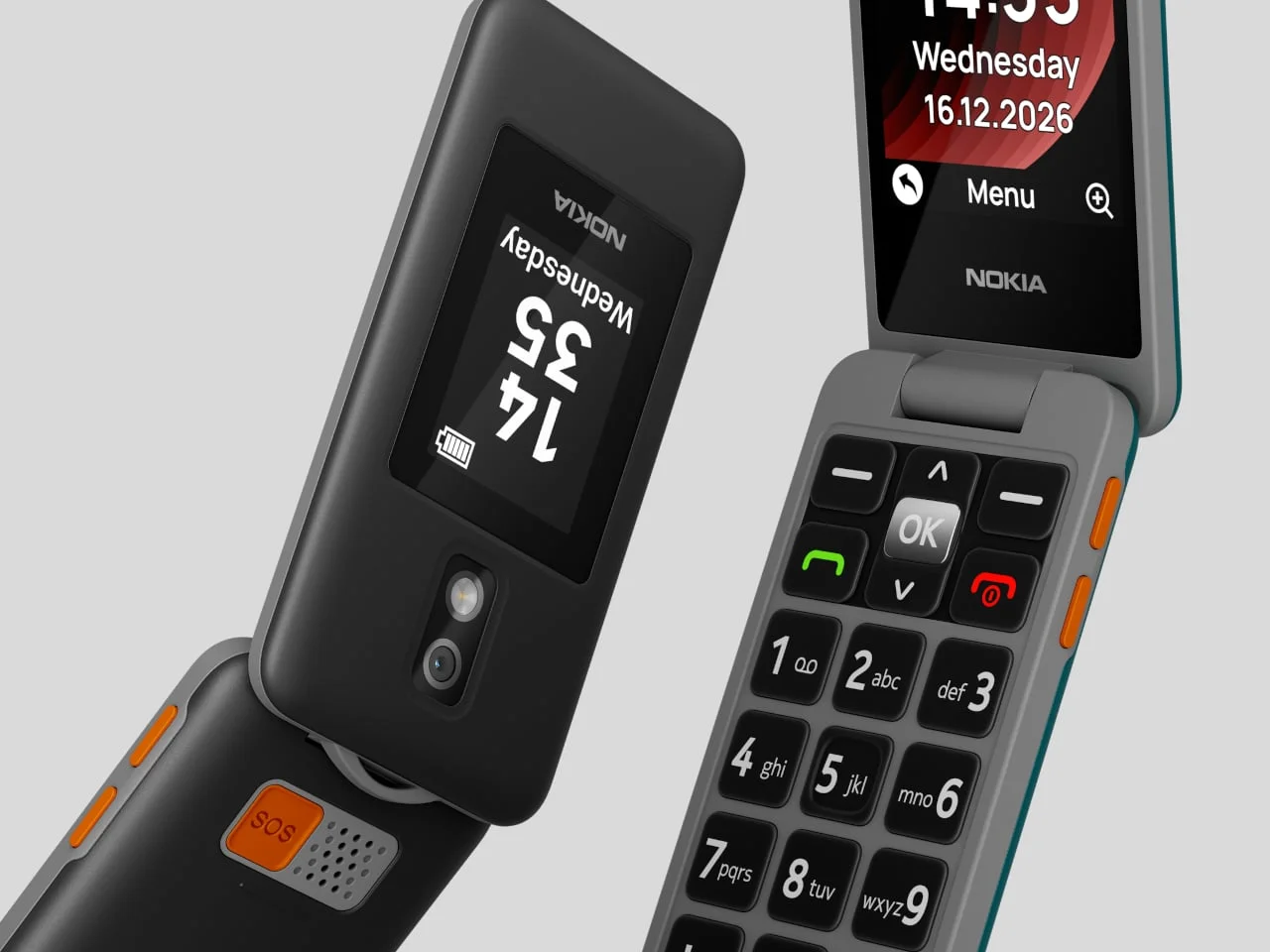
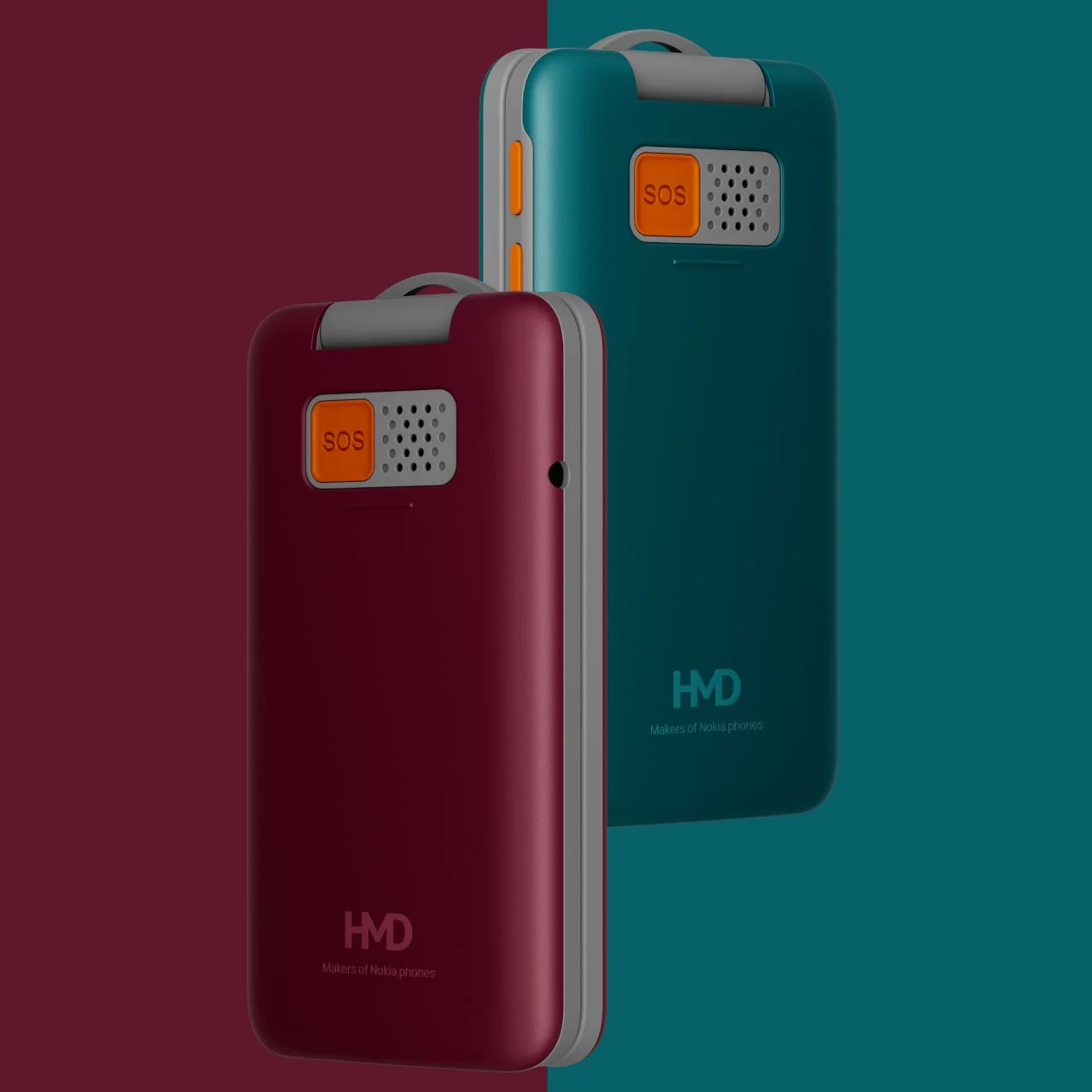
The hardware sticks to familiar cues: a 2.8-inch main screen, large labeled keys, and a 1.77-inch cover display that shows the caller. Opening the lid answers a call; closing it ends one. Charcoal, Burgundy Red, and Teal are the available finishes. The physical design is deliberately legible, with the outside display and labeled keypad making common actions visible without asking the owner to work through a dense menu.
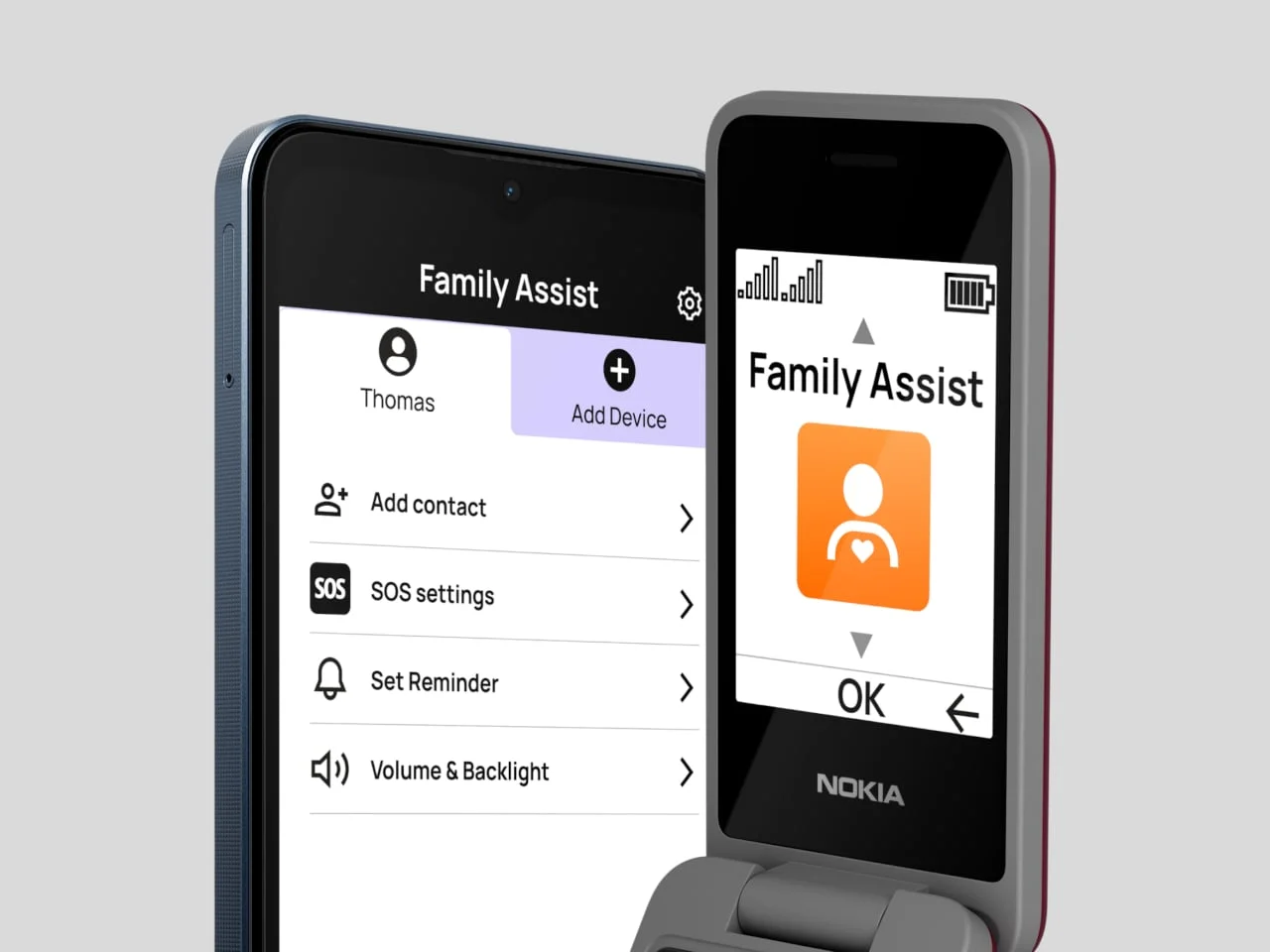
The more distinctive feature is Family Assist. A relative can use an Android phone or iPhone to add contacts, set reminders, change the volume, and configure SOS settings. The Nokia receives instructions by SMS, so remote setup doesn’t require a data plan or the owner to navigate menus for every change. That’s a practical concession to how support often works in families: the person who knows how to configure a phone may not be the person carrying it.
SMS-based control also keeps the setup path relatively simple. It gives the helper a way to make routine adjustments from a familiar device, while the phone itself stays focused on basic use. The tradeoff is that the process depends on the handset being able to receive messages over its network. A feature designed to make assistance easier inherits the same connectivity problem as calls.
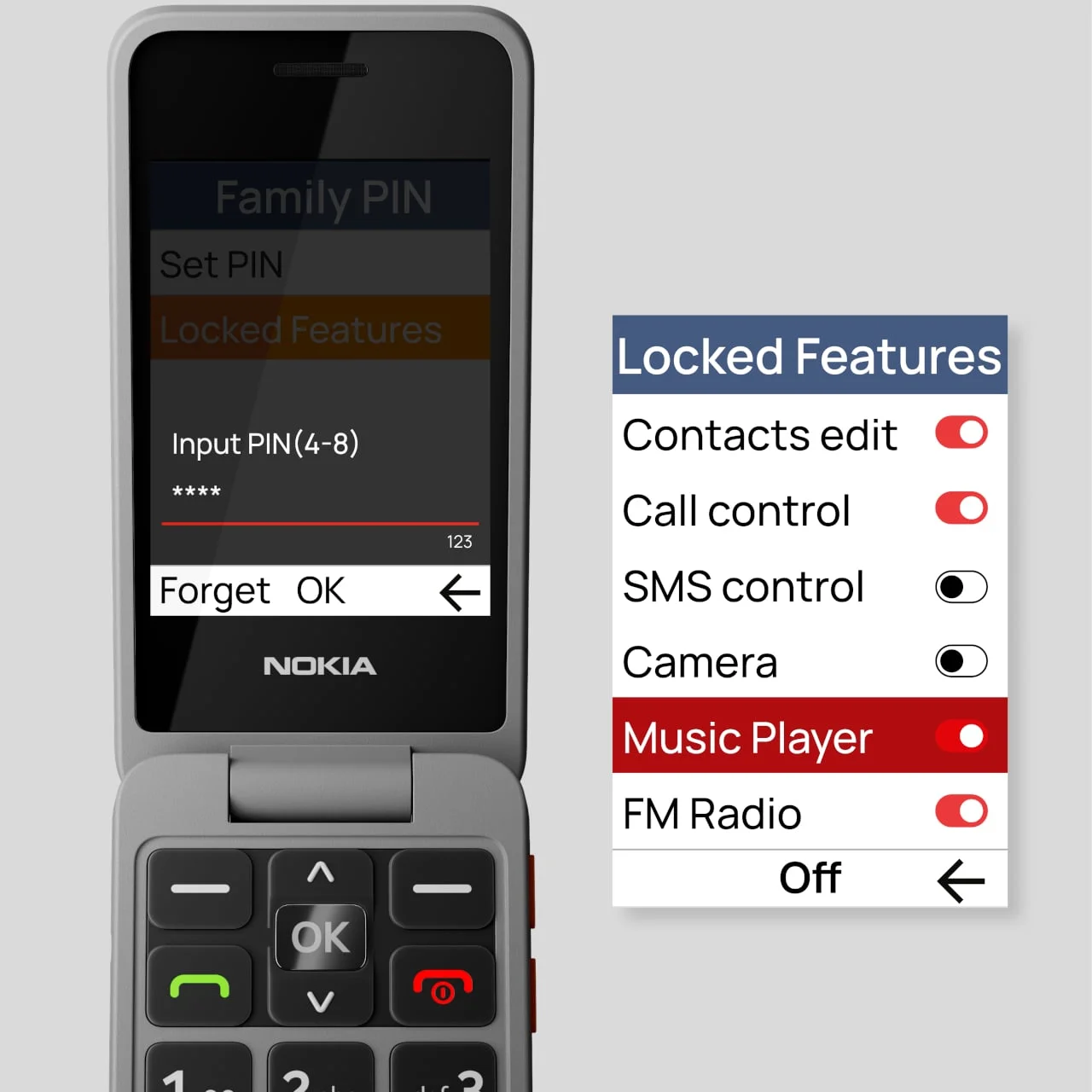
Parents can also set a Family PIN, limit calls and messages to approved contacts, and block features such as games or the camera. School Mode restricts the phone to its clock and emergency calling, with controls configured directly on the handset. Those options make the 2360 Flip more than a basic dialer: they let a family decide which functions remain available and when. Still, the controls address access and distraction; they don’t solve the more fundamental question of whether the phone can connect.
Useful shortcuts depend on a live network
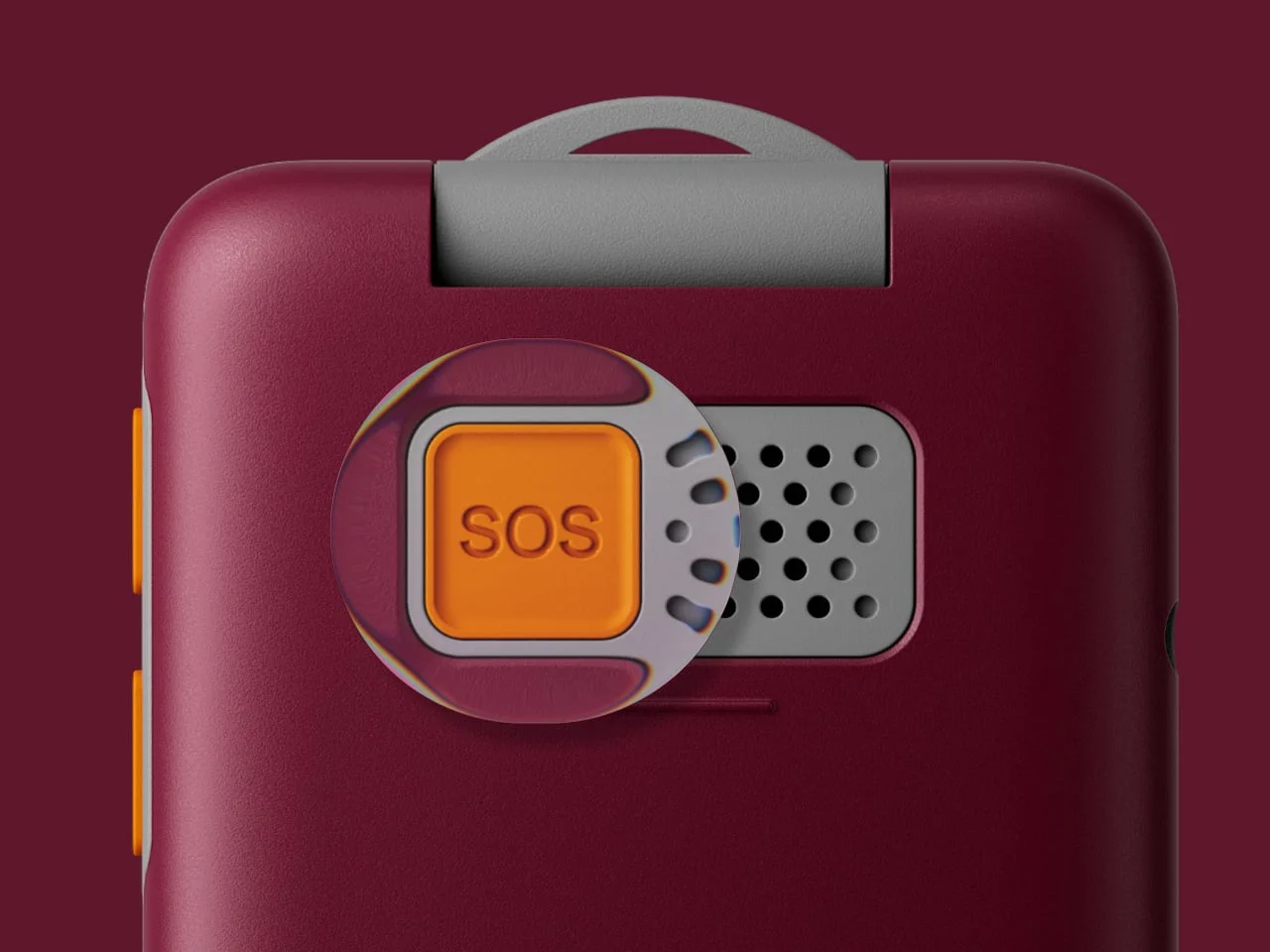
An orange button on the back triggers the SOS function when held for three seconds. HMD says it calls one preset number and texts up to five emergency contacts. That gives users a quick route to chosen contacts, but the feature still relies on cellular service. The button can reduce the steps needed to ask for help, which matters when a user has trouble navigating a screen. It can’t guarantee that a call or message will get through where compatible coverage is unavailable.
The phone has a removable 1,450mAh battery, USB-C charging, and a 3.5mm headphone jack. Those practical choices support a device meant to stay in use. A removable battery can make replacement easier than discarding the handset, while a standard headphone jack avoids requiring wireless accessories for private listening. These are useful details, though they don’t extend the phone’s usefulness on their own.
Its radio handles only 900MHz and 1,800MHz GSM; there’s no 3G or 4G fallback. A replaceable battery can extend the hardware’s life, but it can’t make an obsolete network available. Here’s the thing: the phone’s most important long-term component may be the service it depends on, and that component is controlled by carriers and local network availability, not by the owner.
2G availability is the deciding factor
For US buyers, the timing is especially difficult: T-Mobile retired its 2G network on August 3, 2026, leaving the country’s major carriers without 2G service. In the UK, EE plans to start shutting down 2G in May 2029. Those facts put the product’s appeal in sharp relief: its controls may suit a family’s needs, yet the available network can determine whether the core functions work at all. That’s a serious constraint for a device whose pitch depends on dependable contact.
Other markets may still offer coverage, but that doesn’t guarantee it will last for the phone’s useful life. Network shutdown plans can also vary by carrier, so general availability in a country isn’t enough to confirm service for a particular customer. If you’re working in this space, the relevant question is less whether 2G exists somewhere nearby and more whether the buyer’s carrier supports these bands and expects to keep the service running.
HMD’s international product listing doesn’t specify a price or retail availability. Families considering the 2360 Flip will need to confirm local 2G coverage, supported bands, and their carrier’s shutdown schedule. The numbers here are underwhelming in one respect: a carefully considered set of family controls sits on top of a radio with no newer-network fallback. And yet the remote setup and restrictions address real usability problems that conventional feature phones often leave to caregivers to manage in person.
What the network constraint means for the product
This is more significant than it looks. For a basic phone, network support isn’t an optional extra that can be worked around with another app; it underpins calls, messages, remote configuration, and SOS contact. The 2360 Flip’s design makes sense for households that want a limited, supervised handset, but its practical value depends on a local 2G connection remaining available.
That leaves buyers with a short checklist before purchase: verify the carrier, confirm the supported GSM bands, and check the stated shutdown schedule. A family may also want to consider how long it expects the device to serve its user, since a phone that works today can become less useful as coverage changes. The limitation is plain. No menu setting can fix it.
For HMD, the product illustrates a tension in simplified phones: fewer features can make a handset easier to manage, but they don’t remove the need for current infrastructure. The 2360 Flip’s remote controls and physical shortcuts are thoughtful, and the 2G dependency is the question that will decide whether those strengths matter to a particular buyer (and this is the part most people overlook). What this means for you is straightforward: treat network compatibility as the first buying check, then judge whether the family features fit the user’s needs.
The post Nokia’s 2360 Flip Phone Offers Remote Setup but Sticks With 2G first appeared on Yanko Design.
Discussion
Sign in to join the discussion.