FOLDBOOK pairs a reusable steel holder with removable pages, giving artists a compact sketchbook they can rearrange and refill with different papers.
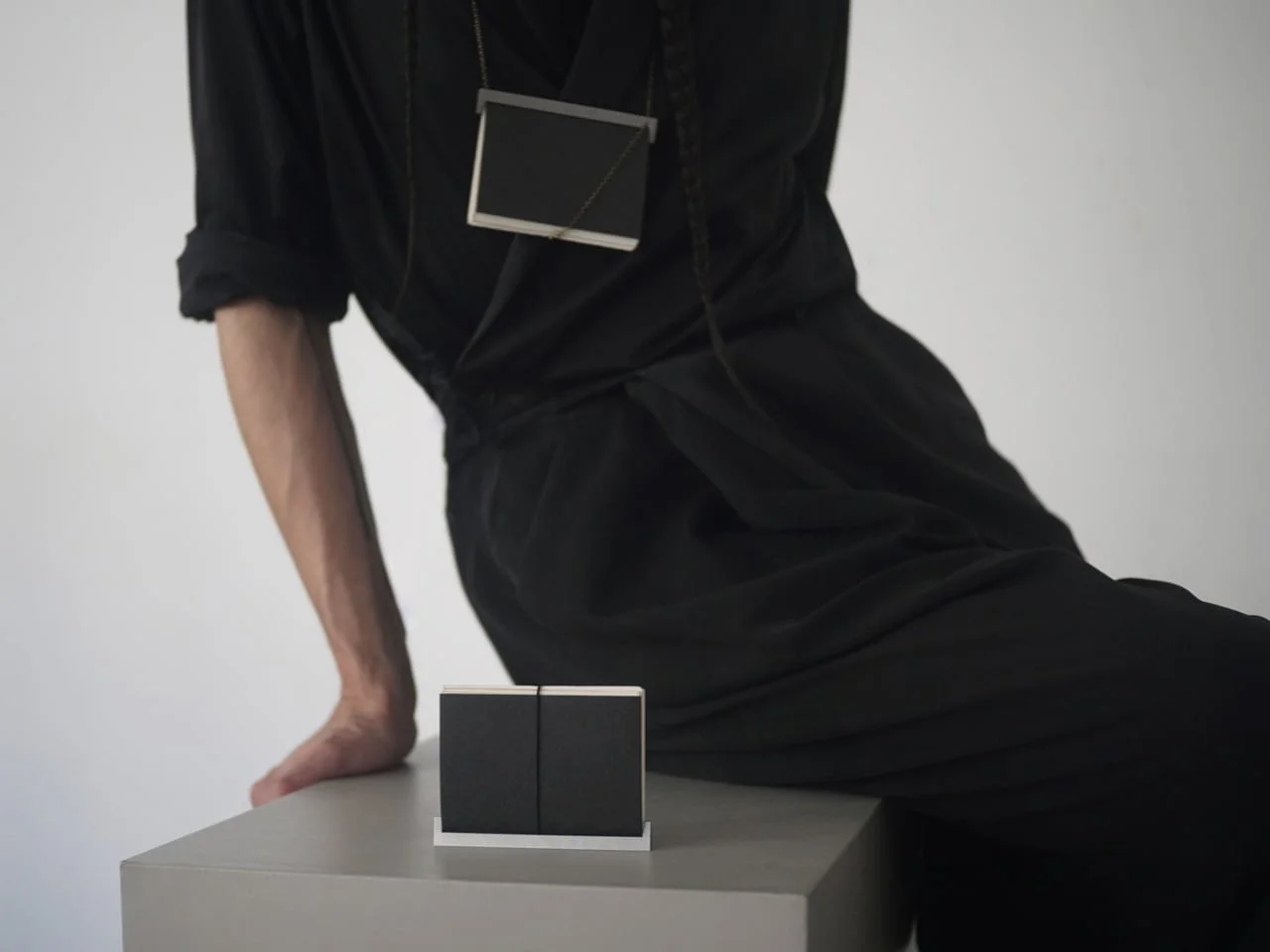
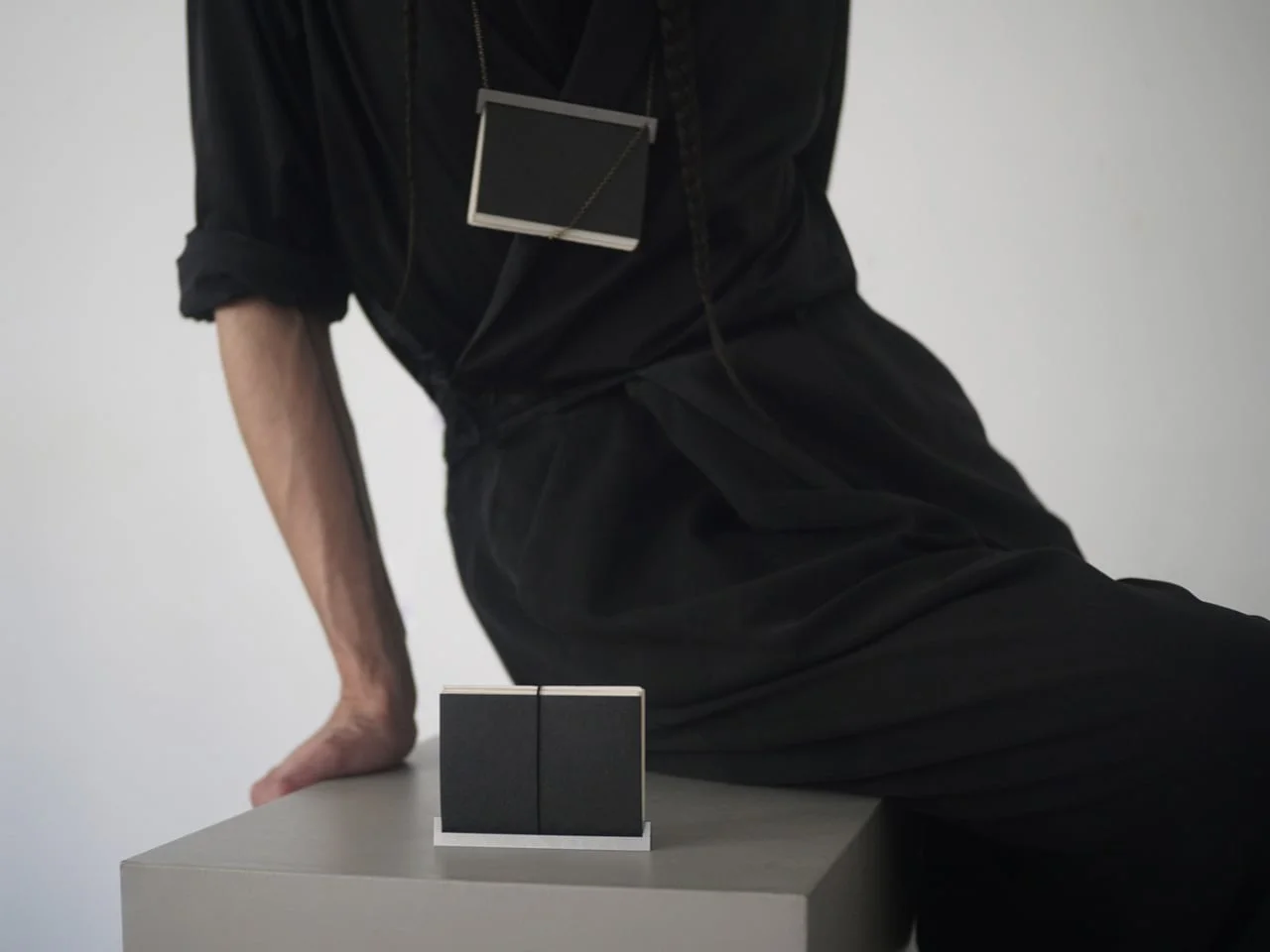
FOLDBOOK’s most useful feature is its editable page order. Erlands has designed a compact sketchbook around a reusable stainless-steel holder, letting artists remove, replace, and rearrange sheets as a project changes. The optional chain gives it the look of a wearable accessory, but the real proposition is a notebook that doesn’t lock its owner into one paper choice or sequence. That difference matters most when a project moves between rough ideas, references, and more finished work: the pages can follow the work instead of preserving the order in which they were first added.
Erlands says the concept dates to 2016, after work across different creative disciplines exposed the limits of conventional sketchbooks. The product is now available for preorder. Its design sits between a bound notebook and loose sheets: pages stay together for carrying, yet can be taken out without tearing or unpunching them. That middle ground is a practical design choice, since loose sheets are easy to reorganize but also easy to scatter, while bound pages are dependable but fixed in place.
Designer: Erlands
A holder designed for changing pages
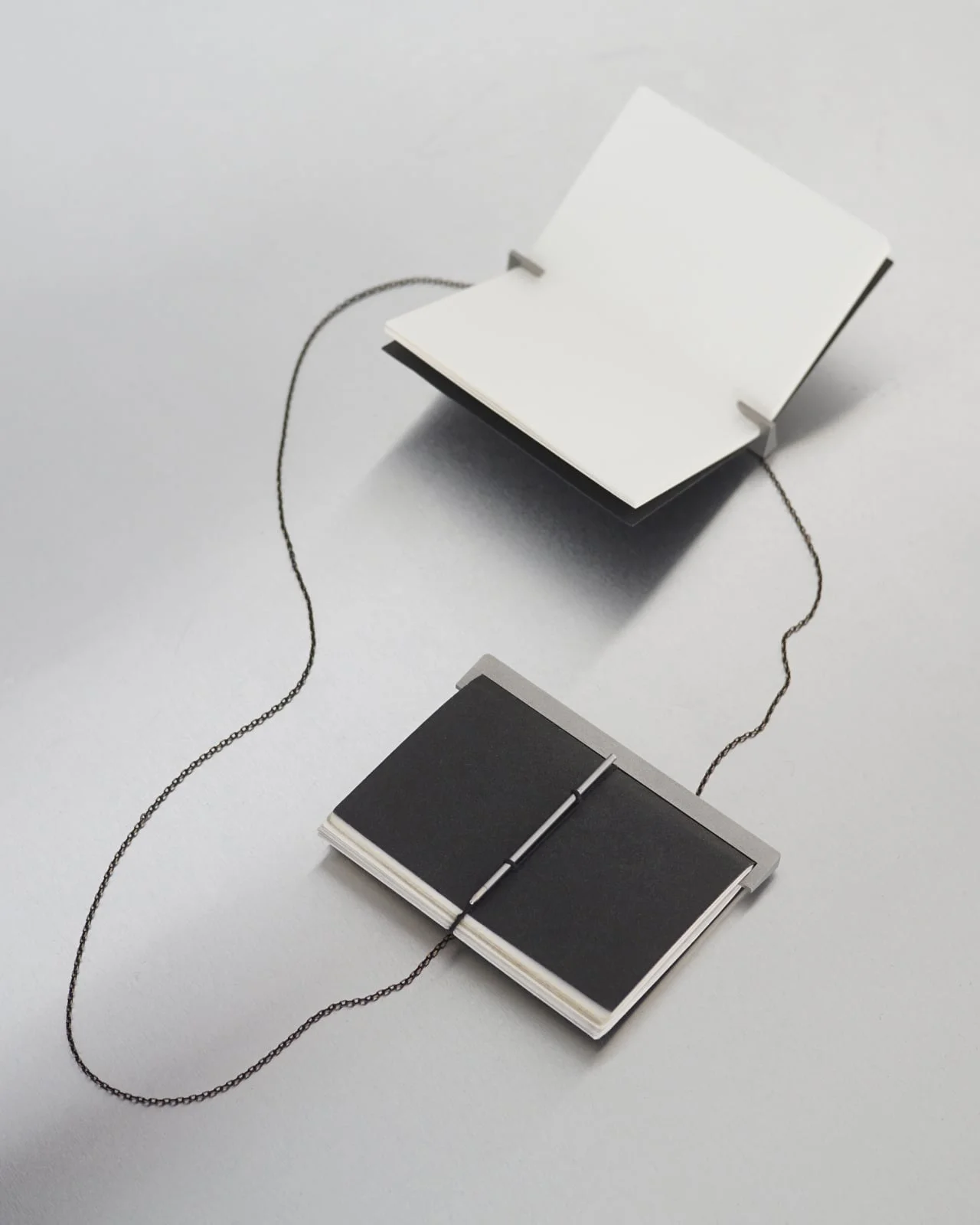
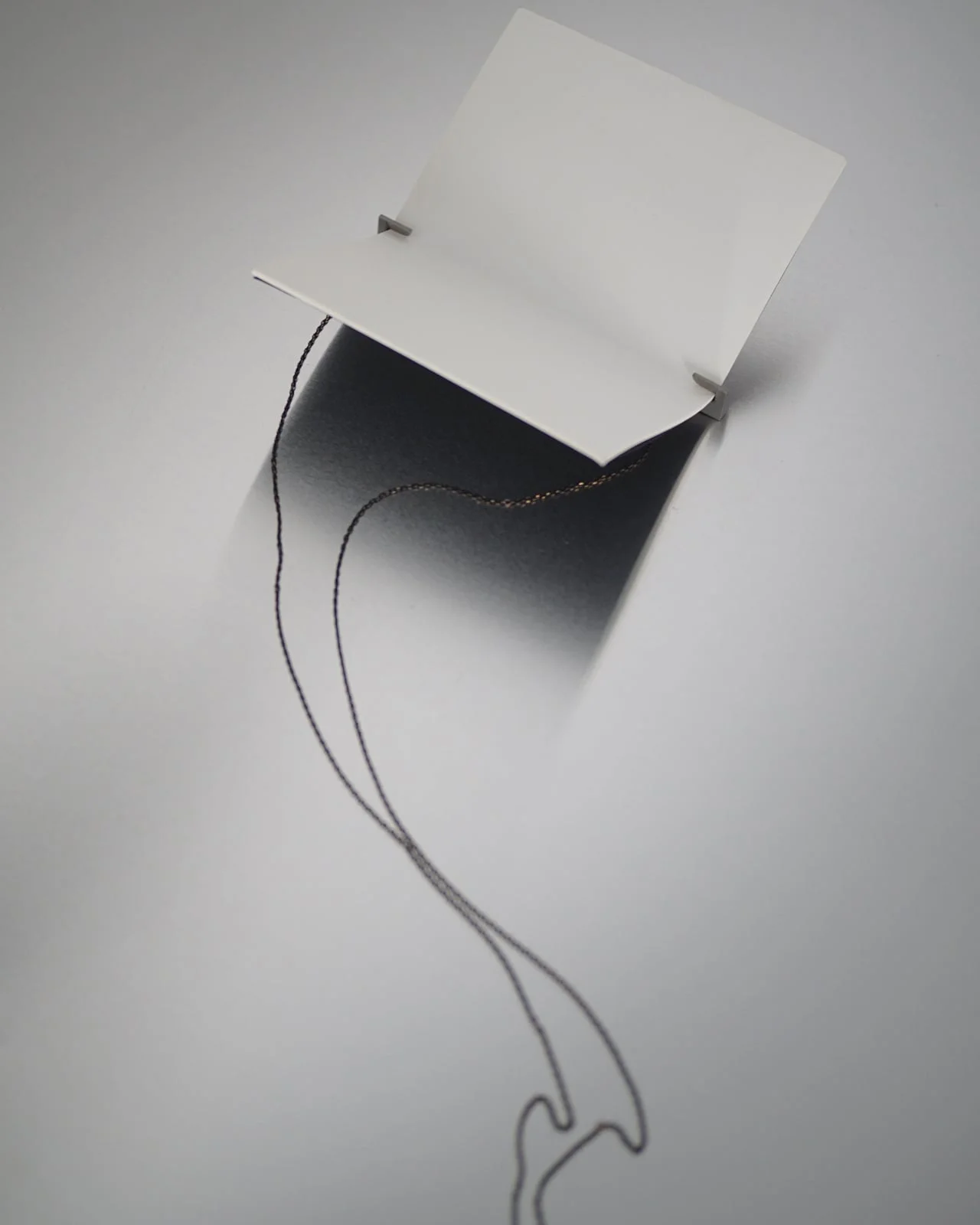
The holder is made from a single piece of stainless steel, with no hinges or springs. To load it, you gently bend the paper and slide it into place; the holder’s shape keeps the sheets together. Rounded, polished contact teeth are intended to prevent damage during insertion. There are no holes to punch and no binding to undo when a page needs to come out. The mechanism keeps the idea easy to understand: the holder supplies the structure, while the owner decides what belongs inside and in what order.
That simple mechanism changes how a sketchbook can serve a project. A drawing can be removed, compared with another, then returned in a new position. Related notes can be grouped together, rather than left separated by unrelated sketches or lists. FOLDBOOK lets the owner decide the sequence as the work develops, instead of requiring that decision up front. For artists who revisit earlier ideas, that can make the notebook a working tool rather than a record that only grows in one direction.
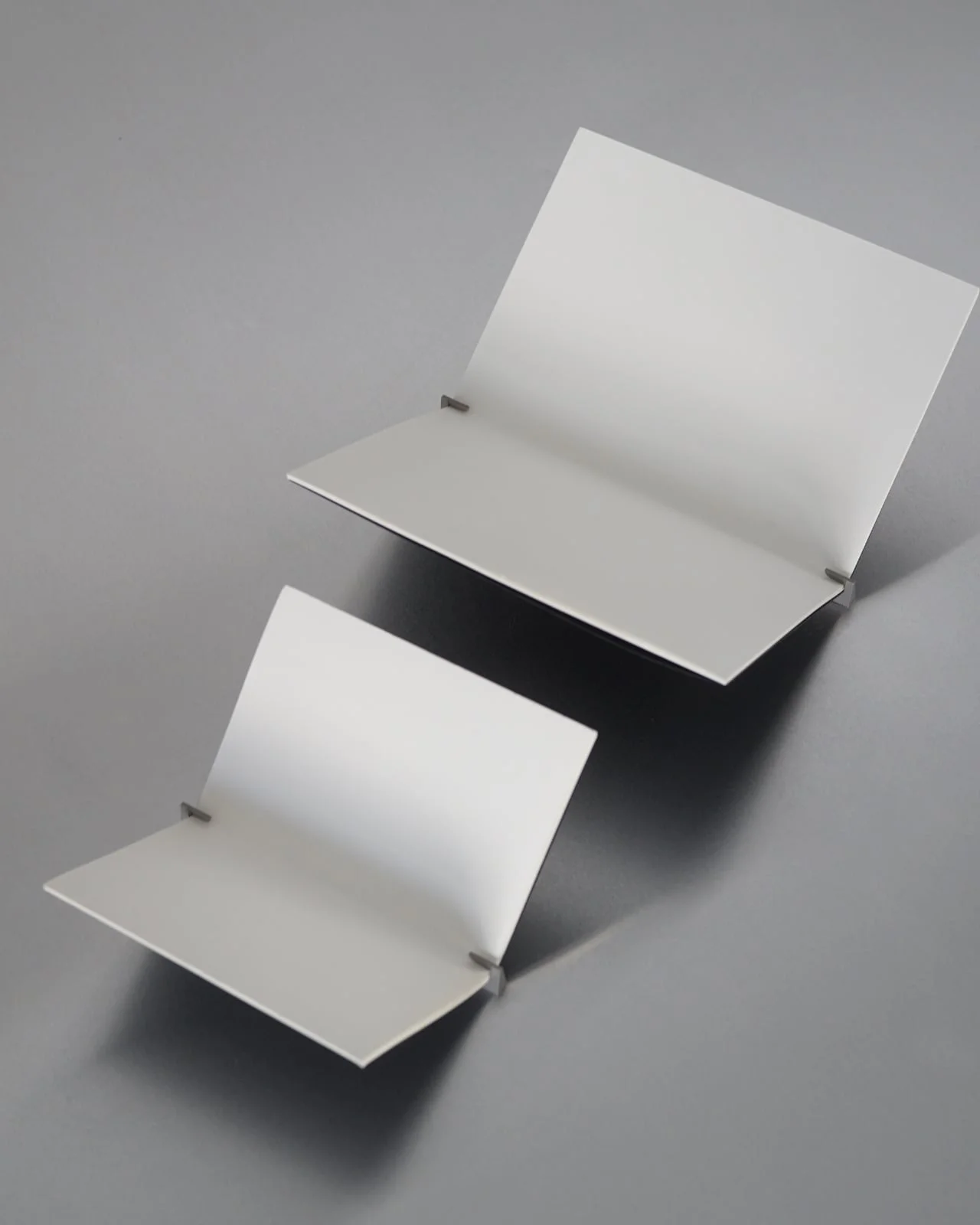
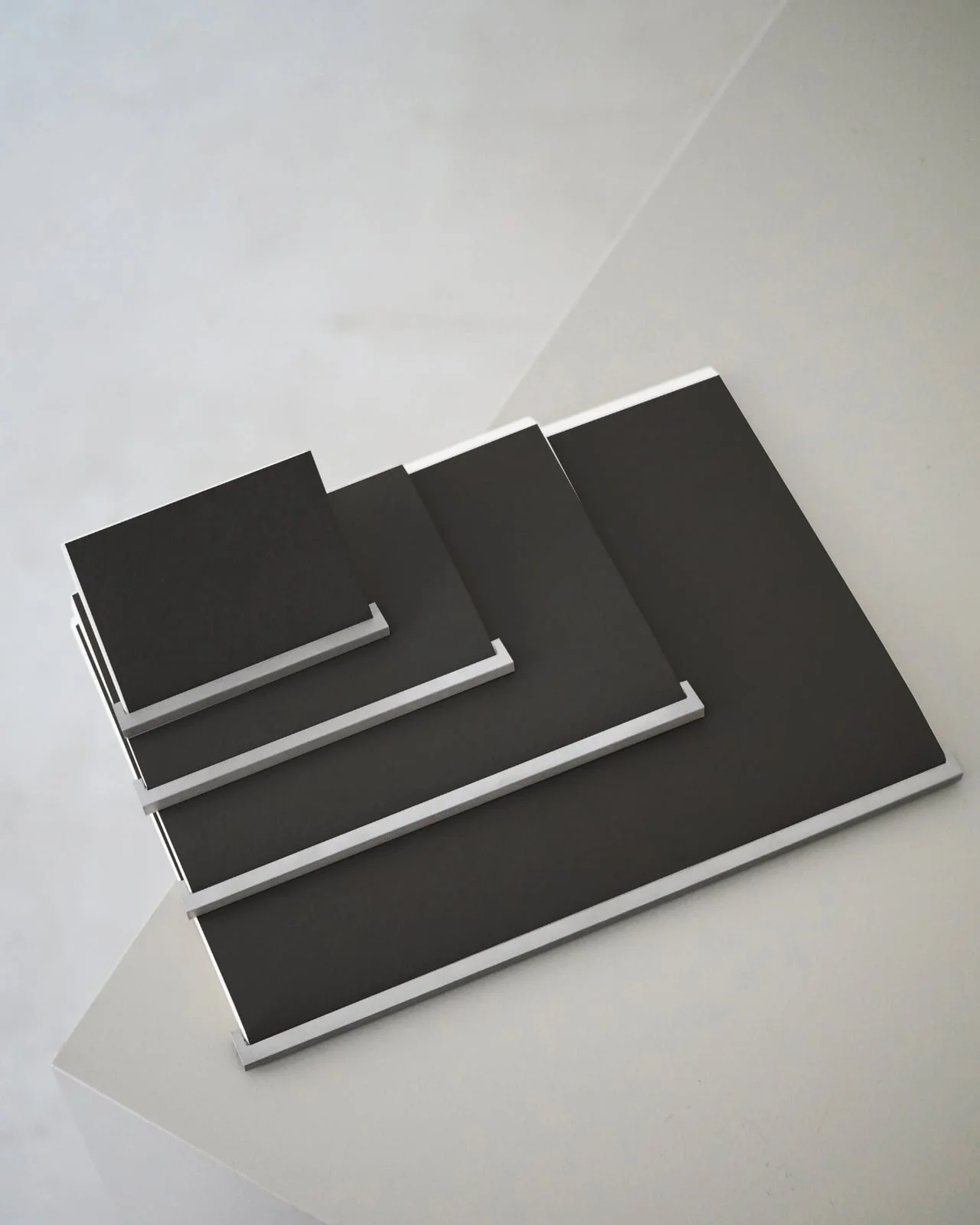
Paper choice remains flexible, too. The system covers A6 through A3 and doesn’t depend on proprietary refills. Other papers can be adapted by folding or cutting them to size, so owners aren’t tied to a particular manufacturer, texture, or ruling. The trade-off is practical: a sheet may need preparation before it fits. That flexibility gives artists room to choose paper for a task, but it also means the convenience depends on the sheet being cut and handled carefully enough to work with the holder.
Designed to be carried, with limits
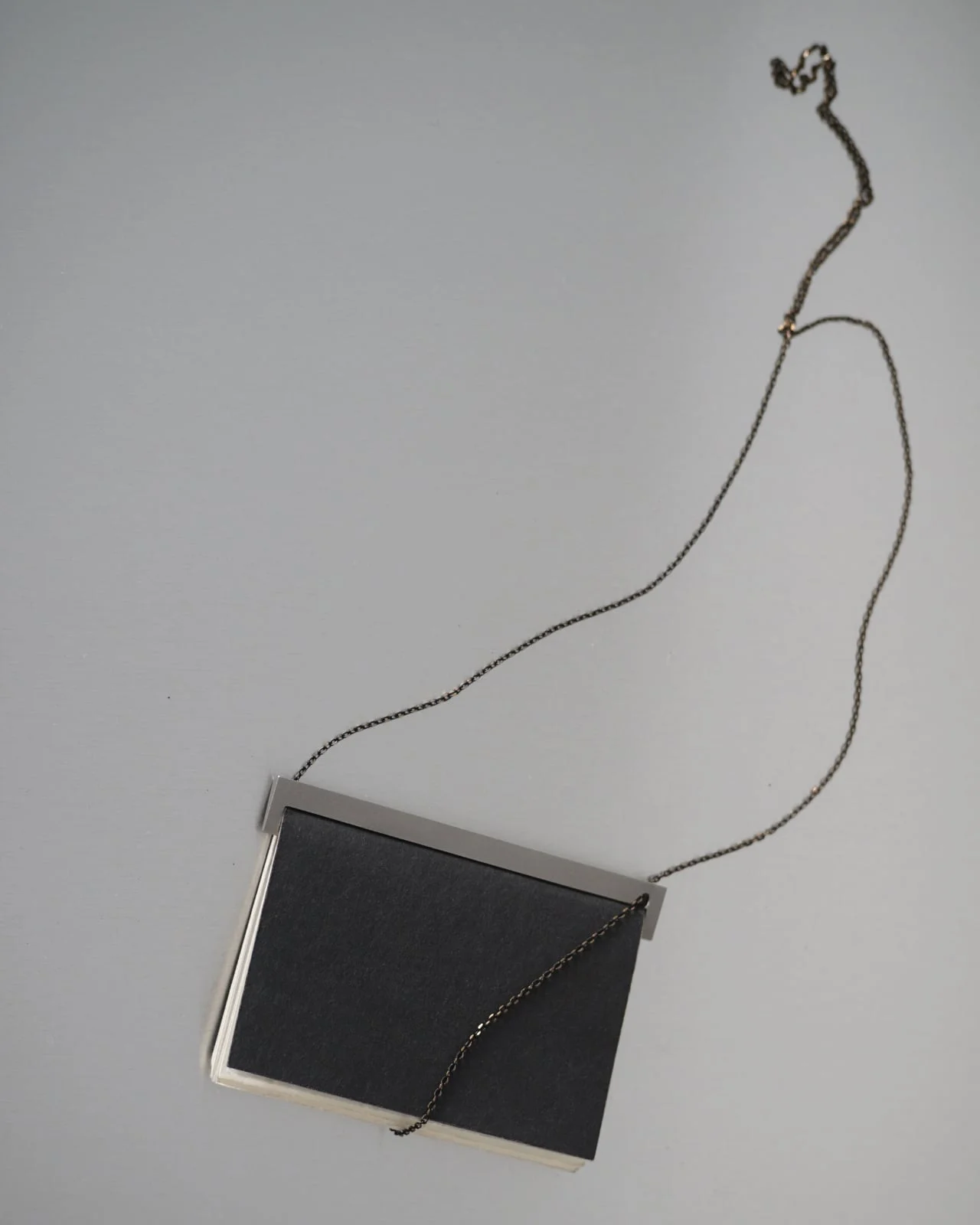
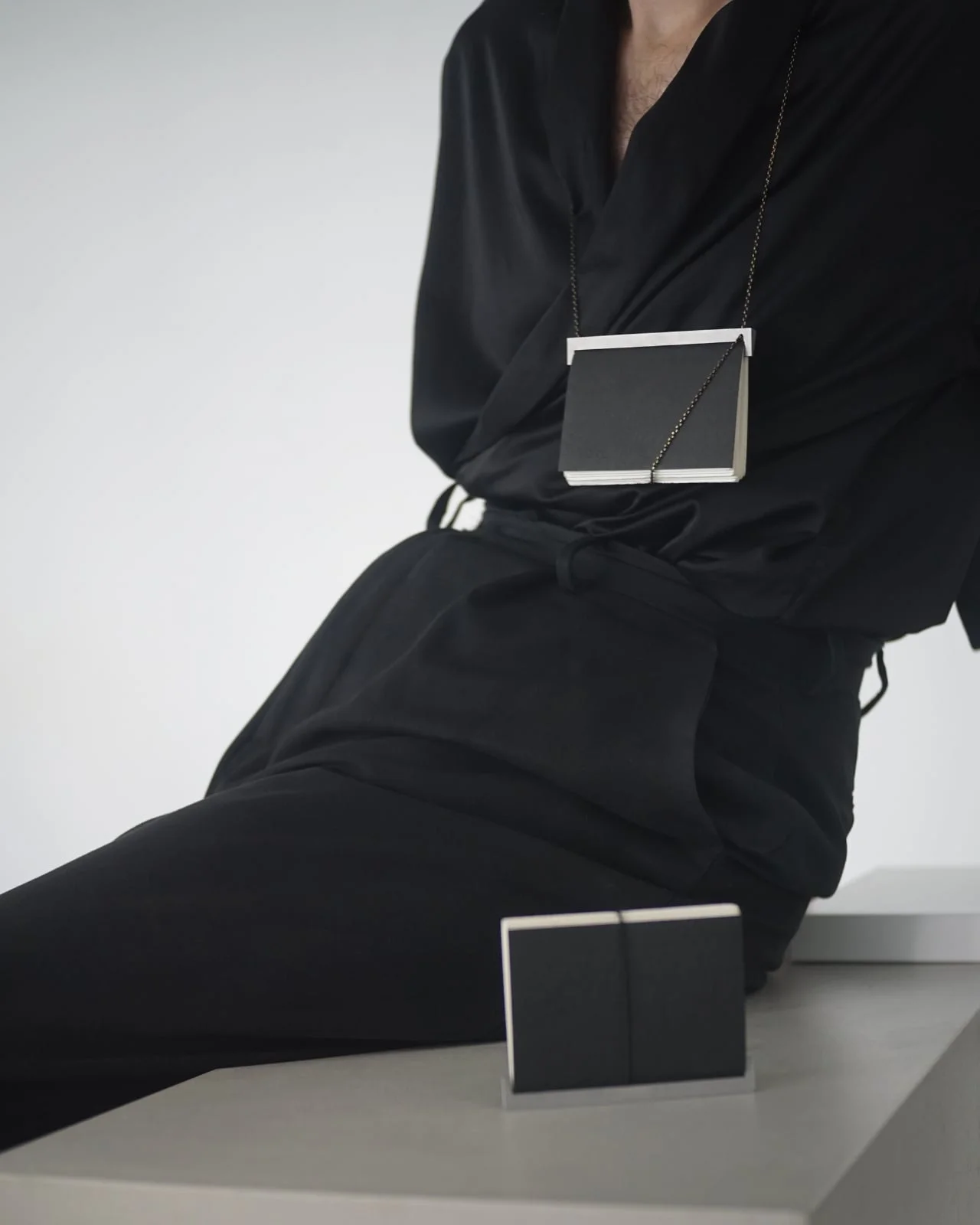
In the photographs, black covers and pale page edges keep the object close to familiar stationery. A slim silver-colored bar frames it without making it look like a small case. The A6 version is listed with recycled French paper covers and uncoated Swedish paper inside; folded, it measures roughly six by four inches. That compact format suggests a notebook intended to travel with its owner and hold a working set of pages, rather than replace a larger studio sketchbook.
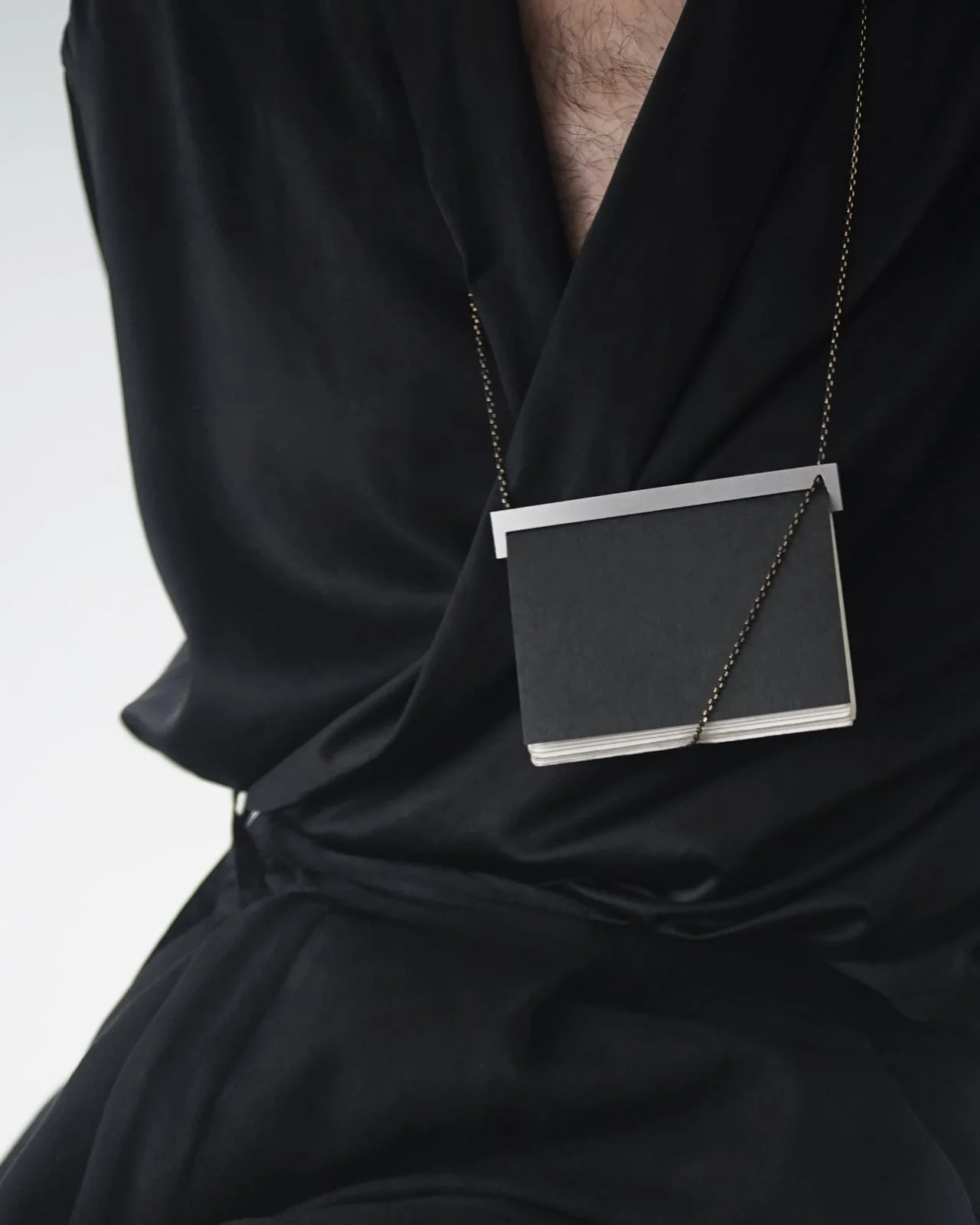
The chain adds a fashion detail. Worn against black clothing in the product images, the sketchbook resembles an oversized pendant. That presentation won’t suit every artist, but it puts a working notebook within easy reach instead of inside a bag. Erlands describes the chain as optional, and the pages don’t rely on it to stay in place. Here’s the thing: the styling may attract attention, but the real test is whether carrying the object this way makes someone more likely to use it.
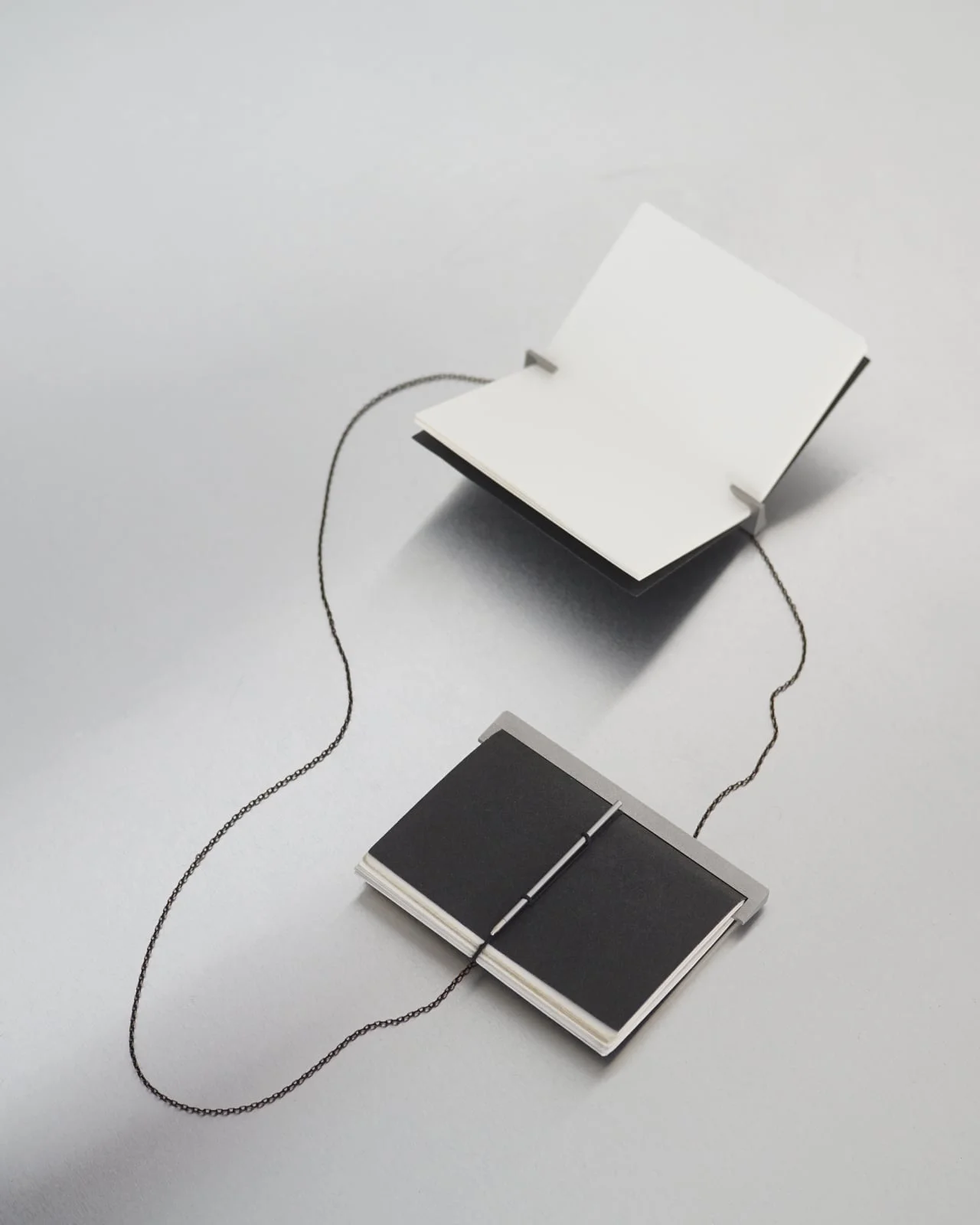
Capacity is the clearer constraint. Erlands estimates room for about 10 to 15 sheets, covers included, depending on paper thickness. That makes it better suited to a current selection of sketches, references, and reminders than a large archive. Keeping it useful will mean sorting and removing pages regularly. That limit is also tied to the product’s central idea: a small, changeable collection can stay relevant, but anyone who wants to keep every drawing together will need another place to store the work. A focused set of pages, then.
A design object with a specific audience
The A6 package, including a chain and a three-set refill, is listed at €155. Erlands accepts preorders and says preparation before shipping can take up to a month. Orders outside Europe may incur duties or import fees. At that price, the case for FOLDBOOK rests on its reusable hardware, appearance, and fit with an artist’s working habits, as well as its ability to hold notes. A buyer is paying for a particular way to carry and arrange pages, so the value will depend on whether that routine is useful enough to justify the cost.
My read is that the chain makes FOLDBOOK memorable, while the removable pages make it useful. The holder stays constant as the contents shift, giving artists room to revise not only their work but the way they organize it. That flexibility is the product’s clearest reason to exist. And yet, the small capacity and need to prepare some papers make it a considered tool for a specific practice, not an obvious replacement for every sketchbook.
What the format could change
FOLDBOOK’s broader appeal will depend on whether artists value rearrangement enough to change how they carry paper. Similar systems typically ask users to trade some simplicity for control: a conventional notebook is ready to open and write in, while a modular one rewards the owner who wants to edit its contents. If you’re working in this space, the useful question is whether you regularly move pages between projects, or whether a fixed sequence already suits your process.
This is more significant than it looks. The design treats a sketchbook as an active collection rather than a finished book, which gives the artist a say in how ideas sit beside each other as a project develops. That doesn’t guarantee a better creative process, and the limited capacity may make ongoing curation part of ownership. Still, Erlands has tied a clear function to a distinctive object: the stainless-steel holder stays, while the work inside can change.
The post FOLDBOOK Is a Wearable Sketchbook Without Permanent Binding first appeared on Yanko Design.


Discussion
Sign in to join the discussion.