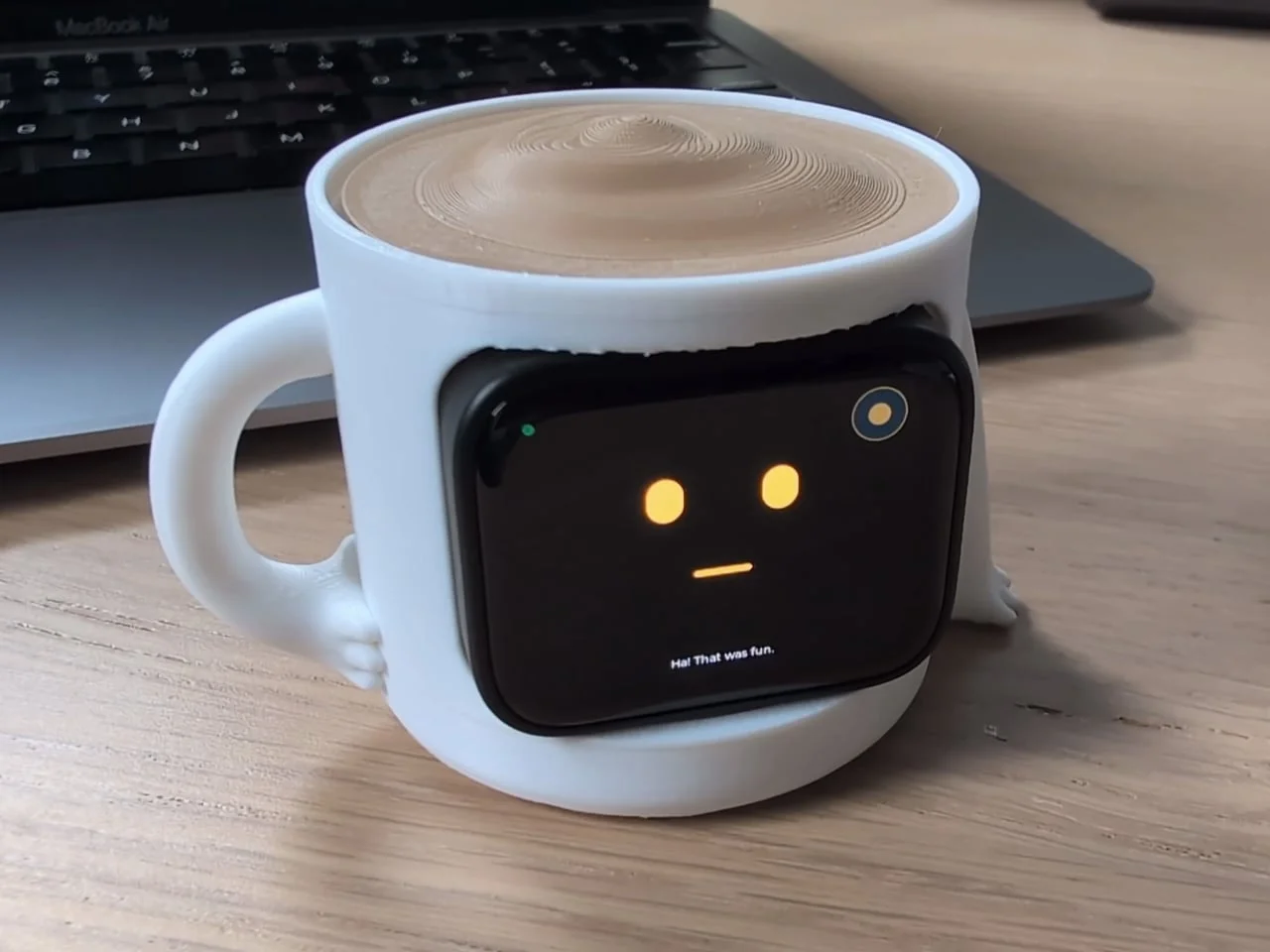
Meet PolyMO, a virtual pet designed to combat doomscrolling by making your screen habits personal and actionable.
The Dilemma of Smartphone Overuse
The modern dilemma of smartphone overuse is all too familiar: you start with one quick notification check and suddenly you’re lost in a rabbit hole of content, completely unaware of the time passing. This isn’t merely a lack of willpower; it’s a battle against apps meticulously crafted to keep you hooked. The underlying mechanisms at play leverage psychological triggers, designed to catch our attention and prolong our engagement. As devices grow increasingly sophisticated in their persuasive tactics, users are left grappling with the consequences. Thus, the challenge lies in finding a solution that personalizes the downside of excessive scrolling beyond mere statistics. Enter PolyMO.
PolyMO: A New Approach to Awareness
Created by YouTuber brenpoly, PolyMO offers a tangible way to register the consequences of doomscrolling. This device resembles a nostalgic Tamagotchi but with a unique twist: it thrives on attention and care. Neglect it and it visibly suffers, even to the point of "dying." This emotional trigger works well, especially for those who grew up with digital pets, as it taps into a deep-seated guilt for letting a virtual companion down. By fostering a sense of responsibility towards the device, PolyMO encourages users to reflect on their smartphone habits. It's not just a tool; it’s a reminder of how we engage with technology, pushing us to consider our interactions more critically.
Engineering and Functionality of PolyMO
Beyond its emotional angle, the engineering aspect of PolyMO deserves recognition. It operates via an inexpensive ESP32 board housed in a friendly 3D-printed case, while a connected Android phone manages more intensive tasks. This "split-brain" setup allows for local processing of voice recognition and text-to-speech, ensuring that the functionality doesn’t require constant internet connectivity or server dependency. By avoiding a reliance on external servers, PolyMO promotes user privacy—a refreshing shift, given the rampant data harvesting in today’s app ecosystem. Everything from its responses to any emotional fluctuations occurs directly on your hardware—no data harvesting by external companies.
This attribute significantly reshapes the relationship users have with their data. Rather than surrendering personal information for convenience, PolyMO empowers individuals to own their experience unequivocally. It's a one-time investment of about fifty dollars in parts, with no strings attached or ongoing subscriptions. This presents a stark contrast to the often exploitative subscription models prevalent in popular apps, ensuring that users aren’t simply commodified.
User Interaction and Design Choices
The charm of PolyMO extends to its personality. Customizable moods, quiet hours to avoid disturbances during late-night use, and even a dark mode enhance user interaction. Each feature appears thoughtfully designed to facilitate a playful relationship between the user and the device. It strikes a harmonious balance: it’s endearing without being overly preachy. This nuanced approach helps it act more like a playful companion rather than just an annoying reminder. People often overlook the significance of user design in technology; a device that’s approachable and relatable may just bridge the gap between awareness and action.
The Reality Check: Limitations of PolyMO
Yet, let's be realistic—no single virtual pet will overhaul someone’s relationship with their smartphone completely. Brenpoly himself acknowledges that PolyMO emerges from a broader context around social media and technology addiction. It's a conversation that’s gained traction, particularly with recent scrutiny of the decisions made by tech giants. It’s clear that while PolyMO can provide some level of insight and encouragement to rethink one’s scrolling habits, it isn’t a panacea. If you're working in this space, you'll know that change often requires a concerted effort, not a single intervention.
Encouraging Mindful Tech Use
While PolyMO doesn’t propose to be a cure-all for smartphone addiction, it introduces friction at a critical moment. That friction might just be exactly what someone needs to rethink their scrolling habits. Just the act of checking on your digital pet can create a moment of pause, urging individuals to reconsider their tech consumption. This small but significant adjustment can lead to better digital habits over time, contributing to a healthier engagement with technology.
The Open-Source Advantage
What stands out most is PolyMO's open-source nature. Brenpoly has made the project’s files, code, and assembly instructions available on GitHub, inviting anyone with basic electronic skills to create their version or even improve upon it. This open model diverges sharply from the enclosed ecosystems many popular apps create, where the intent is to keep users entrapped. Instead, PolyMO offers autonomy, providing users with their agency while encouraging mindful technology use. By fostering a community-driven approach, this project not only democratizes access to this form of tech but also invites collaboration and improvement—something you won’t often see with mainstream apps.
Future Outlook: A Balanced Digital Life
Ultimately, the simplicity and imperfection of something smaller than a hand can lend insight to our more complex digital behaviors. The truth is, technology often demands our attention in ways that can be damaging. In resisting the urge to dive deeper into the algorithms designed to captivate us, perhaps we can find a more balanced approach to our digital lives. This isn’t about replacing technology; it’s about integrating it more thoughtfully. The path to healthier tech habits may not be easy, but initiatives like PolyMO are planting essential seeds. What this means for you is that there are paths forward that encourage a more mindful relationship with your devices, one reminder at a time.



Discussion
Sign in to join the discussion.