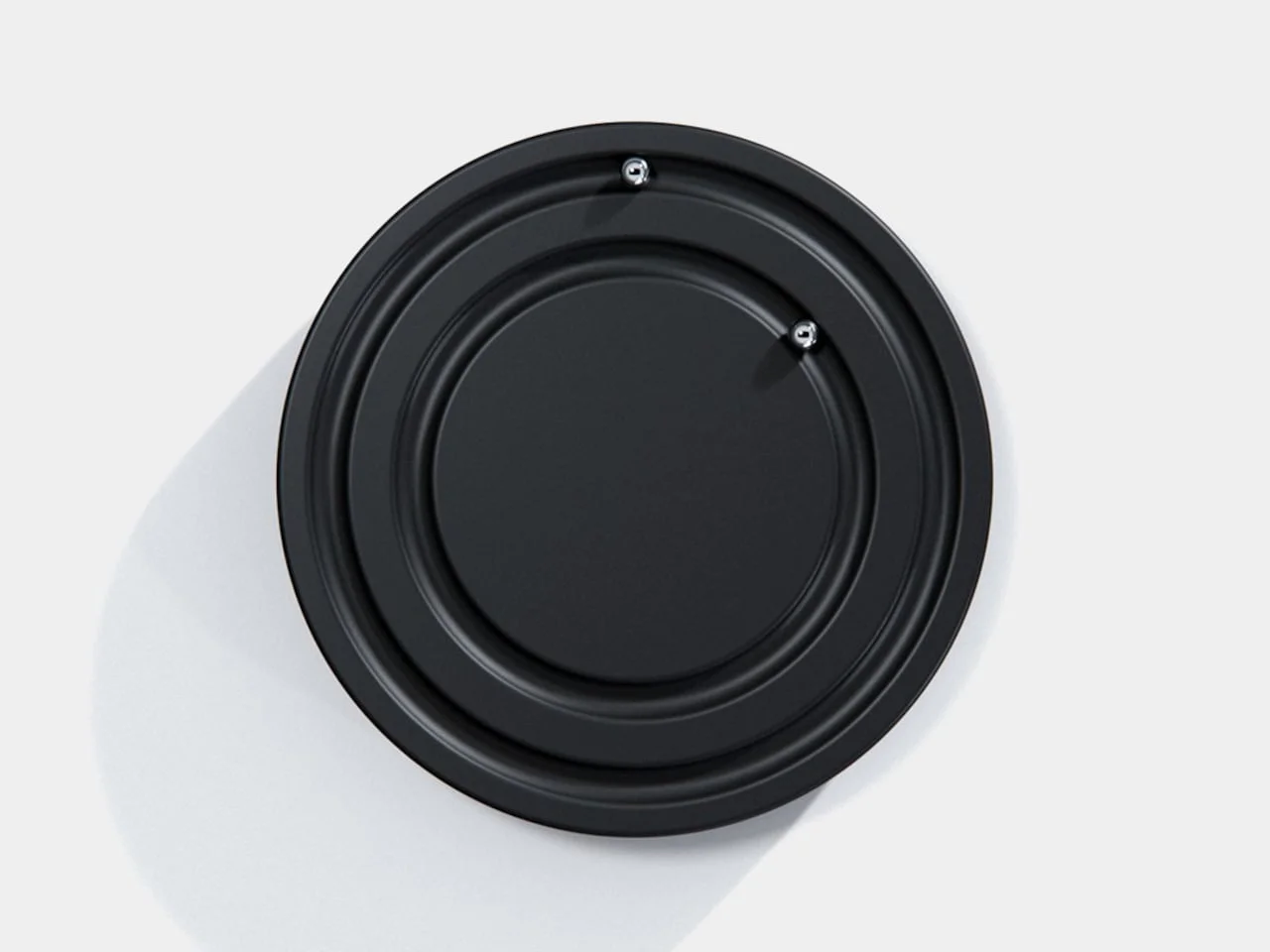
The Orbit clock concept introduces a unique approach to timekeeping using detachable magnetic spheres instead of traditional hands, blending art and function.
The Evolution of Clocks: More Than Just Timekeepers
Timepieces have become ubiquitous in our lives. From wristwatches to wall clocks, we rely on them not just for their primary purpose of keeping time but also as decor and symbols of our personal style. While traditional designs have dominated the market, there's a growing interest in reimagining how we engage with these everyday objects. This trend reflects a broader shift towards experiential design, where products are crafted not only for function but also for emotional connection. The Orbit clock concept, with its tactile components, epitomizes this shift by encouraging users to interact with time rather than merely observe it.
Design and Aesthetic: The Orbit Experience
The Orbit clock presents a minimalist design that challenges conventional clock structures. By eliminating traditional clock hands and numerals, the designer Liam de la Bedoyere invites users to engage visually with time. Instead of succumbing to the usual clutter of numbers, the sleek dark disk and polished spheres create an almost serene ambiance. This stripped-down look not only modernizes the clock but also places emphasis on the act of clock-watching as a leisurely experience rather than a task.
In many spaces, hang-ups about time can often create stress. In contrast, the design allows for a more relaxed approach while still serving its fundamental purpose. However, while the embodiment of aesthetics is commendable, achieving precision with this clock may become a challenge. If you're working in this space, you might appreciate how the absence of explicit markings could hinder time-sensitive tasks. For instance, at a glance, it might be easy to gauge the hour, but identifying the exact minute? That'll take a bit more patience and practice.
The Playful Interaction: Engaging with Time
One of the defining features of the Orbit clock is its interactive design. Unlike most static wall clocks, the magnetic spheres can be lifted from their tracks, inviting users to participate in the measurement of time. This element of playfulness fosters a fresh dialogue about our relationship with timekeeping devices. Instead of being passive observers, users become active participants in the experience of time, enhancing the tactile nature of the object. This kind of design thinking is essential in a world dominated by tech interfaces that often feel impersonal. Many modern clocks eschew tactile interaction altogether, relying on digital displays that can easily become just another piece of distraction. The Orbit clock, on the other hand, nudges us to engage in a physical, almost ritualistic connection with time. (And this is the part most people overlook.) This could redefine how we perceive the passage of time in our daily lives—transforming a utilitarian object into an engaging centerpiece.
Craftsmanship and Functionality
Part of what elevates the Orbit clock is its phenomenal craftsmanship, emphasized by its elegant curvature and the subtle detailing that encourages exploration. Circular grooves provide visual depth, making it more than just a time-teller but also a conversation starter—an artistic piece that adds character to a room. Yet, while successful in its design ethos, practical considerations must stand front and center. The clock features a discreet keyhole for easy wall mounting, simplifying the installation process. However, the interactive nature of the spheres, while appealing, opens up a potential downside: if detached, the spheres can easily become misplaced. In a household filled with distractions, misplacing a small, spherical component could easily lead to a frustrating search. So, the question becomes: does the engaging element outweigh the practical drawbacks? That’s a subjective take based on how much users value interaction versus functionality.
Future Implications and Trends
As it stands, Orbit remains a concept without any definable pricing or availability, leaving enthusiasts in limbo. Nevertheless, it represents a forward-thinking approach to timepieces, hinting at a potential future where our interactions with clocks evolve into more sensory experiences. If you’re considering trends in design, this is more significant than it looks; the integration of interactivity in everyday objects may soon become a standard expectation. The idea that we can engage with time on a tactile level could usher in a new wave of products that prioritize user interaction. This could potentially inspire other designers to rethink how users experience time, both functionally and emotionally. While it's still unclear how the market will respond to a concept like the Orbit clock, one thing is certain: it challenges the boundaries of design and function, inviting us to reconsider not just how we keep time but how we interpret it.
The post Orbit Clock Concept Lets You Pick Up Its Hour and Minute Markers first appeared on Yanko Design.


Discussion
Sign in to join the discussion.