Younghyun Lee surrounds worn chair frames with translucent resin, reframing scratches, uneven color and visible hardware as part of their appeal.
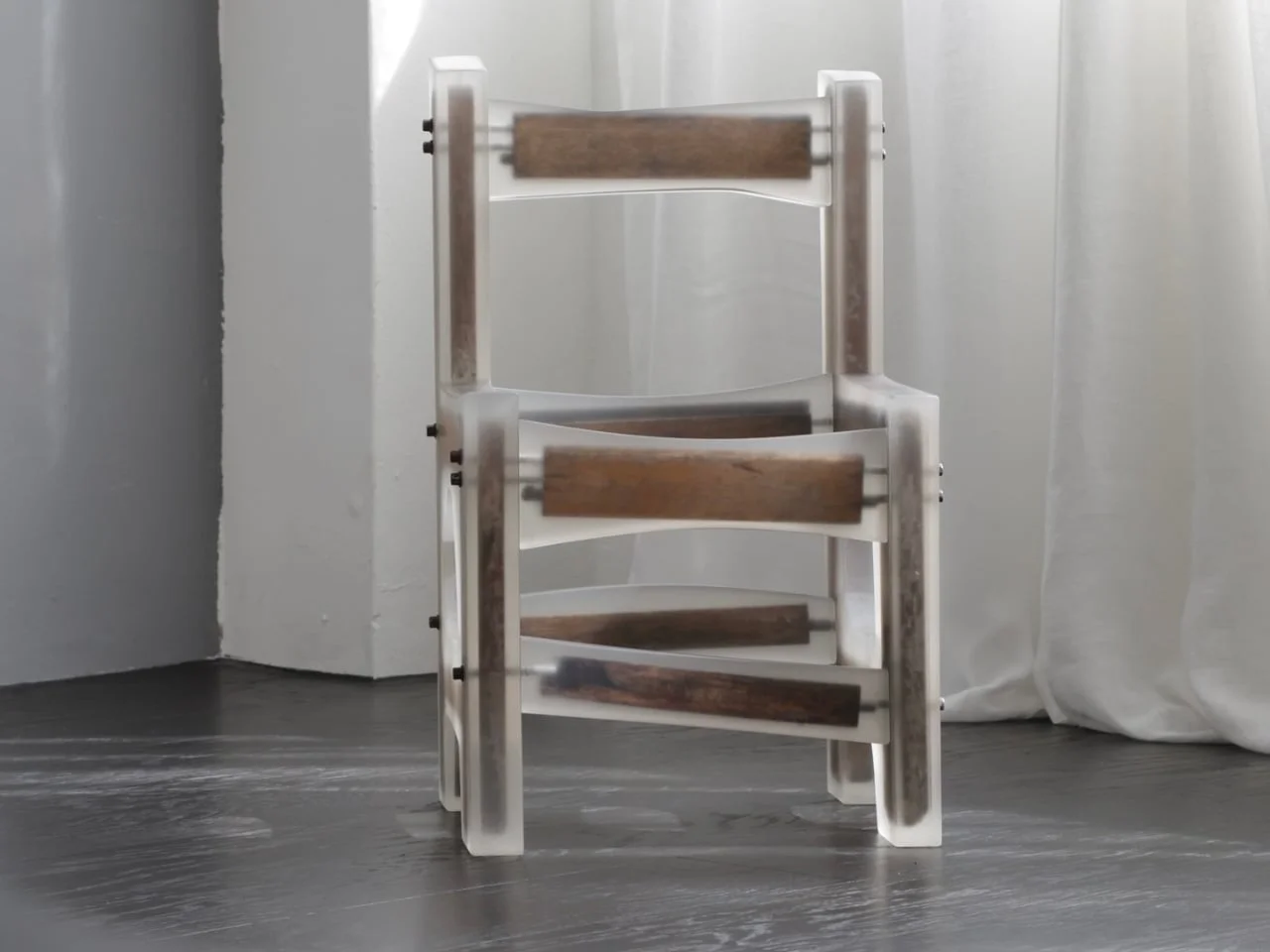
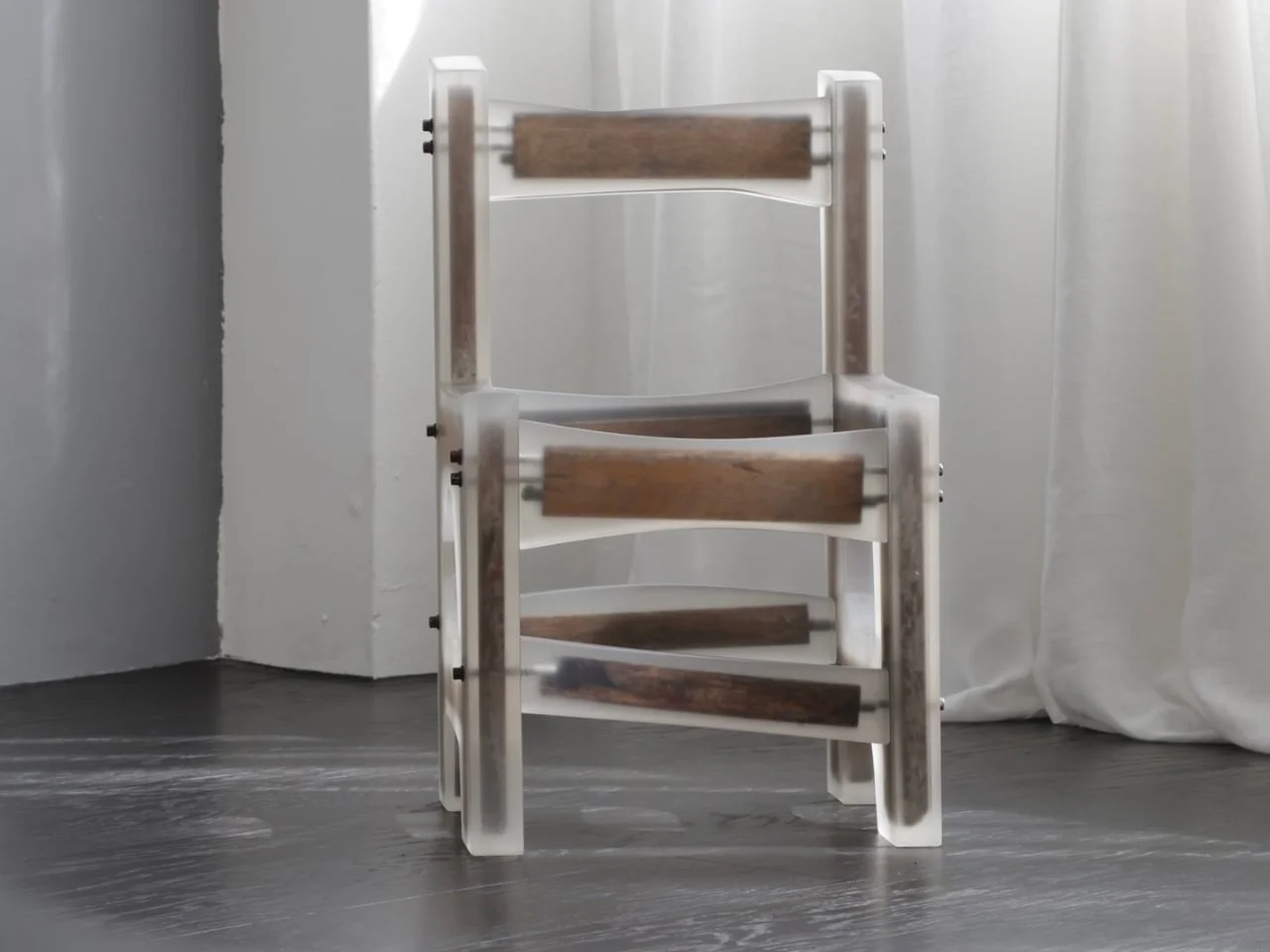
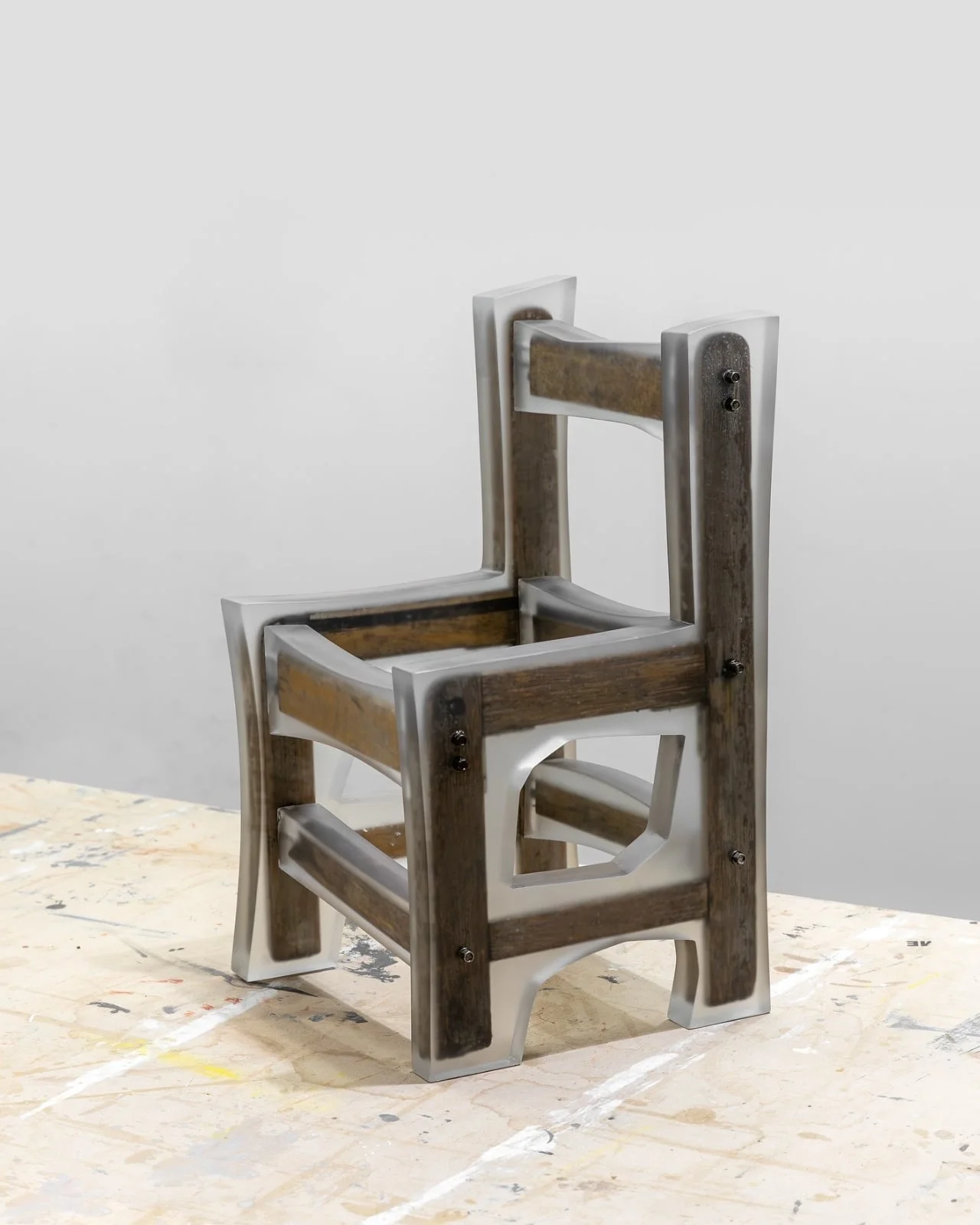
Younghyun Lee’s The Youth gives an old chair a new outline while leaving its history plainly visible. Translucent resin expands around dark, uneven wood, turning wear and exposed fasteners into details to study rather than flaws to conceal. The result reads as an object for looking at, not a ready-made fix for furniture that’s seen better days. That distinction matters: a material transformation can preserve a chair’s visible character while changing its practical role altogether.
Designer: Younghyun Lee
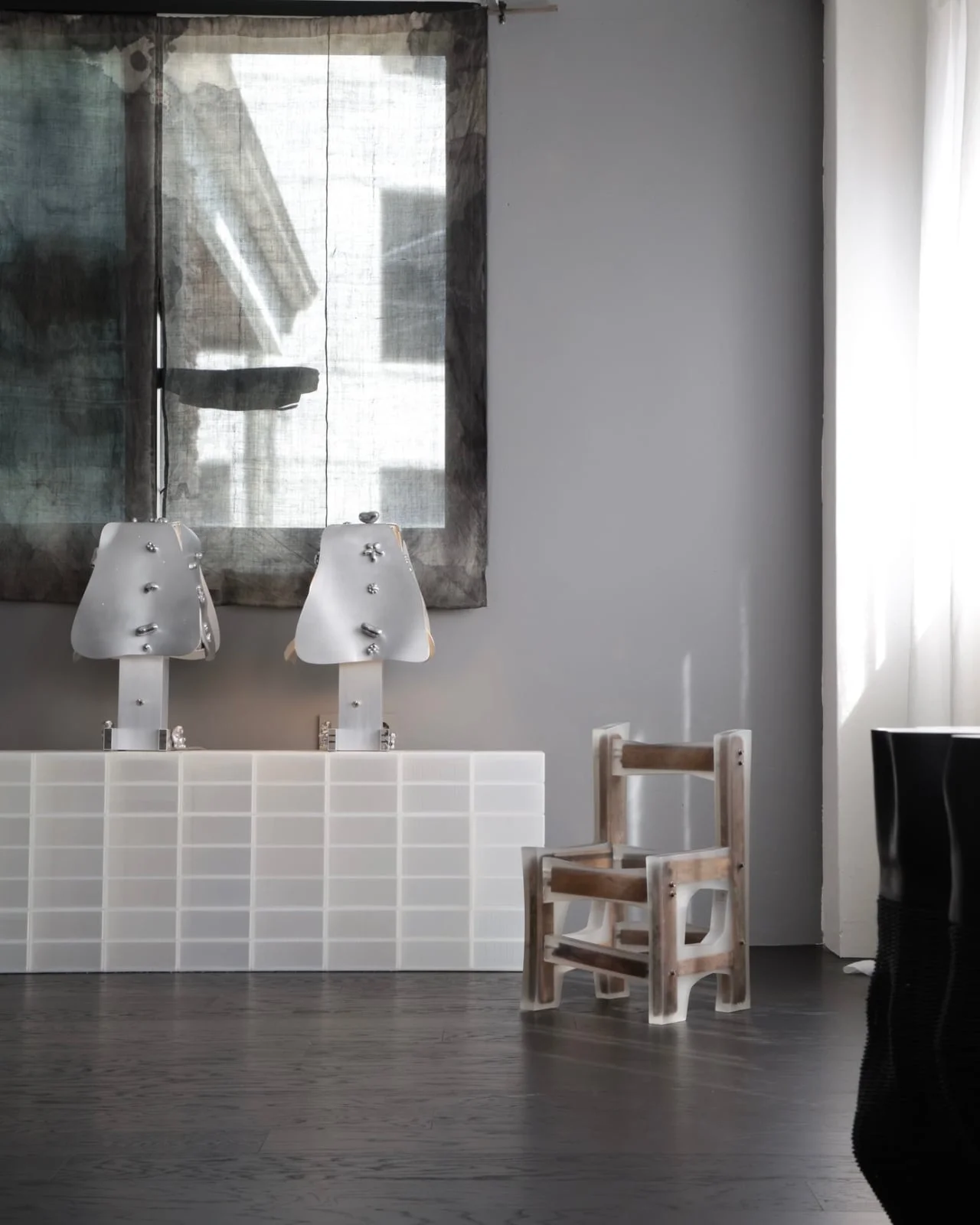
A new silhouette, old details intact
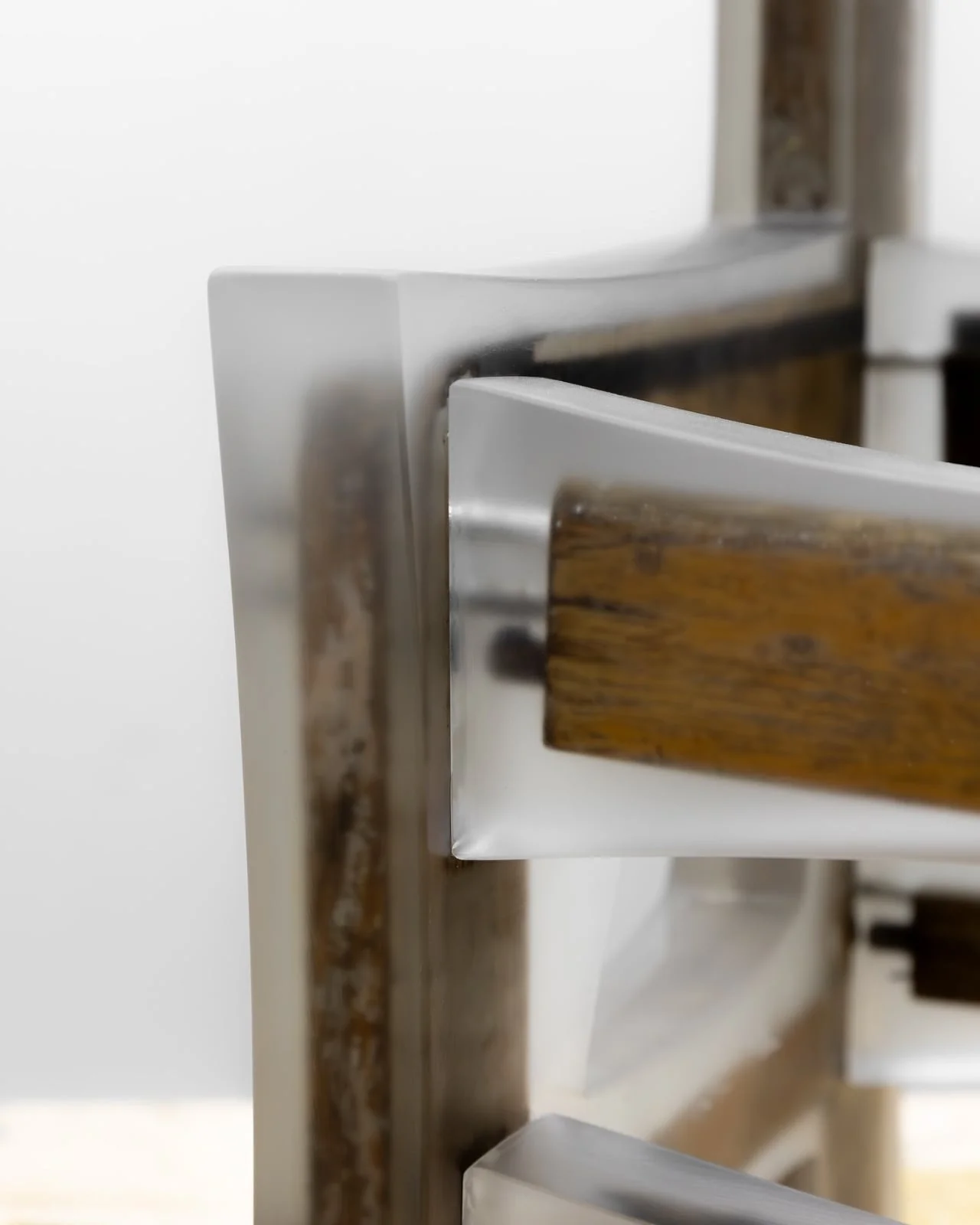
The resin does its most noticeable work along the edges. It broadens the chair’s uprights and forms soft, dipping contours around the rails, making the frame appear larger than the timber inside it. From across a room, the pale surfaces look almost frosted. Up close, the wood’s darker tones and irregular texture come through, so the shell doesn’t fully take over the object’s identity.
That shift in scale and distance is central to the piece. The resin catches the eye first; the age of the wood rewards a closer look. Lee changes how the chair presents itself without sanding away the uneven color that sets this particular frame apart. The effect depends on both readings: the chair appears softened and enlarged at a glance, then becomes more specific as its grain, marks, and edges come into view.
Visible fasteners help keep the transformation grounded. The dark hardware cuts across the light resin and points back to the chair’s construction. Those marks of assembly give the piece a workshop feel, and keep the wood from seeming like a prop inside a decorative shell. They also make the intervention legible: this isn’t an anonymous volume shaped like a chair, but a familiar structure whose connections remain part of the composition.
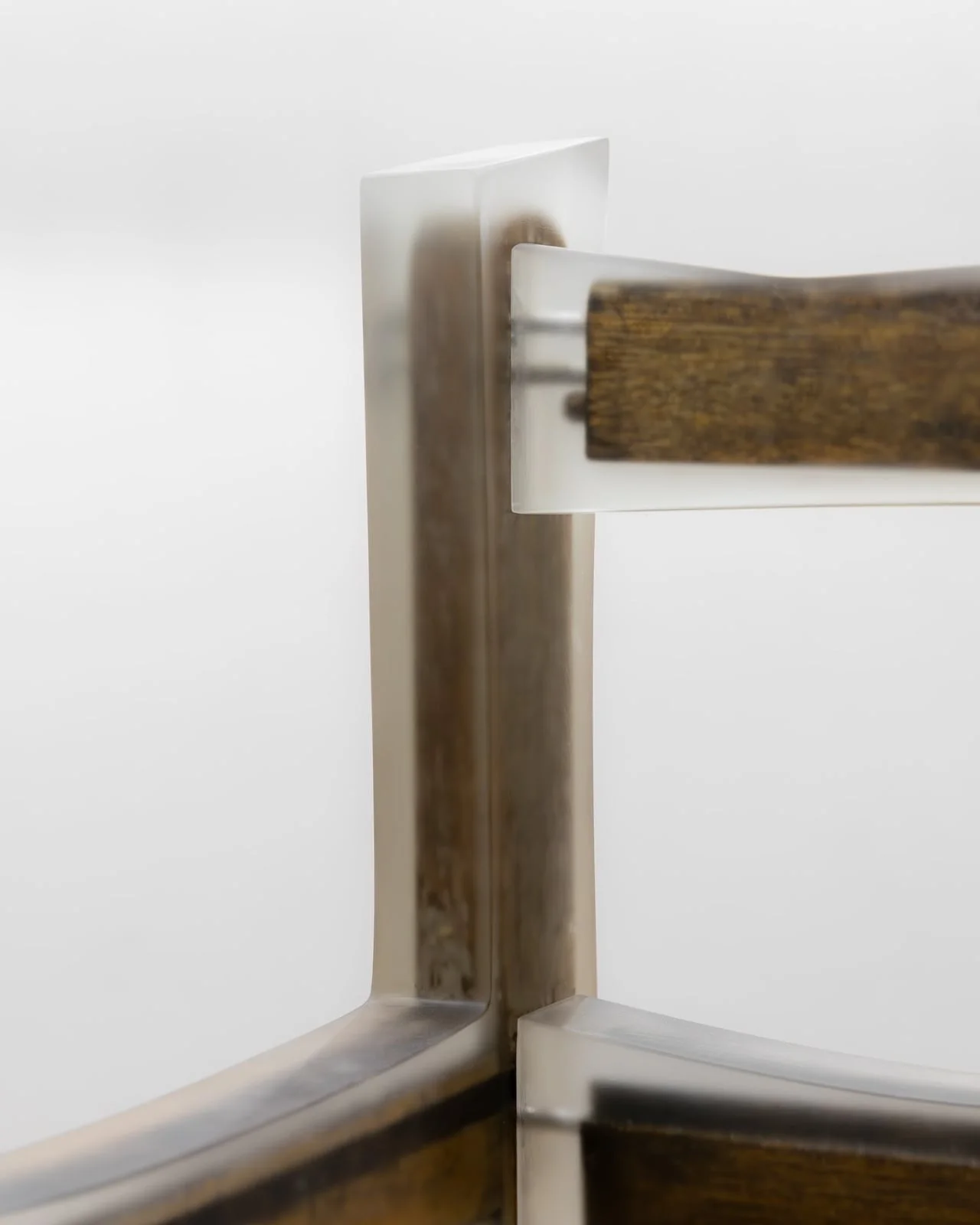
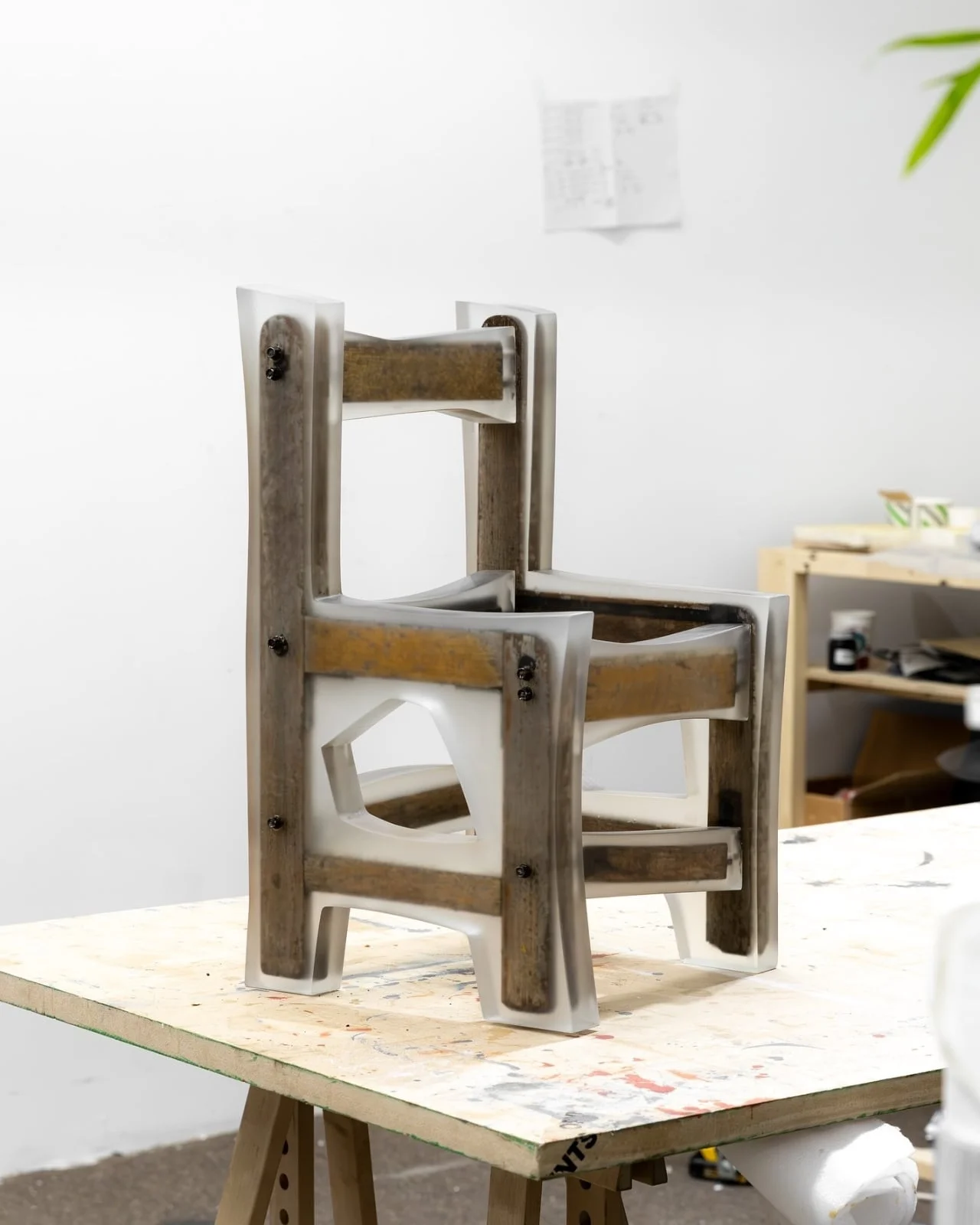
There’s a practical limit to what the photographs show: the seat area is open. That makes the chair’s familiar profile slightly deceptive. It suggests an everyday object, then breaks the expectation that it can be used as one. The gap shifts attention toward the frame and its proportions. I’d read it as a chair-based sculpture, rather than judge it by comfort or function the images can’t establish. The open center also gives the enlarged outline more visual weight, since there’s no solid seat to compete with the contrast between wood and resin.
Here’s the thing: a recognizable form carries expectations with it. When a chair can’t be read straightforwardly as seating, the viewer has to consider its shape, material, and history on their own terms. That tension gives the work more to say than a simple before-and-after makeover. It asks how much can change before an object becomes something else.
What “The Youth” asks us to see
The title might suggest renewal, but Lee’s treatment doesn’t make the timber look young again. Scratches, faded patches and changes in color remain visible. Earlier coverage describes the project as an exploration of memories held by old objects. Here, the resin seems to give those traces a different setting: it changes the chair’s appearance while leaving its past legible. The title therefore reads less like a promise to erase age than an invitation to look at age through a changed frame.
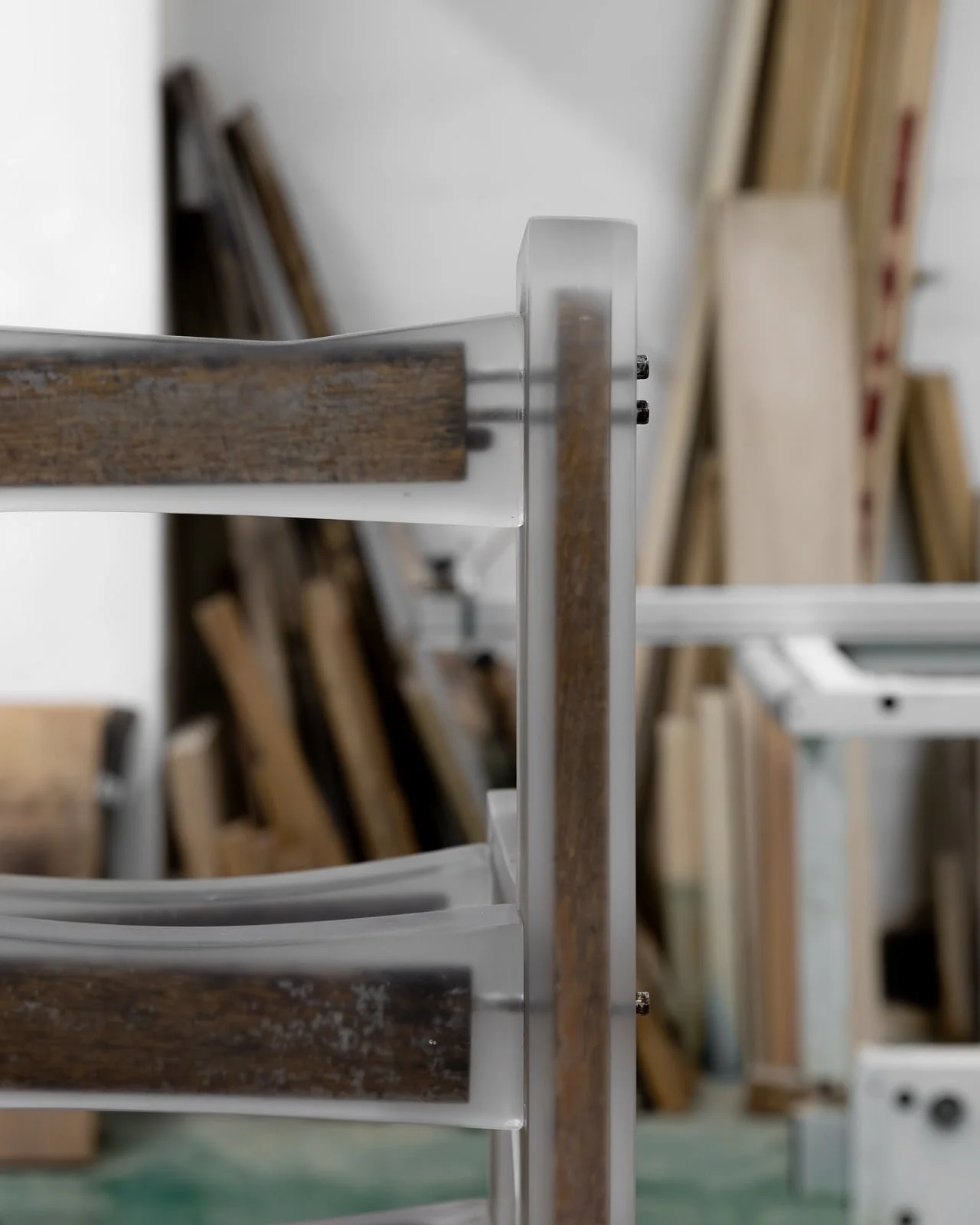
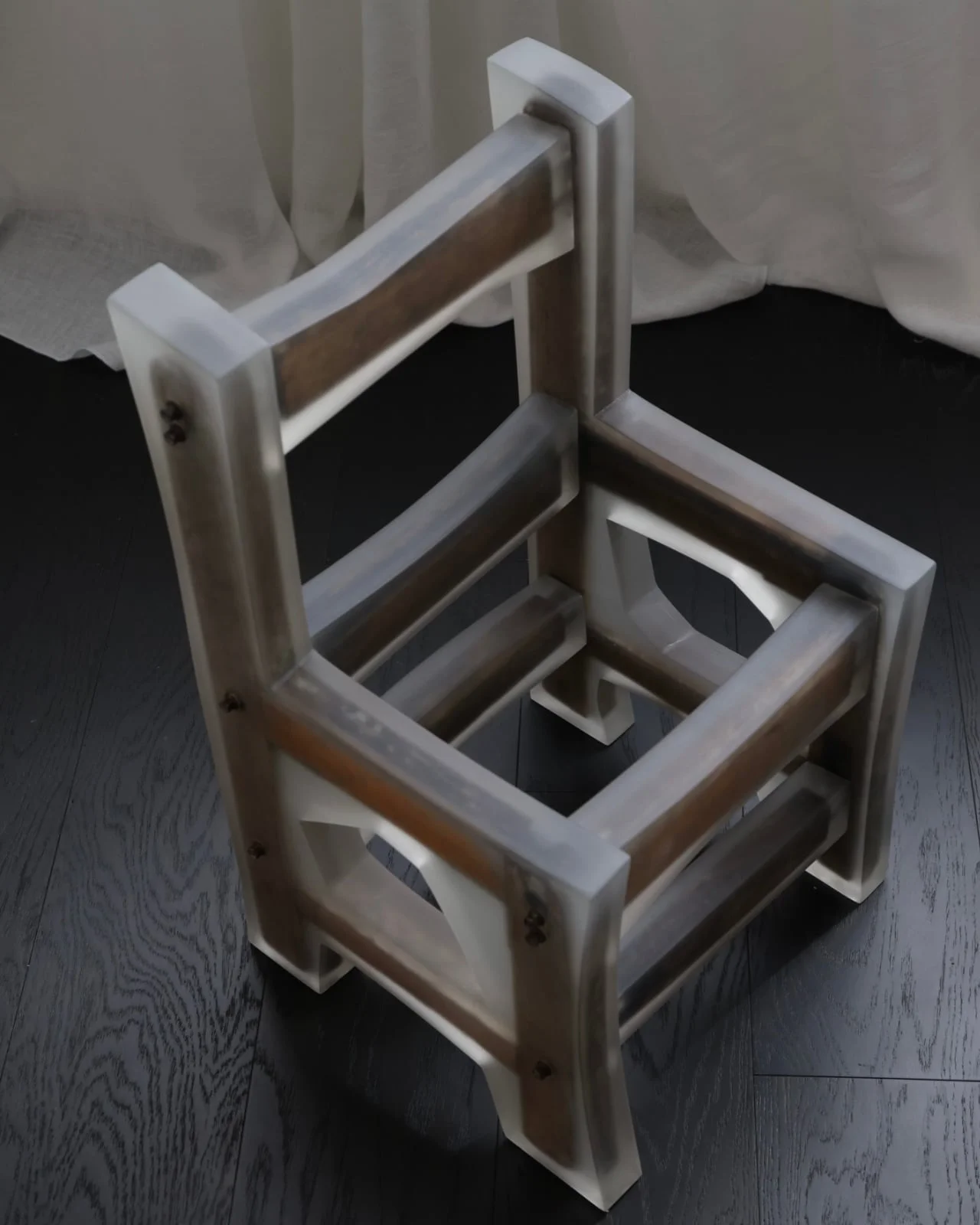
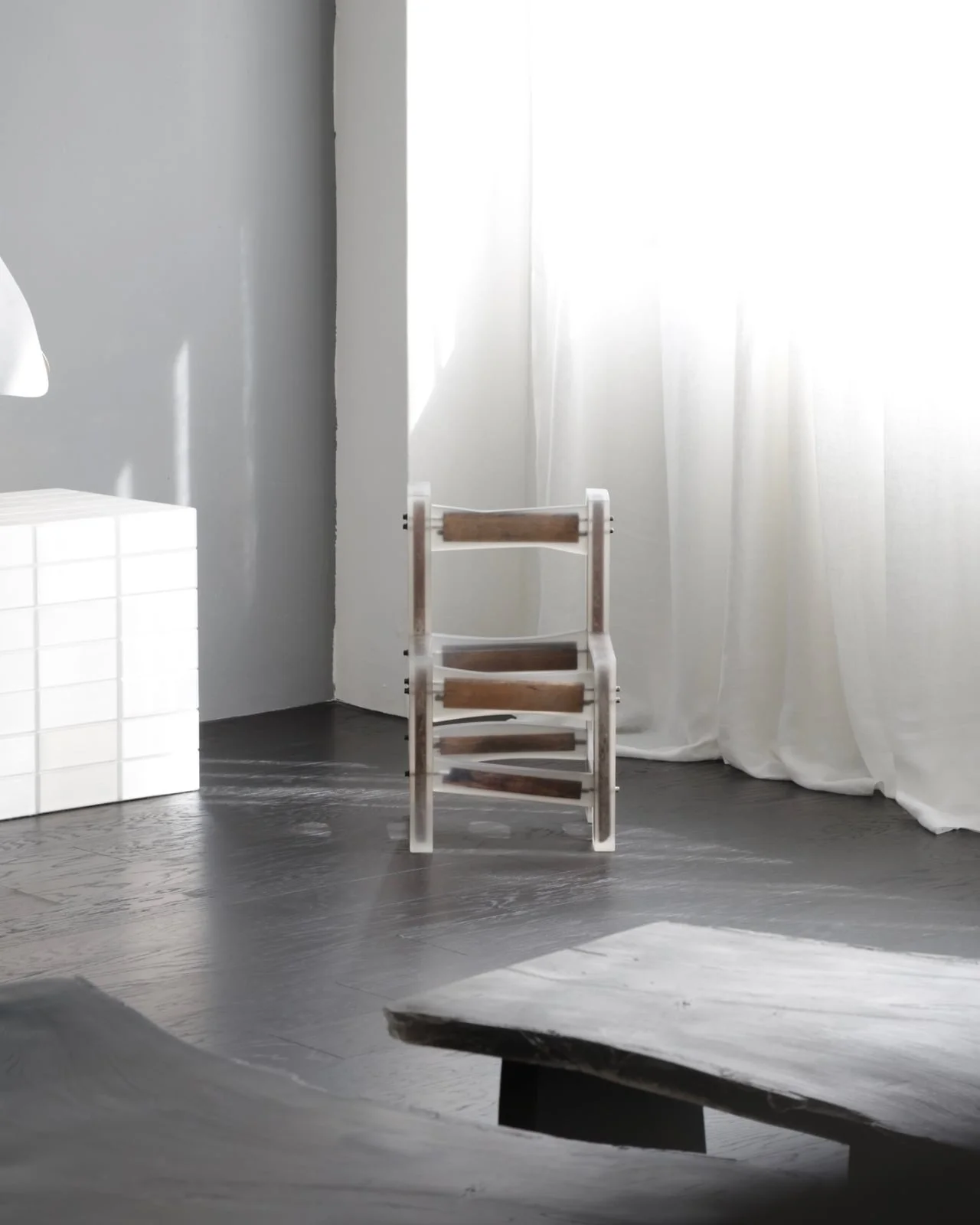
Shown in The Nuance, Lee’s solo exhibition at KiNN in Seoul, the work’s materials play against the room around them. The pale resin picks up the surrounding light, while the wood stays dark within the enlarged contours. There’s a ghostly quality to that contrast, but the visible joints and hardware keep the chair tangible. It still looks assembled, with a history attached. That balance keeps the work from drifting into pure effect: light and translucency alter its presence, while the construction continues to anchor it in an ordinary object.
The use of reclaimed wood may invite environmental claims, but the work doesn’t need them to make its point. What’s evident is a material choice that alters the chair substantially and preserves the identity of its original components. The wood isn’t presented as interchangeable stock; its specific wear remains part of the design. That’s a narrower and more convincing argument than treating reuse as an automatic virtue. The piece shows what this particular material can contribute, without establishing a broader claim about the process or its impact.
When preservation changes the object
This is more significant than it looks: Lee’s approach puts preservation and transformation in the same frame. The chair’s marks survive, but the added resin changes how the frame reads and how a viewer is likely to approach it. In furniture design, repair often aims to restore use or reduce visible damage; this work instead makes the intervention itself visible. It gives wear a place in the composition, while accepting that the result may belong more comfortably in an exhibition than in daily use.
If you’re working in this space, that distinction is useful. Reclaimed material can carry a history, but simply retaining it doesn’t guarantee that history will register in a finished object. Here, contrast does the work: pale resin draws attention, dark wood holds it, and exposed hardware explains how the parts relate. The arrangement is specific to this chair, which is why it avoids reading as a general recipe for making old furniture look new.
And yet, the images leave practical questions open. They don’t establish how the chair feels to handle, how the resin behaves over time, or whether the object was intended for use beyond display. Those unanswered points limit what can be claimed about its function. As an image-led design, though, its priorities are clear: keep the old frame visible, enlarge its outline, and let the mismatch between familiar form and sculptural presence do the talking.
That’s where the piece holds my attention. The resin’s first impression is striking, but the uneven color gives the eye a reason to stay. Lee doesn’t suggest every worn chair needs this treatment. Instead, The Youth makes a focused case for keeping the marks that distinguish one old object from another—and finding a new way to see them. A changed outline, and a past that remains.
The post Old Chairs Get a Resin Shell Without Hiding Their Scars first appeared on Yanko Design.


Discussion
Sign in to join the discussion.