A removable Swedish elm case gives Kord’s Cuboid+ power strip a place in the room, while keeping its three outlets and two USB-C ports accessible.
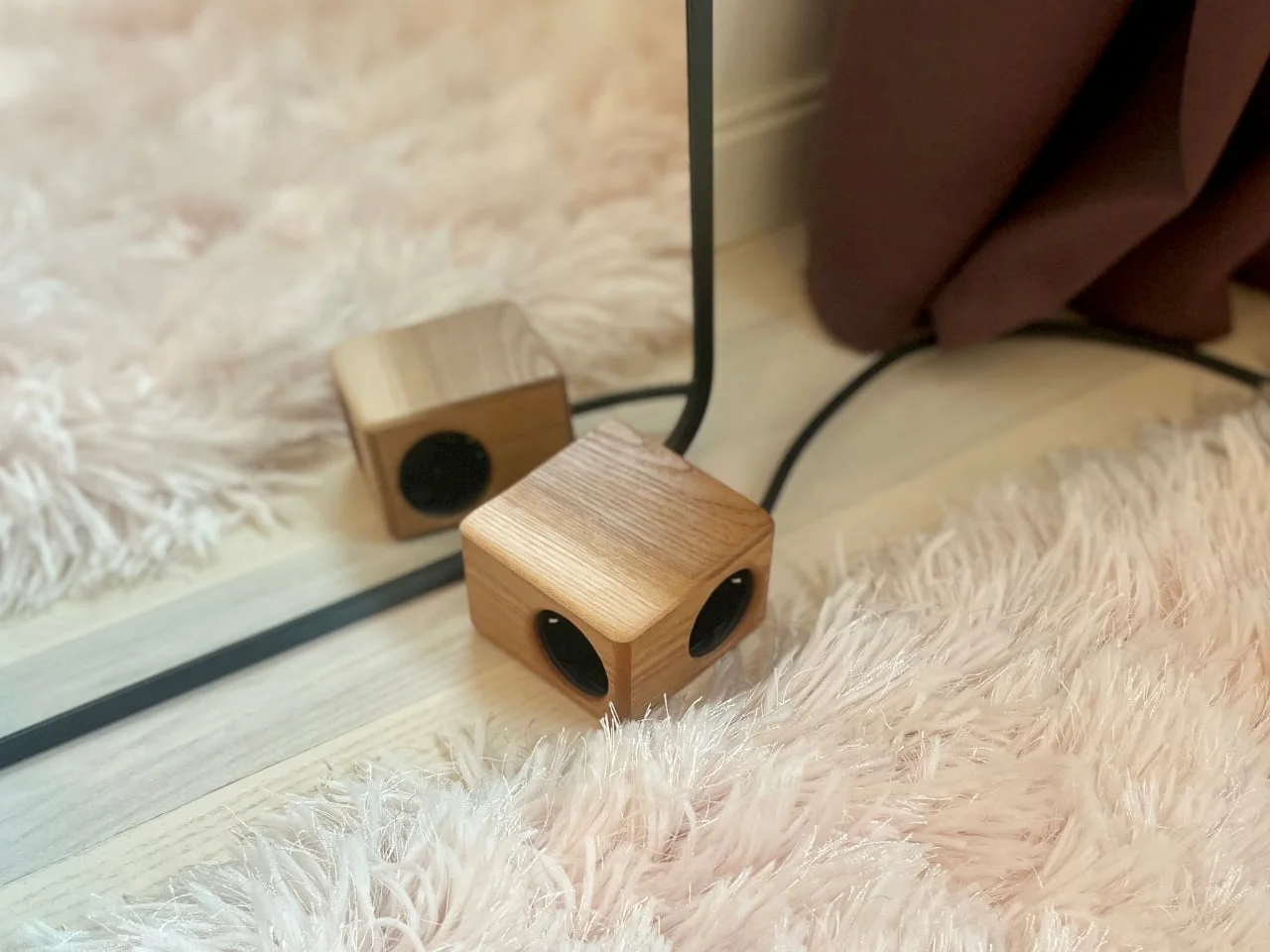
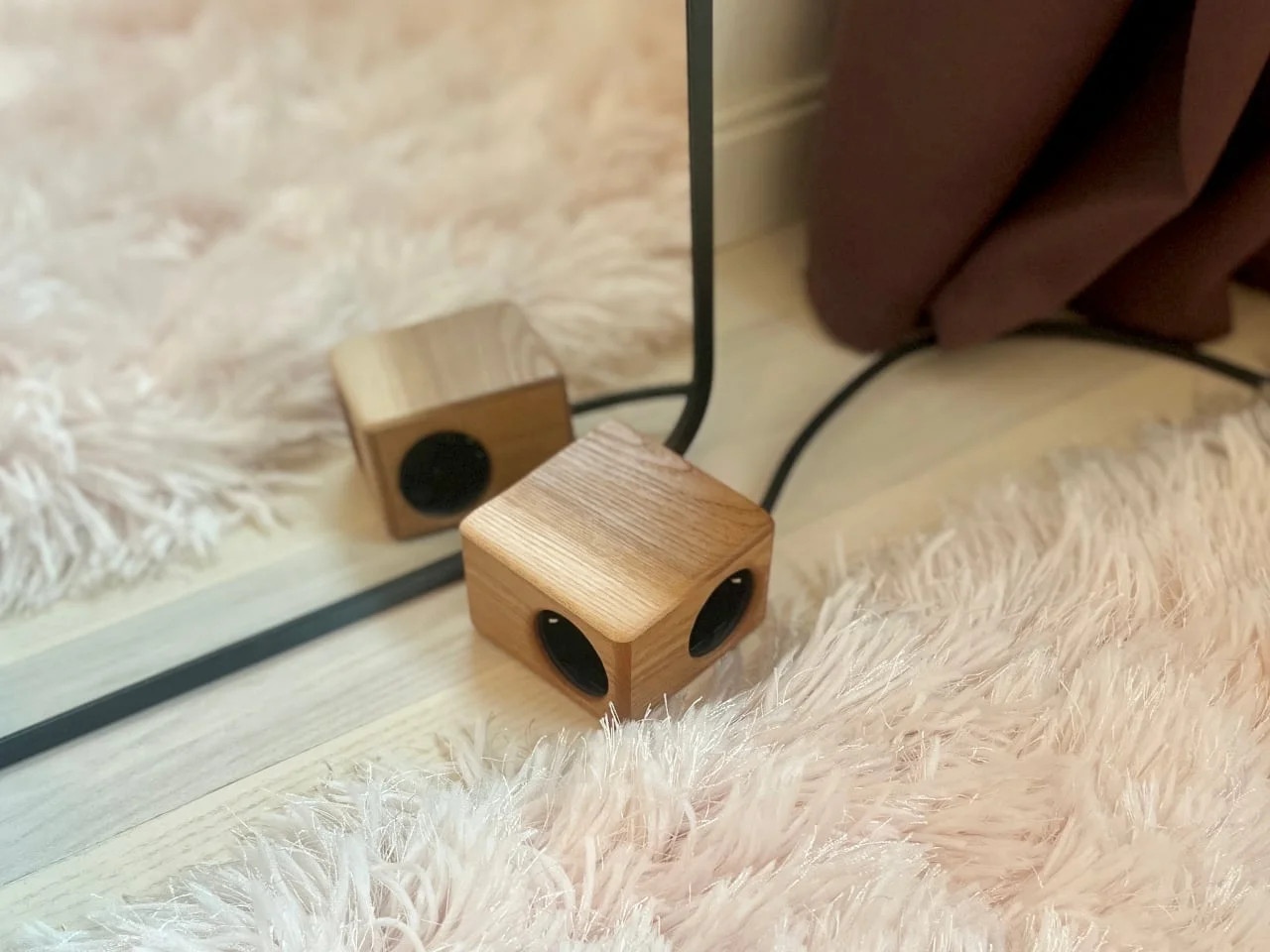
Making a power strip visible
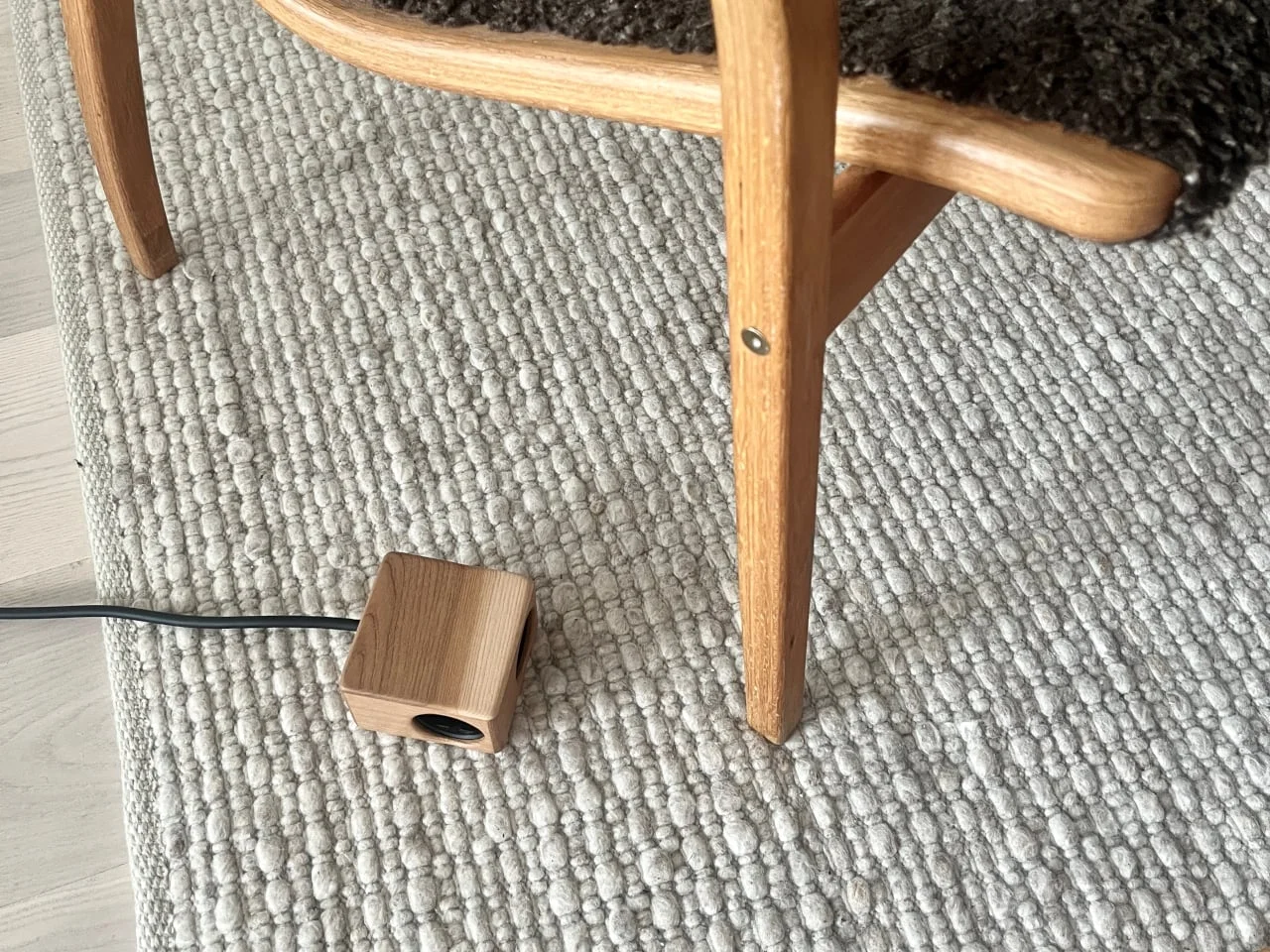
A power strip usually disappears behind a sofa or under a desk. Kord and Bark Sweden’s wooden case for the Cuboid+ makes a different choice: it gives a functional electrical accessory a finish that can sit alongside furniture. The shell is made from reclaimed elm, so the appeal comes from both its material and the fact that the strip can remain within reach. That’s a small design decision with a practical consequence: people are more likely to place an outlet where they need it if it doesn’t look like leftover office equipment.
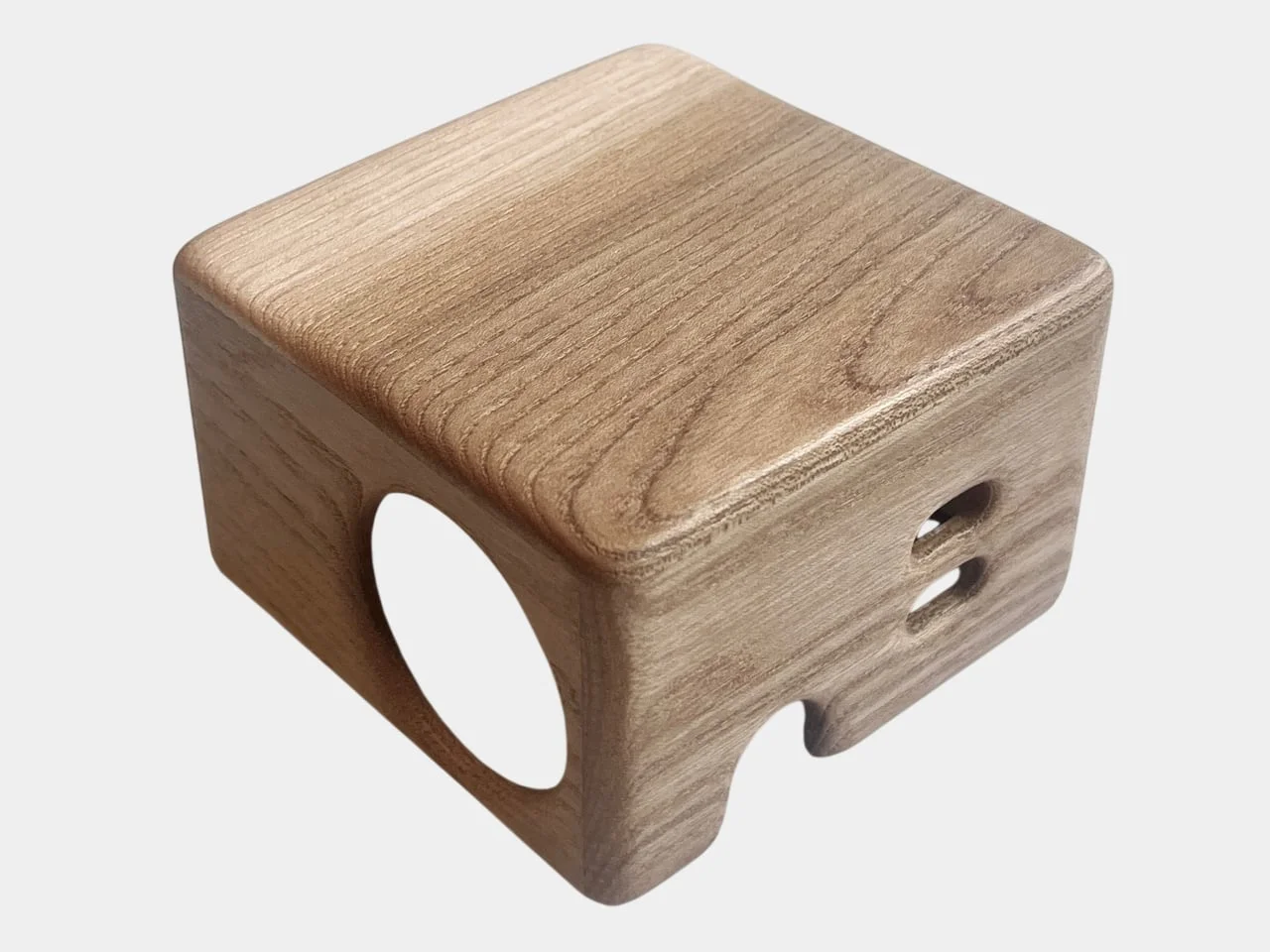
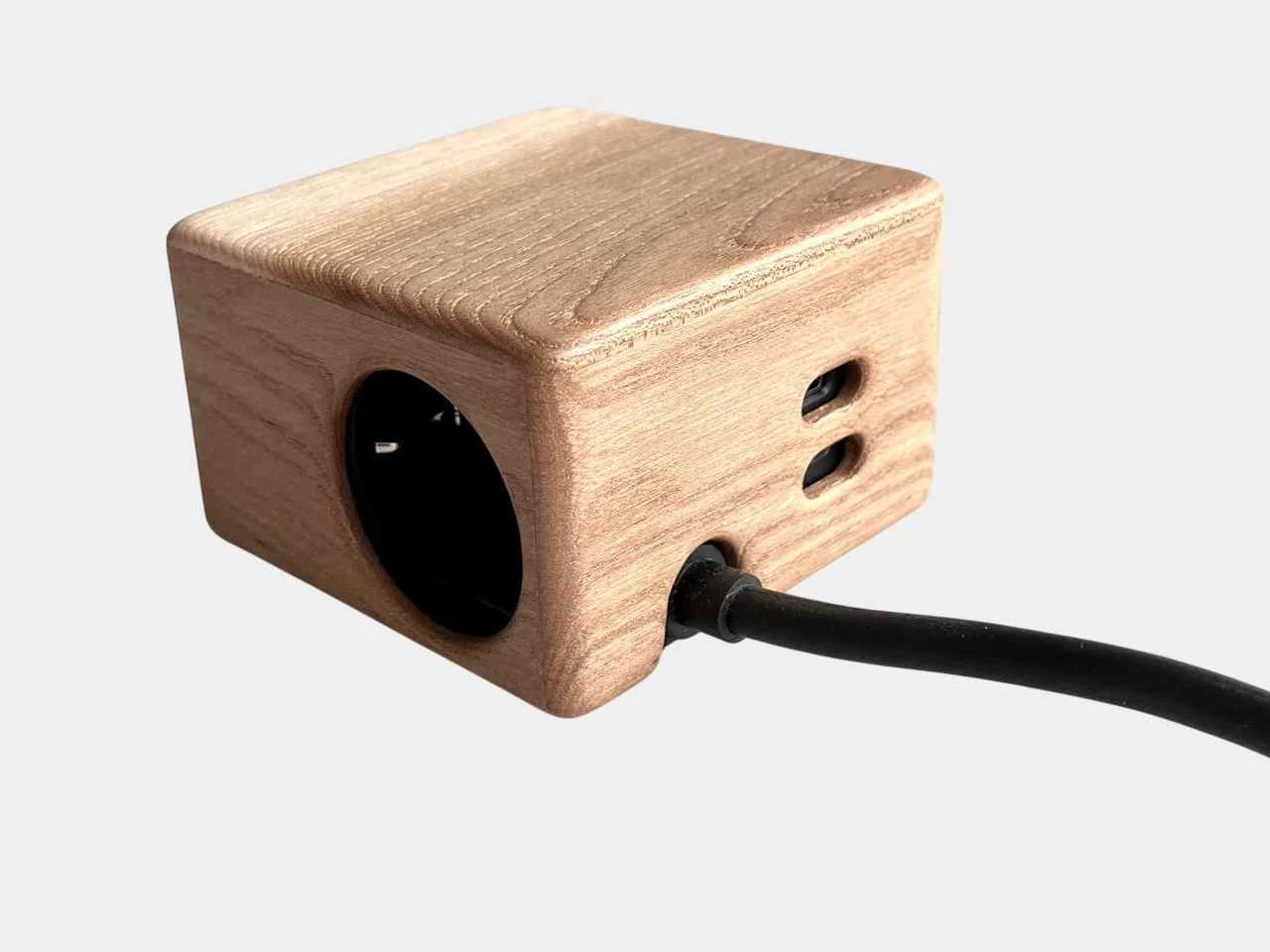
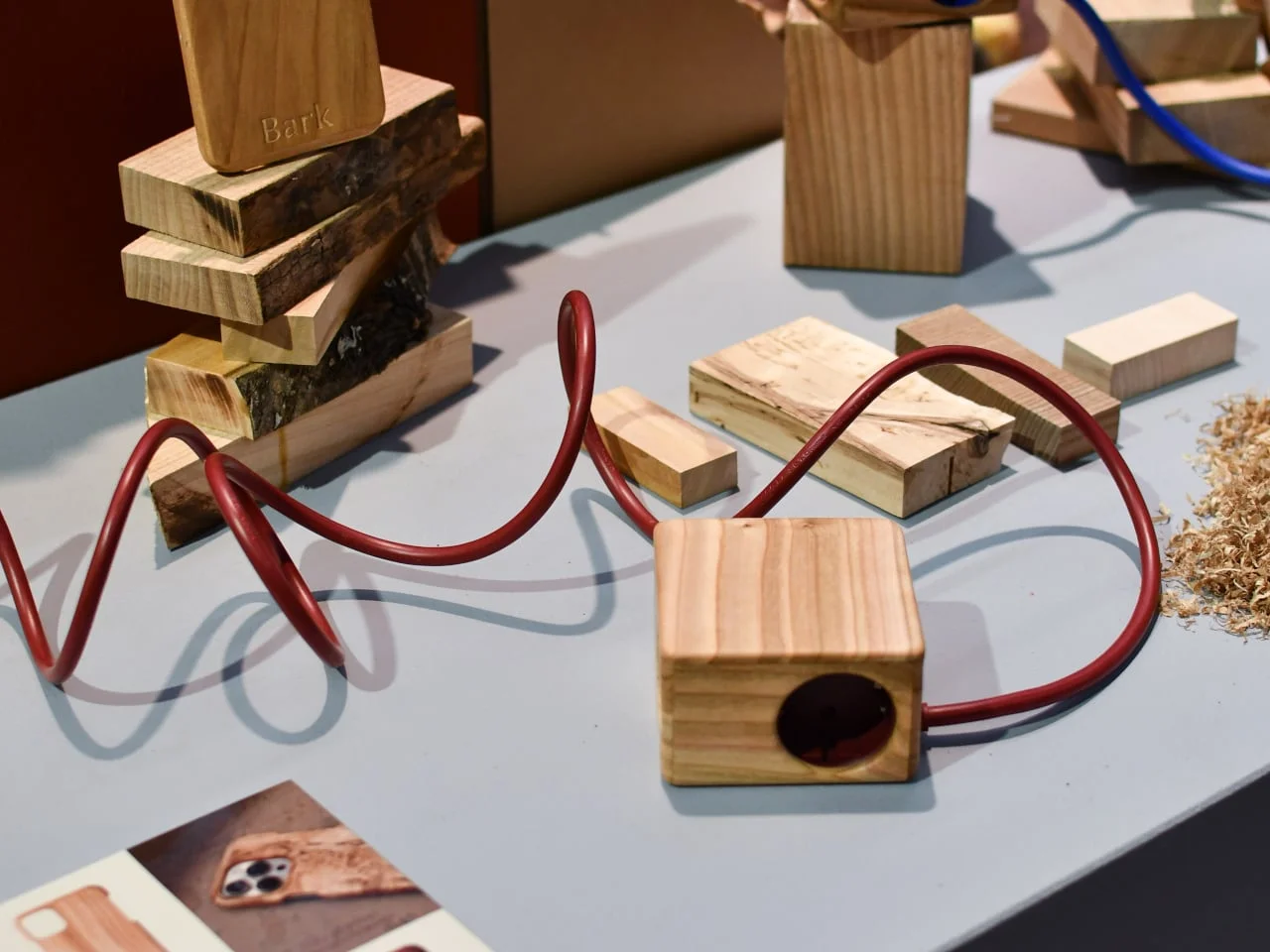
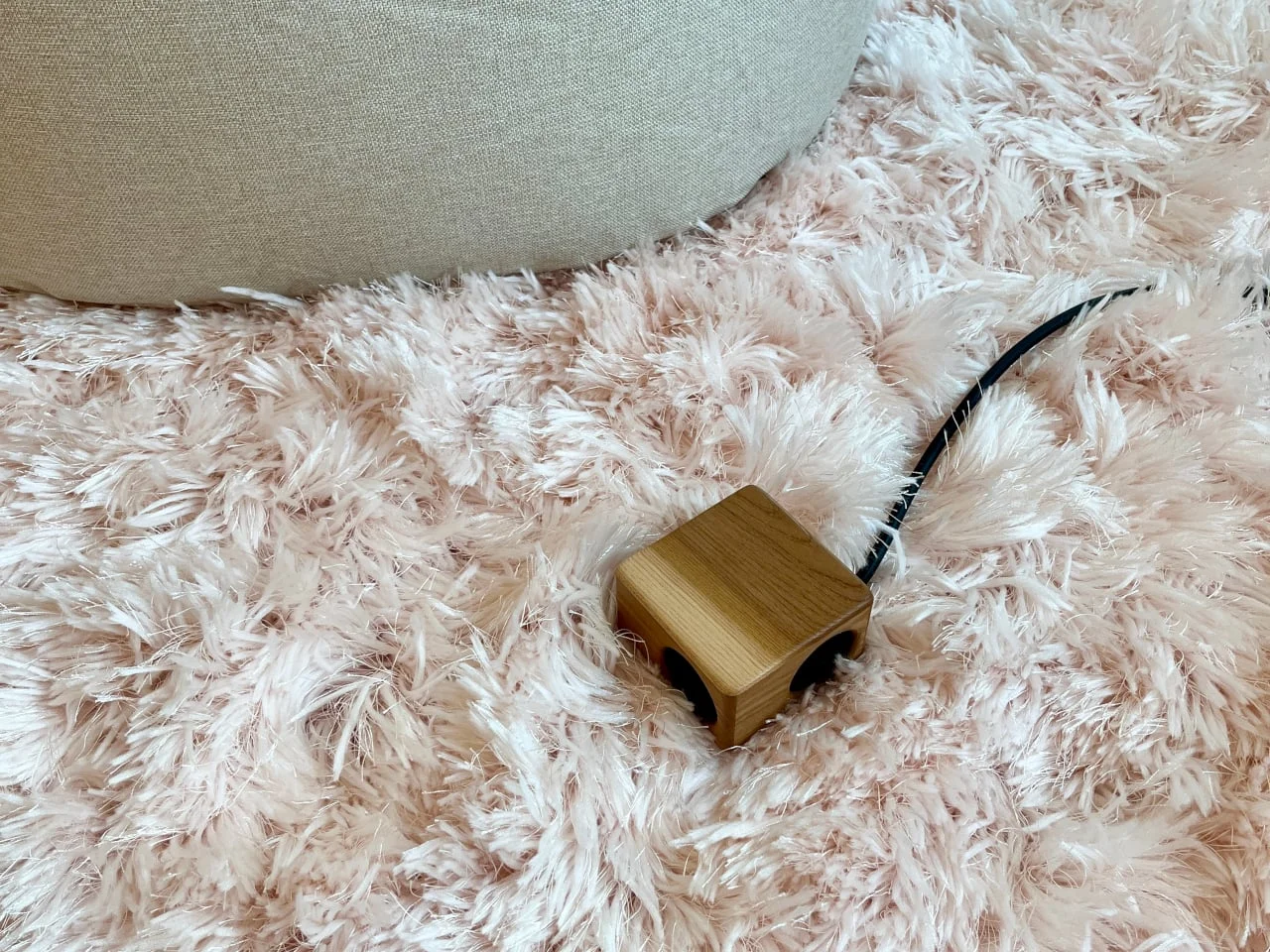
The case keeps the Cuboid+’s compact, rounded-square form. Openings around the sides expose the sockets, while smaller cutouts leave the USB-C ports clear and a notch accommodates the power cable. The design makes the strip easier to place in view without pretending it’s anything other than a place to plug in devices. It doesn’t conceal the everyday mess of chargers and cords; it gives the main unit a more considered surface.
Designer: Gustav Rosén (Kord) x Bark Sweden
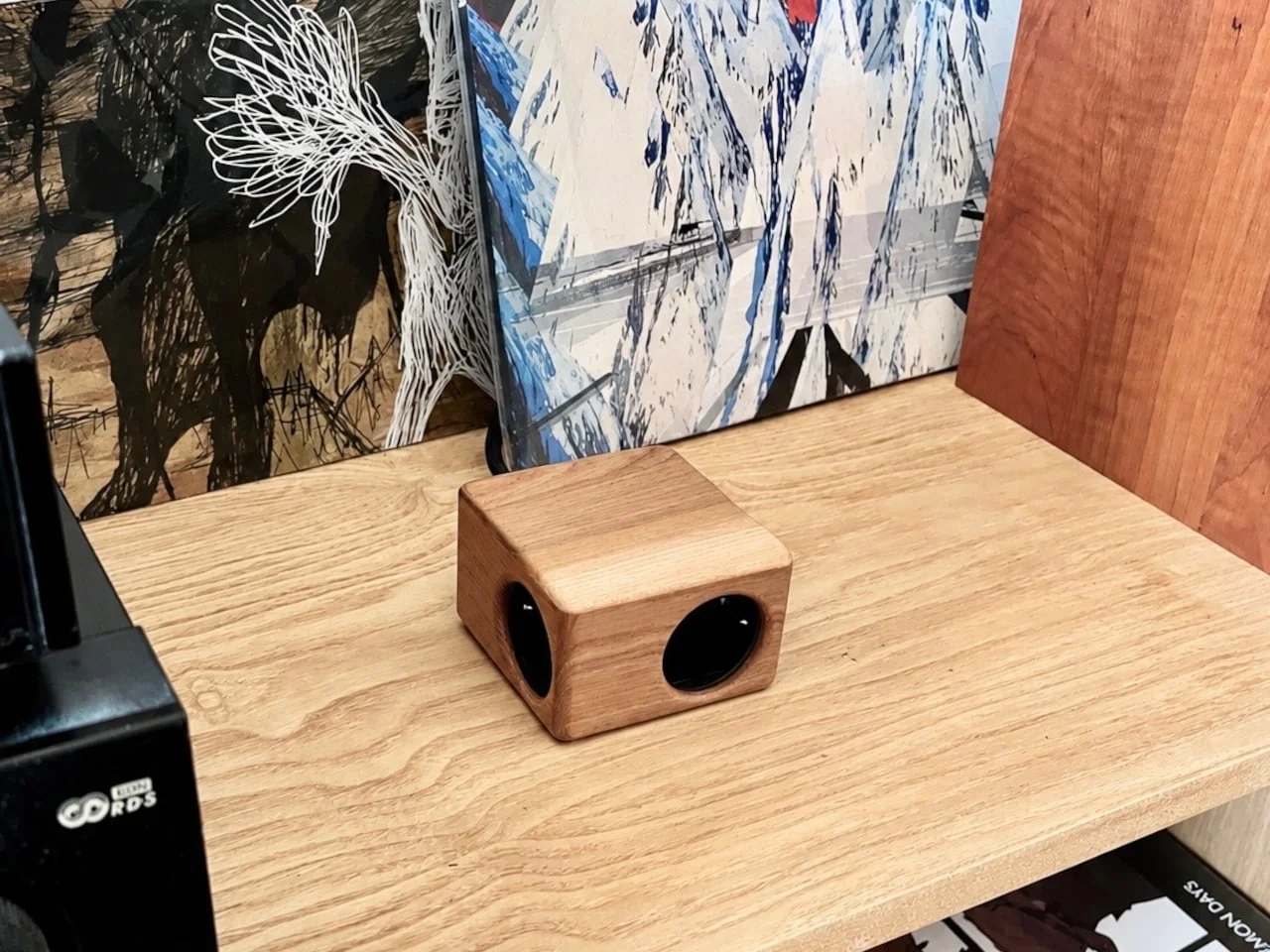
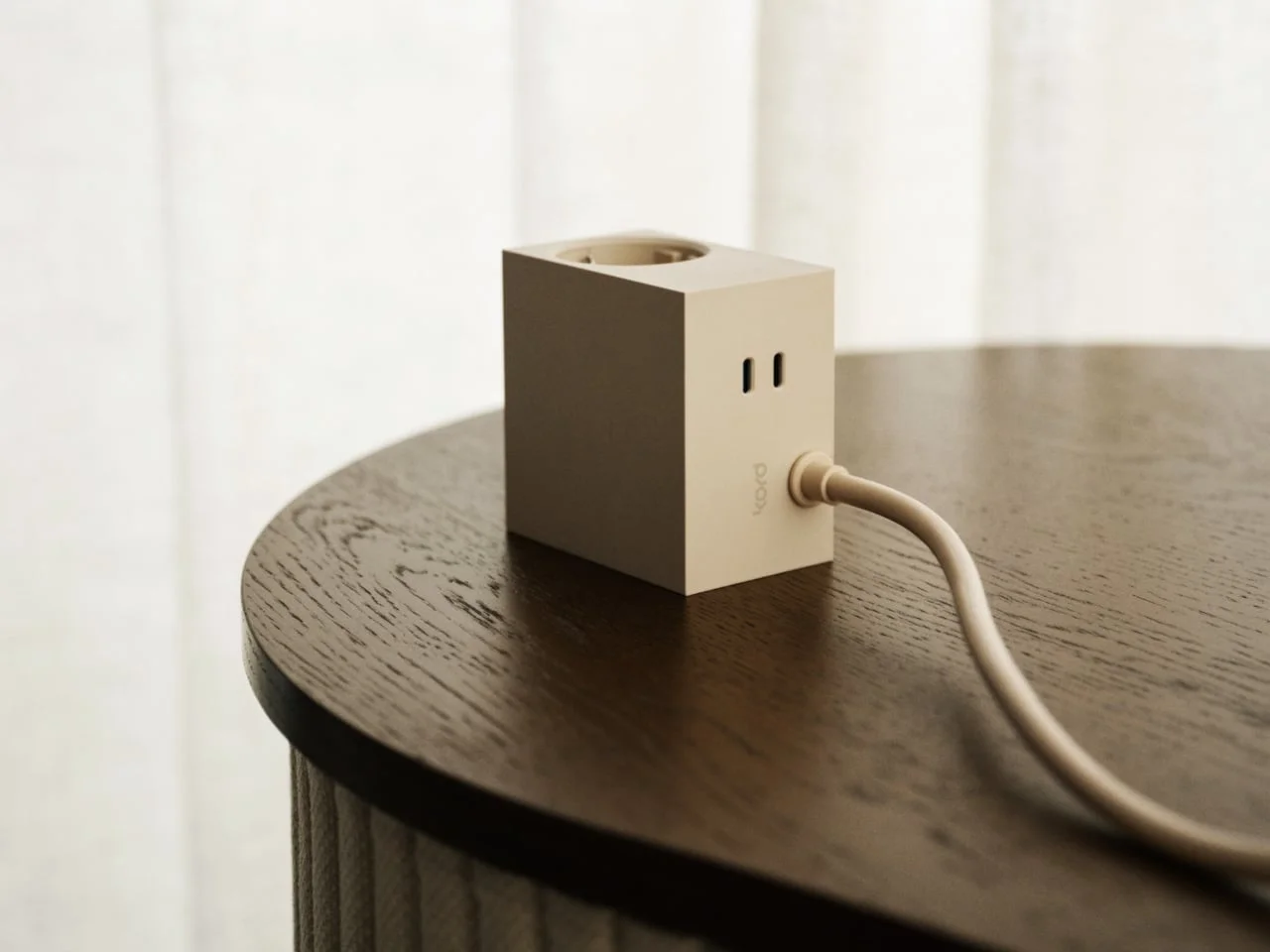
A cover for existing hardware
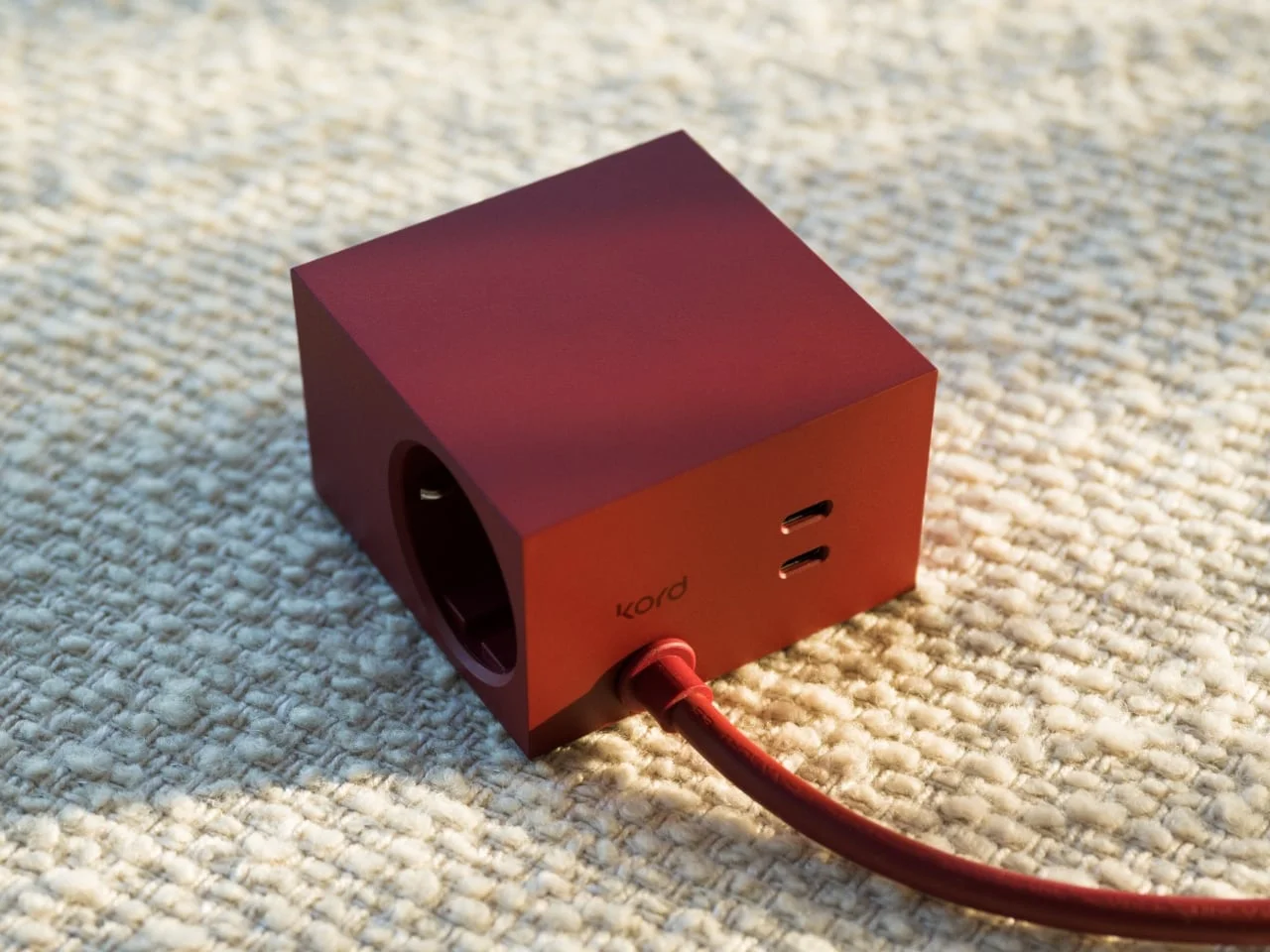
The case doesn’t change the Cuboid+’s capabilities. The power strip still has three sockets and two USB-C ports, allowing a lamp and charging cables to share one compact unit. Kord says the wooden shell slides on and off, making it possible to change the strip’s look without replacing the electrical hardware. That division of roles is straightforward: the electronics provide the utility, while the case changes how the device reads in a room. Whether that separation proves useful depends on the fit and on how often owners actually want to remove the cover.
The elm has a traceable origin. Kord and Bark say it grew beside the River Tidan at Åreberg Farm in Sweden’s Skaraborg region. Dutch elm disease led to the tree being felled; Bark then reclaimed the timber for the cases. Because the wood’s grain and color vary naturally, each piece has its own pattern even though the cases share the same shape. Reclaimed wood gives the material a specific history, but it doesn’t by itself establish the full environmental impact of making or shipping the product.
Precision around the practical details
Making the shell fit an existing power strip calls for carefully placed openings and shaped edges. Bark uses precision woodworking and CNC machining to produce the cases, which are designed and made in Sweden. The apertures follow the Cuboid+ layout, while the reclaimed wood supplies the visual variation. Here’s the thing: a cover like this succeeds only if it leaves the controls and connections easy to reach. A handsome finish can’t compensate for awkward access to a socket, especially for a product whose job is to make plugging in routine.
The collaboration also brings together a shared engineering background. Kord’s co-founder and Bark’s founder studied mechanical engineering at Stockholm’s KTH Royal Institute of Technology before pursuing separate work in design and manufacturing. Here, those skills meet in a product that combines the Cuboid+’s existing geometry with Bark’s experience machining reclaimed hardwood. The result is a focused adaptation of a familiar object, with the tight tolerances and layout doing as much work as the visible timber.
Price and socket compatibility
Kord lists the case at SEK 695, or about $70, in Sweden starting November 14, 2026. The Cuboid+ is sold separately. Buyers in the United States should check the plug format: the strip uses European Schuko Type F outlets, which don’t match the sockets commonly found in American homes. That compatibility detail limits the product’s relevance for some readers, regardless of how well the wood finish suits their interiors.
A wood cover won’t tidy connected cables or make plugged-in chargers disappear. Its more modest effect is to make the strip less of an object to hide. For a phone or lamp that needs a nearby outlet, a power strip left beside the sofa may be more useful than one tucked out of sight. This is more significant than it looks: the product’s central proposition is not extra electrical capacity, but a change in where an ordinary accessory can comfortably live.
The numbers here are underwhelming if you’re expecting a new kind of power strip. The value is in the material, the specific fit, and the option to leave the unit visible; those benefits will matter most to people who already own or plan to buy the Cuboid+. If you’re working in this space, the useful question is whether a finish can earn its place through daily convenience, rather than simply adding another decorative layer. And yet, for a device that’s often hidden by habit, a better-looking case may be enough to change that habit. In a small way.
(And this is the part most people overlook): because the shell is removable, it can be understood as an accessory for the Cuboid+ rather than a replacement for it. That keeps the offer narrow, and makes compatibility the first practical question for any buyer. The design’s success will rest on whether its appearance and ease of access justify the extra cost to someone who already has suitable hardware.
The post Kord and Bark Give a Power Strip a Wooden Case Worth Leaving on Display first appeared on Yanko Design.



Discussion
Sign in to join the discussion.