BIG-GAME’s Pedestal accessories organize cords and power strips with playful silicone and steel designs, from a $45 Cable Bagel to a wheeled $180 Cable Villa.
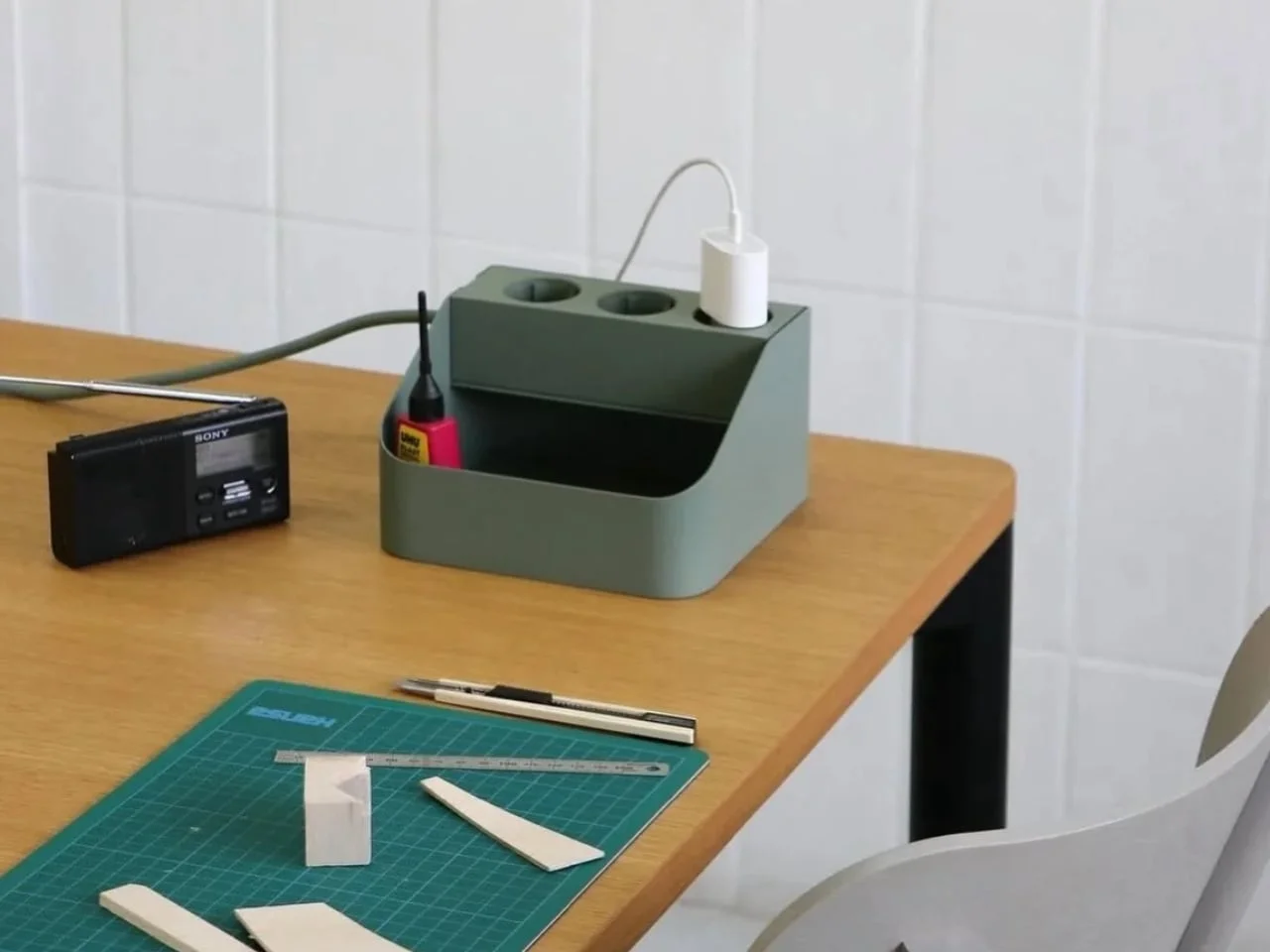
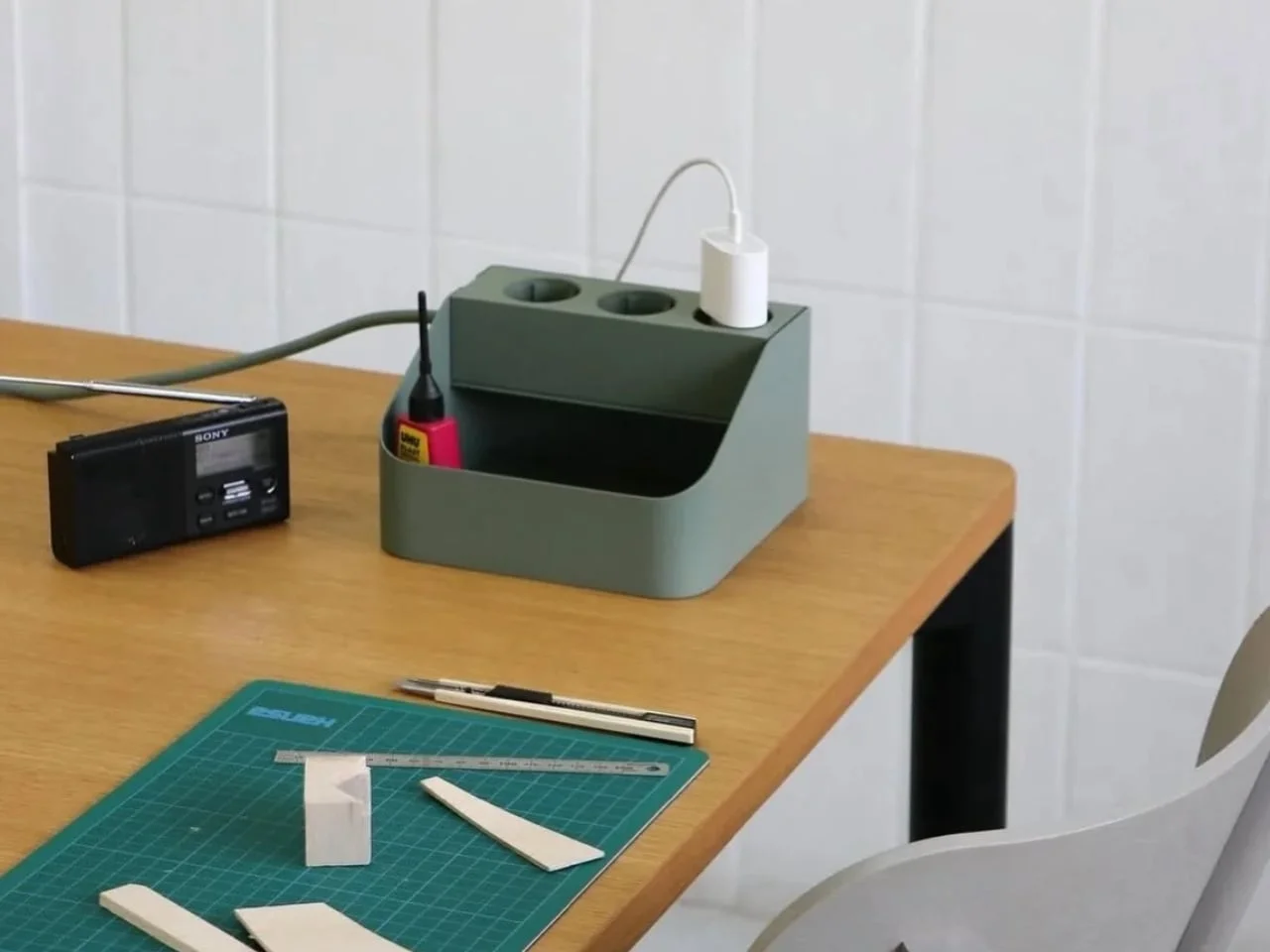
Power strips, adapters, and spare cable length tend to gather in the part of a room people would rather ignore: behind the desk, beside the television, or under a console. The mess is familiar, but it’s also a design problem with a practical cause. Devices need power where people use them, and cords rarely fall into neat lines on their own. Pedestal’s Power Series, designed with Swiss studio BIG-GAME, treats that everyday clutter as something worth designing around. The collection ranges from silicone cord holders to steel enclosures and trays, giving different kinds of electrical gear a more considered place at home.
That approach has a clear limit. A storage object can organize the visible hardware, but it can’t remove the need for outlets, chargers, or cable slack. The useful question is whether it makes the setup easier to manage without adding more visual noise. Here, the answer depends on choosing the piece that matches the scale of the mess.
Designer: Big Game Design for pedestal


Two ways to contain cable clutter
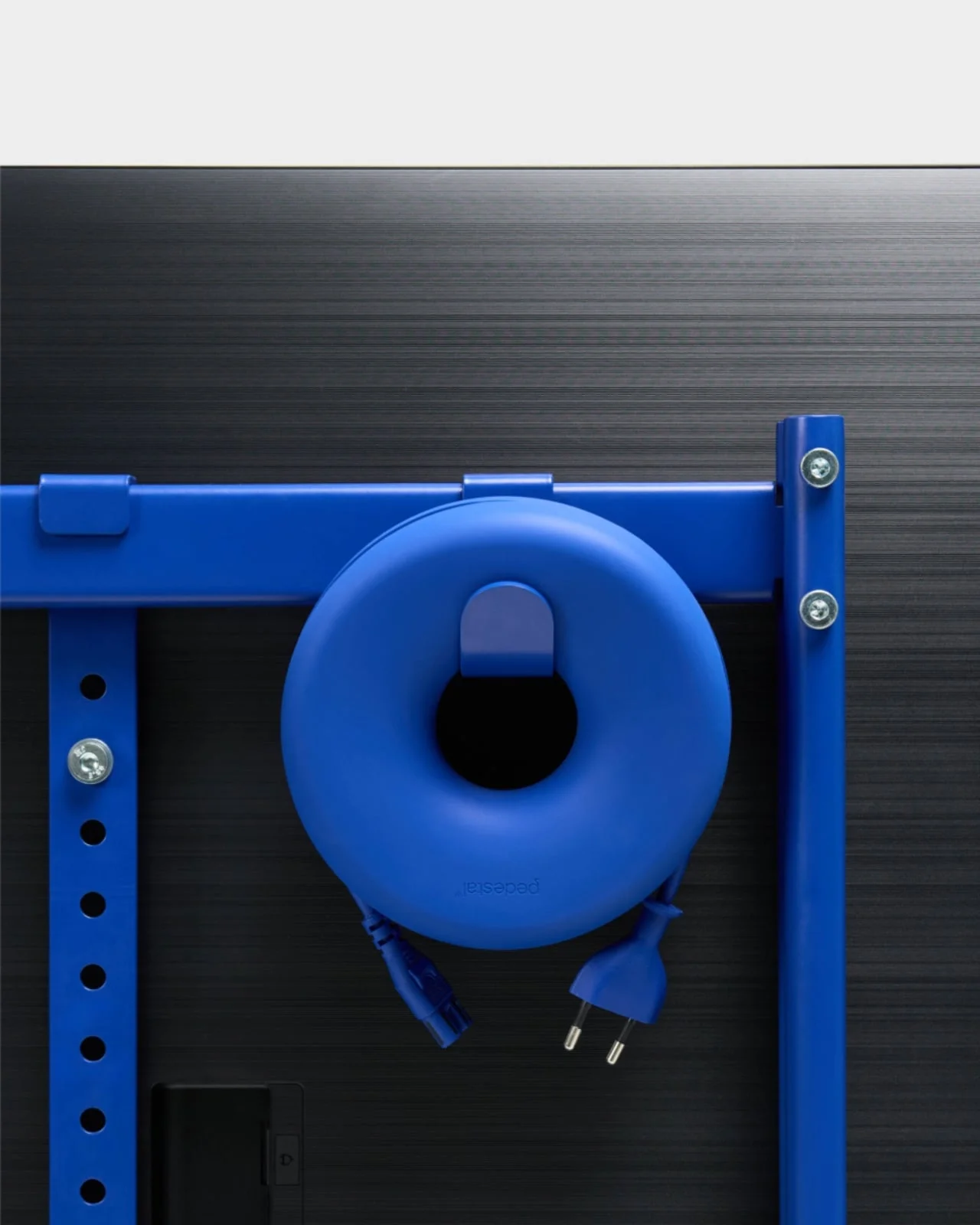
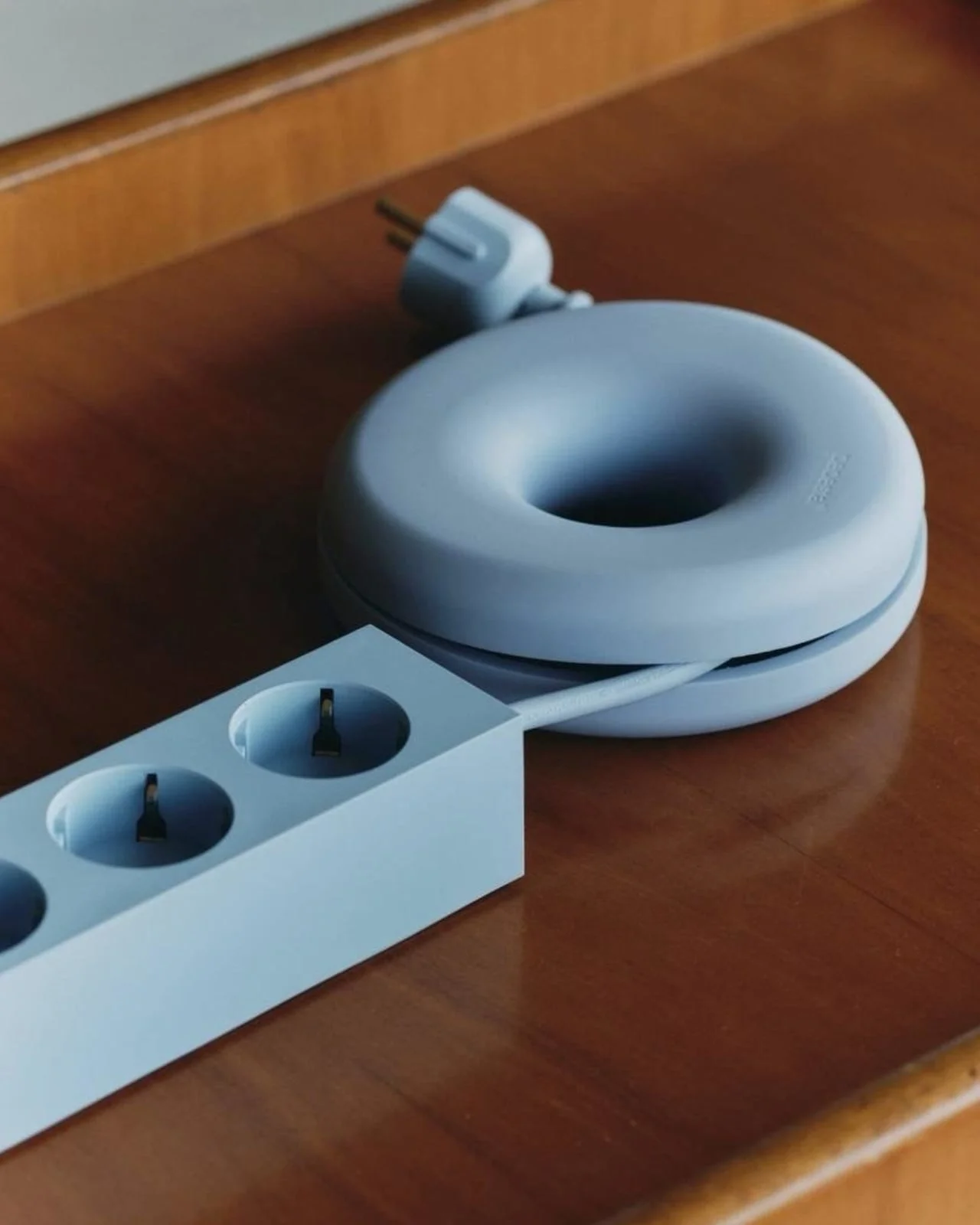
The Cable Bagel takes a simple approach: flexible silicone wraps spare cord into a compact, doughnut-shaped form. Available in blue, green, pink, and cream, it reads more like a small tabletop object than a piece of utility gear. Its basic job is to gather excess length so it’s less likely to sprawl across a surface or drop into a tangle. It can also hang behind a television, where it corrals extra cable while leaving the ends accessible. That last detail matters: cable management works best when it doesn’t make routine connections harder to reach.
The Bagel is aimed at a modest, specific problem. It can tidy one length of cable, but it won’t conceal a power strip or organize a group of adapters. That’s fine; the compact form makes more sense for a loose charging cord or surplus length than for a whole cluster of equipment. It’s the small fix in the series, and the one most likely to be useful wherever a cable keeps wandering into view.
For a larger tangle of equipment, the Cable Villa is a steel storage box with a rooflike lid, a handle, and wheels. It holds cables, adapters, and power strips; the pink finish gives it the look of a miniature utility cart. Its design makes a sensible distinction between hiding the hardware inside and letting the container itself remain visible. That distinction is the product’s central idea: the contents can be messy, while the object holding them still has a deliberate presence in the room.

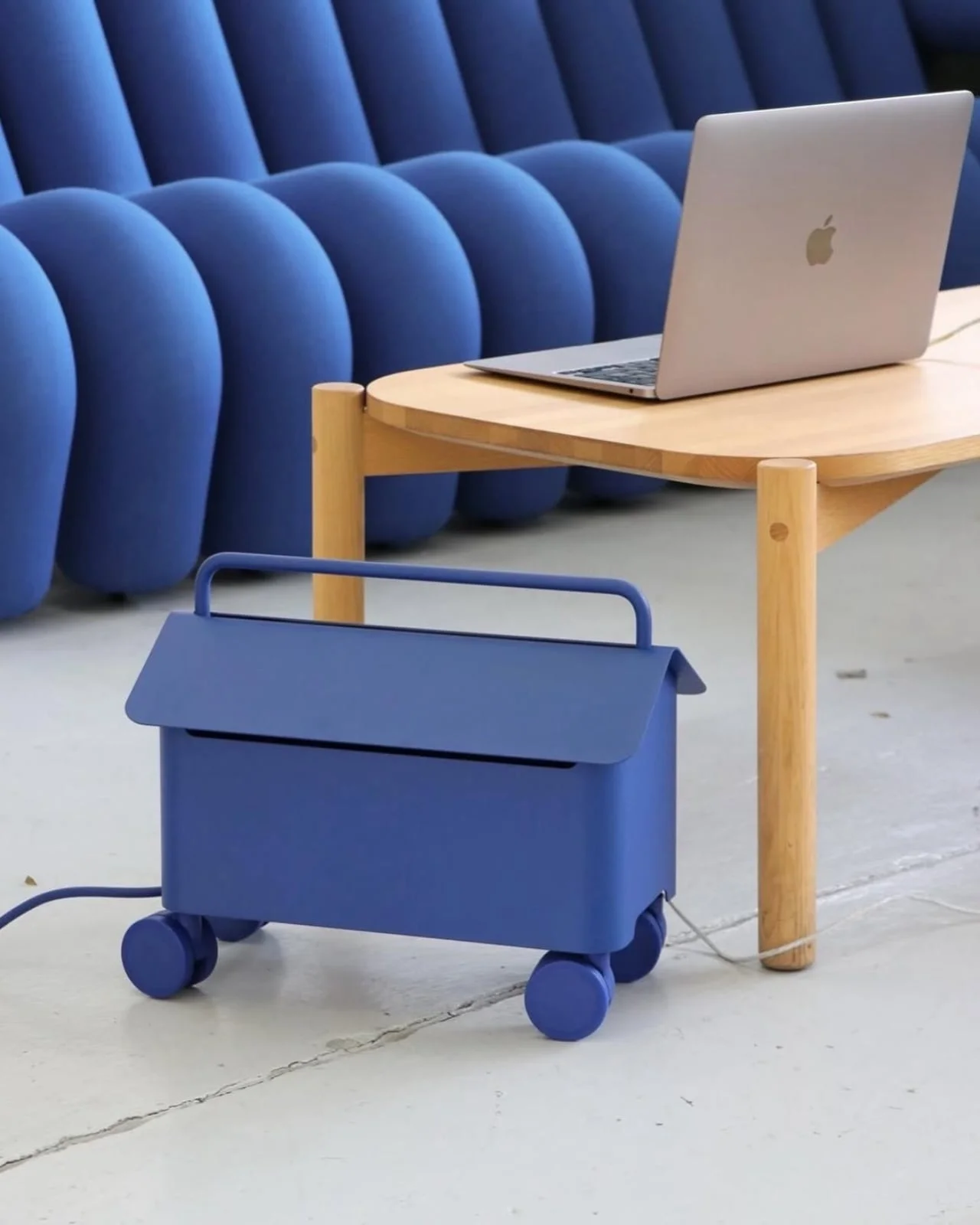
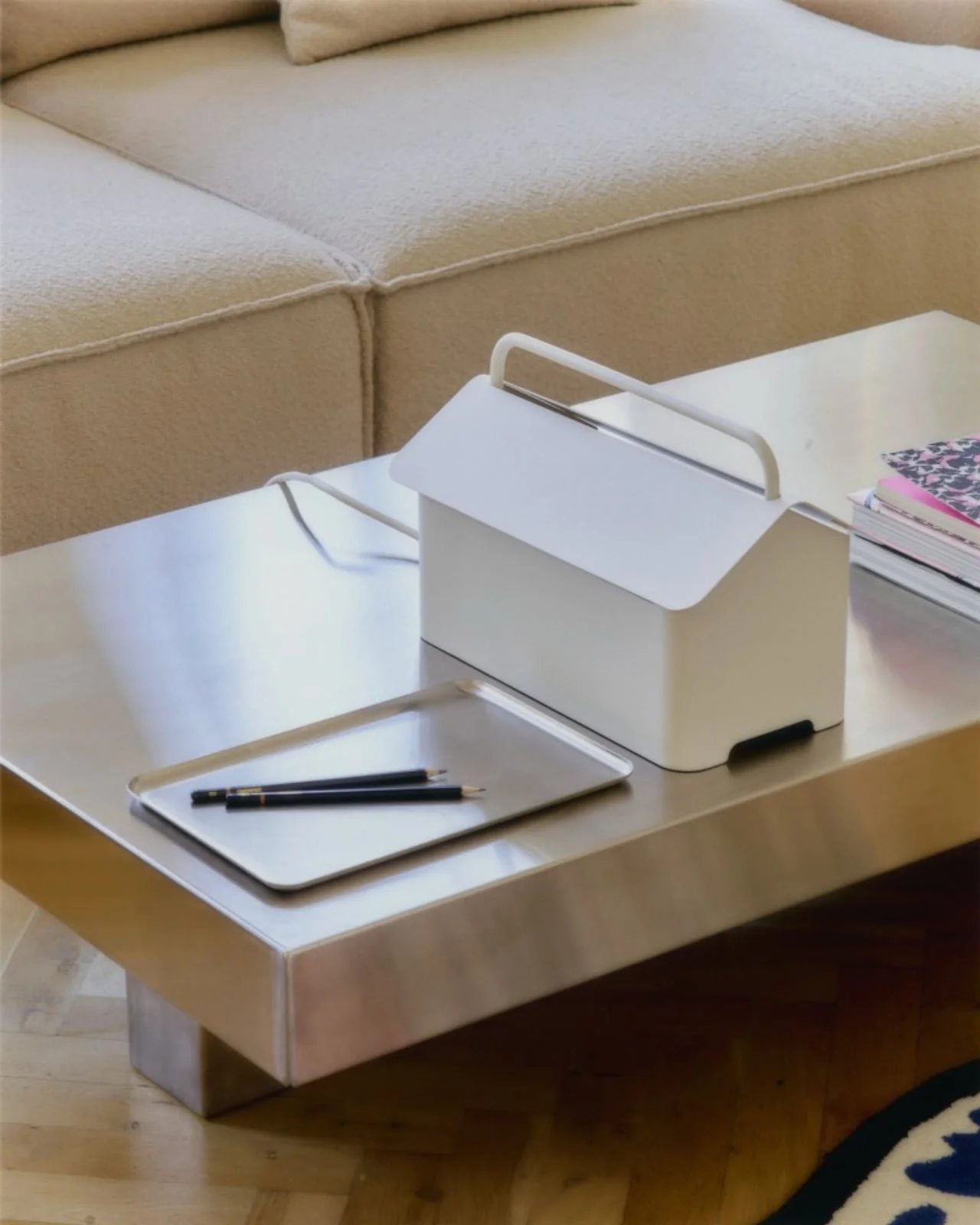
The Villa’s wheels make it easier to move the box when access is needed, though the length of connected cables will set the practical limit. That’s a small, useful detail rather than a promise of effortless mobility. The handle and wheels make repositioning less awkward when the equipment needs attention, while the box keeps the power strip and loose accessories gathered between those moments. If you’re working in a room where the power setup has to stay accessible, that balance between containment and access is the point to consider.
There’s a tradeoff, too. A container large enough to hold several pieces of equipment will occupy space of its own, and the Villa’s visible finish means it becomes part of the room’s furnishings. The box is designed to accommodate the equipment already in use, and its presence can suit a living room instead of demanding a spot out of sight. That’s a more honest proposition than suggesting the hardware has vanished.
Power Beam accessories for desk setups
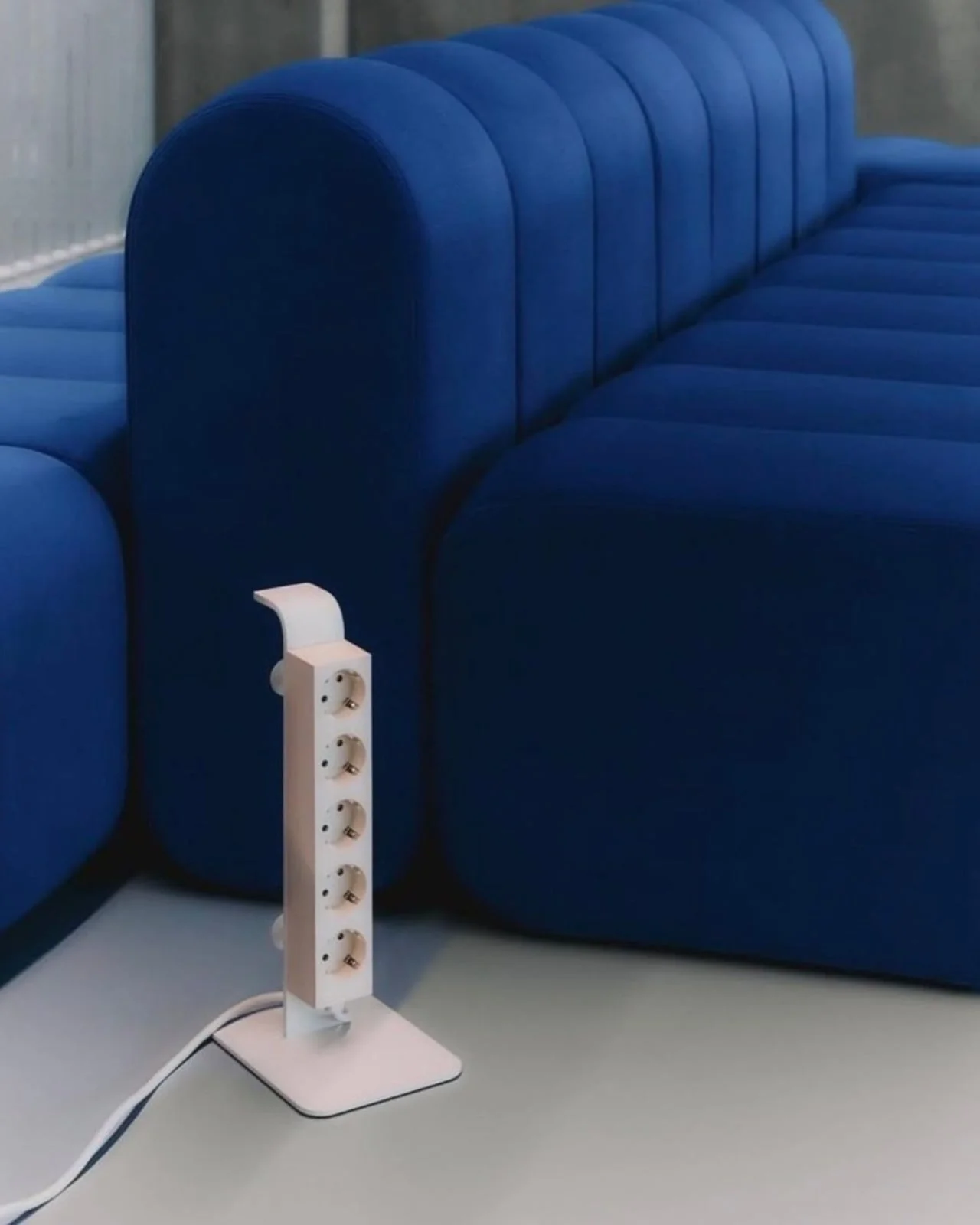
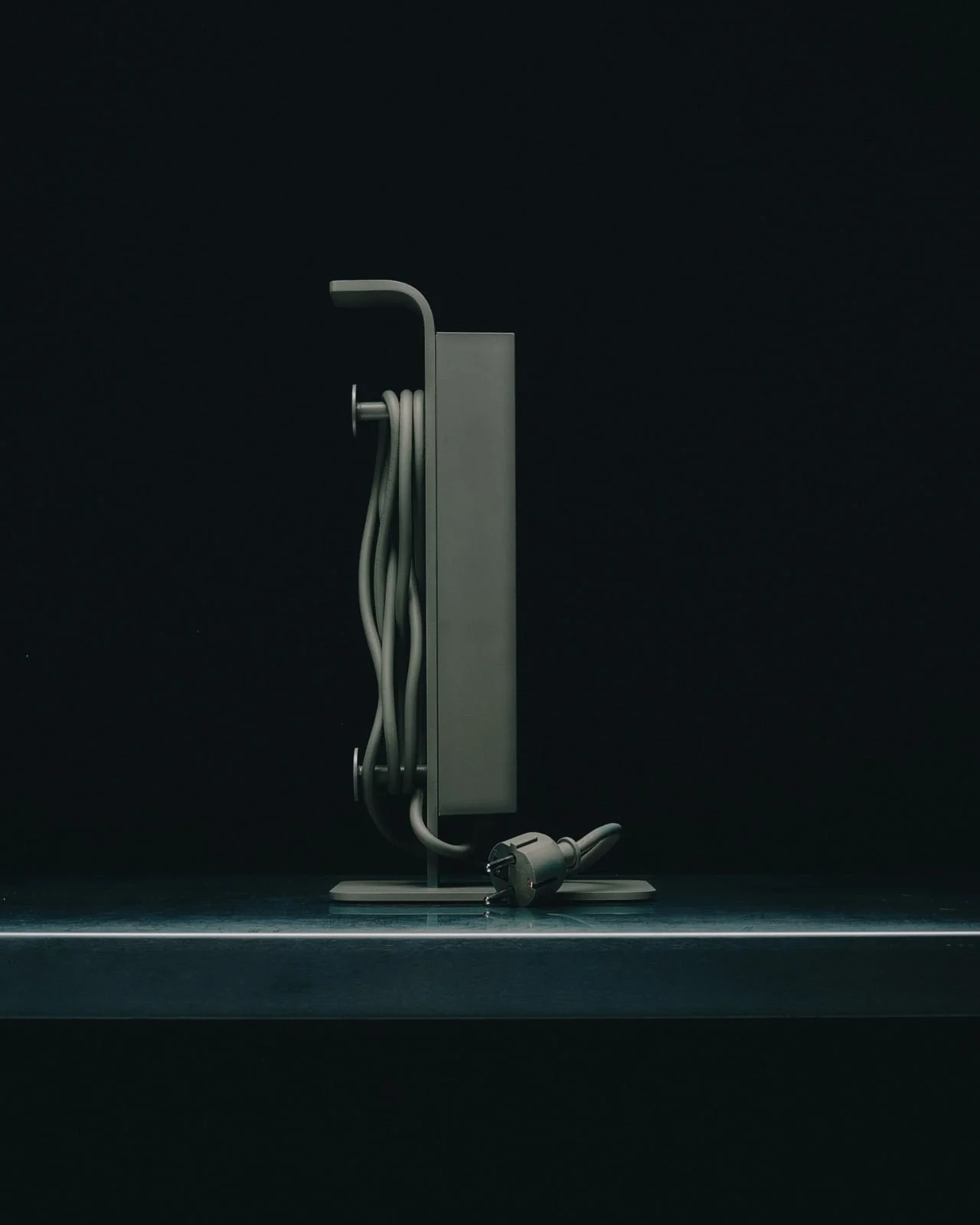
Two steel accessories are built around Pedestal’s separately sold Power Beam. The powder-coated Power Shell surrounds the Beam and works either upright or flat, while the Power Tower holds it vertically. The distinction is practical: the Shell screens the power strip, while the Tower keeps its outlets easy to reach. They’re not interchangeable answers to the same problem. One puts more emphasis on covering the strip; the other makes orientation and access the priority.

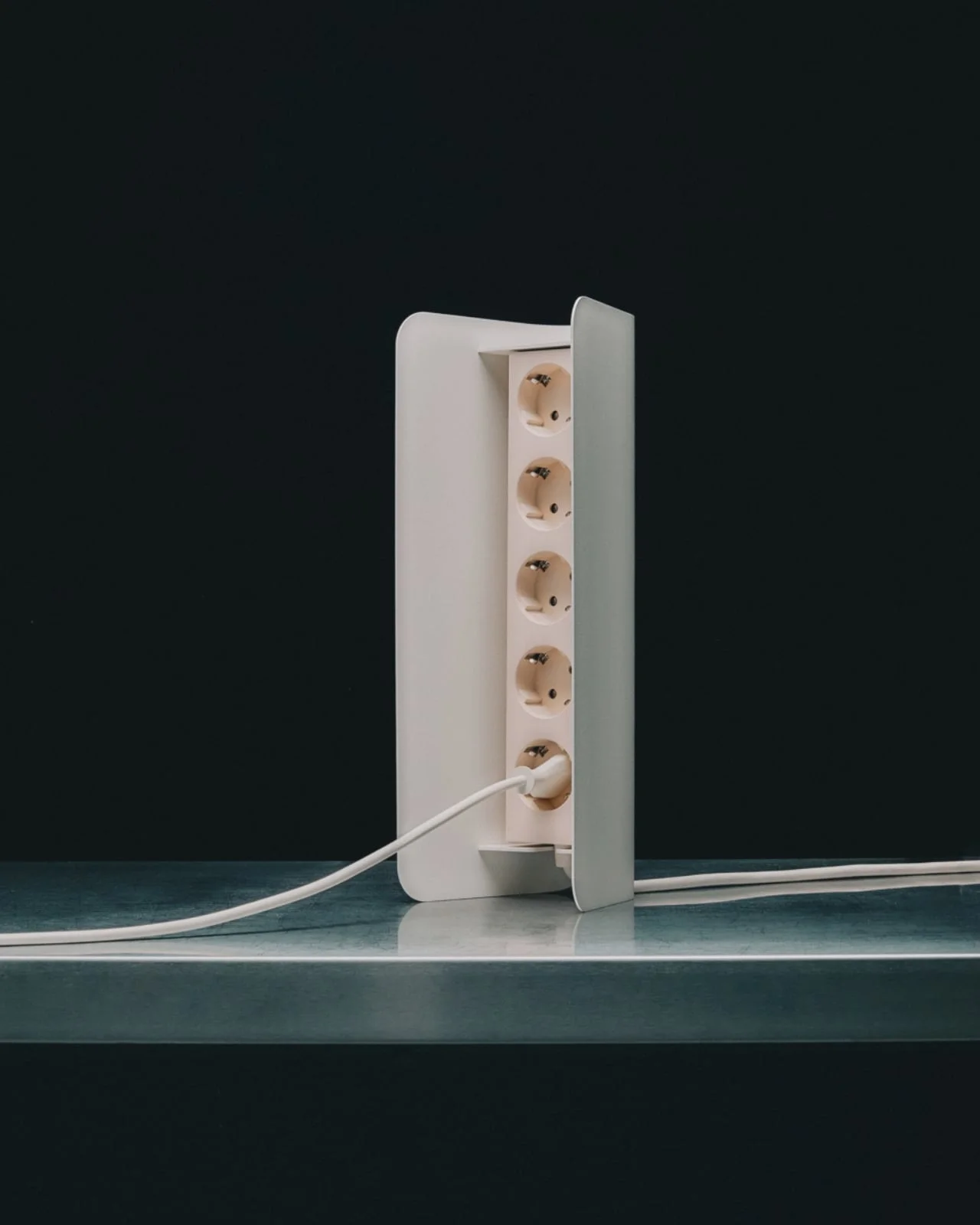
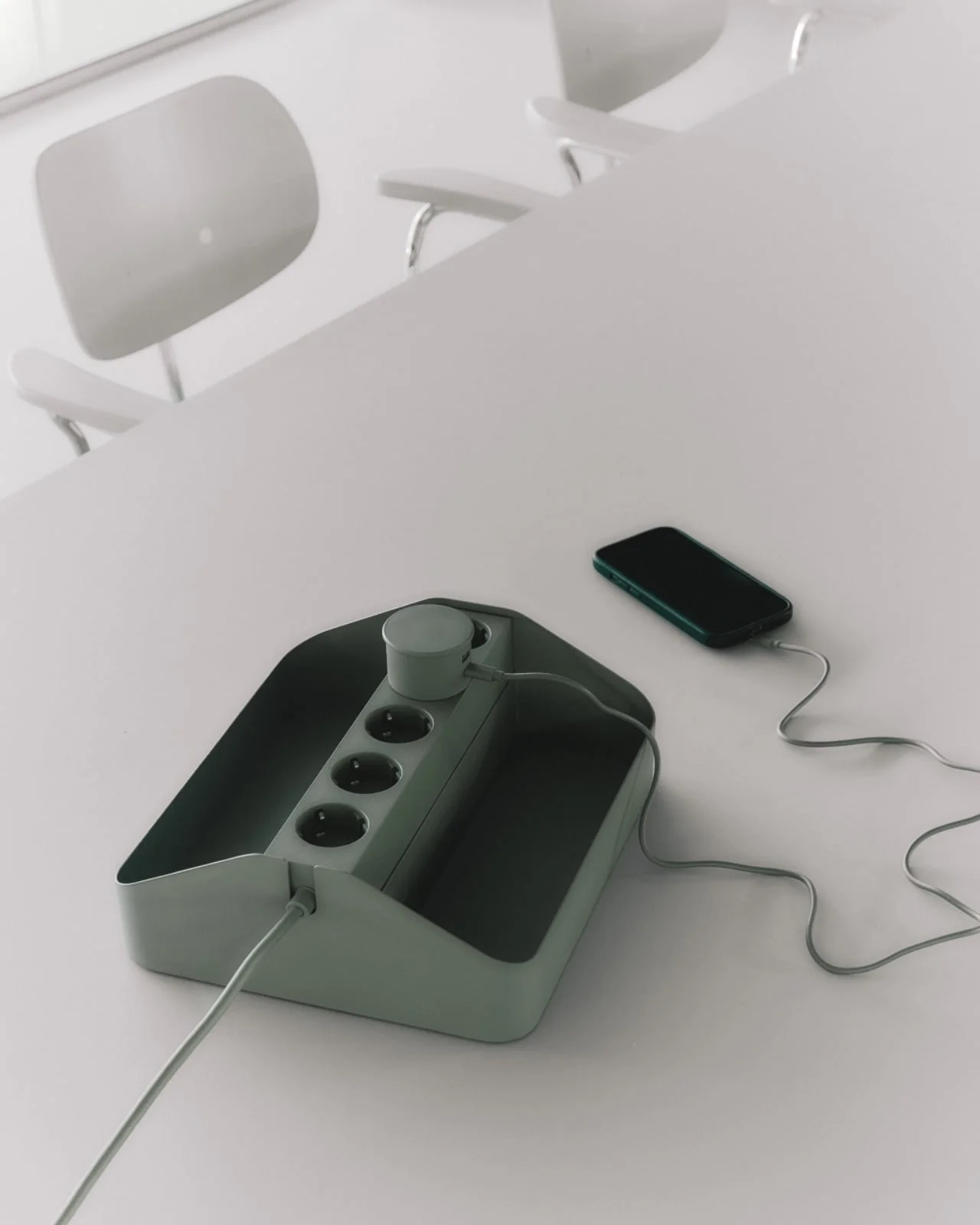
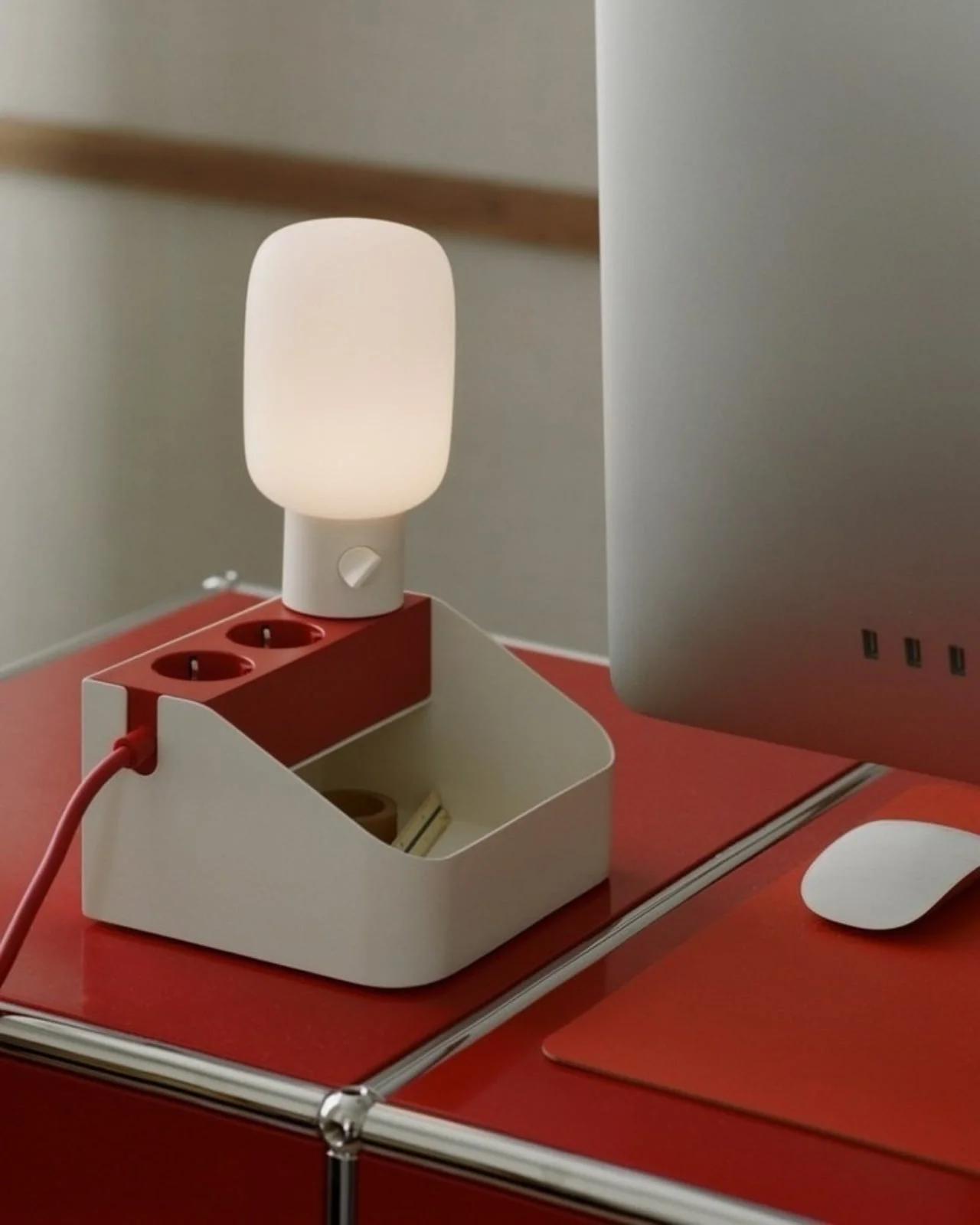
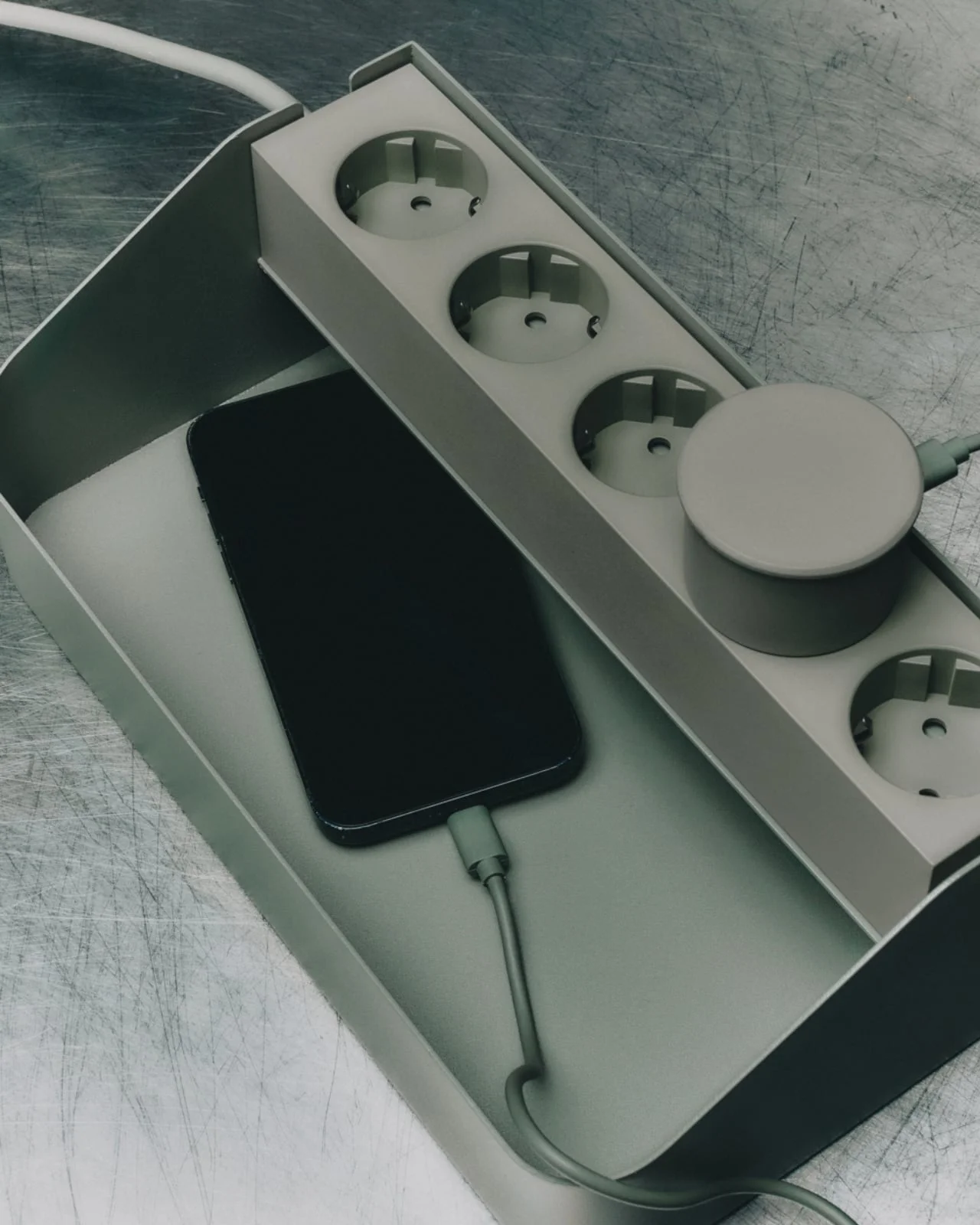
The steel Power Tray brings the Beam onto the work surface, adding space for adapters, cables, and small essentials around the power strip. A double version offers two compartments. It functions as a desk organizer, but its connection to the power system gives the tray a clear purpose: keeping storage near the devices that need power. That can help reduce the scatter of small items around a workstation, where chargers and accessories often compete for the same limited surface.
Still, the Beam accessories depend on an existing or separately purchased product, so they make most sense for someone already building around that system. The tray may help define a place for the power strip and its nearby items, but it also claims desk space. The appeal rests on whether a more organized work surface is worth that footprint—and whether the Beam is already part of the setup.
Prices and fit matter
Pedestal lists the Cable Bagel at $45 and the Cable Villa at $180. That’s a meaningful premium for cord management, so choosing by the actual problem makes more sense than buying the collection as a set. The Bagel handles loose cable; the Villa stores a broader mix of gear; the Beam accessories require an existing or separately purchased Beam. Buyers should also check regional plug compatibility before ordering. The collection’s visual consistency may be appealing, but it doesn’t make every component necessary for every room.
Price also changes the standard each object has to meet. A simple cord holder needs to be convenient enough that it earns its place in daily use, while a larger box has to justify both its cost and the floor or shelf space it occupies. The numbers here are underwhelming if the goal is only to hide one cable. They’re easier to defend when a piece solves a persistent, visible problem and fits the way the room is used.
What tidy power setups can—and can’t—change
The Villa is the strongest expression of the collection’s premise: a box for the least attractive part of a setup that doesn’t need to be hidden away itself. This is more significant than it looks, because many home accessories treat utility as something to conceal completely. Pedestal’s approach instead makes organization part of the room’s appearance, asking the container to look intentional while the equipment stays within reach. And yet, good styling can’t substitute for a useful layout.
None of these pieces will reduce the number of devices or make cables disappear. They offer a more achievable improvement—giving the power equipment already in a home a defined place, and making that place easier to live with. (And this is the part most people overlook.) A tidy setup still needs to work when someone plugs in a device, moves a screen, or has to reach an adapter. If an organizer blocks those ordinary actions, its clean appearance won’t last.
For buyers, the broader lesson is to start with the equipment and the room, then choose the accessory. A small cord bundle, a collection of power gear, and a desk built around a Beam each call for different solutions. Here's the thing: these objects are most persuasive when they make a familiar inconvenience easier to manage without pretending it can be erased. A better-looking corner. That’s a modest promise, but a credible one.
The post Pedestal’s Cable Storage Is Actually Worth Leaving on Display first appeared on Yanko Design.


Discussion
Sign in to join the discussion.