AYANEO’s Ice Pink handheld pairs a translucent shell with GBA-inspired controls and a 3.5-inch screen. Sales are planned for mid-November 2026.
A translucent finish with a clear purpose
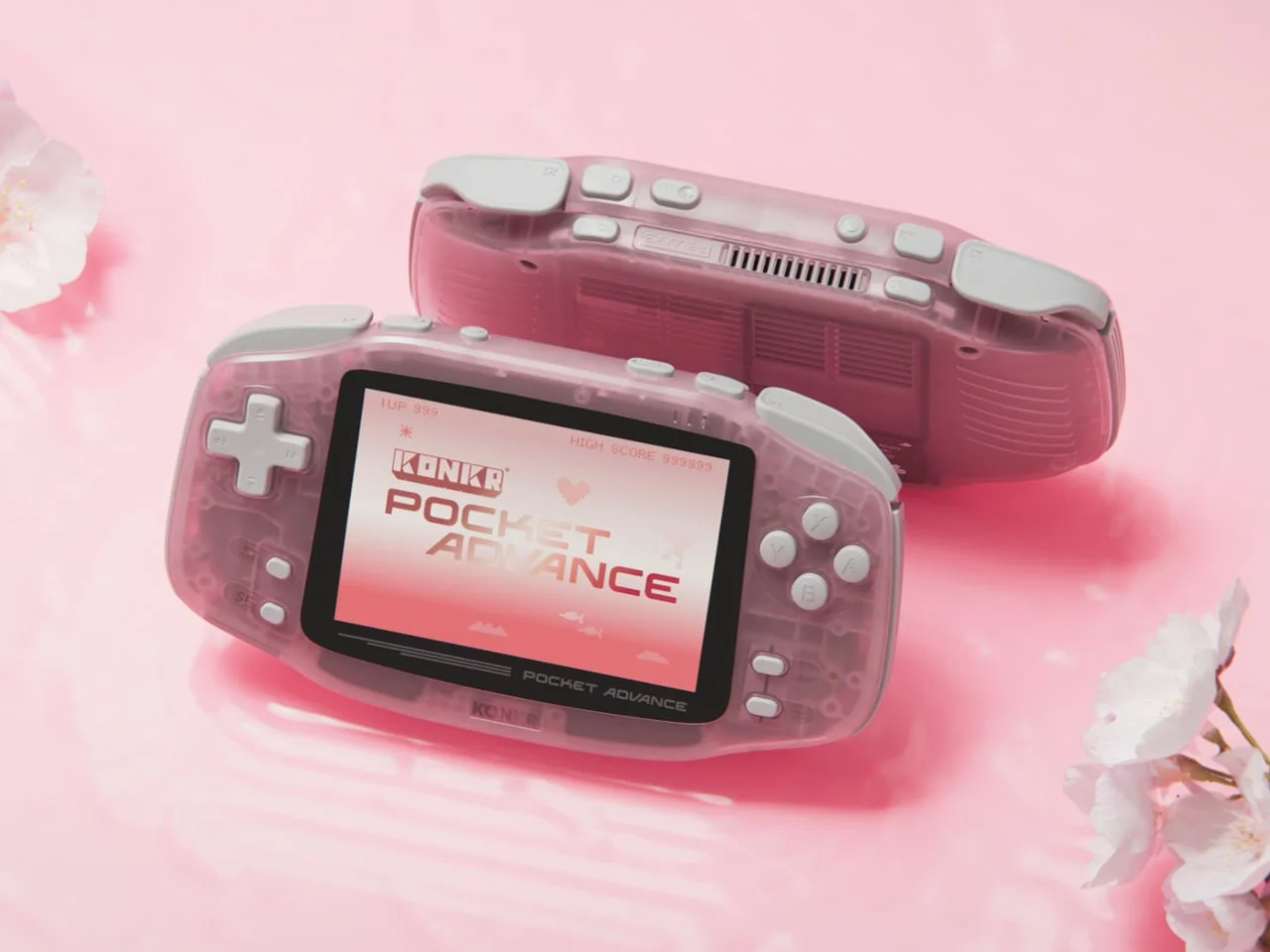
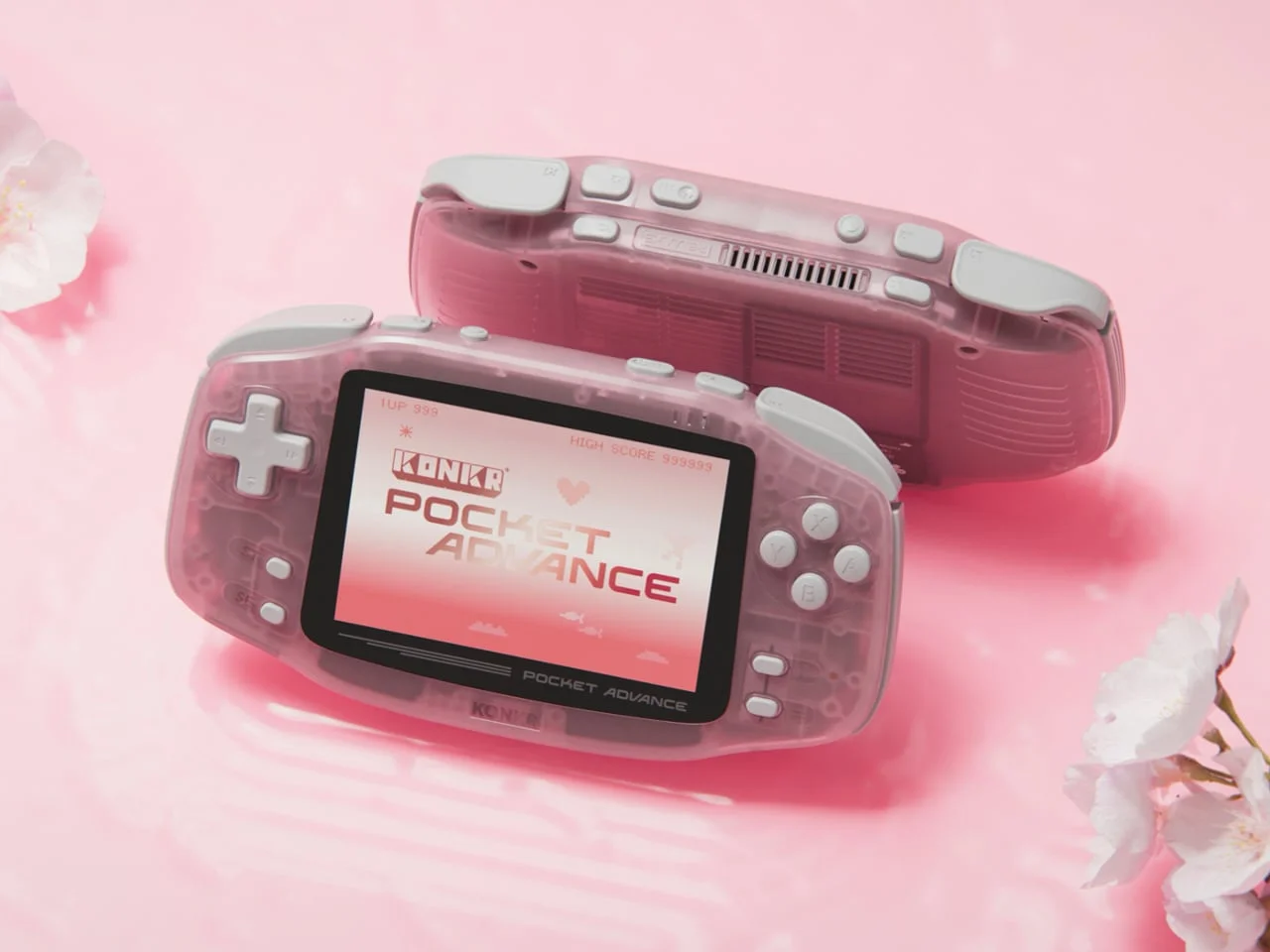
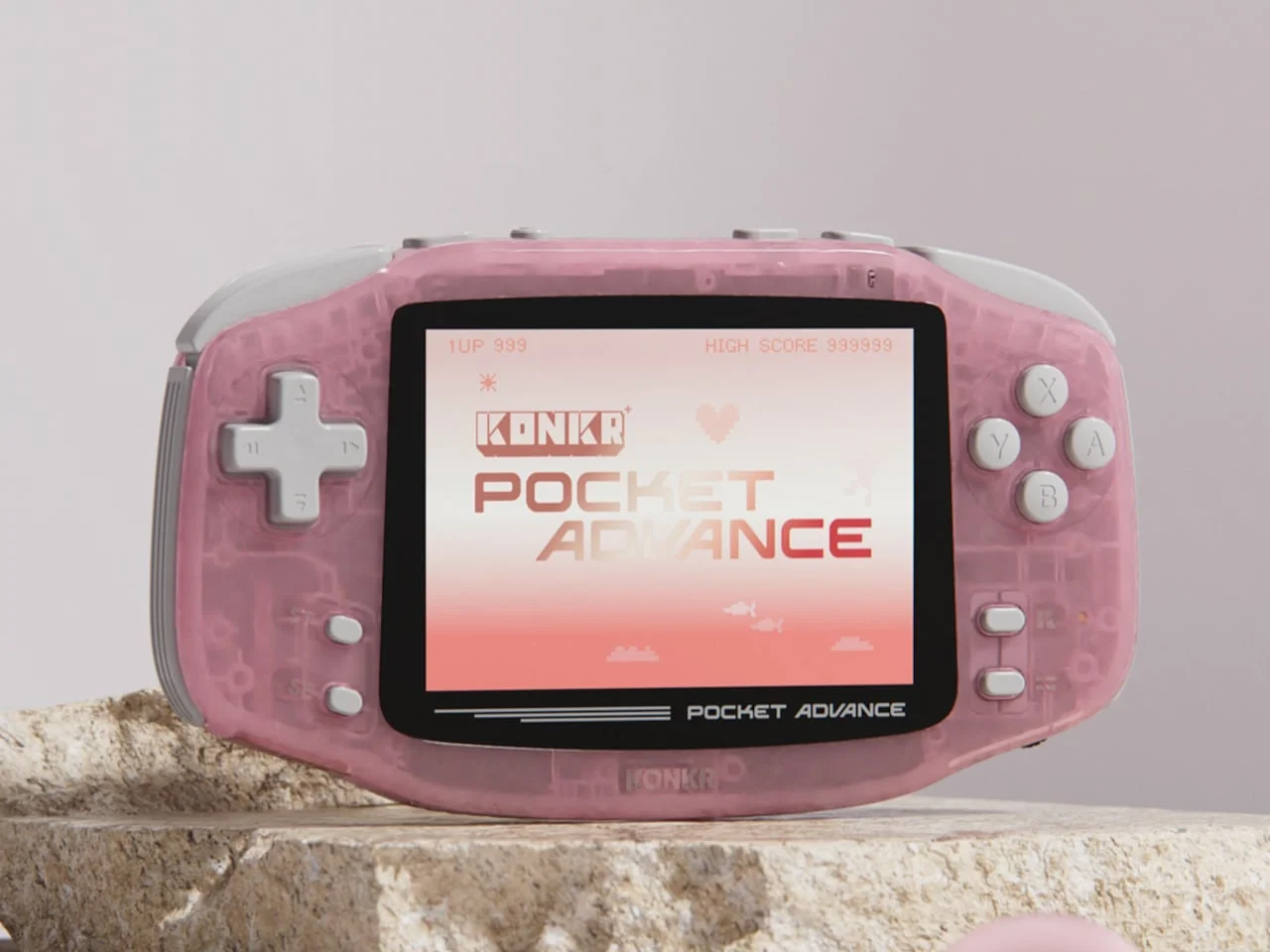
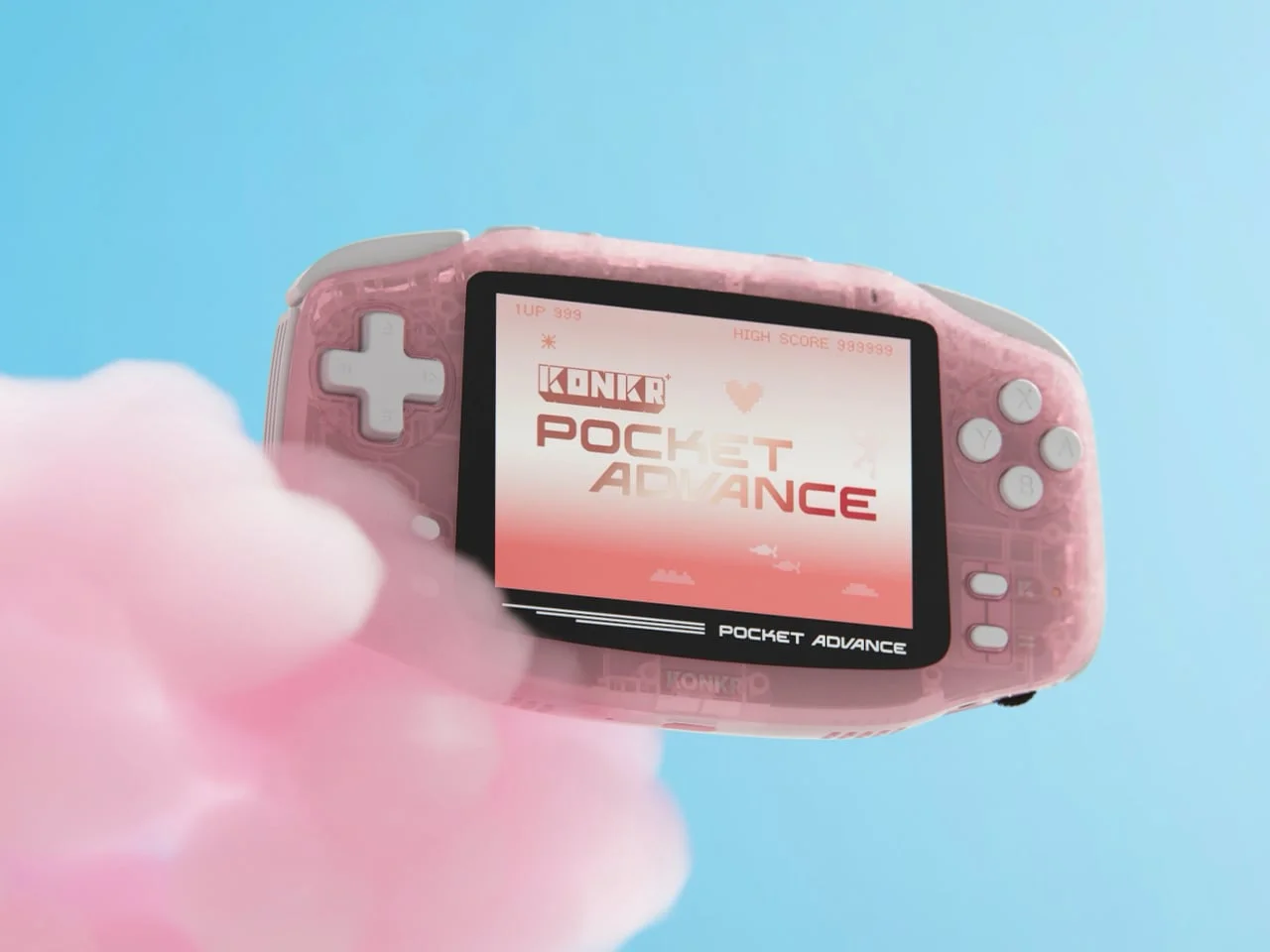
The Ice Pink edition gives AYANEO’s KONKR Pocket ADVANCE a clear visual hook: its translucent shell turns internal structure into part of the design. The pink tint softens the ribs, mounting points and darker layers beneath, while a black screen bezel and pale controls keep the layout legible. It’s a finish that makes the handheld itself the first thing you notice, before the game begins.
That choice gives the case a role beyond color. On an opaque handheld, seams and supports recede; here, they become part of the visual composition, giving the device a more technical character. The balance matters: the tint makes the internal shapes visible without letting them compete too heavily with the screen and controls. This is more significant than it looks, because a limited color edition has to make its distinction clear without changing how the hardware works.
The device keeps the rounded outline of the Game Boy Advance. AYANEO’s new version of its Android gaming handheld retains that compact, familiar arrangement, with a screen between physical controls. The design’s nostalgia has a practical side, too: the display’s proportions suit the games that inspired the shape.
That familiarity is doing useful work. A centered screen and controls on either side make the handheld’s purpose immediately clear, while the rounded outline recalls a format built around portable play. But resemblance can set expectations that the software and controls won’t fully meet. The Pocket ADVANCE borrows the silhouette, not the original device’s cartridge-based experience.
Designer: AYANEO
A screen built for GBA proportions
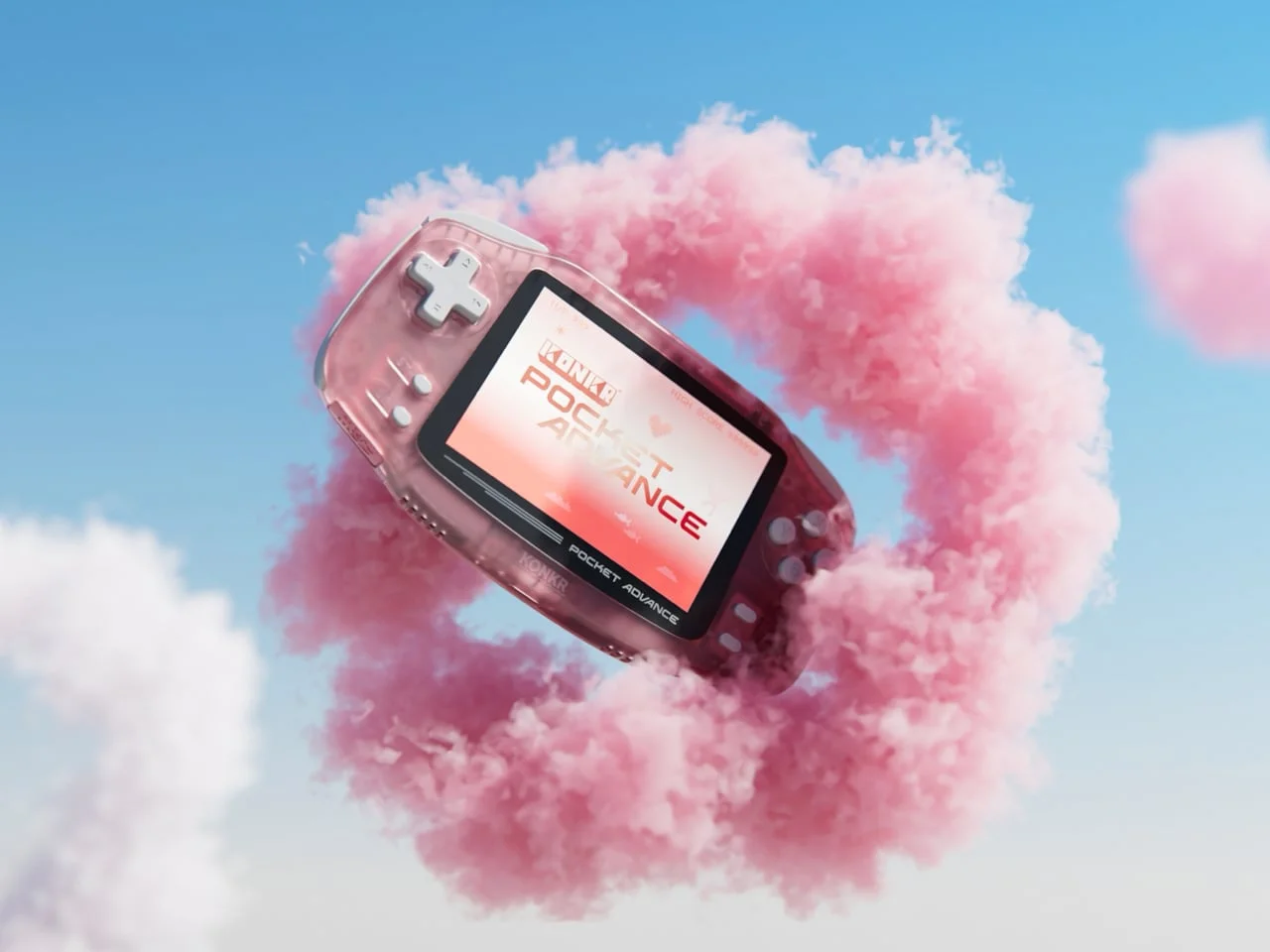
The 3.5-inch LCD has a 3:2 aspect ratio and 960×640 resolution. That matches the proportions of Game Boy Advance games, and fourfold integer scaling can map each original pixel to a 4-by-4 block. The result keeps pixel art in proportion instead of stretching it to fill a differently shaped screen.
That matters most to players who notice how older games are rendered. When a display’s shape differs from a game’s original frame, software often has to stretch the image, add borders or crop content. A 3:2 panel gives this category of game a more natural fit, while integer scaling keeps the relationship between source pixels and screen pixels consistent. It doesn’t make every game look identical to its original display, but it avoids one common source of distortion.
The 960×640 resolution also gives the device room to show a clean image at this size. Still, resolution alone can’t tell you everything about a screen: brightness, color, viewing angles and response all affect what play feels like. Those details aren’t specified here, so the numbers describe the panel’s shape and pixel count, not its full visual performance.
At approximately 5.96 by 3.24 by 0.87 inches and 7.9 ounces, the standard Pocket ADVANCE is small enough to carry easily. Curved sides frame the display and leave room for controls on both sides; ridges at the back give fingers somewhere to settle. Size and grip remain personal, though, so the measurements alone can’t promise a comfortable fit for every player.
The dimensions suggest a device aimed at being held for play rather than treated as a miniature tablet. A compact body can make it easier to tuck away, but it also limits how much space designers have for controls and hand support. The rear ridges offer a physical cue for finger placement, though their effectiveness will depend on hand size and how each person holds the unit.
Physical controls, with a clear trade-off
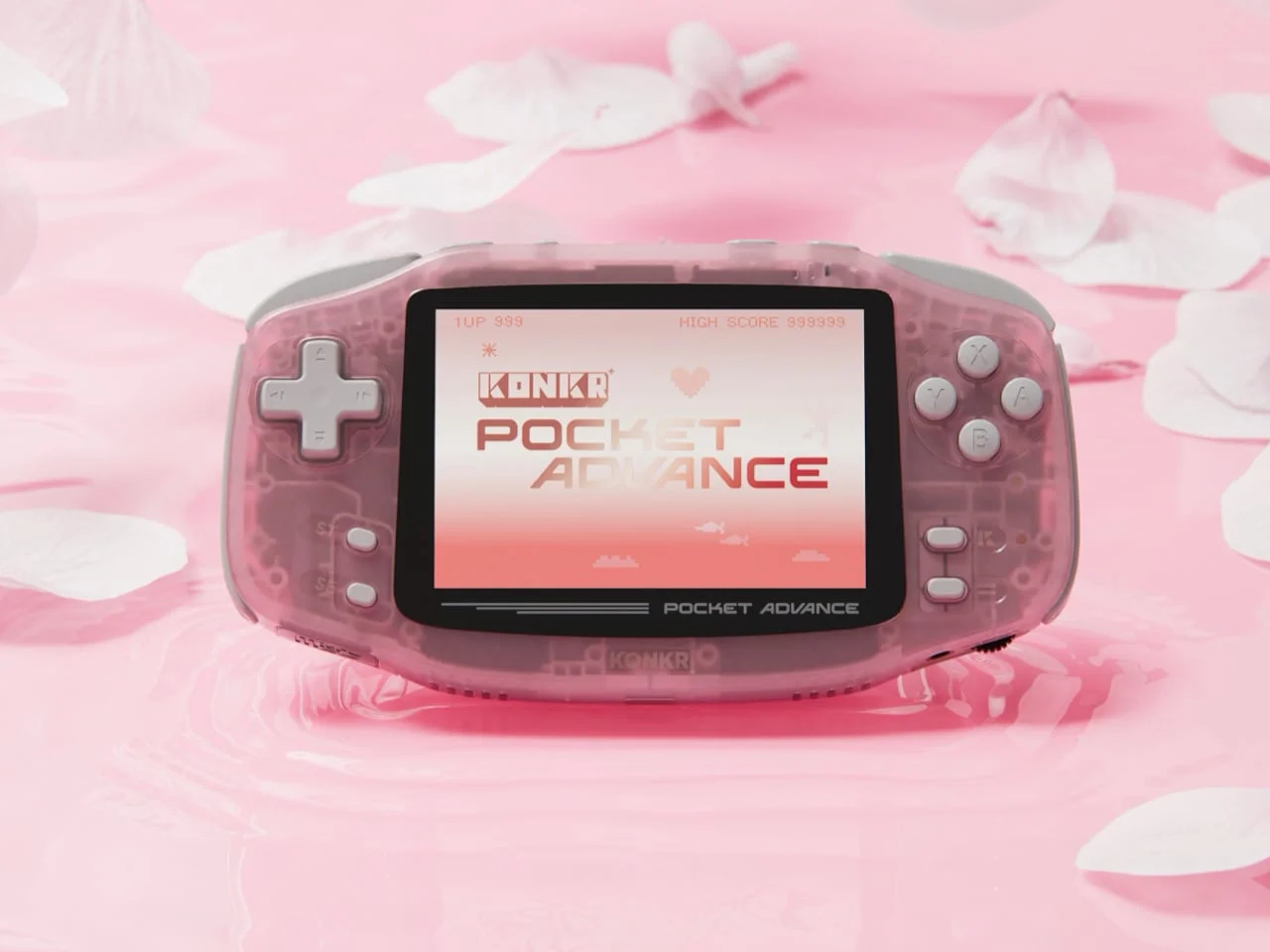
The four face buttons and shoulder controls offer more inputs than the original Game Boy Advance’s two-button layout. Yet the Pocket ADVANCE has no analog stick. That’s a natural fit for games designed around a D-pad, but titles built around analog movement will demand a compromise. The device’s familiar form can’t change what those games expect from their controls.
That’s the central usability question for an Android handheld: its software options may reach beyond games designed for a directional pad, while its physical layout stays rooted in older portable systems. Touch controls can fill some gaps, but they don’t provide the same feel as a dedicated stick. If you’re working in this space, the point is familiar: broad compatibility only helps when the controls remain comfortable for the games people actually want to play.
Small hardware details make day-to-day use more straightforward. A volume wheel provides quick adjustment, and the headphone jack supports wired listening without an adapter. USB-C handles charging and data, while a microSD slot adds expandable storage.
These are practical choices, especially for a device expected to handle local game files and portable listening. A physical volume wheel can be easier to adjust by feel than an on-screen control, and wired audio avoids relying on a wireless connection. The microSD slot offers flexibility as a collection grows, though the amount of supported storage isn’t stated. (And this is the part most people overlook: small interface details can shape daily use more than a striking shell does.)
Android under the translucent shell
The platform pairs a MediaTek Helio G90T processor with active fan cooling and a 4,000 mAh battery. Android makes the Pocket ADVANCE an emulation handheld, rather than a replacement that plays Game Boy cartridges. That opens up software options, but also brings setup and configuration; the familiar controls don’t make the experience identical to using an original handheld.
Emulation puts more responsibility on the owner than a dedicated system with a fixed game library. Players may need to install or configure software and adjust settings to suit different titles. Similar Android handhelds typically trade some plug-and-play simplicity for flexibility, and that trade is part of the product’s appeal as well as its friction. The fan indicates active cooling is part of the hardware design, but the supplied details don’t establish how loud it is or how performance changes during extended play.
The 4,000 mAh battery gives a capacity figure, not a runtime promise. Actual endurance can vary with screen brightness, processing load, cooling and software settings. That makes battery life a practical unknown for anyone planning long sessions away from a charger. Here's the thing: a compact handheld can look ready for travel, but portability also depends on how often it needs to be plugged in.
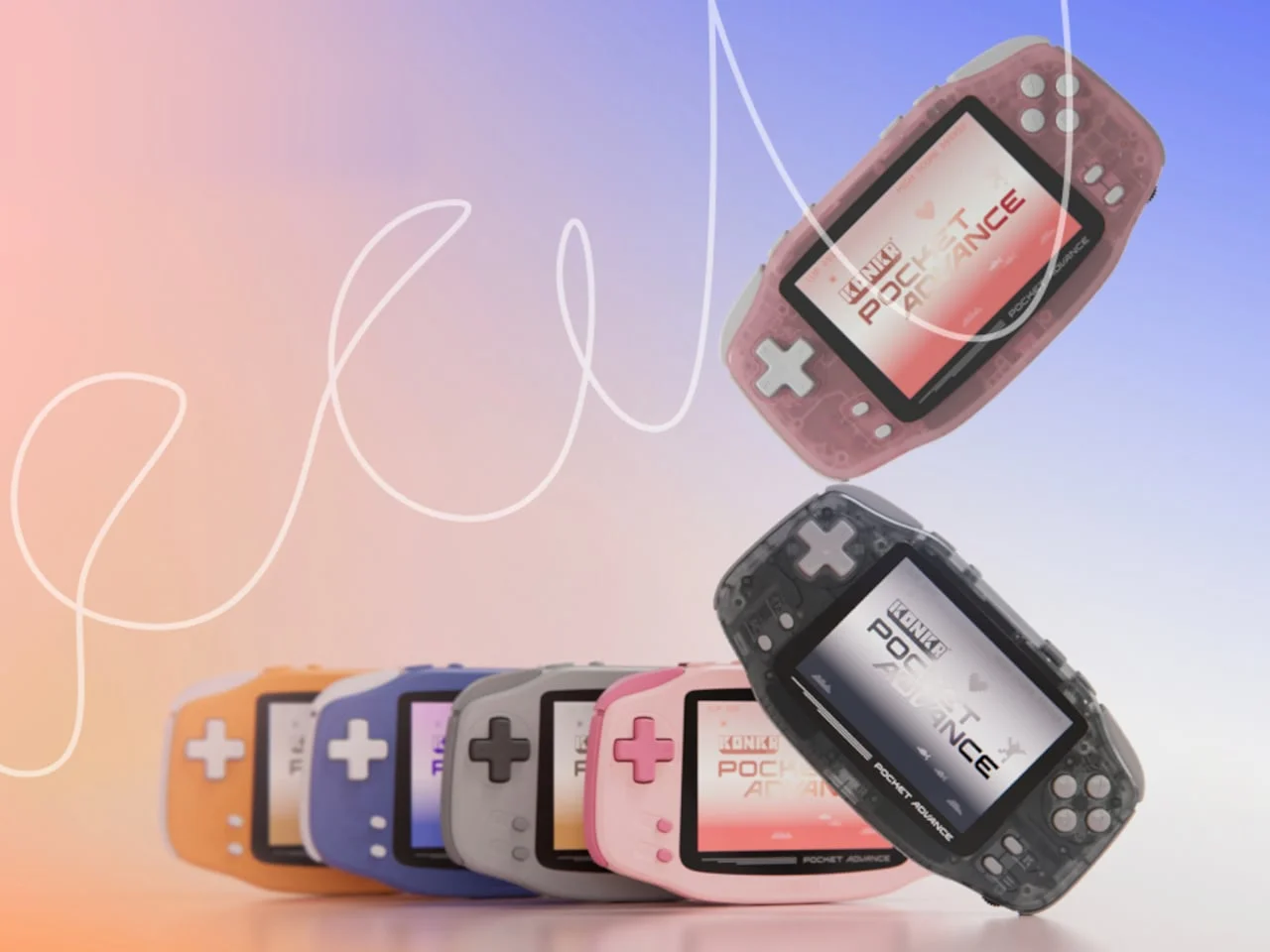
AYANEO plans to open sales in mid-November 2026. Pricing and shipping schedules haven’t been confirmed. For current Pocket ADVANCE owners, the Ice Pink version offers a new appearance, with no stated hardware upgrade. Its appeal will come down to whether the translucent finish is worth waiting for once the price and availability are clear.
That leaves the edition with a simple proposition: the hardware stays familiar, while the shell gives it a stronger visual identity. Without a price or shipping schedule, it’s difficult to judge whether that identity will justify an upgrade for existing owners. For new buyers, those missing details also make it too early to weigh the Ice Pink finish against other options. A colorway, and a few unanswered questions.
What the Ice Pink edition signals
The Pocket ADVANCE sits between two expectations: the comfort of a familiar retro layout and the flexibility of an Android device. Its proportions and pixel scaling speak directly to players drawn to older handheld games, while Android broadens the software possibilities and adds setup work. The hardware choices make the concept legible, but they don’t erase the differences between playing an original system and using an emulator.
The Ice Pink shell sharpens that identity by making the device’s construction visible. That’s a design decision with immediate appeal, though its value will be personal and largely cosmetic. For buyers who already own the standard Pocket ADVANCE, the case color is the stated reason to consider this edition; for everyone else, the unresolved price, shipping details, battery performance and screen characteristics will matter alongside the finish.
The post AYANEO’s Ice Pink Handheld Makes Its Hardware Part of the Decoration first appeared on Yanko Design.



Discussion
Sign in to join the discussion.