Dometic’s Out-Post is designed for daytime use, with a convertible bed, stowaway table and optional divider. The Out-Series starts at €1,799 in Europe in 2027.
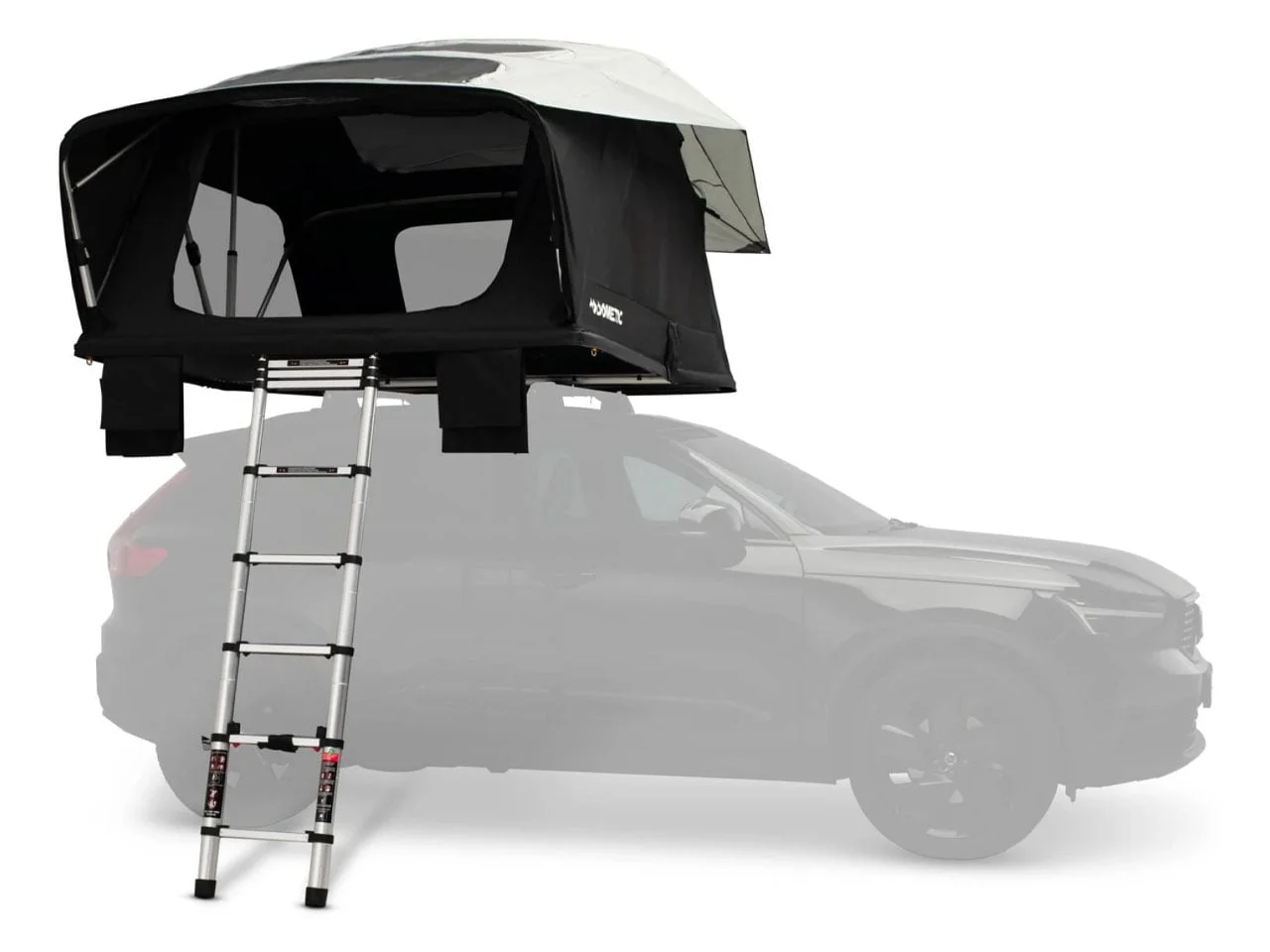
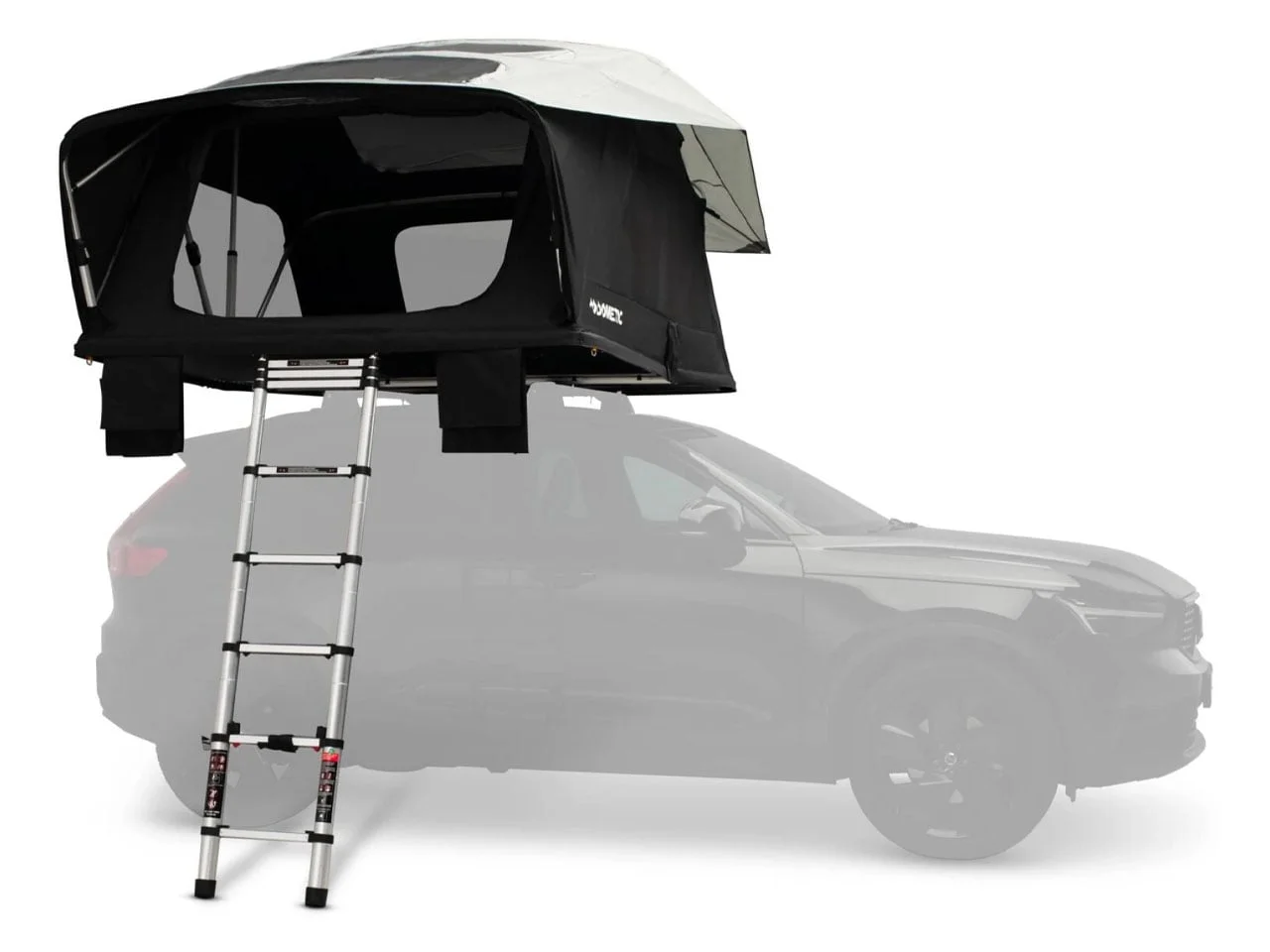
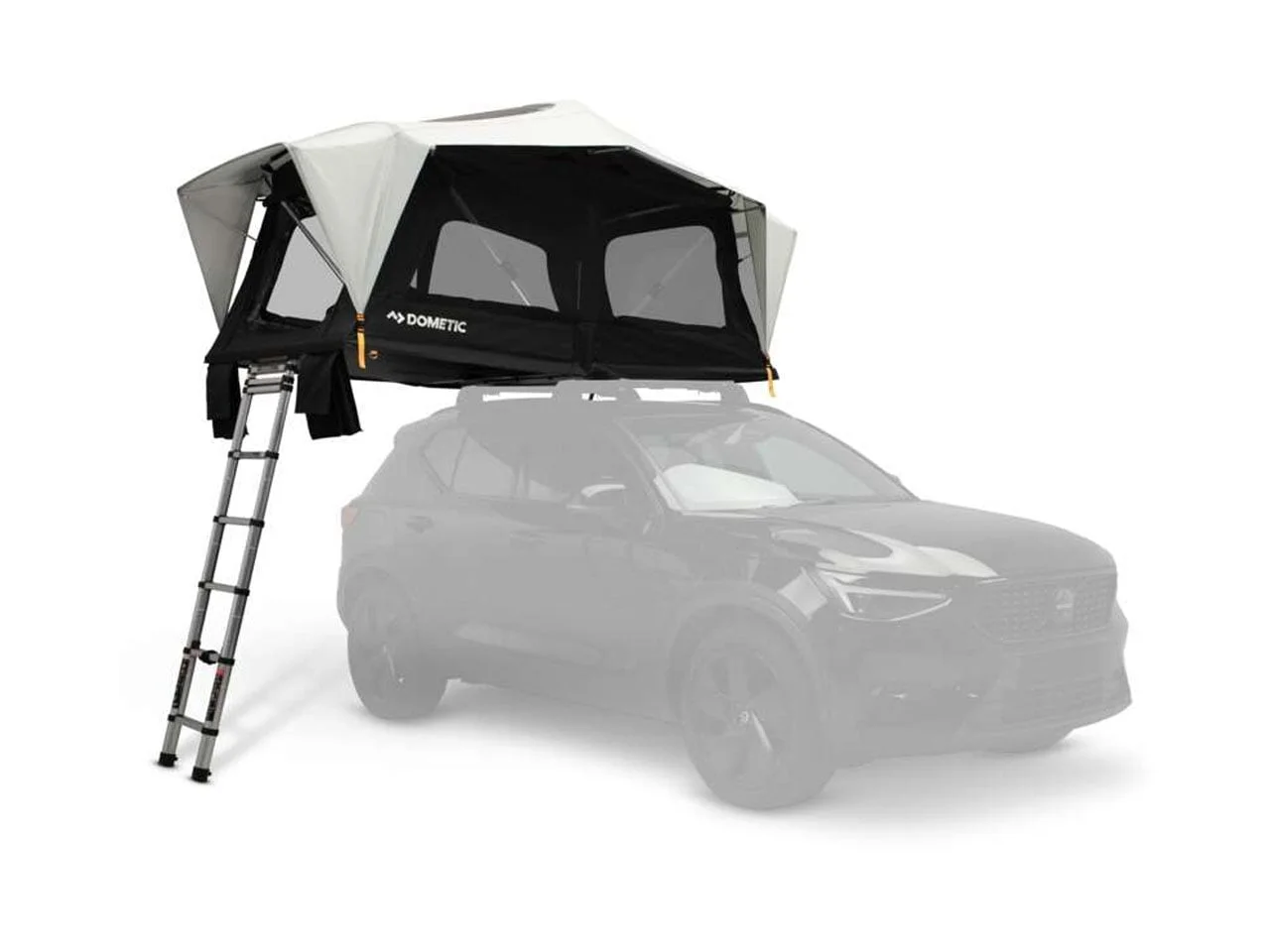
Dometic’s Out-Post is built around a different idea of rooftop camping: the tent should work as a place to spend time, not just somewhere to sleep. Its convertible bed, stowaway dining table and optional room divider give the interior more uses than a typical rooftop tent, though the product’s price and availability beyond Europe remain open questions. That change in emphasis is more significant than it looks: rooftop tents are constrained spaces, so every feature has to justify the room and setup it demands.
The Swedish company’s new Out-Series, led by the Out-Post, follows a broader push to make rooftop tents more practical during the day. It arrives after Thule’s Widesky hardshell rooftop tent, which also looks beyond overnight accommodation. Dometic’s approach adds a table that can be put away when it’s not needed, while the bed changes configuration to suit the space. The overlap points to a category-level question: can a tent mounted on a vehicle become a useful daytime room, or does that promise add complexity to a product most people primarily use for sleeping?
Designer: Domestic
A room for more than sleeping
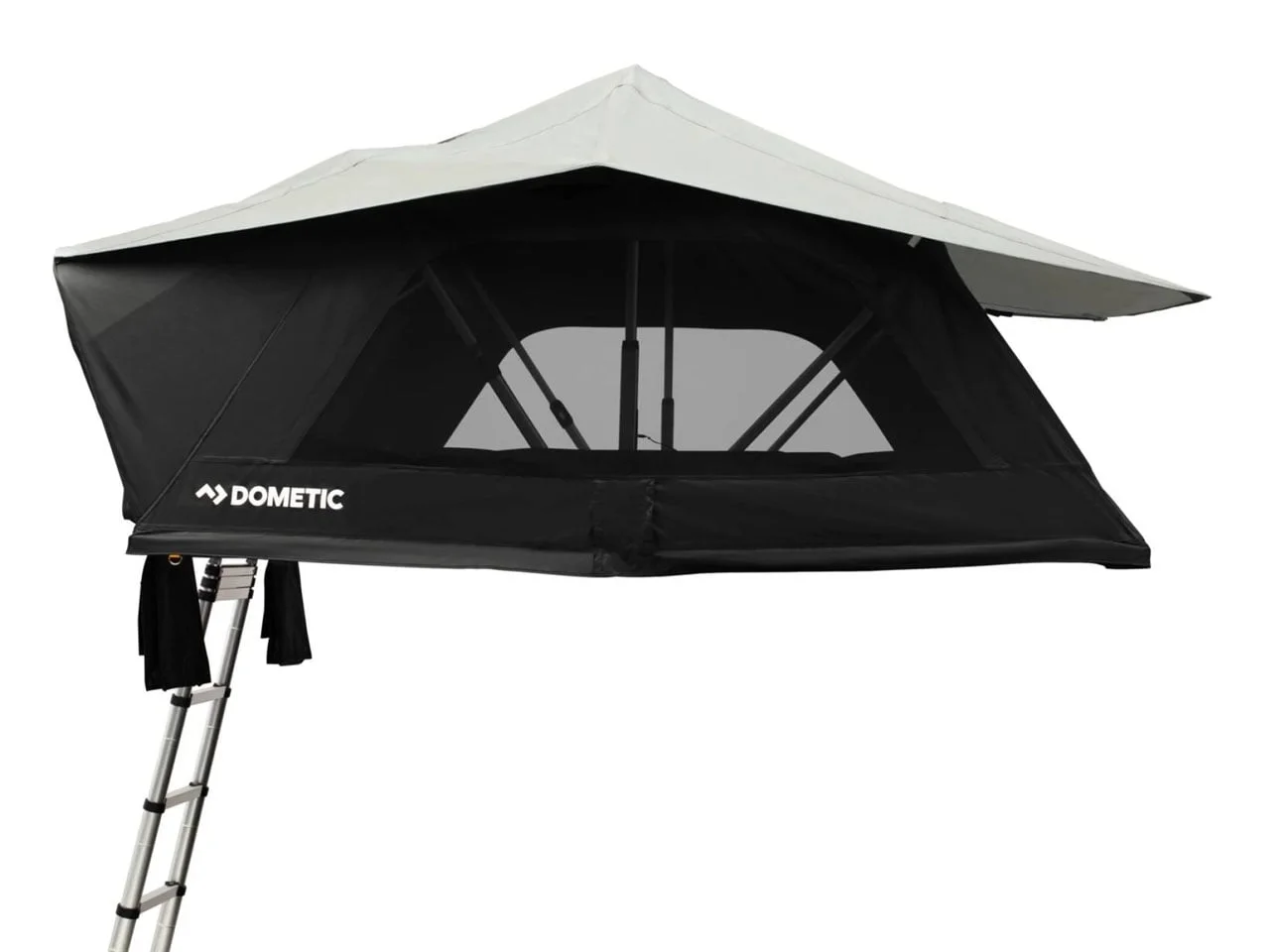
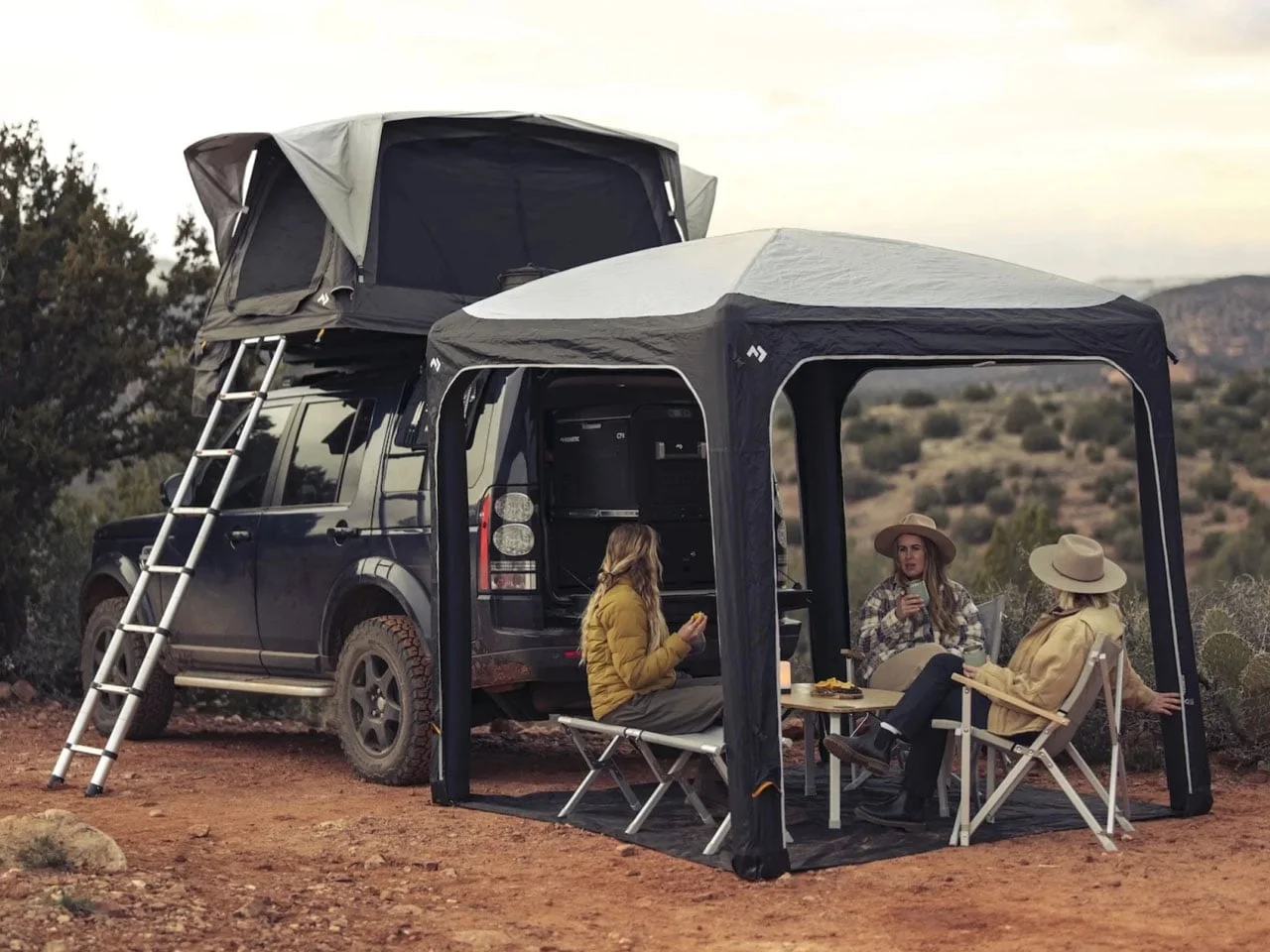
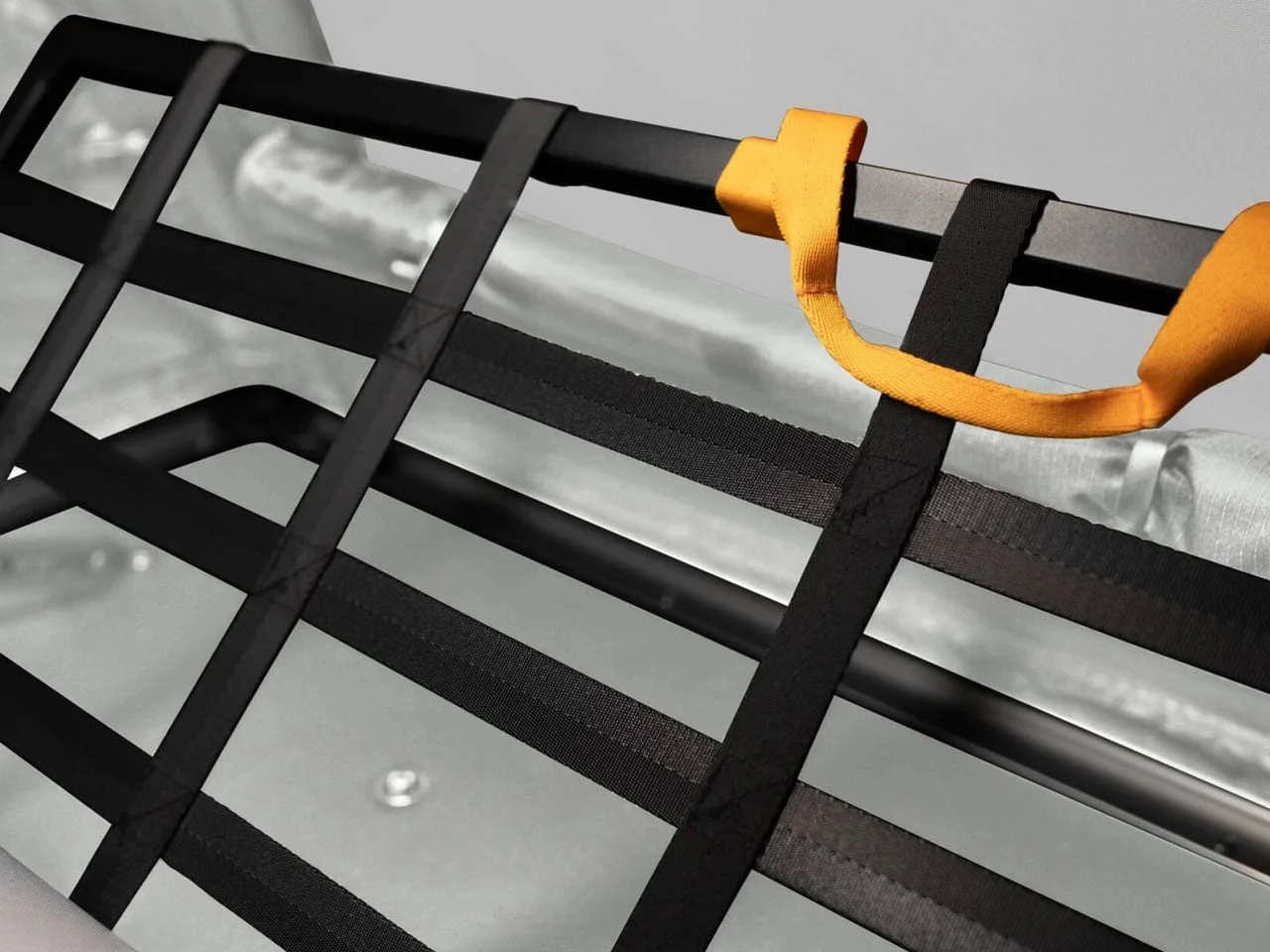
From the outside, the Out-Post resembles a conventional rooftop tent. Inside, the layout is designed to accommodate four people for more than a night’s rest. A telescopic ladder provides access, and metal frames support the canvas structure. These are familiar elements in a tent of this kind, but they also set the practical limits: people need to climb up, share the floor area and work around the frame while using the interior.
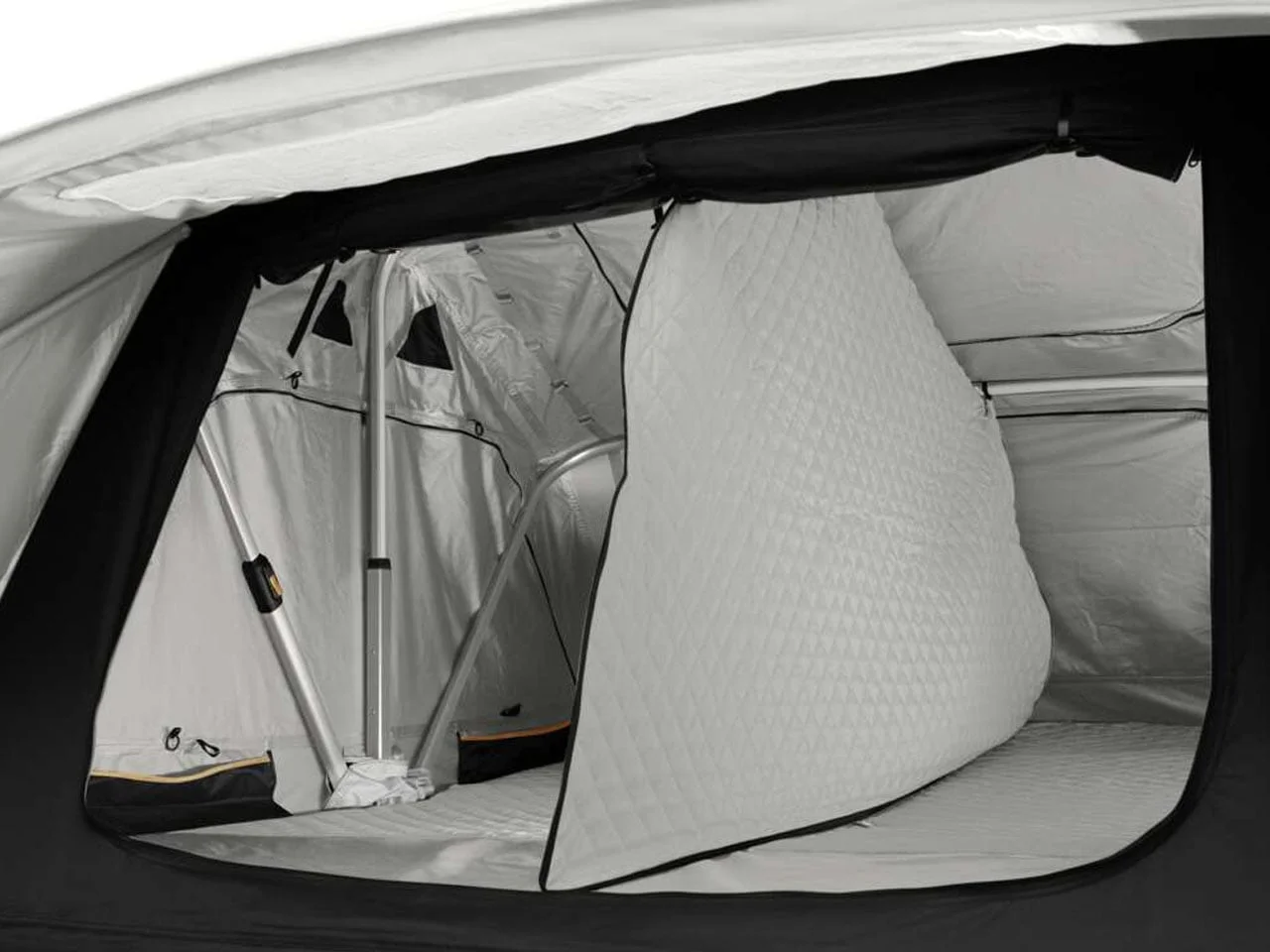
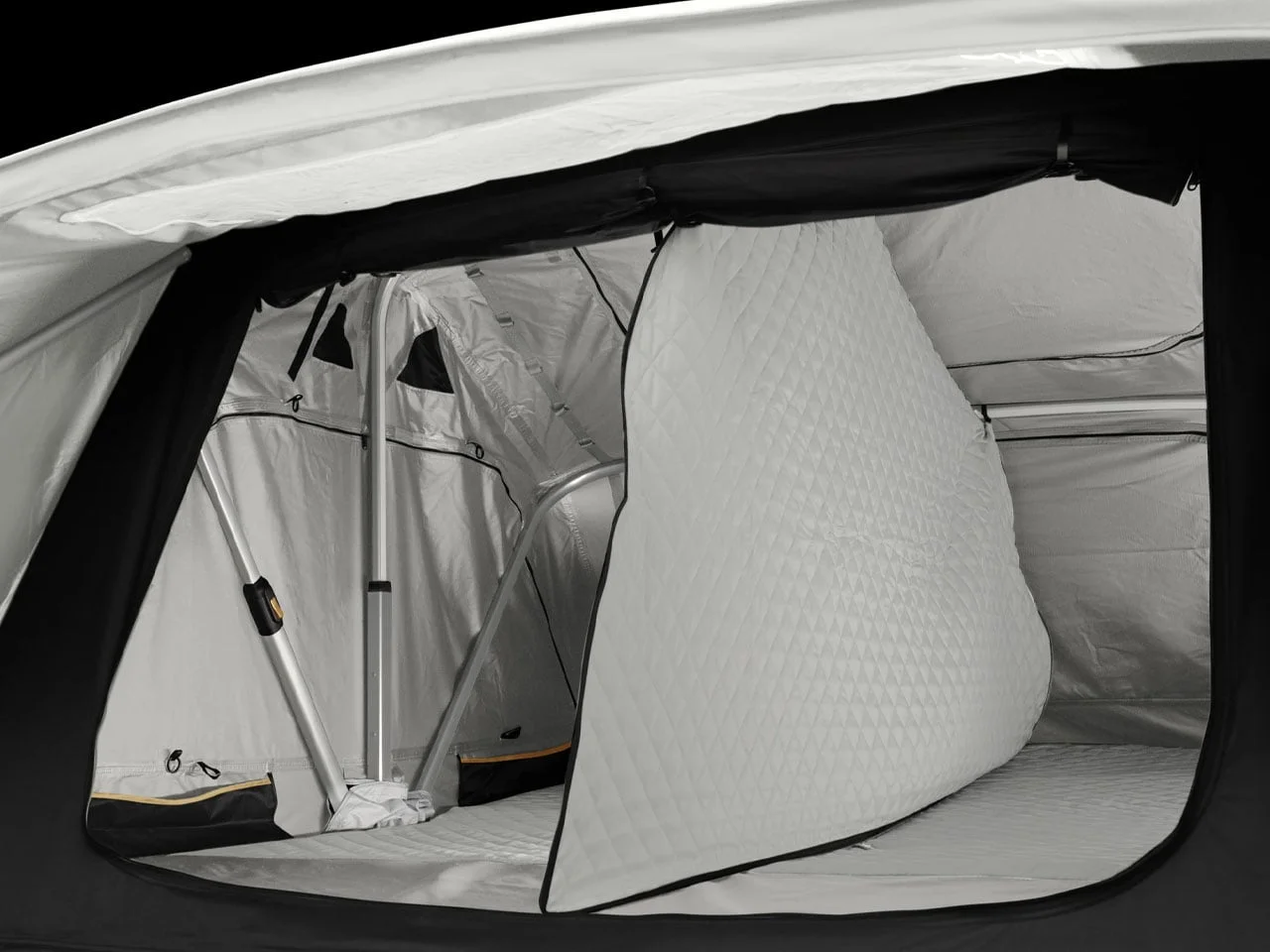
The standout feature is an optional divider that splits the floor area into two sections. That could offer parents and children some privacy within the same tent—a useful change for families who want to spend time indoors at camp. Dometic hasn’t shared details on how the divider is installed or how much space each section provides. Those details matter because a partition can create separation while also making an already compact interior feel tighter.
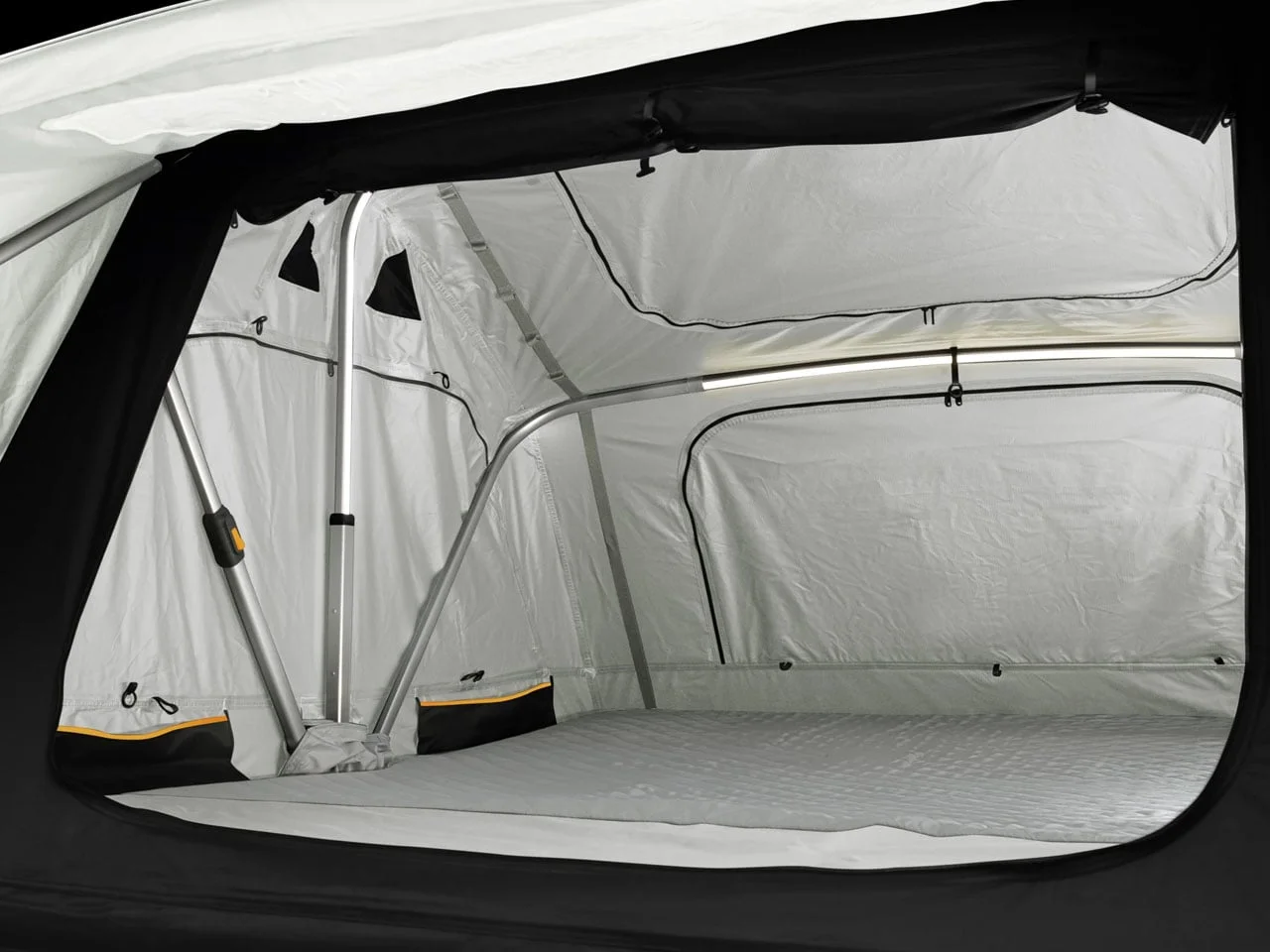
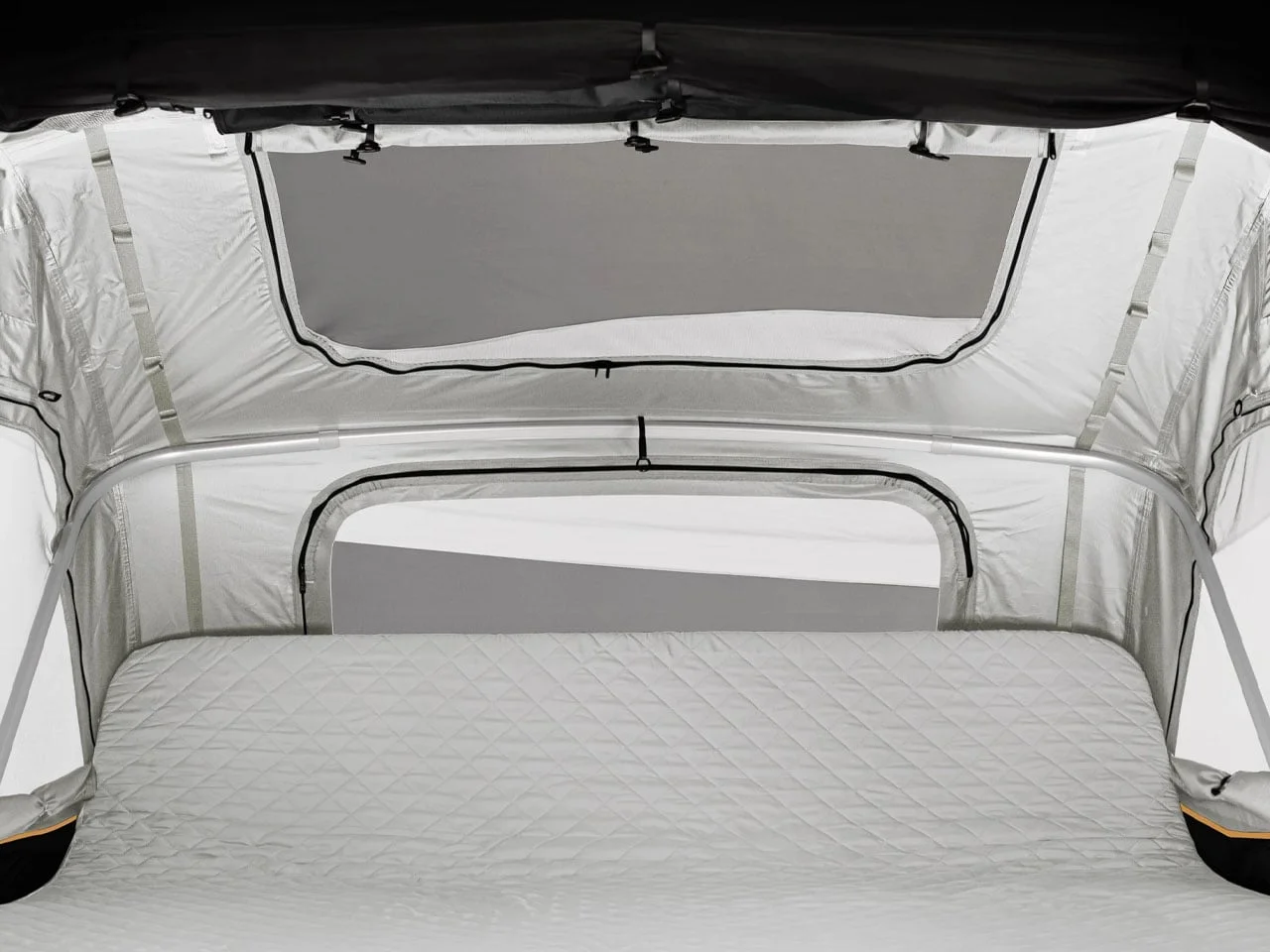
The Out-Series includes three tent models. Their interiors pair the transforming mattress with the stowaway table, making room for dining or working when the bed is folded away. That arrangement suggests a tent intended to support several kinds of downtime, from a meal to a place to sit with a task. But the design’s appeal will depend on how comfortably those configurations work in a rooftop footprint, and on how easily the furniture changes position in everyday use. A clever layout has to earn its keep each time it’s set up.
Light, launch and pricing
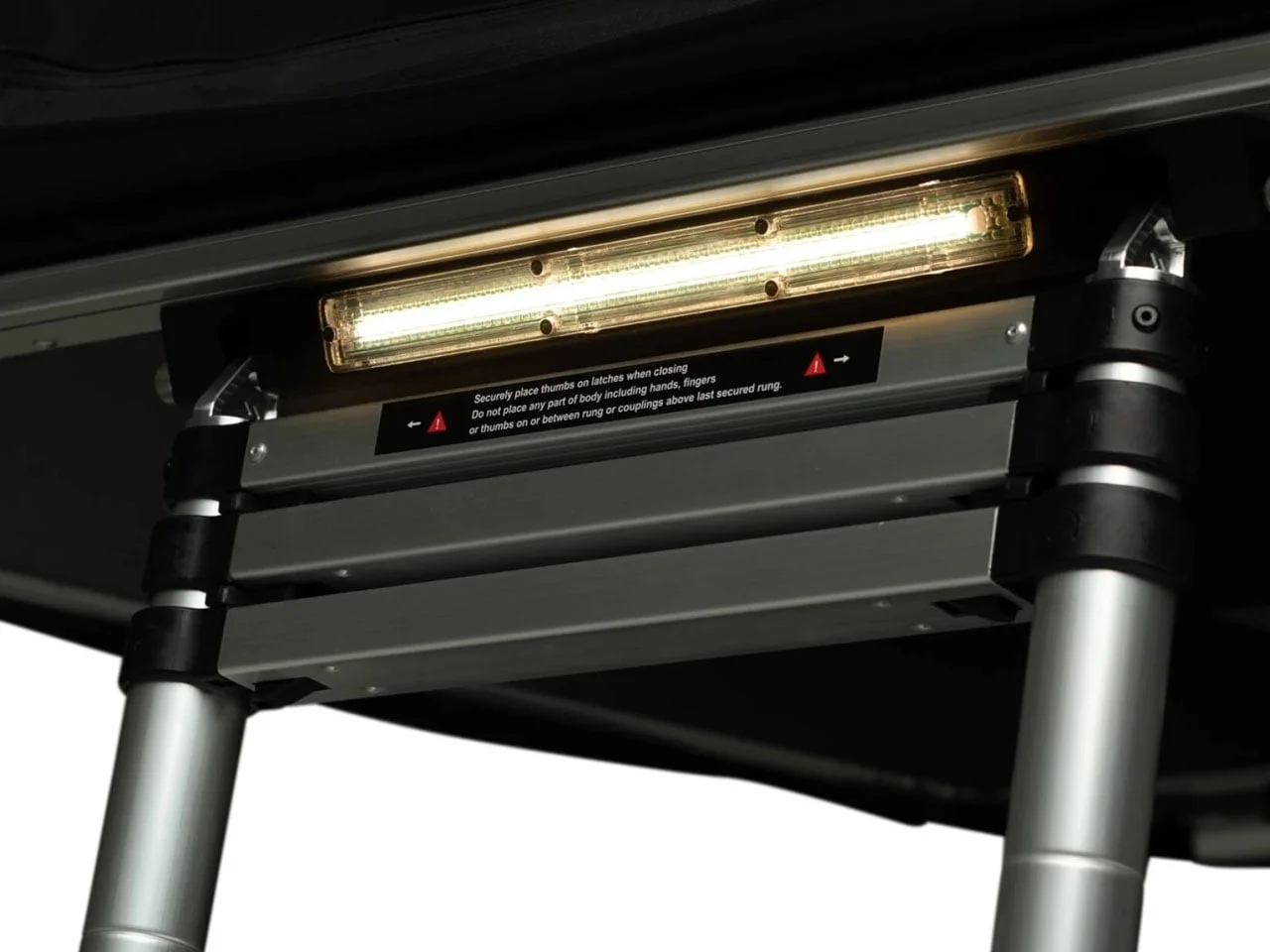
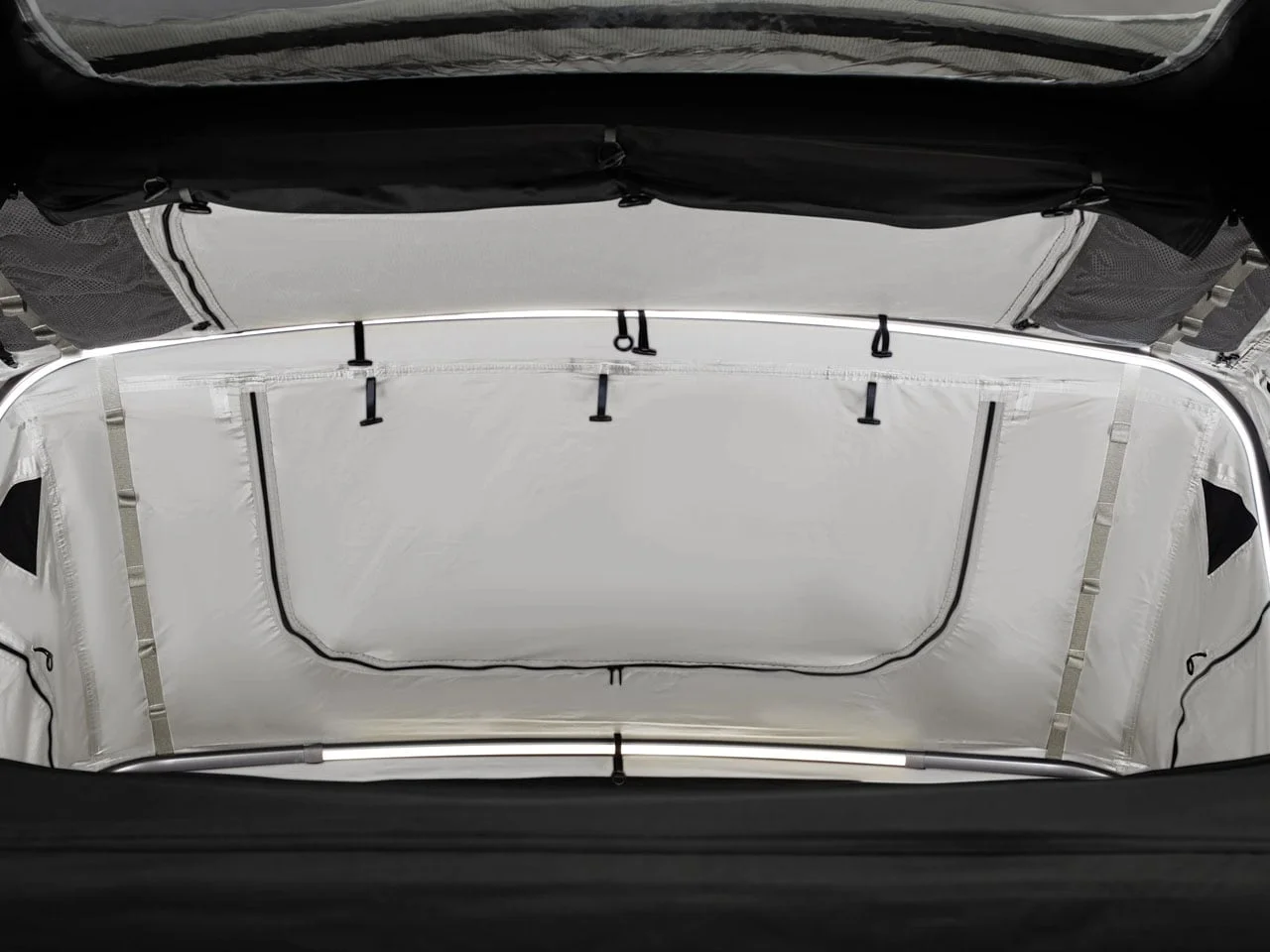
The Out-Post has windows arranged around the tent and a door to bring in daylight, along with a skylight for looking up when the lights are off. After dark, a reading light and ambient lighting are powered by an onboard mobile battery. Together, these features make the interior feel planned for longer periods of use, though the available information doesn’t explain the battery’s capacity or how long the lights can run.
Dometic unveiled the tent at this year’s Düsseldorf Caravan Salon and plans to launch the Out-Series in Europe in spring 2027. Prices will start at €1,799, approximately $2,000; the company hasn’t announced a price for the Out-Post specifically. Global availability is also unconfirmed. The collection’s next test will be whether its flexible interior makes rooftop space useful enough to justify the added features. If you’re working in this space, that’s the key question: a table and divider sound appealing in a product description, but buyers will judge them by the room they leave available and the effort they add to setup.
The starting price gives a point of reference for the range, but it doesn’t settle the value question for this particular model. The Out-Post’s eventual price, along with the cost of optional equipment, will shape how its extra functions compare with a simpler tent. Here's the thing: versatility only matters when it fits the way people camp. And yet, making one small interior serve as a bedroom, dining area and workspace is a clear design ambition. The proof will be in the details—how the bed folds, where the table goes, and whether there’s still comfortable room to move.
What the daytime pitch needs to prove
Rooftop tents trade some ease of access and interior space for a sleeping area carried above the vehicle. Dometic’s concept asks buyers to see that area as more than a bed, which could make the product more useful during pauses in a trip or when weather keeps campers inside. (And this is the part most people overlook.) A second use for the same space doesn’t automatically make the tent more practical; it depends on whether switching between uses is straightforward and whether each arrangement feels complete.
That distinction will matter more to families and campers who expect to spend time inside than to people who treat a tent mainly as a place to sleep. A divider may help different occupants share the space, while the table could give the interior a purpose during daylight. Still, the reported features leave basic questions unanswered, including the precise dimensions of the usable areas and the Out-Post’s own price. A few unknowns, then.
For now, the Out-Post is a proposal for a more lived-in rooftop tent, backed by a launch plan and a starting price for the wider series. The product’s case will rest on practical details that haven’t yet been shared: how the pieces fit together, how much room remains, and whether the interior’s flexibility feels worthwhile in real use. That’s a more useful standard than counting features.
The post Domestic Out-Post RTT wants campers to even spend daytime hours inside first appeared on Yanko Design.

Discussion
Sign in to join the discussion.