The Huawei Watch D3 makes scheduled blood pressure readings comfortable enough for day and night wear, though its app limits and £399.99 price narrow its appeal.
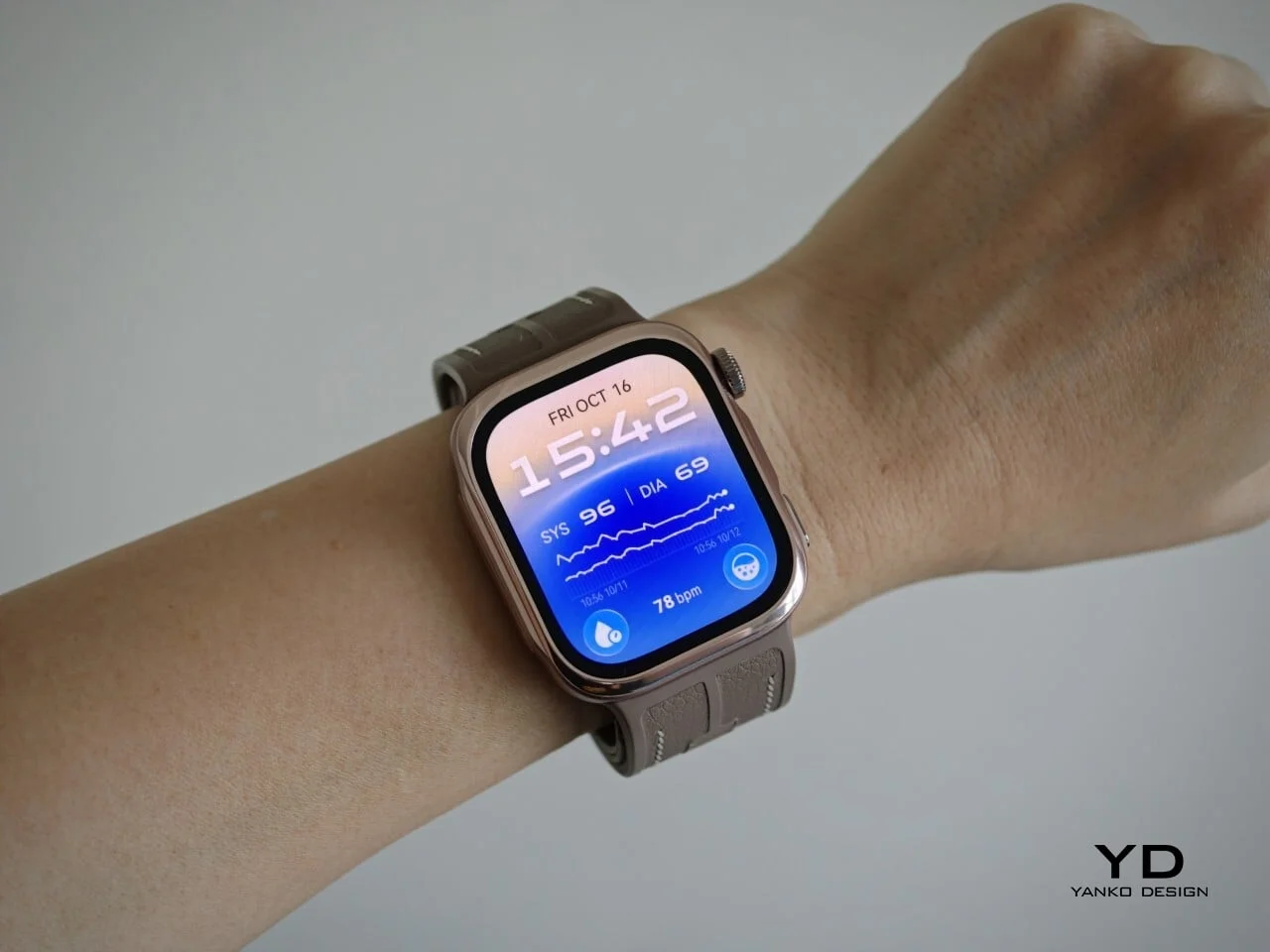
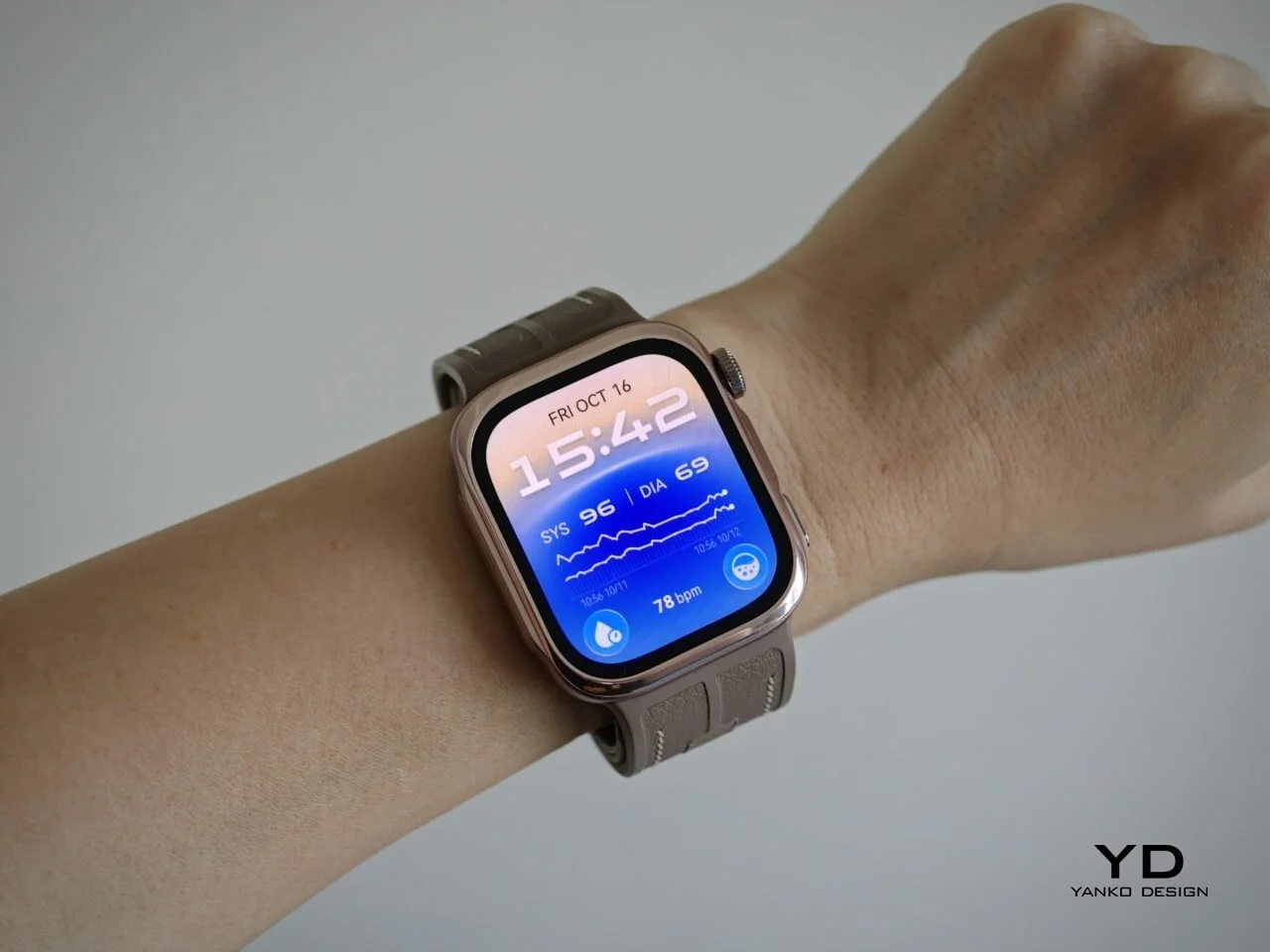
The Huawei Watch D3’s strongest feature may be how little it asks you to accommodate it. Its inflatable strap can take blood pressure readings across the day and overnight, yet the watch stays comfortable and discreet enough for ordinary wear. That combination makes scheduled monitoring feel practical, rather than turning it into a routine that revolves around a bulky medical device.
Blood pressure can be elevated without obvious symptoms, which makes repeated measurements more informative than relying on how you feel. The D3 is built around that idea: a small airbag in the strap inflates around the wrist to measure pressure, and ambulatory monitoring can capture readings at intervals over 24 hours. The hardware is unusual. Living with it, I found the experience surprisingly ordinary.
Designer: Huawei
A health device that looks like a smartwatch
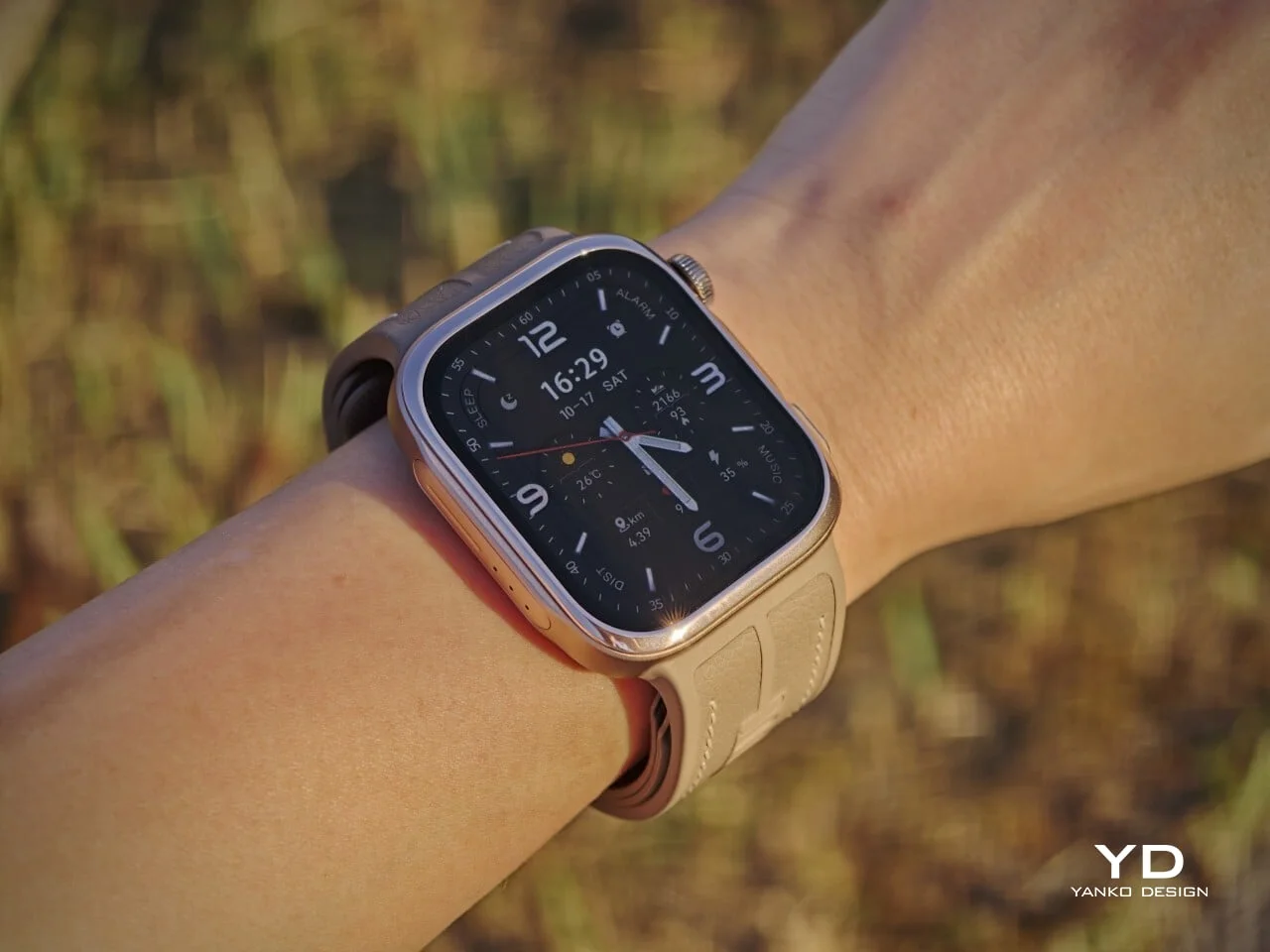
Huawei has kept the D3’s appearance restrained. The rectangular case and 1.92-inch display give it the familiar shape of a mainstream smartwatch, while the strap conceals the feature that sets it apart. It doesn’t look like a clinical instrument, even though its blood pressure system adds unusual structure to the band.
The watch comes in White, Black, and Mocha Gold. My Mocha Gold review unit had a warmer, more polished look, with a fluoroelastomer strap matched to the case. The result sits comfortably between understated and rugged. That’s a useful choice for a product intended to stay on the wrist overnight as well as during the day.
Comfort makes the monitoring routine workable
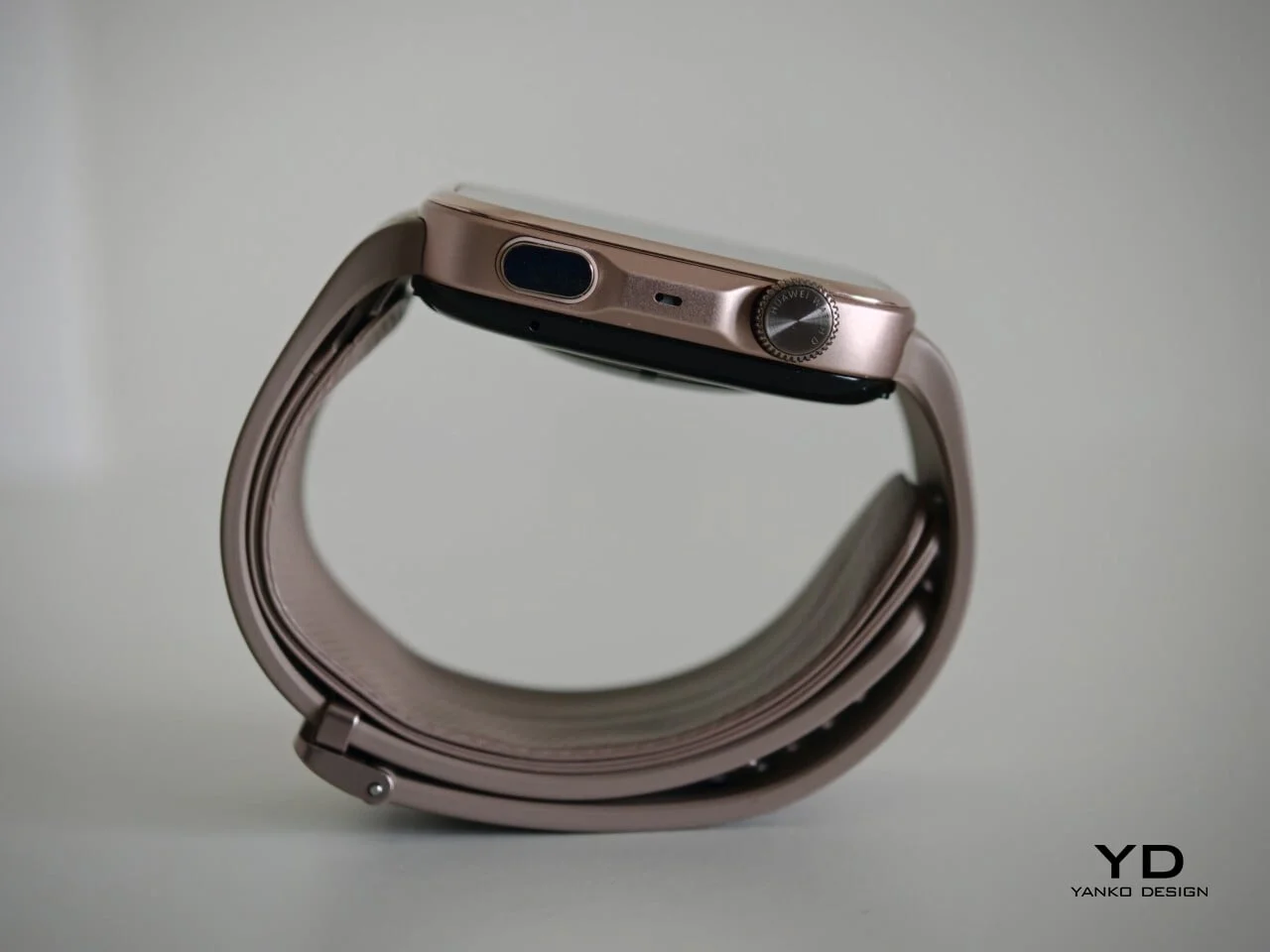
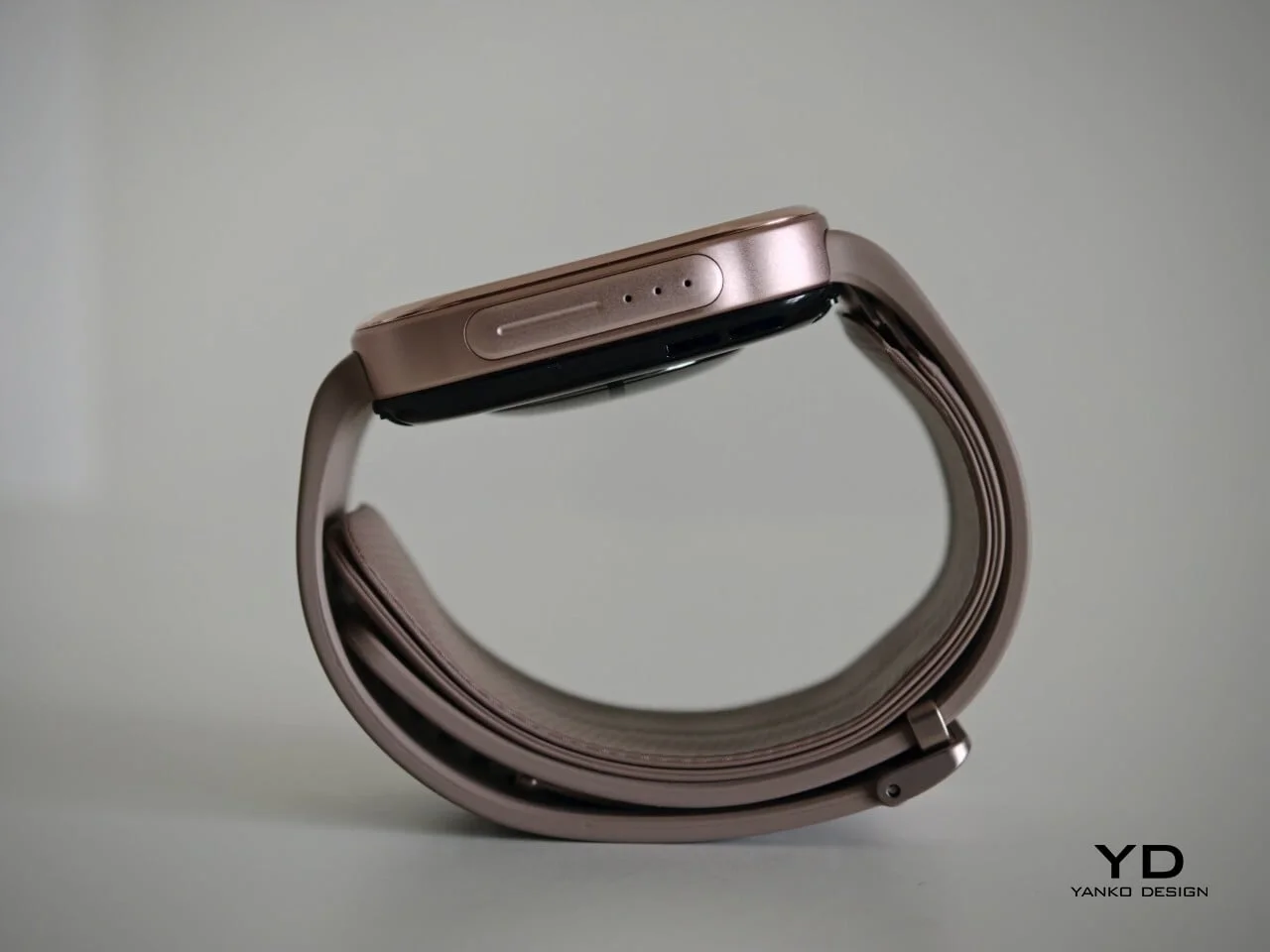
The D3 measures 1.83 by 1.61 by 0.44 inches. That’s a sizeable watch, but it didn’t feel cumbersome in use. Huawei has reduced its thickness from 0.52 inches on the Watch D2 to 0.44 inches on this model, and the slimmer profile helps the device feel more like a daily smartwatch. The strap is thicker than a conventional band because it houses the airbag, though I stopped noticing that after wearing it for a while.
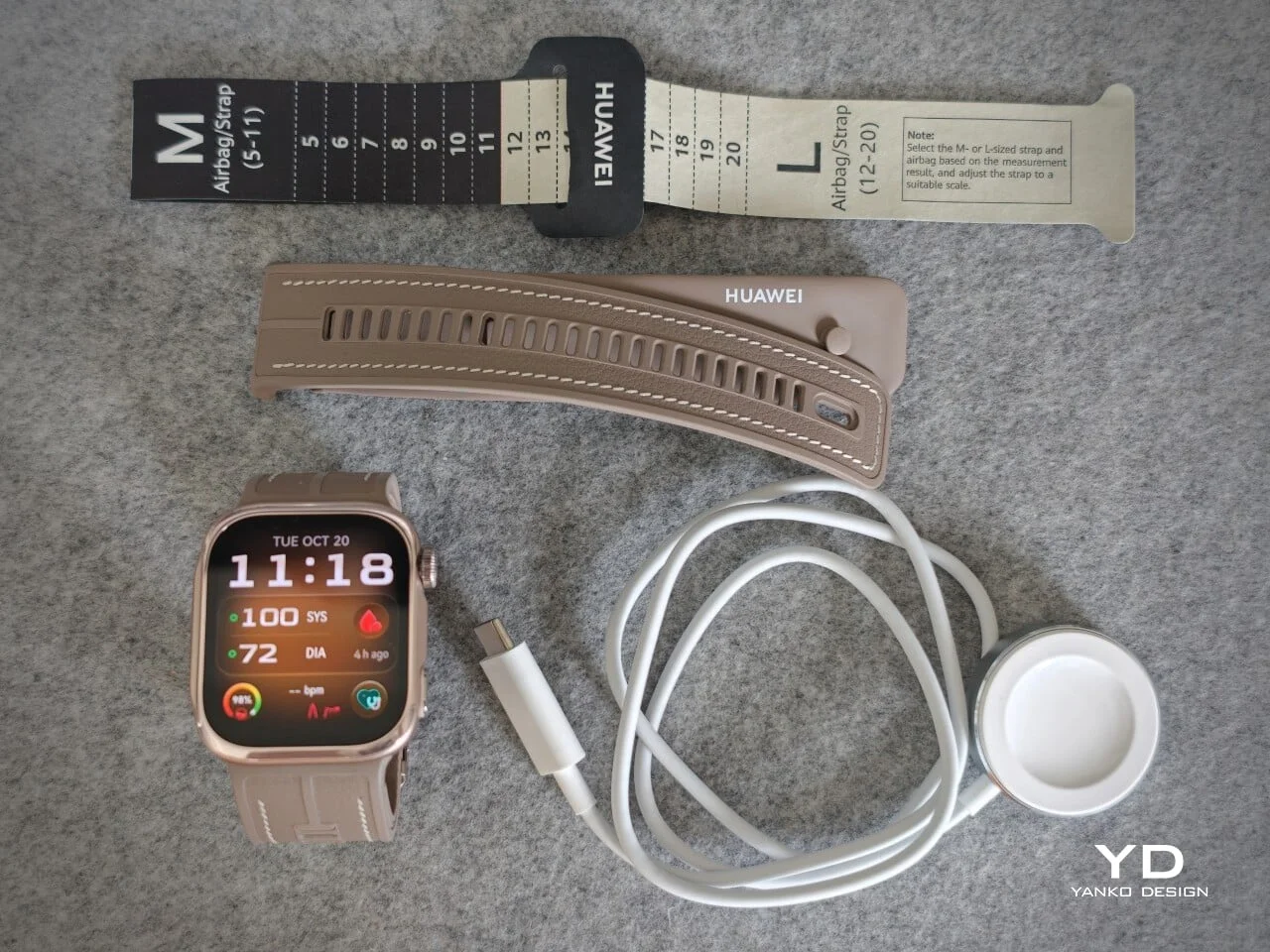
At about 1.41 ounces without the strap, the watch feels substantial without becoming tiring over a full day. Fit matters because the D3 takes readings at the wrist, and Huawei includes a paper measuring guide and two strap sizes to help users choose. That attention to sizing is practical: a health feature that depends on wrist placement needs a secure, suitable fit.
Quiet readings, with some effort required
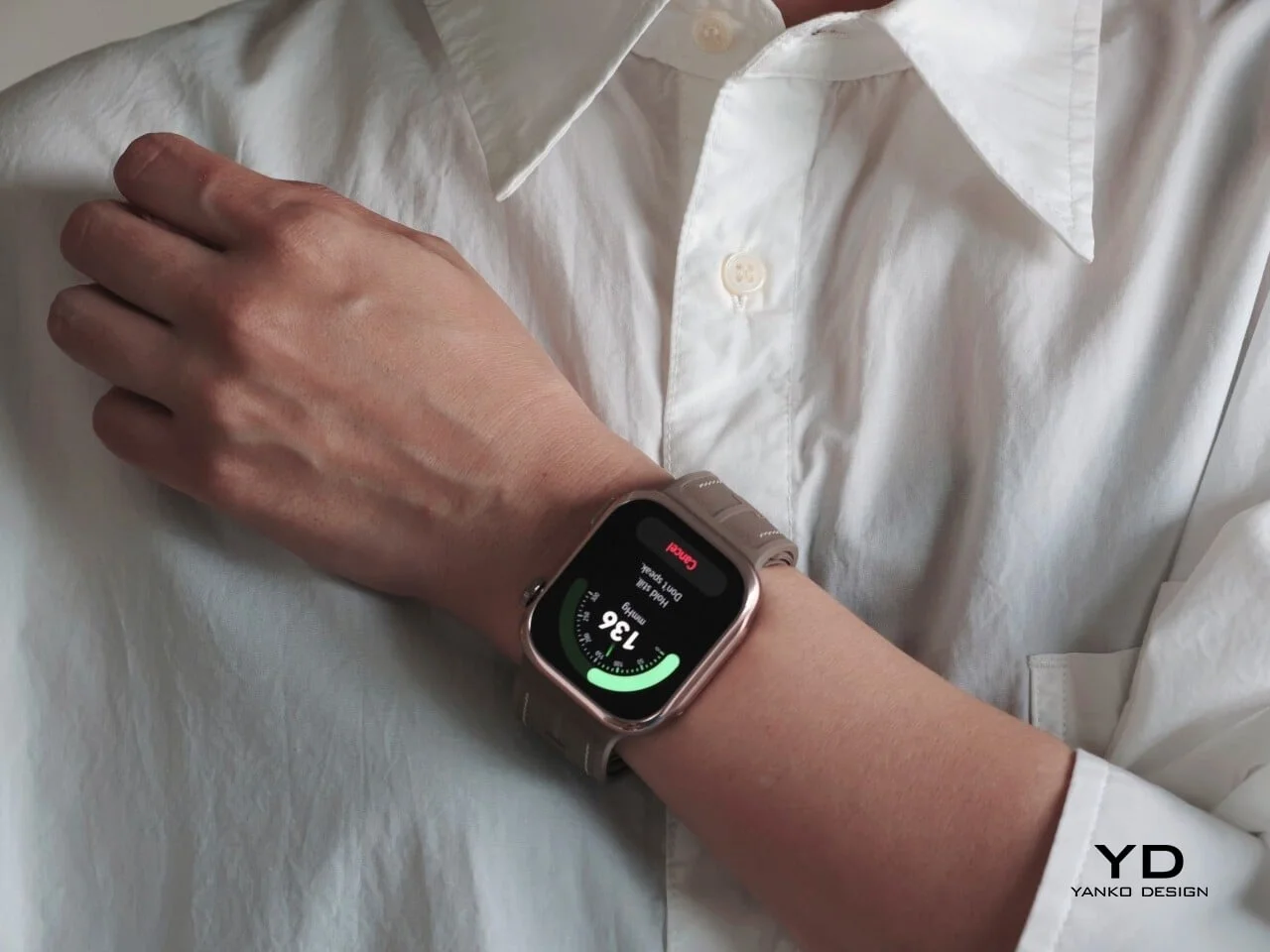
During a measurement, the D3 is nearly silent. You can feel pressure building around your wrist, but there’s little noise to call attention to the process. That made readings feel discreet, and the sensation didn’t put me off using the feature.
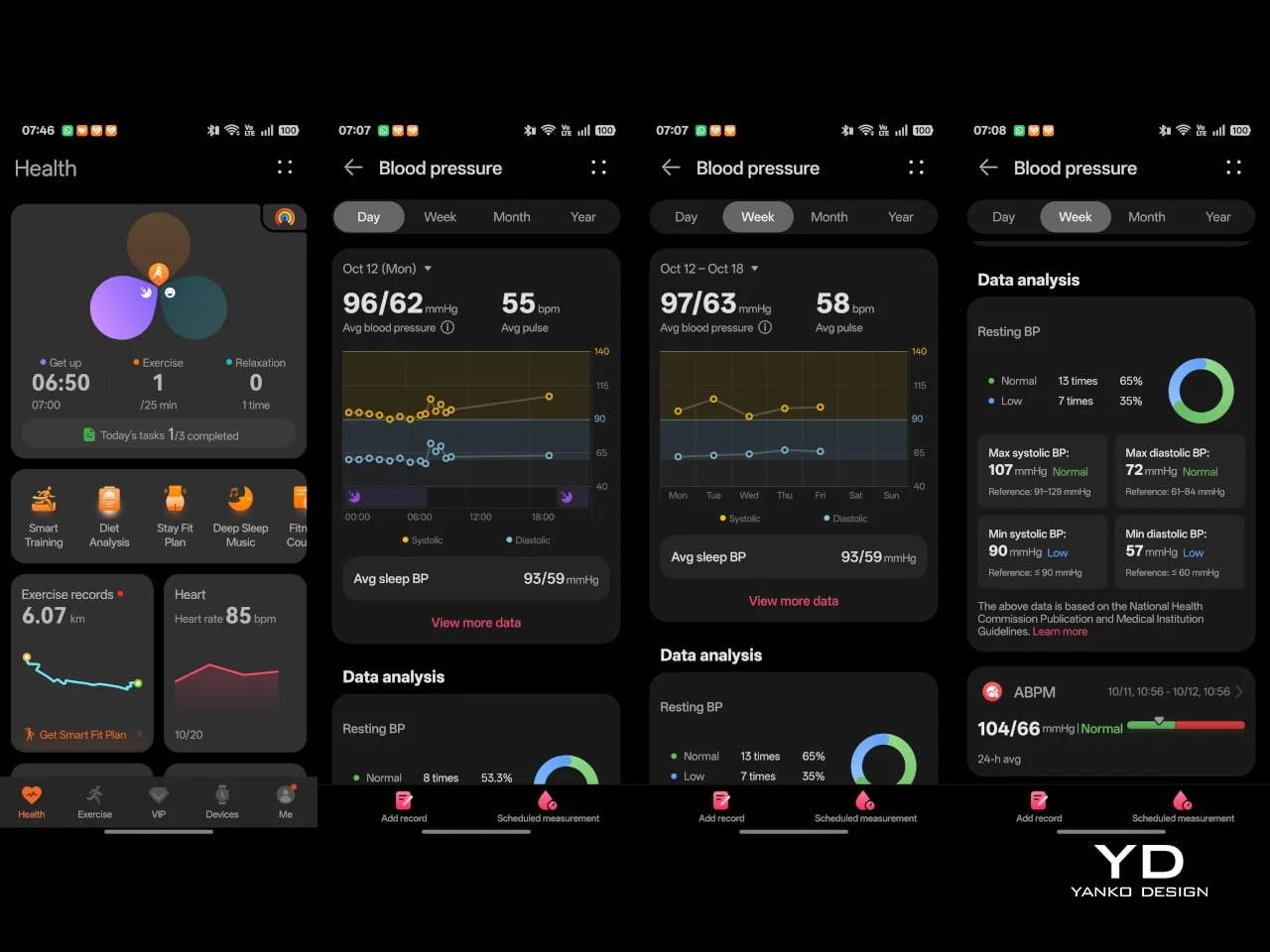
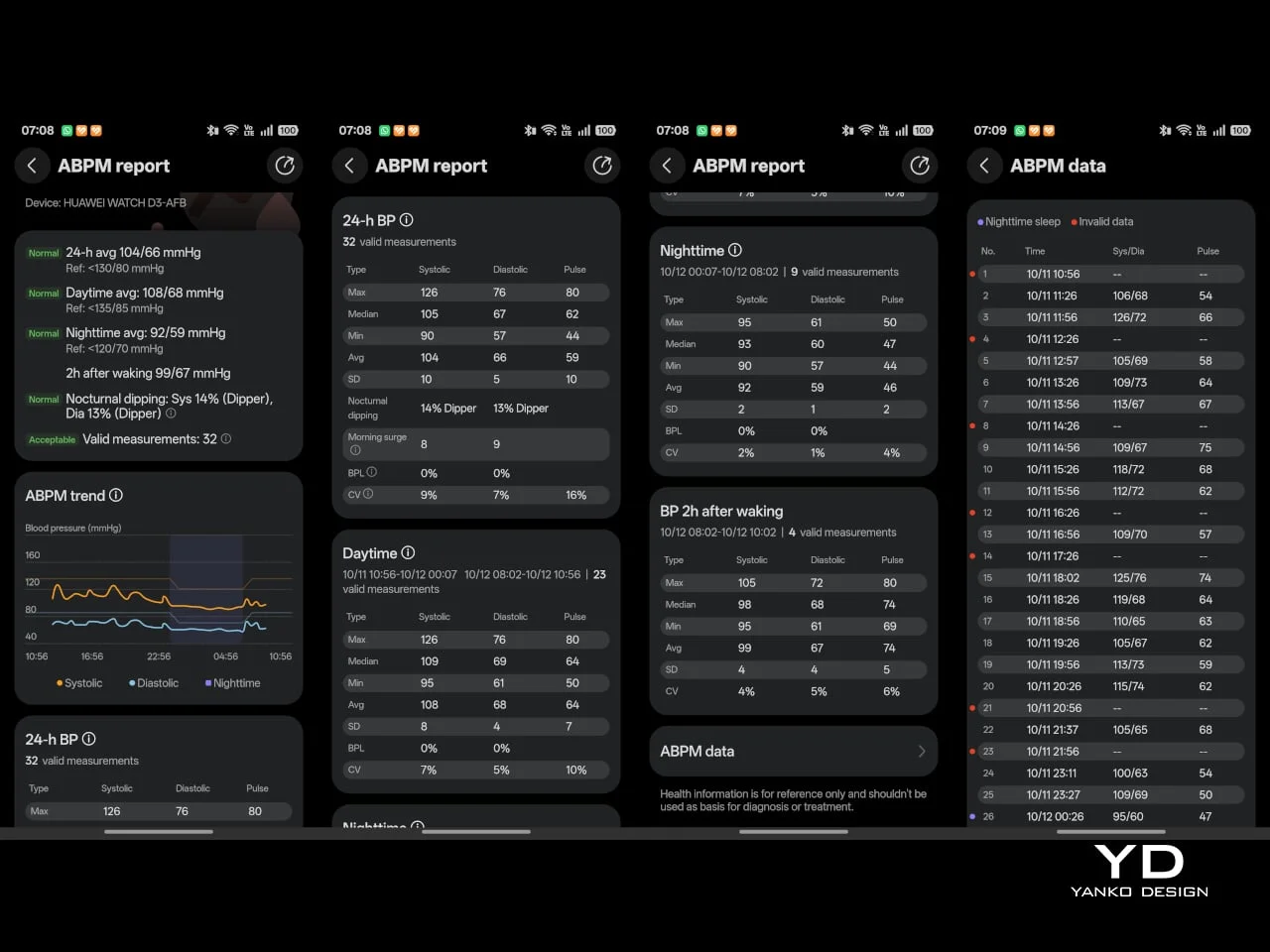
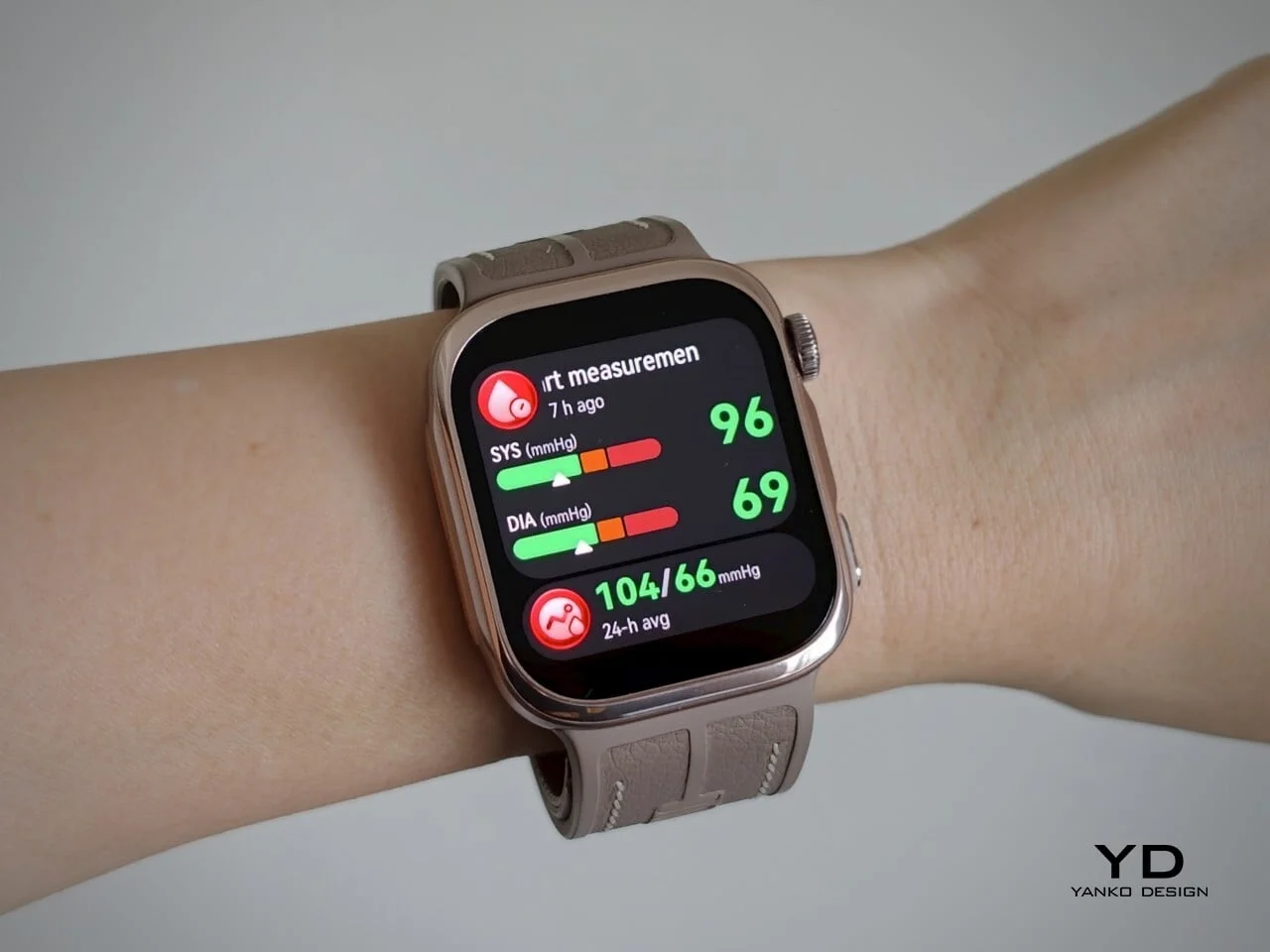
Huawei says the blood pressure measurement has NMPA medical device registration in China and CE certification under the European Union’s Medical Device Regulation. The watch also supports ambulatory blood pressure monitoring (ABPM), which schedules repeated readings during the day and night. Huawei Health collects the results into daytime, nighttime, and overall averages, with a report users can save or share with a doctor.
Daytime measurements still call for cooperation. You need to pause, stay still, and hold your wrist at heart level, following the watch’s positioning instructions. The schedule can be adjusted, so readings don’t have to follow the default intervals. At night, the watch measures automatically; the readings didn’t wake or disturb me during testing.
There’s also a pre- and post-exercise measurement option for six workout types: indoor and outdoor running, walking, and cycling. The watch asks for a reading before exercise and another within two minutes of finishing. Those measurements can help users track how pressure responds to activity and recovery, although the feature adds another step around a workout.
The D3 covers familiar health and fitness metrics too, including heart rate, sleep, blood oxygen saturation, and skin temperature. ECG is available in supported regions, and there are more than 80 workout modes. In everyday use, the fitness tools complement the central blood pressure feature without making routine activity feel like a data-entry task.
Smartwatch basics vary by phone
The Watch D3 runs HarmonyOS and pairs with Android phones and iPhones, but some features depend on which one you use. Bluetooth calling and music playback are supported. Android users can reply to supported messages with quick replies or the on-screen keyboard; iPhone users can’t send message replies from the watch.
The third-party app selection is limited, which leaves less scope to tailor the watch beyond its built-in functions. Offline maps are available on supported models, and NFC payments depend on region and service availability. The presence of NFC hardware alone doesn’t guarantee compatibility with a user’s cards or preferred payment service.
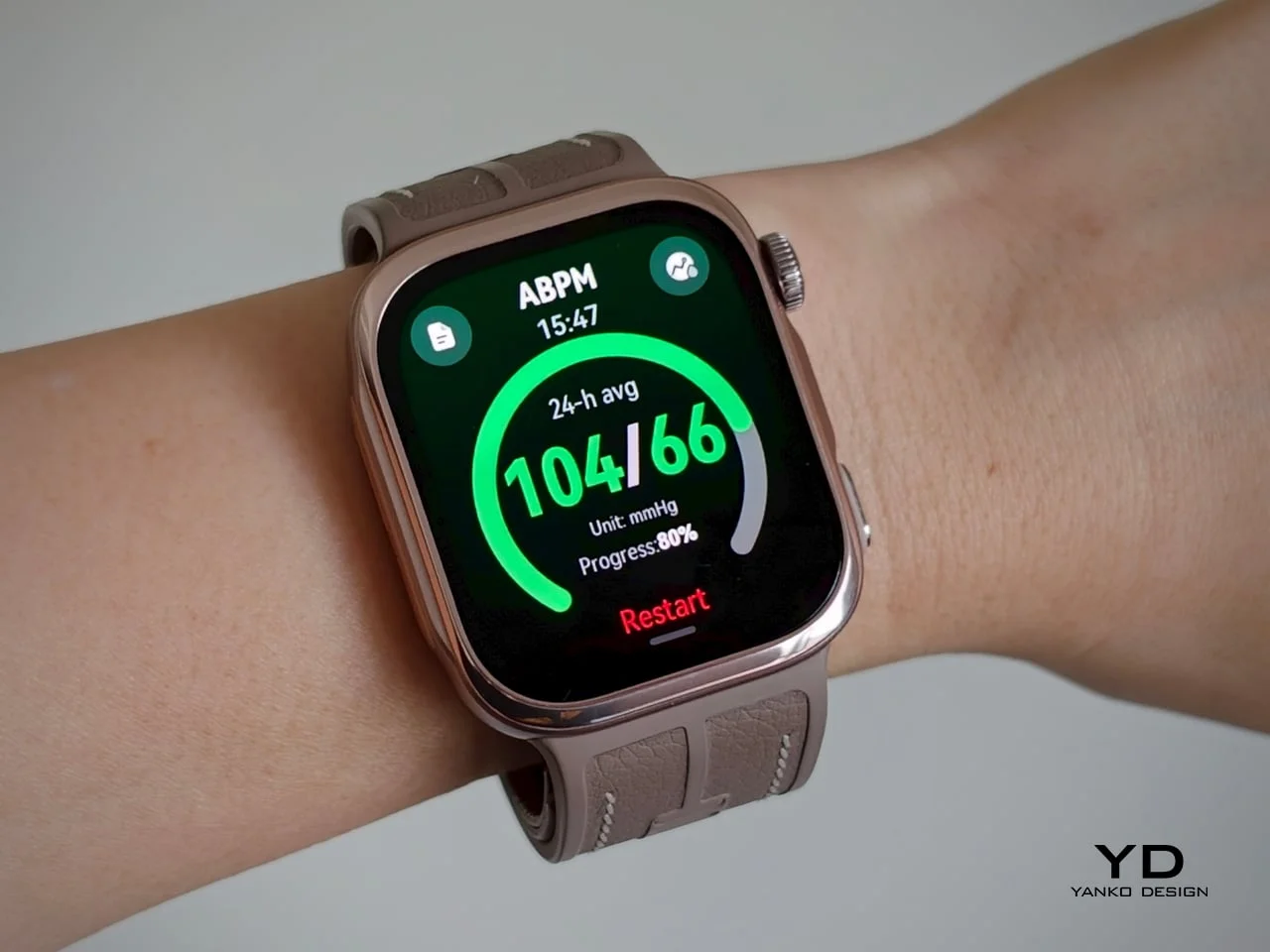
Battery life held up well. Huawei’s estimate is up to six days in typical use, falling to around one day when ABPM is enabled. My typical use came close to the six-day figure, and the watch lasted beyond a day with ABPM running. Results depend on settings: Huawei’s ABPM battery test uses measurements every 15 minutes.
Charging speed is unremarkable, but I didn’t need to reach for the charger constantly outside monitoring sessions. The included charger connects by USB-C, a convenient detail for people whose current adapters use that port.
Water resistance and long-term questions
The D3 carries an IP68 rating, but Huawei advises against wearing it in the shower or while swimming. The blood pressure system has air openings that need to stay clean and dry, and the watch isn’t water- or dust-resistant while taking a measurement. That makes water care a more significant part of ownership than it is with many everyday watches.
The strap is removable and felt durable during my use, although Huawei doesn’t provide wear-test figures. Replacement straps could help extend the watch’s service life if they’re available. Beyond that, the sustainability picture is hard to assess: information on recycled materials, repair options, and long-term software support is limited.
Price depends on how often you’ll use ABPM
Huawei lists the Watch D3 at £399.99 in the UK and €449 in Europe. That price is easiest to make sense of if cuff-style readings and 24-hour monitoring are features you expect to use regularly. The D3 puts them into a watch that I found comfortable enough to wear through the day and overnight, without the awkward feel its specialized strap might suggest.
If notifications and workout tracking are your main priorities, the blood pressure hardware may not justify the extra cost. The limited app selection also makes the D3 less flexible as a general-purpose smartwatch. Its appeal rests on a fairly specific proposition: frequent blood pressure monitoring in a form that fits into everyday life.
Verdict
The Huawei Watch D3 makes its unusual blood pressure hardware easy to live with. Readings are quiet, overnight monitoring didn’t disturb my sleep, and the thicker strap felt comfortable rather than cumbersome. Battery life is also solid outside ABPM sessions.
Its price, limited third-party apps, phone-specific messaging features, and unclear repair information all deserve consideration. The D3 is best understood as a monitoring tool to use alongside professional care, not as a basis for diagnosing yourself or changing medication. For people who want frequent blood pressure readings and will use them, its combination of monitoring and day-to-day comfort looks compelling. The key question is whether that monitoring will become a regular part of your routine.
The post Huawei Watch D3 Review: A Game Changer for On-Wrist Blood Pressure Monitoring first appeared on Yanko Design.



Discussion
Sign in to join the discussion.