Breville’s $599.95 Spiral Luxe handles grinding and spiral pours while keeping brew settings adjustable and the process in view.
Pour-over, with the busywork automated
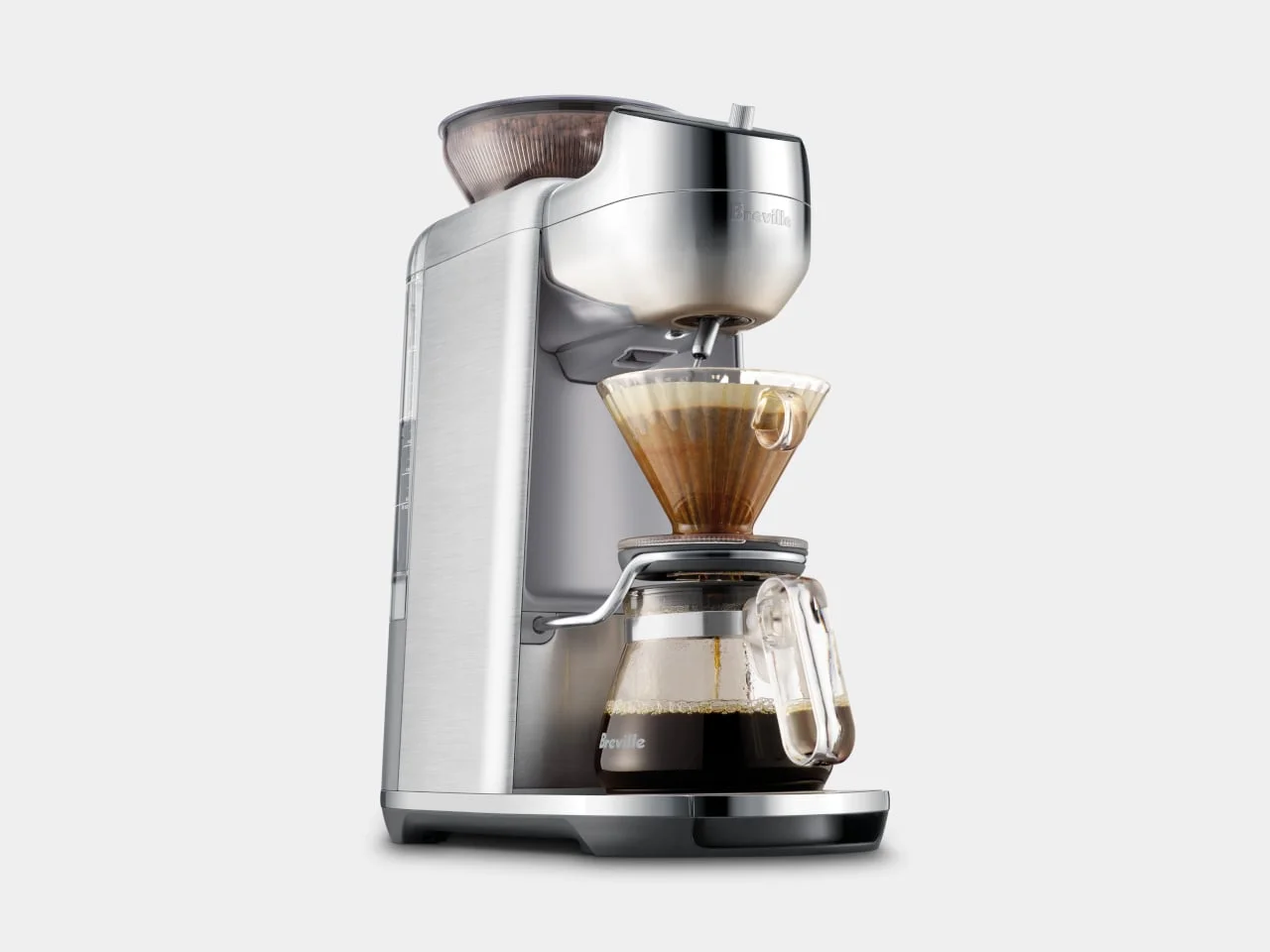
Breville’s Spiral Luxe puts a mechanical spin on pour-over: it grinds the beans, moves the dripper into position, and directs water in a spiral. The pitch isn’t to eliminate the ritual, but to take over its most hands-on steps while leaving the brewing in view. At $599.95 in the US, that distinction will matter to anyone weighing convenience against the appeal of making coffee by hand. The machine offers a particular kind of compromise: less attention during the pour, with room to adjust how the brew is made.
The brushed stainless steel machine arranges its hopper, brewing head, and carafe in a vertical stack. An open front gives the dripper room to travel between the grinder and water spout, making that movement part of the experience rather than hiding it behind a housing. The clear brewing cone is Tritan plastic, while the included carafe is glass. It’s a deliberately visible setup, although the materials and moving parts also make the machine’s footprint and cleaning routine worth considering.
Designer: Breville
A brew cycle with visible movement
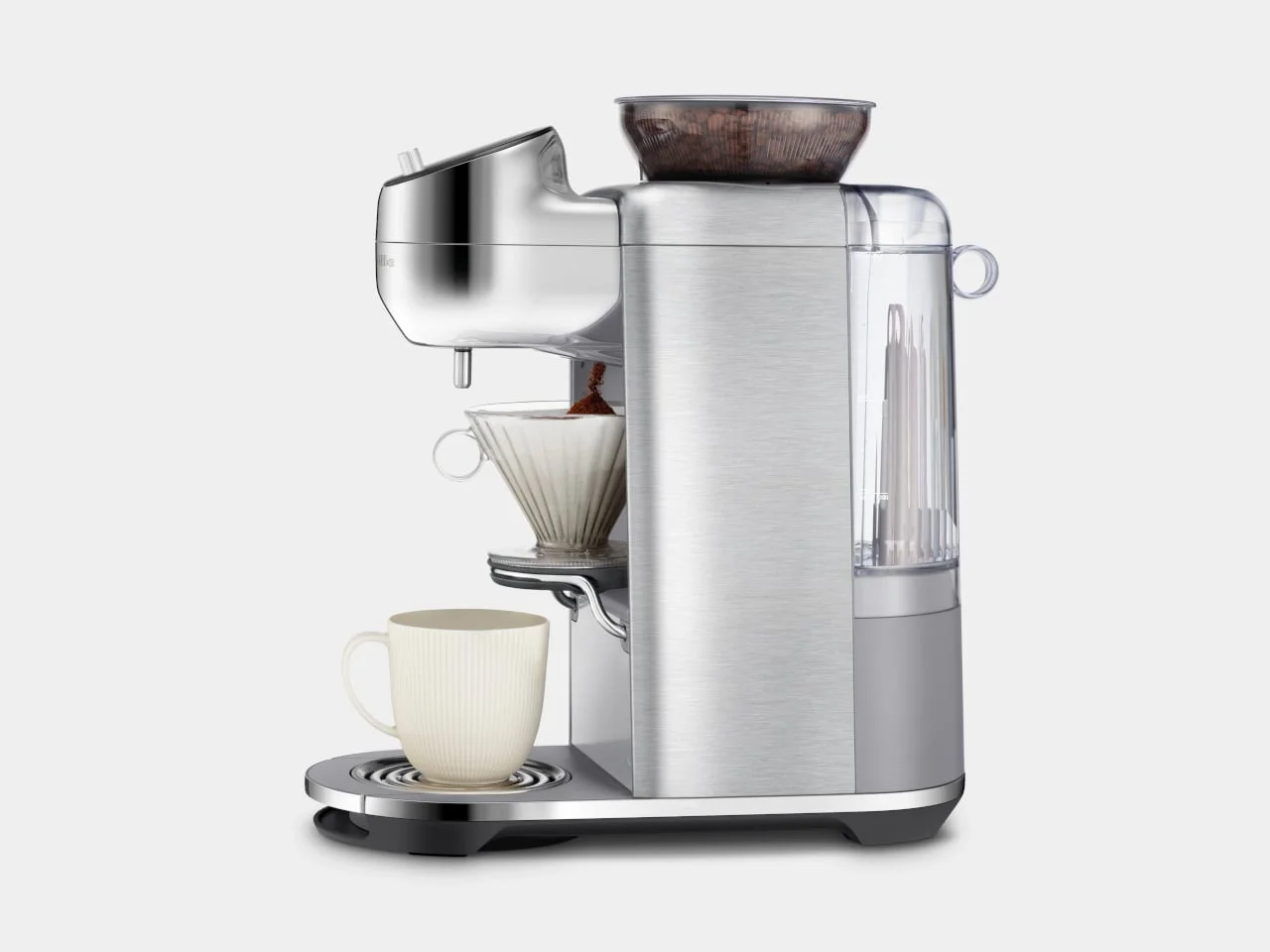
The carriage starts beneath the flat-burr grinder, which sends grounds directly into the filter. The dripper then slides toward the articulating spout, avoiding the usual handoff from grinder to a separate brewer. It’s a small piece of choreography, but it’s central to the machine’s appeal: the process stays on display even as the user steps back. That movement gives the appliance a clear identity, though it doesn’t tell us on its own how the resulting coffee will taste.
During brewing, the spout moves in a spiral to distribute water across the grounds. Breville says the pattern is designed to echo a gooseneck kettle’s controlled pour. That’s a description of the intended motion, not evidence that every cup will match a carefully executed manual pour; grind, dose, water, and the chosen settings still shape the result. Its ThermoJet system heats water in seconds, according to the company, but that describes the heating step, not the full time needed to brew a cup.
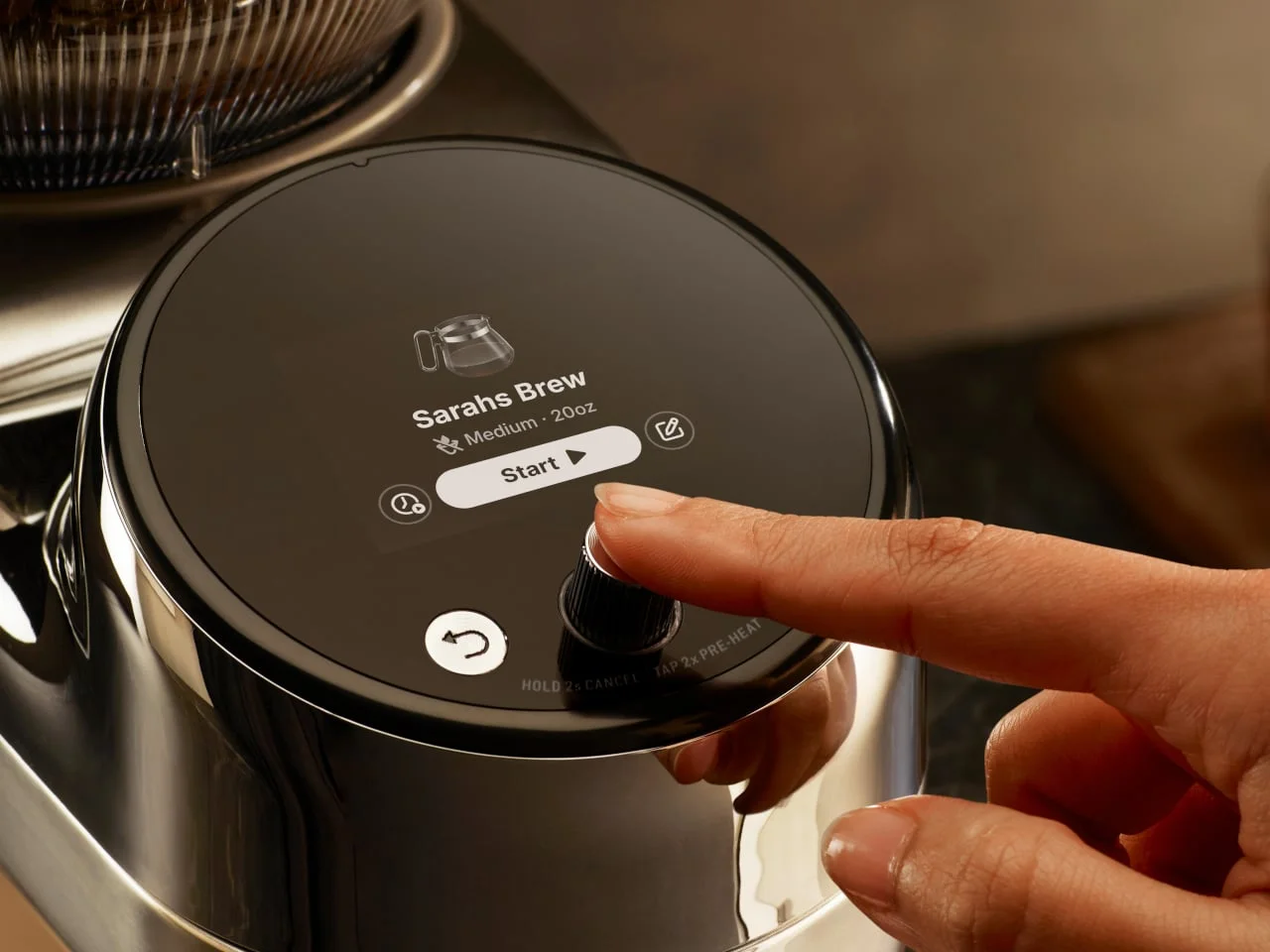
Settings for quick cups or careful experiments
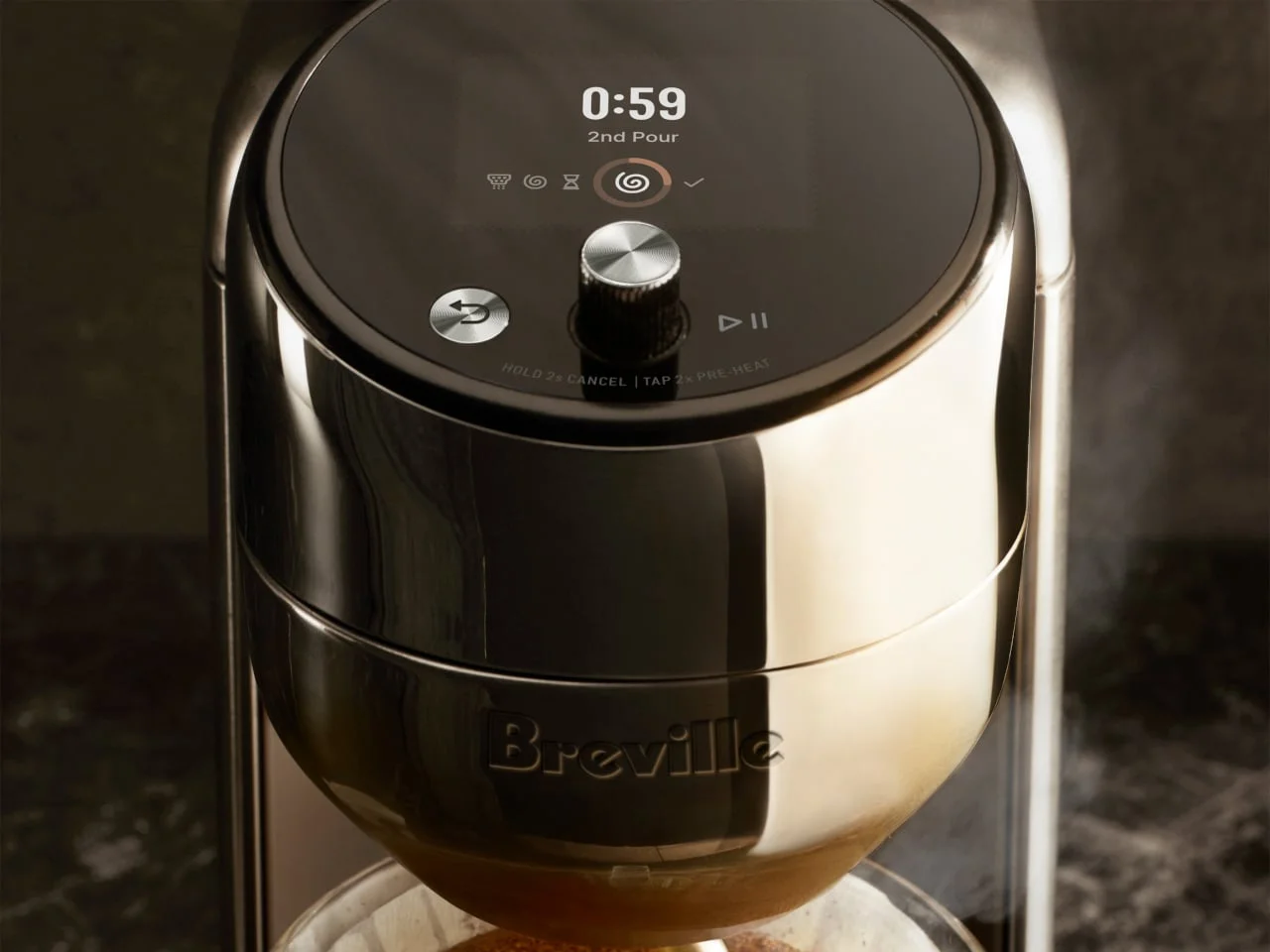
A color display and press-to-turn dial handle the controls. Users can select a brew size and Mild, Medium, or Strong strength, or use Advanced Mode to change the coffee-to-water ratio, temperature, pour pattern, and pauses. That range gives the machine room for both a preset morning cup and more deliberate adjustments. Here’s the thing: offering many controls is useful only if people can understand how each change affects their brew, and the available description doesn’t explain how the interface guides that learning.
Brewing can go straight into a mug or into the included 20-ounce carafe. Removing the drip tray accommodates taller mugs, and the 40-ounce water tank can support multiple brews. The carafe capacity points to a small serving scale rather than a machine built for a crowd. If you’re making coffee for several people, you’ll need to think about repeated cycles and the time they take, rather than assuming the tank size means a large batch can be brewed at once.
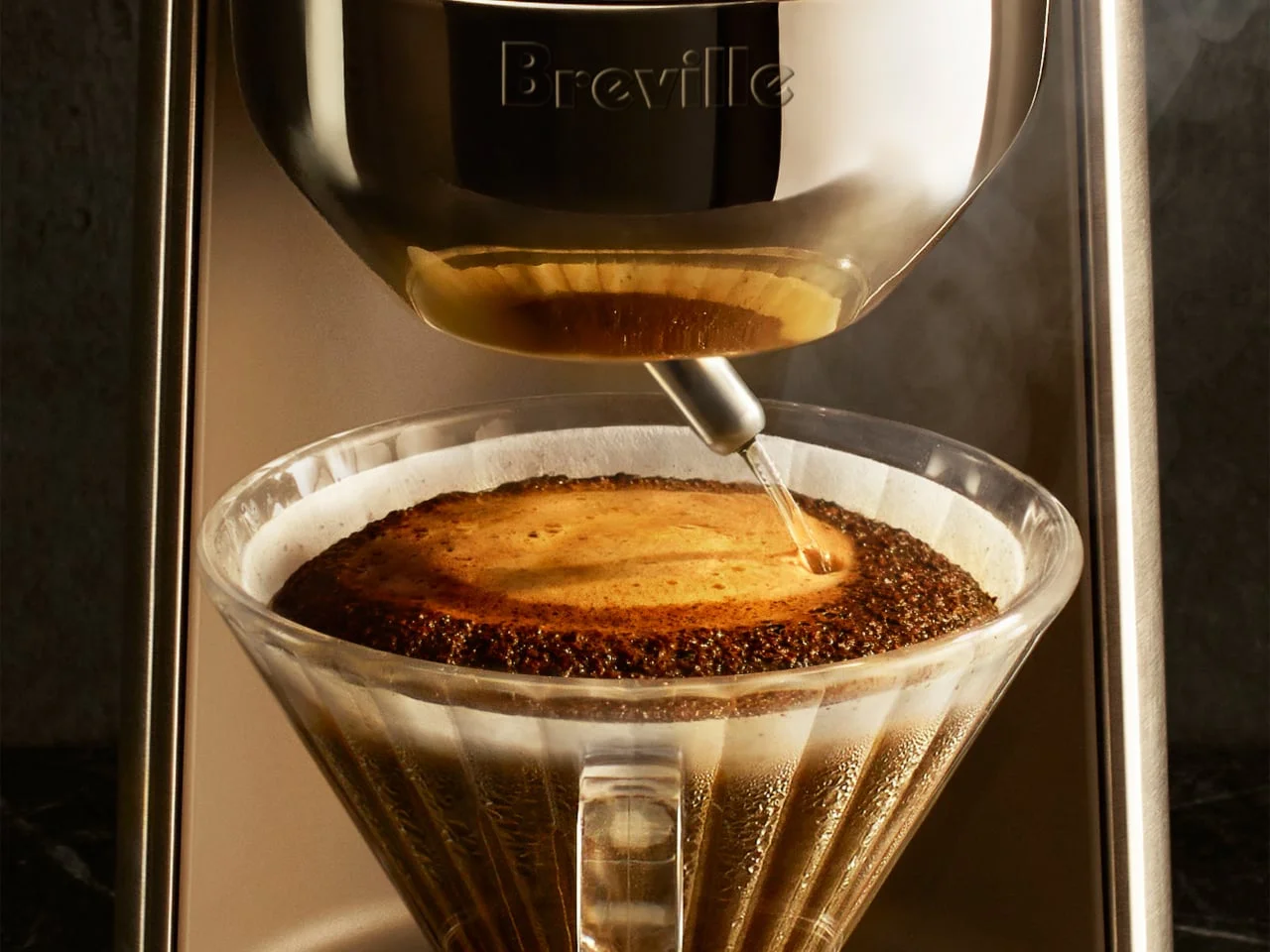
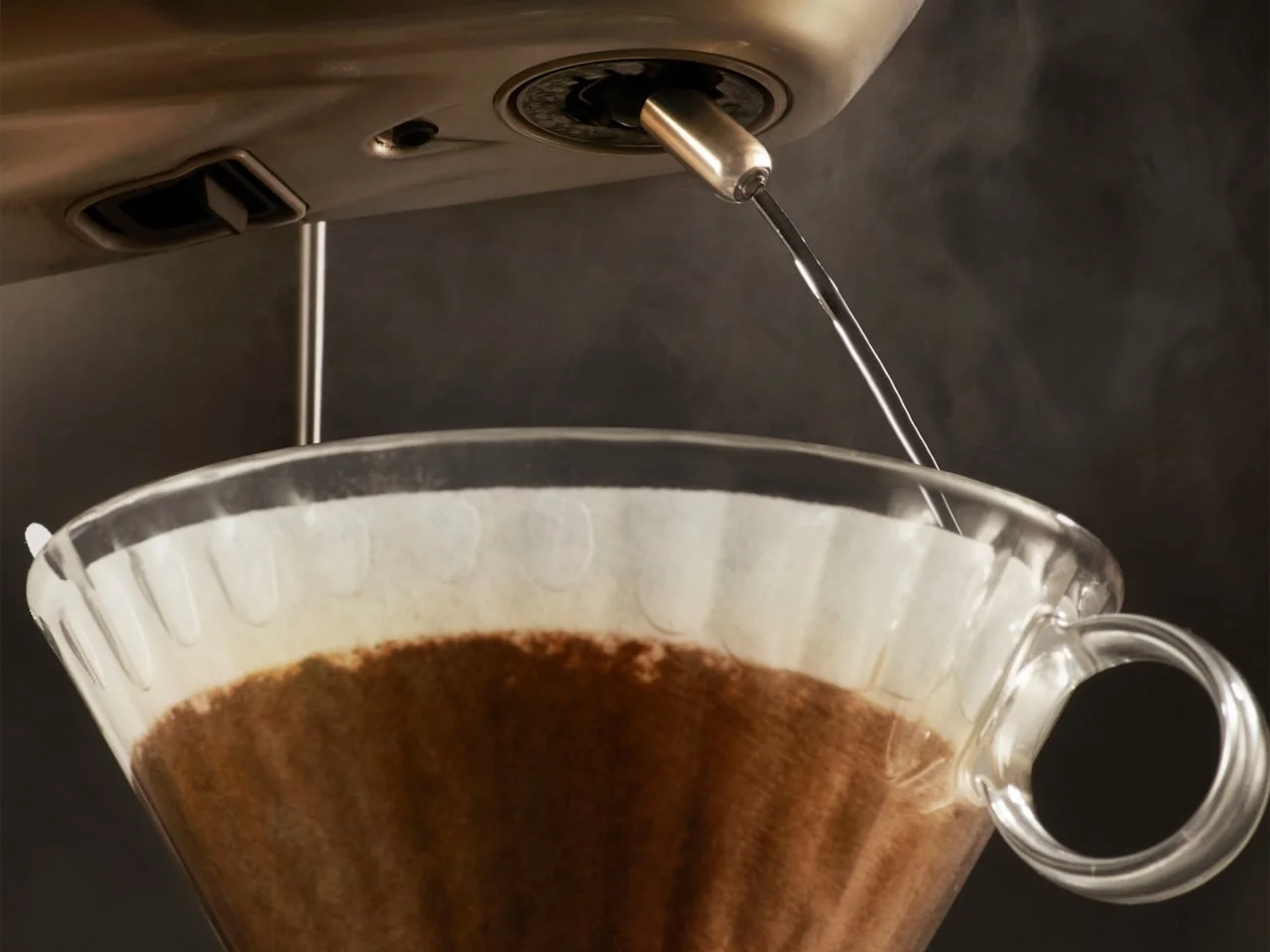
Auto Start lets users prepare the filter, beans, and water in advance and set a start time. A bypass mode accepts pre-ground coffee, so the built-in grinder isn’t mandatory. Those options make the machine more adaptable to different morning routines, but they don’t remove the need to handle ingredients and set up the brew. The machine still leaves some work for after the brew: the paper filter needs to be discarded, and the dripper and carafe need cleaning. Less tending during brewing; cleanup remains.
What the automation changes
The Spiral Luxe’s case rests on a specific tradeoff. It costs $599.95 to automate grinding and pouring, yet keeps the mechanics visible and the brew parameters adjustable. For people who like pour-over’s measured pace but don’t want to tend every pour, that combination may be the point. This is more significant than it looks: the product isn’t simply presenting coffee as a one-button task, but retaining enough visible process to appeal to people who care how their coffee is made.
And yet, automation doesn’t settle the practical questions that define a coffee maker over time. The available details don’t establish how easy the moving dripper is to clean, how much attention the settings require, or whether its spiral pour produces a cup a particular drinker prefers. Those are matters for hands-on use. The design makes its priorities legible, but the asking price means buyers will have reason to judge the daily experience as closely as the mechanism.
What this means for you depends on which part of pour-over you value. If you enjoy adjusting a pour by hand, the machine’s automated movement may feel like a step away from the practice; if you want control over settings without standing over the brewer, it may offer a useful middle ground. That said, the small carafe and remaining cleanup put limits on the convenience story. Its strongest argument is for a single user or a modest serving who wants an involved-looking brew with less work at the spout.
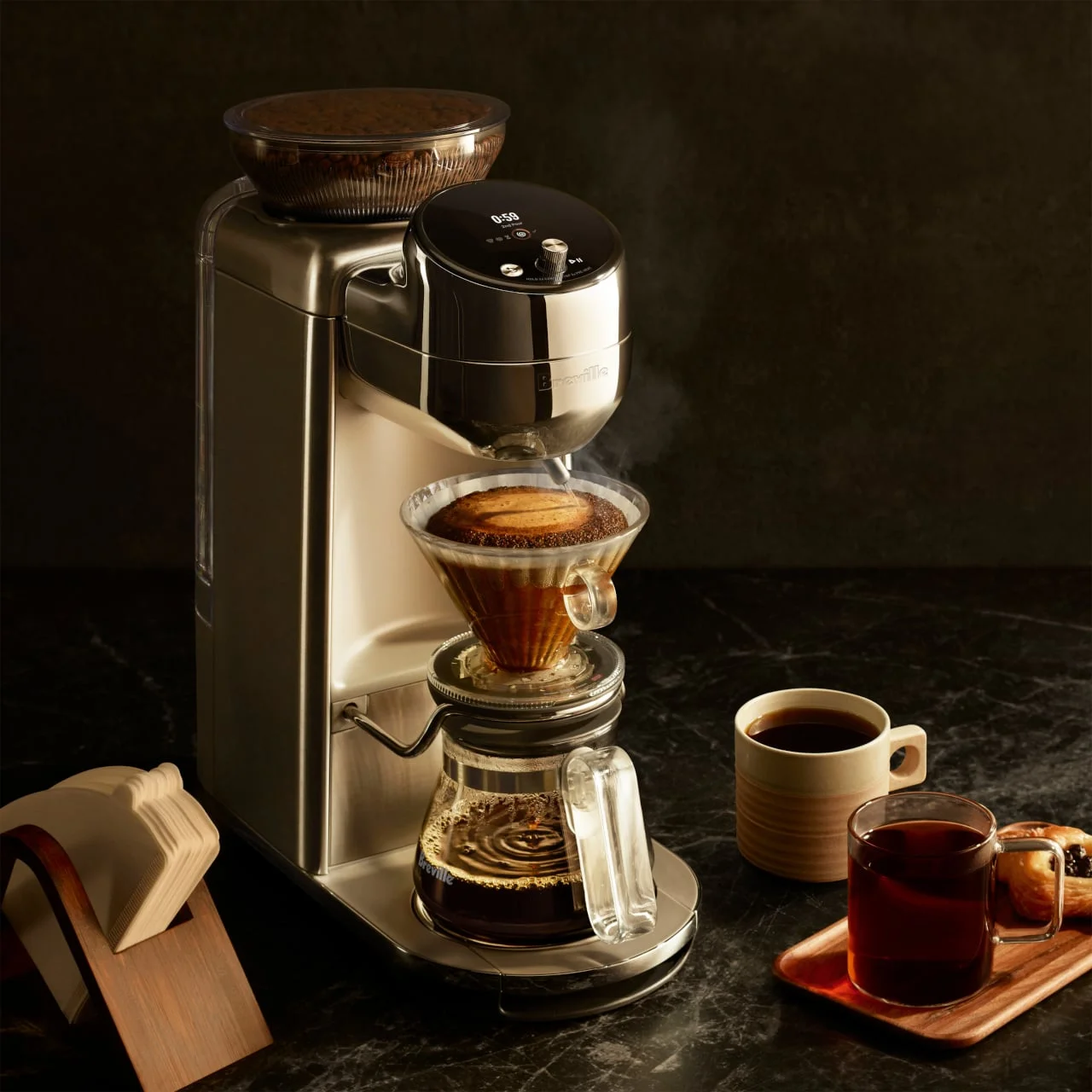
The post Breville’s Spiral Luxe Automates Pour-Over Coffee With a Sliding Dripper first appeared on Yanko Design. The product details here describe its design and advertised features, leaving taste and day-to-day usability for buyers to assess in practice.


Discussion
Sign in to join the discussion.