Leonardo Garza’s BYREDO installation uses movable steel spheres and five material studies to make fragrance a tactile, open-ended experience.
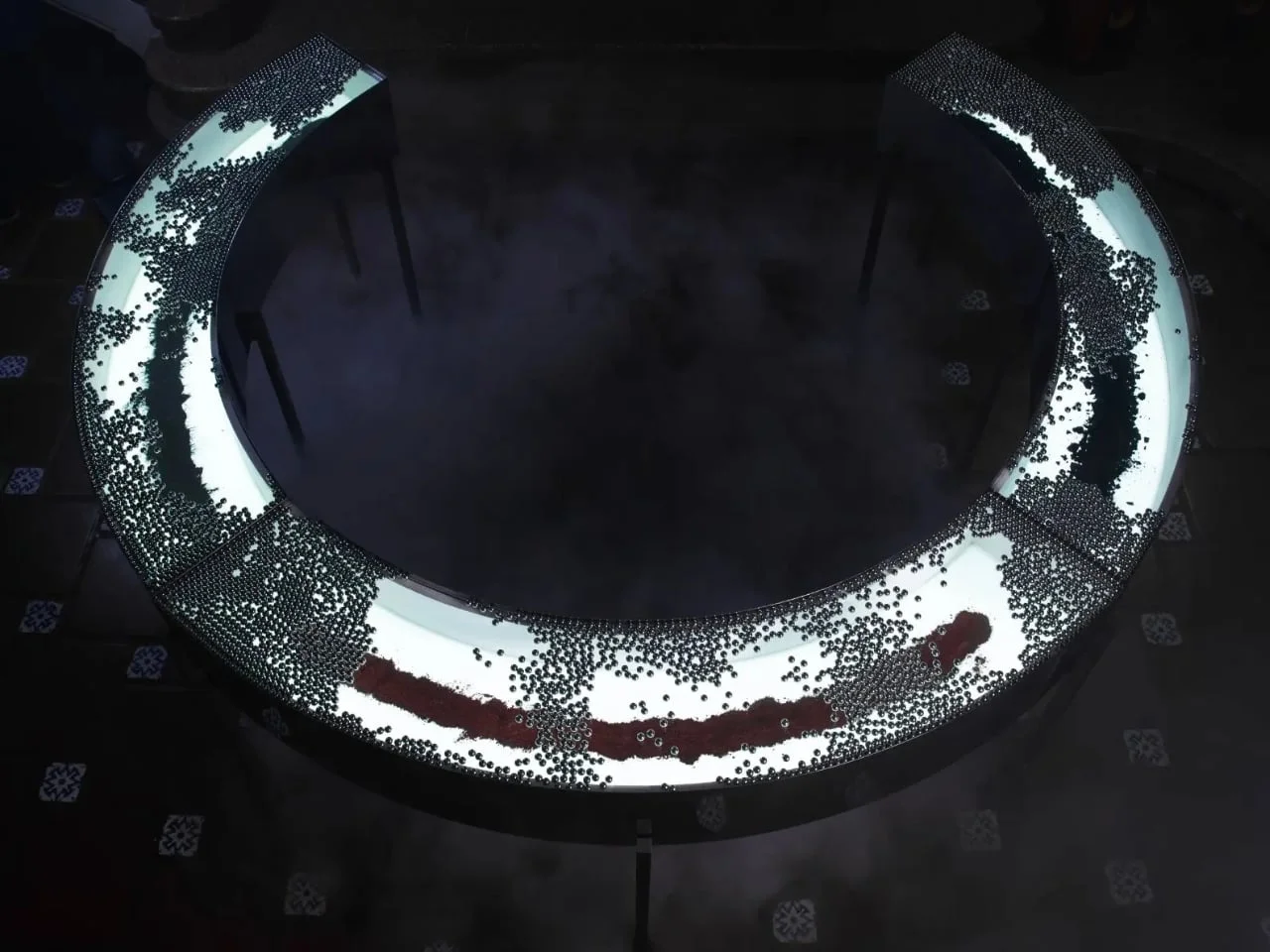
BYREDO’s Matter / Memory makes its strongest case through a simple action: move a handful of steel spheres, and a fragrance inspired scene comes into view. Designed by Leonardo Garza, the installation gives visitors a tactile way to engage with perfume’s less tangible qualities: memory, association and mood. The gesture is small, but it changes the visitor from an observer into a participant.
Created for BYREDO’s introduction to Mexico, the work debuted at the brand’s October 7 launch event in Mexico City, with Artsynonym curating the presentation. Rather than function as a conventional product display, it treats scent as a prompt for interpretation. Each composition becomes visible through the visitor’s movement, though the work offers no single explanation of what those materials should mean.
That open ended approach suits fragrance, which often depends on associations that are difficult to put into words. A scent can recall a place or feeling without reproducing it exactly. Matter / Memory shifts that idea into a visual and physical format, asking people to discover the references at their own pace.
Designer: Leonardo Garza for BYREDO
Five fragrances, five material studies
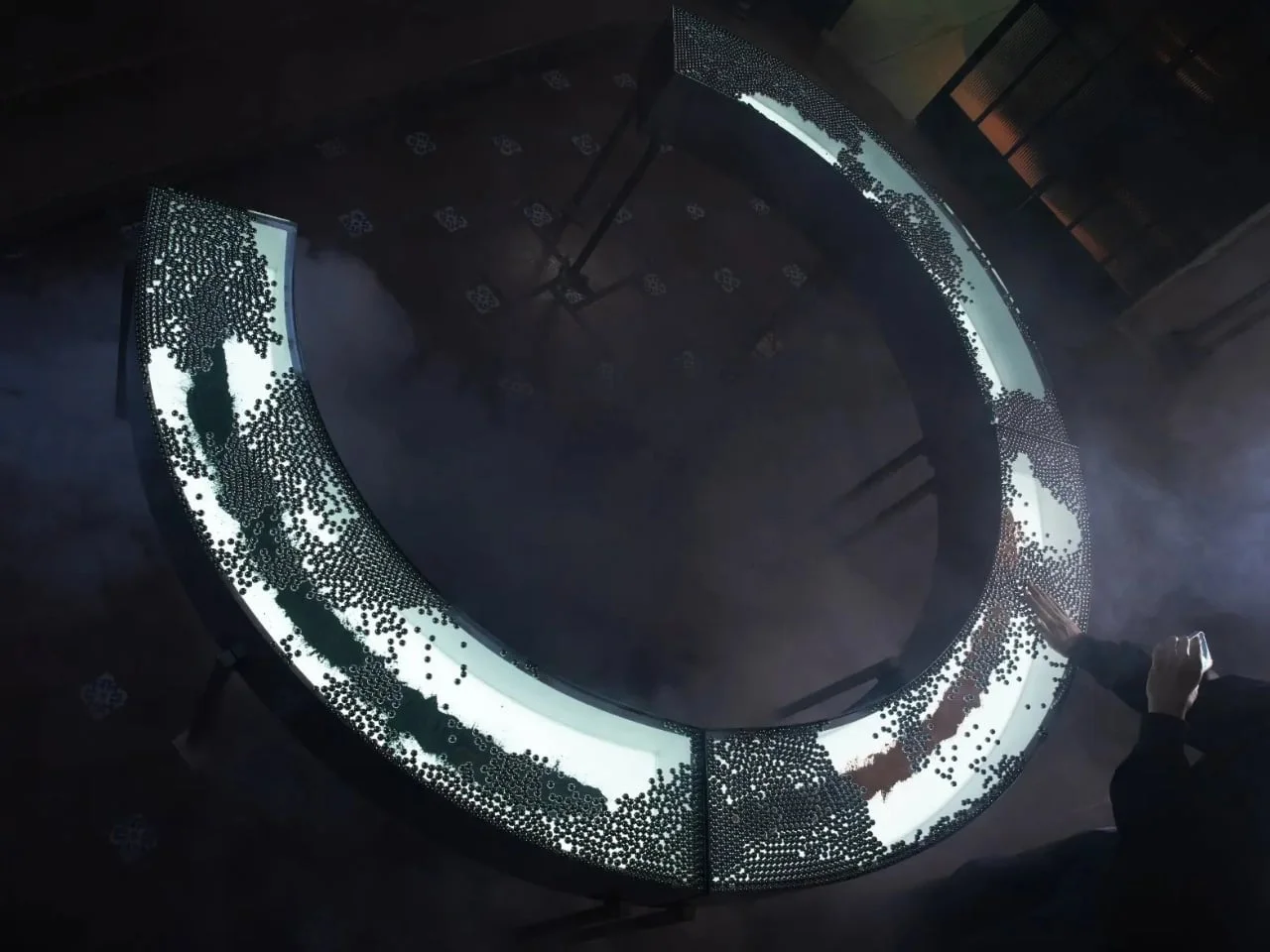
The installation is built from five curved sections, each with a different material composition beneath a transparent surface. Thousands of stainless steel spheres cover parts of the display. Visitors can shift them by hand, uncovering portions of the materials while creating soft metallic sounds. The connection between action and response is immediate, so the installation needs no explanation to invite participation.
The design’s basic mechanism is also its organizing idea. The spheres conceal and reveal, turning the viewing experience into a series of partial encounters instead of a single, fixed presentation. Their movement makes the display feel responsive, while the clear barrier keeps the underlying arrangements intact. That combination gives the work a simple rule visitors can understand by trying it.
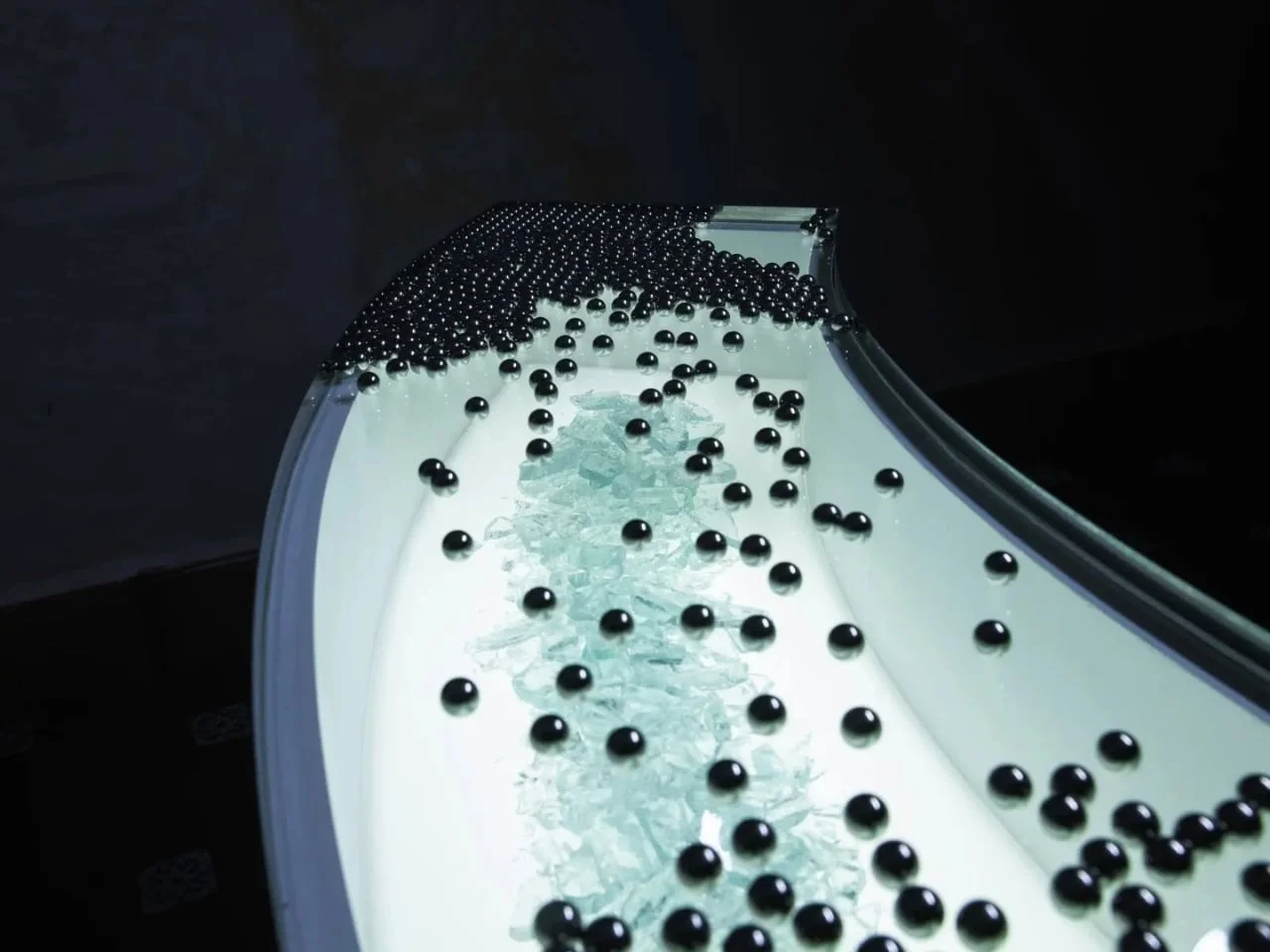
Garza translates five BYREDO fragrances into physical references: charcoal and ash for Gypsy Water, fractured glass for Rose of No Man’s Land, mineral dust for Mojave Ghost, red ochre earth for Bal d’Afrique, and folded white textile for Blanche. These are artistic interpretations rather than literal ingredient displays. That distinction leaves room for visitors to form their own associations instead of being handed a definitive reading.
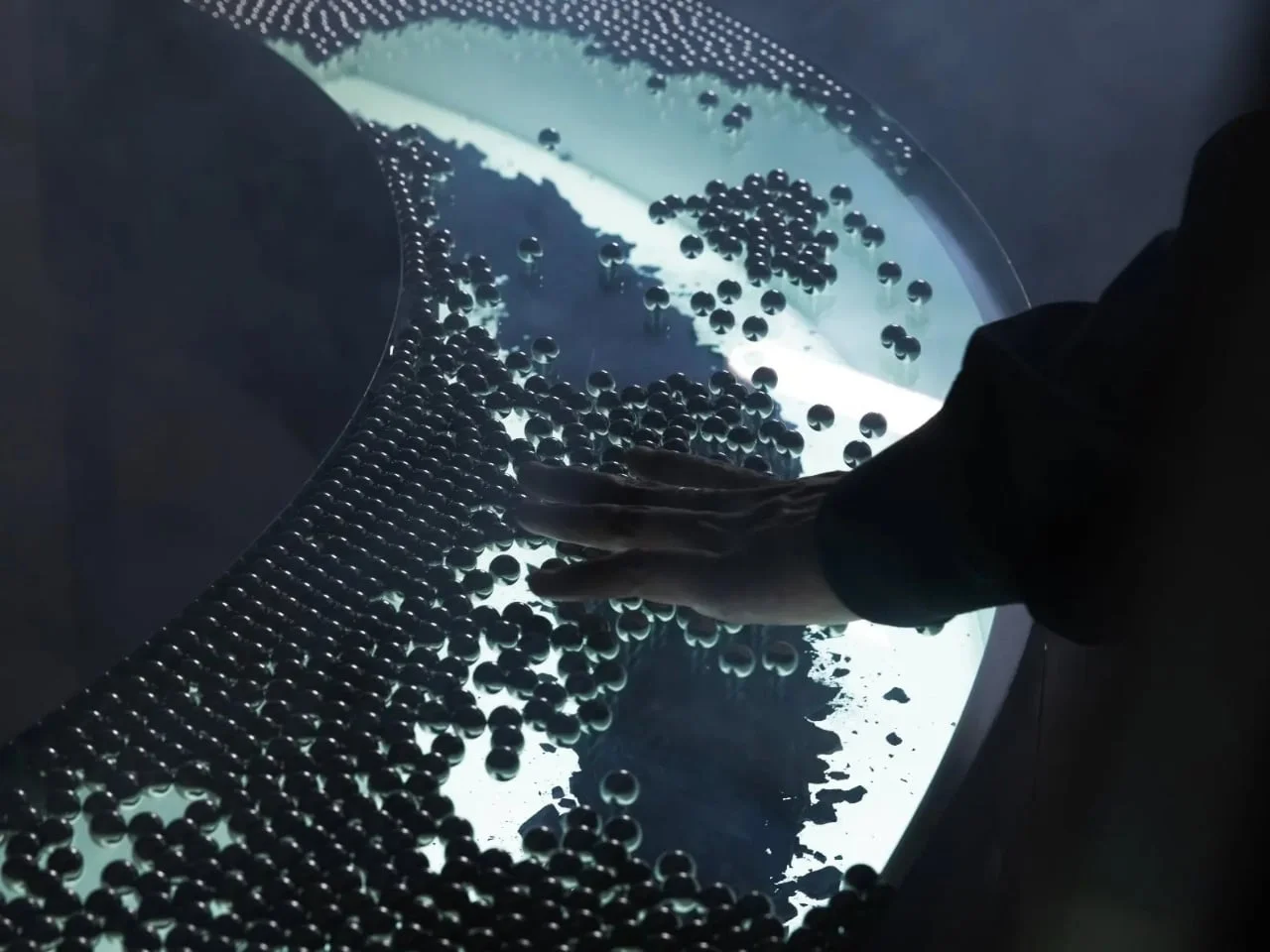
Some material choices resist the polished cues often associated with perfume. Ash hints at what remains after something has burned; broken glass suggests fragility. Neither is an obvious shorthand for luxury, and that tension gives the compositions more interpretive range than familiar arrangements of flowers or fruit might offer. The materials create atmosphere through contrast, not through a neat visual translation of each fragrance.
Here's the thing: an installation like this can suggest an emotional register, but it can’t reproduce the private associations that make a scent meaningful to an individual. That limit is also part of its appeal. It presents a set of prompts, then leaves the final connection to the visitor.
Interaction shapes the viewing experience
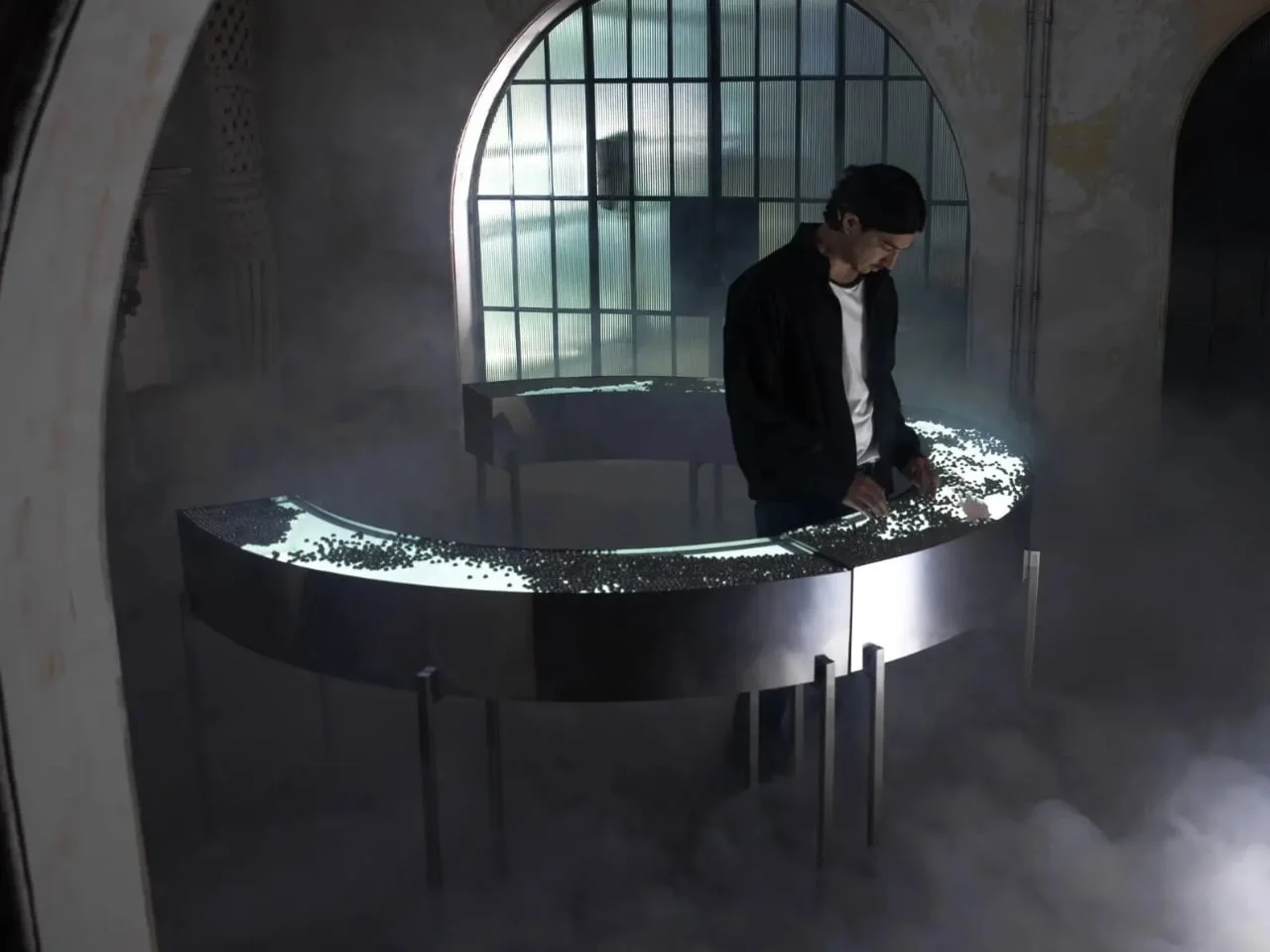
In photographs, the five sections sit in an open, almost circular arrangement on slender supports. Light beneath the transparent surfaces makes the steel appear dark in places and mirror bright in others. As visitors push the spheres into clusters, they form shifting, uneven borders around the exposed materials. The precise geometry of the structure and the changing patterns on top create a productive contrast.
The layout encourages visitors to move around the display and compare its sections. Each panel offers a different material and visual texture, while the repeated act of moving spheres provides a consistent way to engage with them. Small changes matter: a patch of material may emerge, disappear behind a new cluster, or look different as reflected light catches the steel.
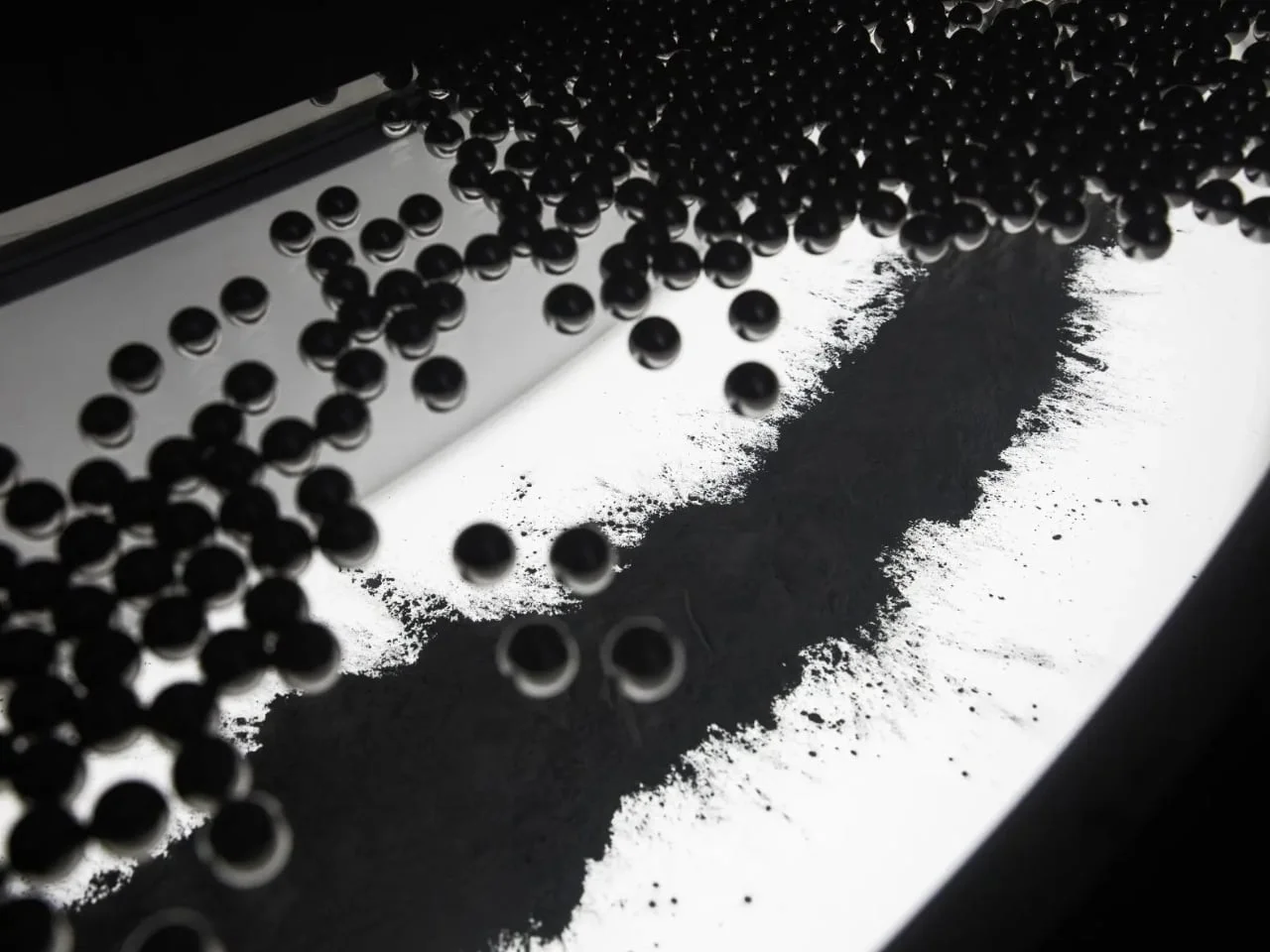
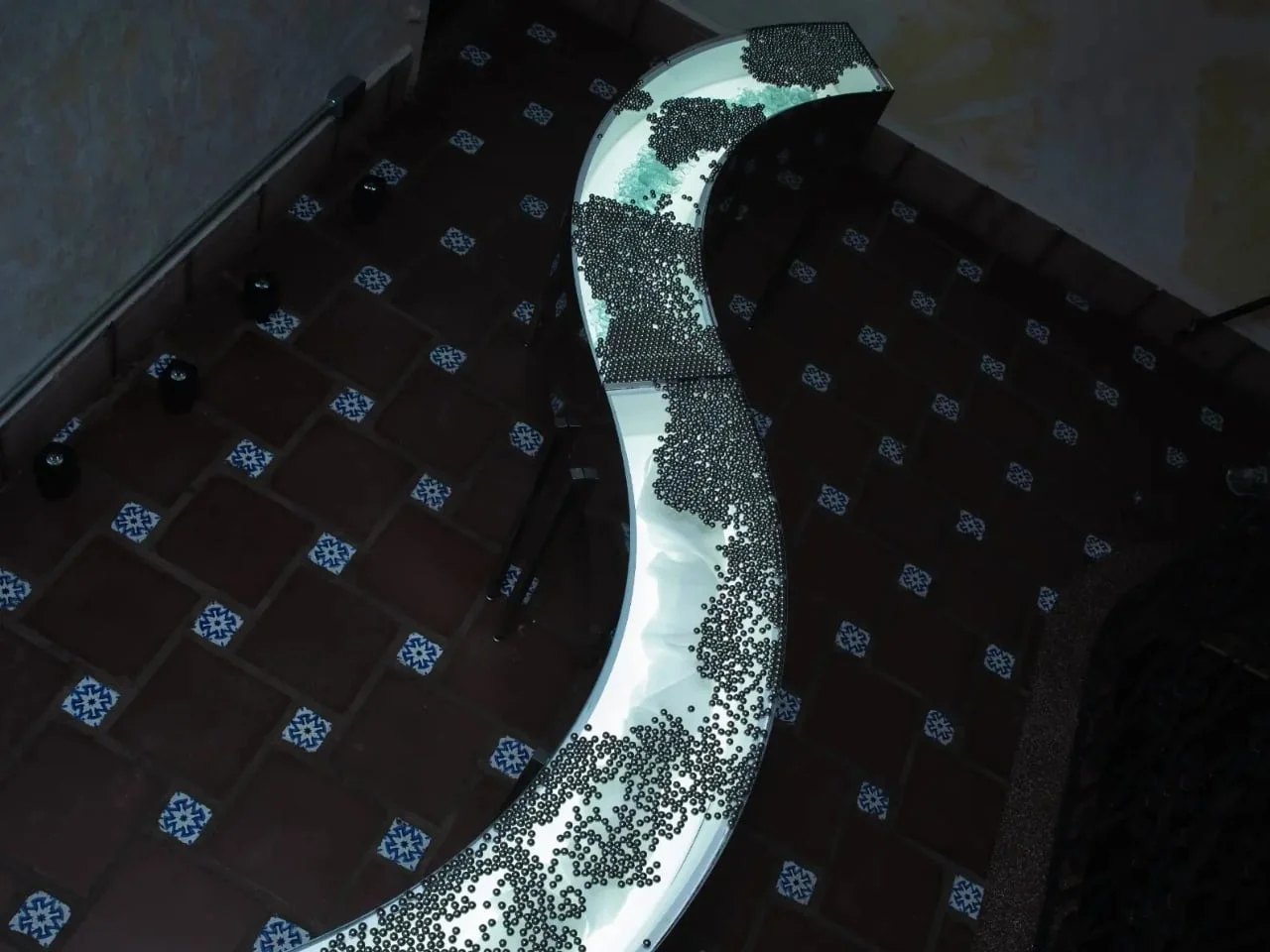
The transparent surface sets a clear limit on participation. Visitors move the spheres above the materials, while the compositions themselves remain undisturbed. In the fractured glass section, for example, the shards stay protected beneath the cover. People can change what they see without rearranging what Garza has placed there. That balance gives them agency while preserving the work’s structure.
It’s a considered choice. The visitor affects the presentation, but the work controls the materials and their arrangement; participation operates within a defined boundary. And this is the part most people overlook: the barrier doesn’t merely protect fragile elements. It makes the act of revealing them the central interaction.
A low layer of fog adds atmosphere, though it may be the least necessary element. The illuminated curves and movable steel already establish a distinct visual language; mist can push the scene toward the conventions of a luxury campaign set. The physical interaction keeps the work from becoming merely a backdrop. Visitors do more than look: they uncover, listen and shape the view. A decorative touch, perhaps.
What the installation leaves with the visitor
Matter / Memory can’t tell someone how a perfume will smell on their skin, and it doesn’t need to. Its contribution is to slow the encounter down, turning a fragrance display into a sequence of small discoveries. For an installation about memory, that hands on process offers a fitting point of entry: an experience shaped by what visitors do, as much as by what they see.
This is more significant than it looks. Retail displays often put the product and its claims at the center; this one gives attention to the act of looking and to the visitor’s own interpretation. If you’re working in this space, the useful idea is the relationship between a simple physical action and a more abstract subject. The spheres don’t explain scent. They give people something to do while they consider it.
That said, the installation’s success depends on visitors being willing to participate, and the display can only suggest the sensory experience of fragrance. Its strength lies in knowing those limits. It doesn’t claim to translate smell into a complete visual equivalent; instead, it offers a temporary encounter that leaves room for memory to do its own work.
The post BYREDO’s Steel Spheres Reveal Hidden Landscapes Inspired by Scent first appeared on Yanko Design.

Discussion
Sign in to join the discussion.