A hidden linkage lets the vintage Scissor Chair change its stance, offering two distinct seating positions in one upholstered armchair.
One chair, two ways to sit
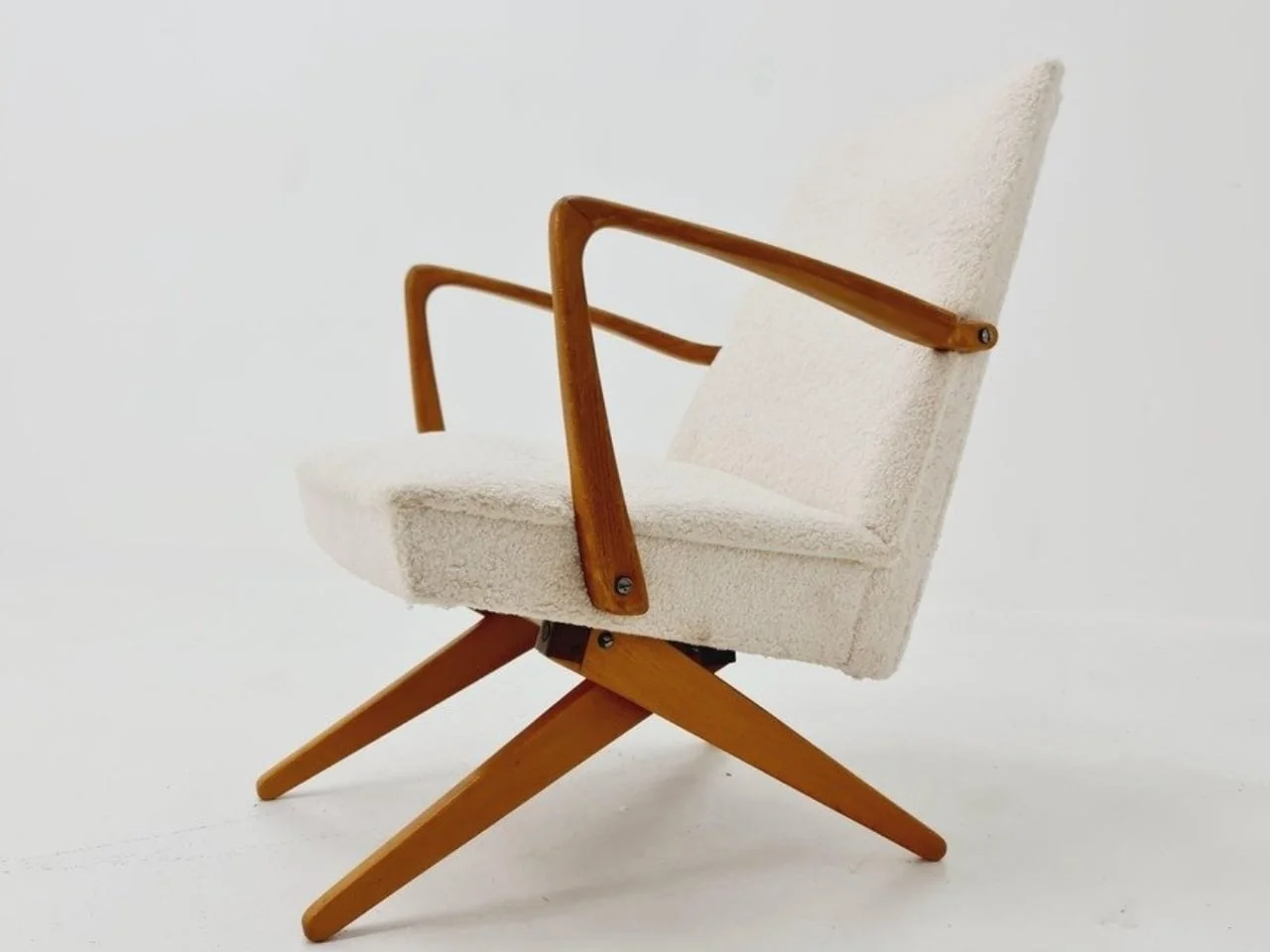
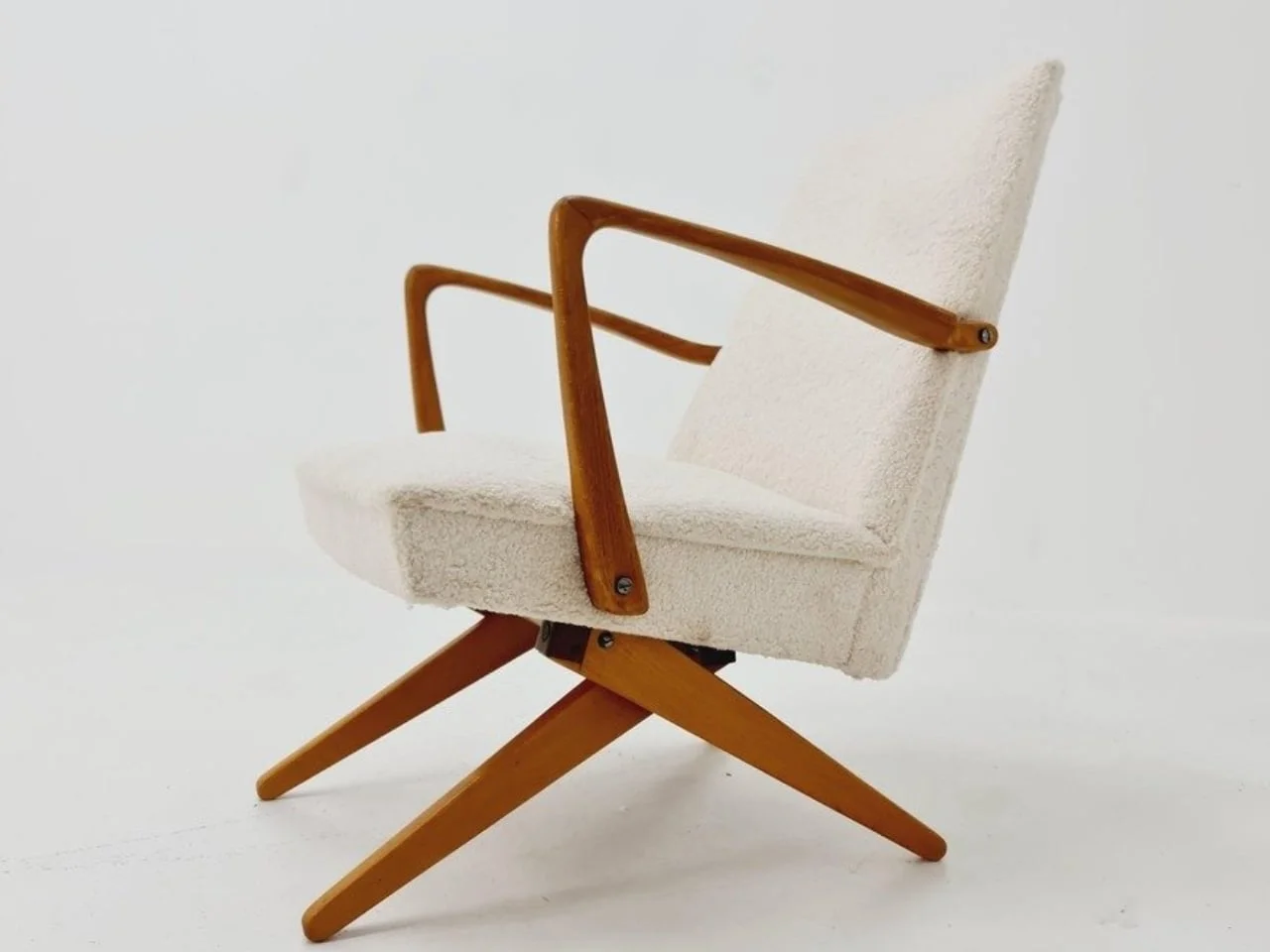
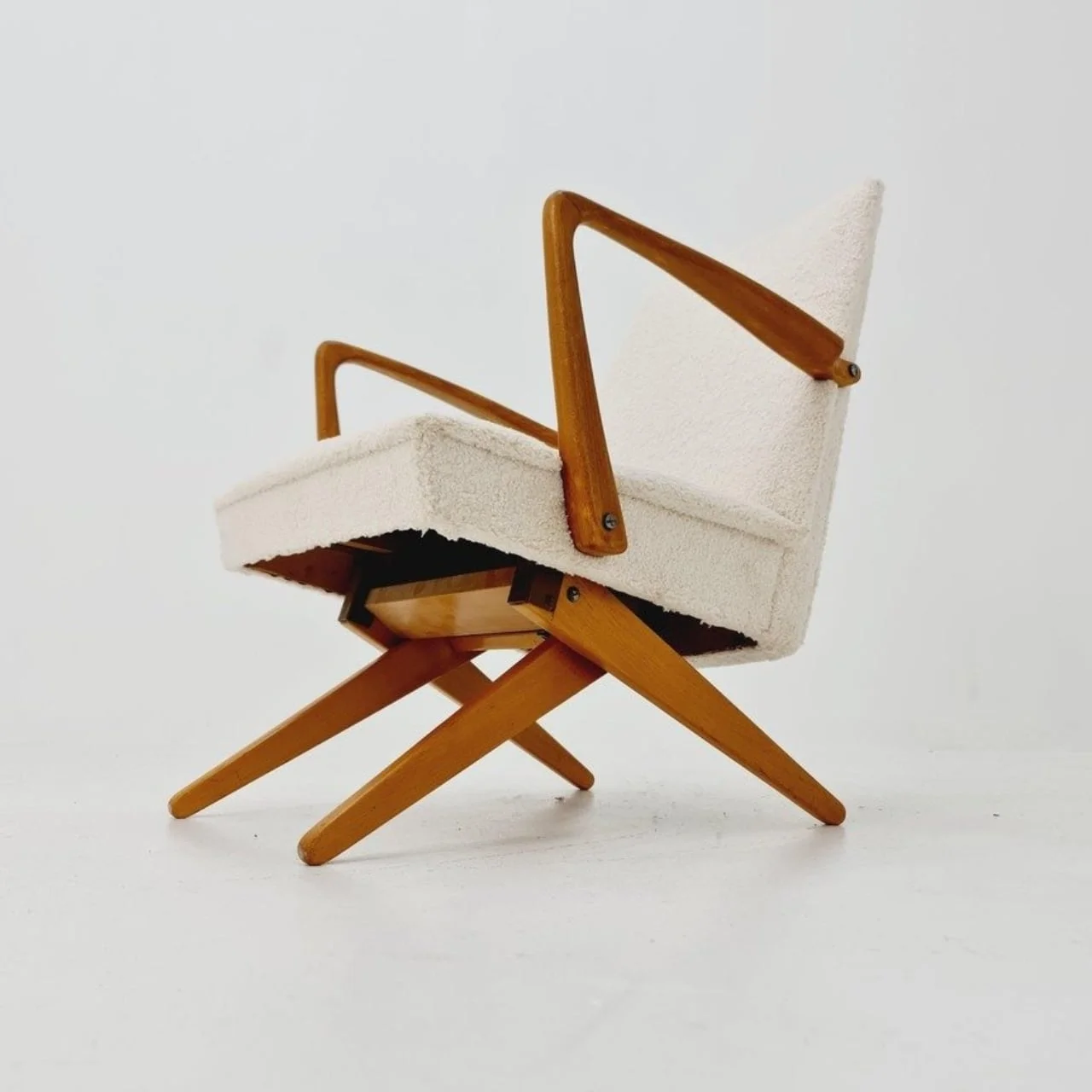
The Scissor Chair makes its case through a practical bit of engineering: raise the armrests, and the chair’s crossed wooden legs unfold into a lower lounging position. Made by German company Wilhelm Knoll, the mid-century design offers two noticeably different ways to sit without advertising its mechanism in the usual view. Its designer is unknown, but the design problem is clear: one chair for sitting upright and another for settling back can be a lot to ask of a small living room.
That flexibility is more than a visual trick. A chair’s posture affects how it fits into a room and what people are likely to use it for, from a brief conversation to a longer rest. The Scissor Chair builds those options into its frame, so changing position means changing the chair’s stance rather than adding a separate footrest or another seat. It’s an economical idea in physical terms, though it still asks the owner to leave room for the moving frame.
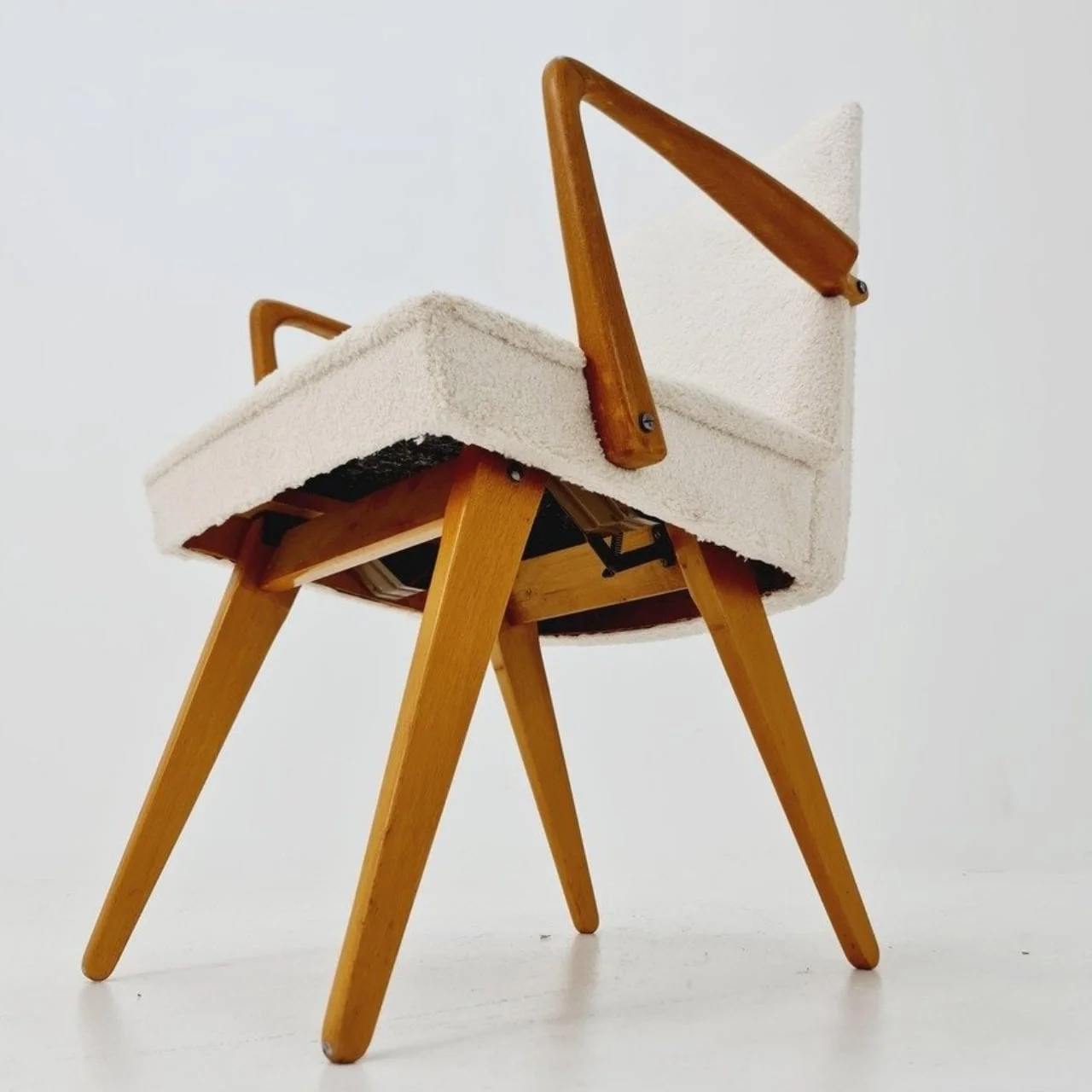
Rather than adjust only the backrest, the Scissor Chair changes its stance. The crossed supports move as part of the transformation, so the seat shifts in relation to the floor as well. That gives the mechanism a visible purpose: the legs aren’t just a frame beneath the upholstery; they help determine how the chair feels to use. This is more significant than it looks, because the adjustment changes the geometry of the whole seat, not just the angle of one surface.
Designer: Unknown (produced by Wilhelm Knoll)
A restrained profile, a real change
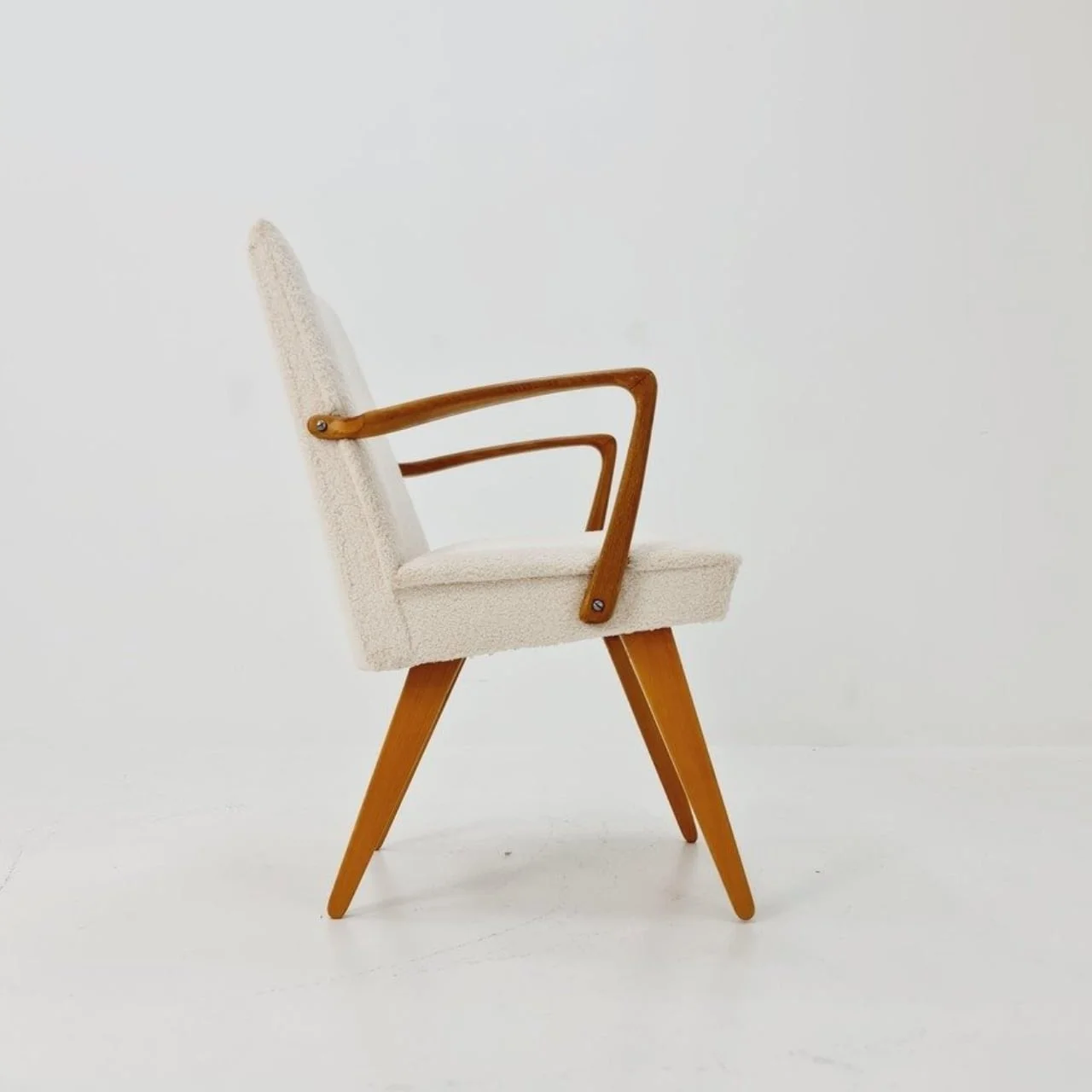
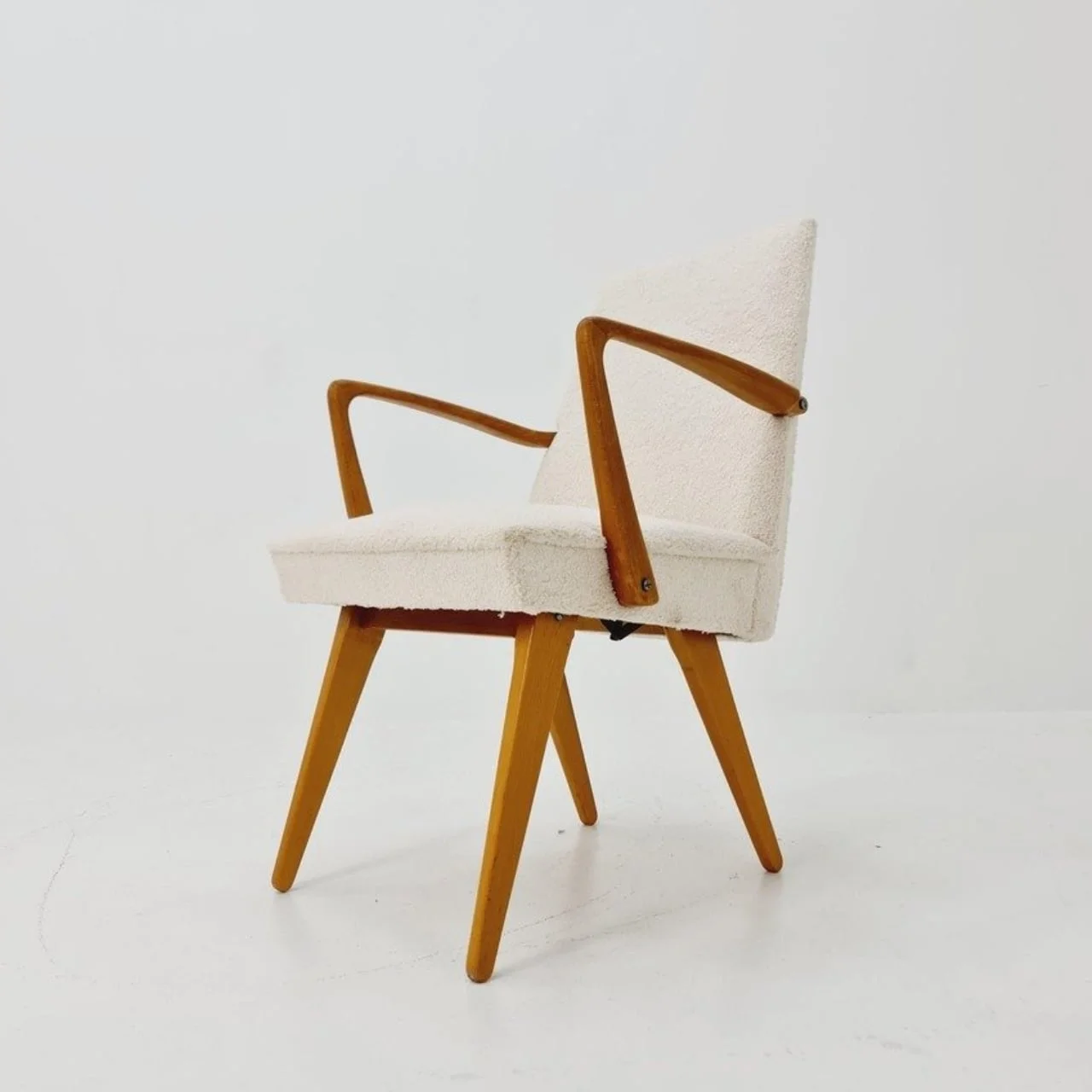
The cream-upholstered example has a light, open profile. Slim wooden arms outline the seat and back, while the exposed legs leave clear space beneath the chair. In its raised position, it reads as a composed armchair. Lowered, the crossed frame becomes more prominent and the seat takes on a relaxed, reclined angle. The shift is substantial, yet the design’s appearance stays restrained.
That restraint helps the mechanism feel integrated rather than theatrical. From the outside, the chair still reads as furniture first; the moving supports become most apparent when the chair is adjusted or viewed from a different angle. The contrast between the calm outline and the more active frame underneath is part of its appeal. It suggests an object designed to change use without demanding attention while it sits in the room.
A vintage dealer lists seat heights of 45 centimeters and 36 centimeters—about 18 and 14 inches—for one example. Those figures describe a particular chair, not a standard specification, but the roughly nine-centimeter difference helps explain why the adjustment matters. It changes the seat’s height enough to create two distinct postures, with different relationships to the floor and nearby furniture. A lower seat can make the chair feel more settled for reclining, while the raised position is better suited to a conventional seated posture.
Those measurements also put a useful limit on what can be claimed. They show a meaningful shift in height, but don’t establish the angle of recline, the chair’s dimensions in every position, or how it fits a particular room. If you're working in this space, that distinction matters: a striking mechanism may solve one ergonomic problem while creating a clearance question around the moving legs.
Mechanics kept out of sight
Look underneath and the quiet exterior gives way to pivoting metal links, brackets and a coil spring between the wooden supports, visible in a dealer’s photograph. The assembly does the work below the upholstered seat, leaving the chair’s upper surfaces free of mechanical clutter. That separation is a thoughtful part of the design: the mechanism is present where it’s needed, without turning the whole chair into a display of hardware.
Here’s the thing: a moving mechanism has to be judged as part of the everyday experience, not only as a clever diagram. The visible links and spring explain how the frame can shift, but a photograph can’t tell us how much force the adjustment takes or whether the chair holds its position reliably. The system’s placement keeps the design visually quiet, though it also means that inspection and maintenance depend on access to the underside.
(And this is the part most people overlook.) A mechanism that transforms the chair also makes its condition central to the purchase. Metal pivots and springs can wear, and the frame has to move without binding; the article offers no evidence about the condition of any particular example. An appealing silhouette can’t answer those practical questions.
A practical shift in posture
The appeal for a smaller home is flexibility, not a promise that one chair will save a room. It still needs space around it, particularly as the legs change position. The more useful trade is one seat that can work for conversation and then settle into a lower, more relaxed configuration. That’s a straightforward benefit, and the two positions are distinct enough to make the adjustment meaningful.
That said, flexibility only helps when the alternate position suits how the chair will actually be used. The Scissor Chair provides a choice between an upright arrangement and a lower one, but the source gives no measurements for its full footprint or details about comfort over extended use. It’s sensible to treat the small-home case as a design advantage with conditions, not as proof that the chair will suit every compact room.
A chair that adapts this way also asks users to think about movement around it. The crossed supports need space to change position, and nearby furniture could affect how freely that happens. The mechanism makes the chair more versatile, but it doesn’t make the room around it irrelevant. One clear idea.
Maker, attribution and what remains unknown
The maker’s name also needs a little context. Wilhelm Knoll traces its roots to a leather shop founded in Stuttgart in 1865. It shares family history with the American company Hans Knoll established in 1938, but the two businesses shouldn’t be conflated. Vintage dealers date Scissor Chair examples to the 1950s. With the designer unidentified, separating the maker’s history from the chair’s authorship keeps the attribution clear.
That distinction matters in a category where a manufacturer’s history can easily become a substitute for evidence about a specific object. The available account identifies Wilhelm Knoll as producer, while leaving the designer unknown and relying on vintage dealers for the dating. Those are useful details, but they answer different questions: who made the chair, who designed it, and when examples appeared are not interchangeable claims.
Photographs can’t show whether a surviving chair changes position smoothly or remains comfortable through a long stretch of reading. Anyone considering a vintage example would be wise to see the mechanism operate and check its condition. Still, the design’s appeal is easy to grasp: lift the arms, change the chair’s stance, and choose another way to sit. The Scissor Chair turns a single piece of furniture into two useful seating positions through one clear mechanical idea.
What the design suggests
The Scissor Chair’s strongest idea is also its most practical: adjust the supporting frame and the chair changes how it invites you to sit. That approach gives the object a legible purpose, rather than adding movement for its own sake. For readers weighing vintage furniture, the lesson is modest but useful: a clever mechanism earns its place when the change in use is clear and the chair remains comfortable and functional.
What this means for you is that the chair is best understood as a considered compromise. It offers two seating positions in one object, while asking for room to move and careful attention to the condition of its hardware. Its designer remains unknown, and the available measurements describe one example. The mechanism is compelling; the everyday value still depends on the individual chair.
The post A Hidden Mechanism Turns the Scissor Chair Into a Lounger first appeared on Yanko Design.


Discussion
Sign in to join the discussion.