Made in Japan, these guitar-shaped scissors pair stainless steel blades with a safety cap and a stand that keeps them visible on your desk.


A guitar shape built for the desk
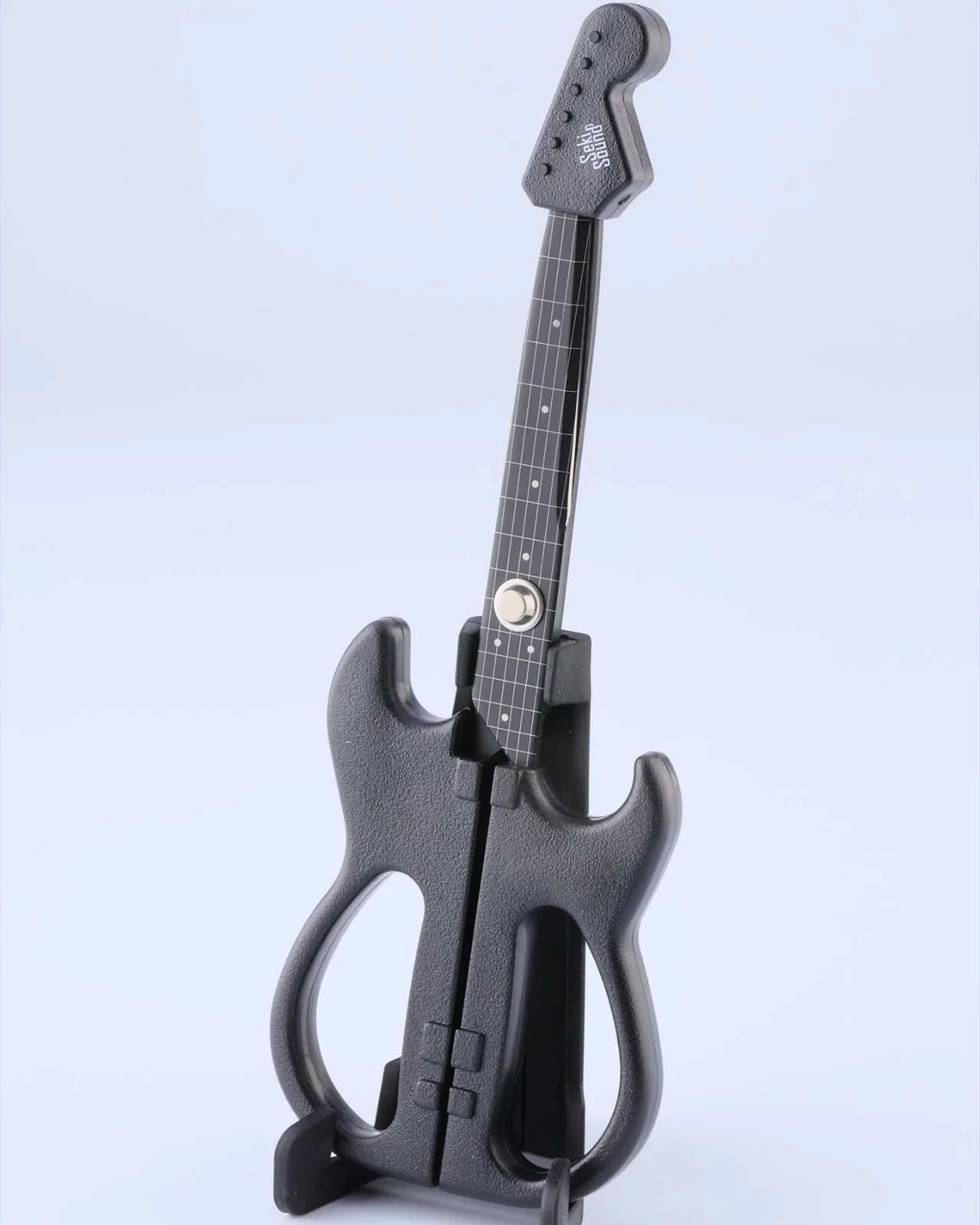
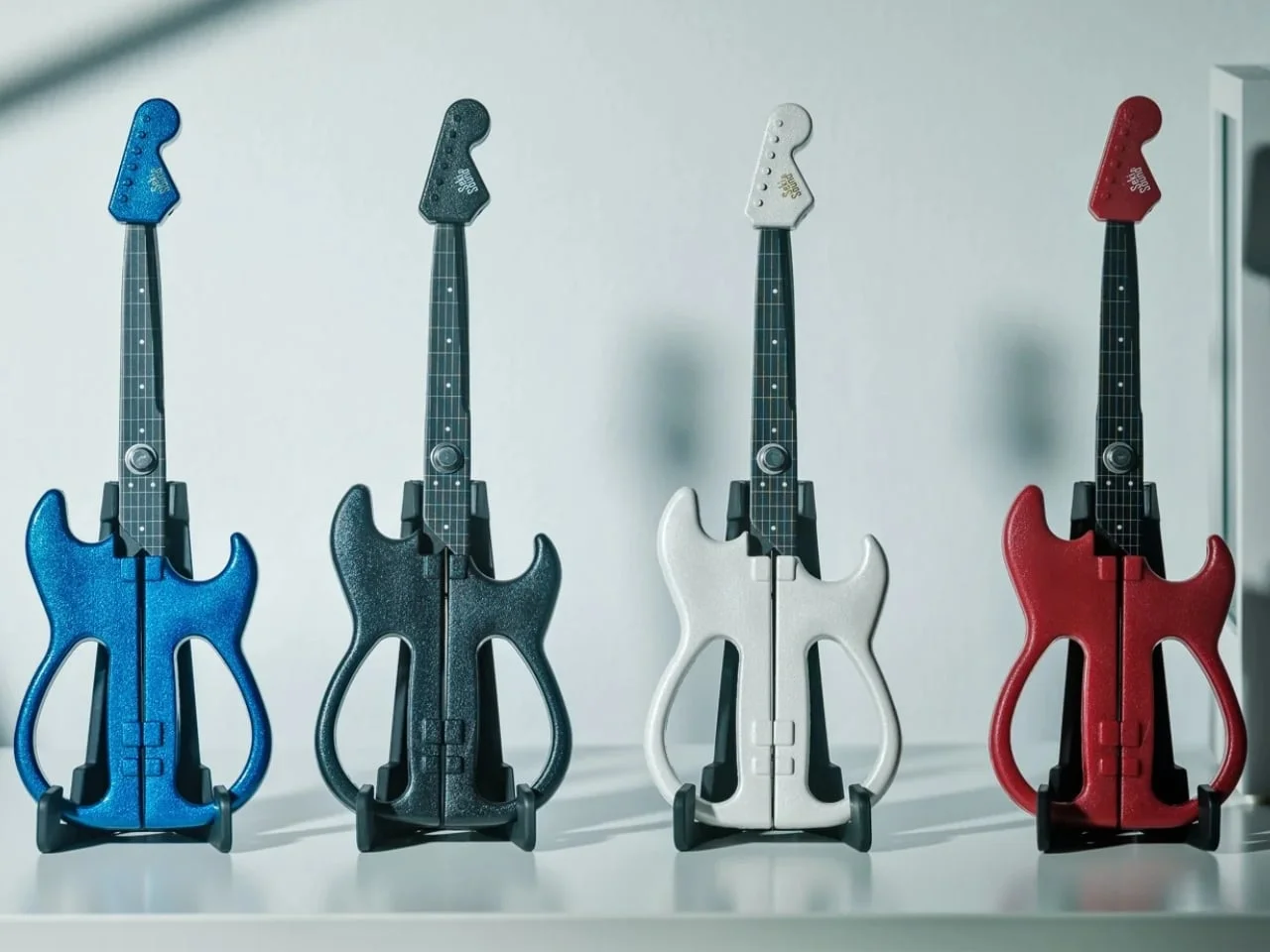
The Rockstar Guitar Scissors make their strongest case when they’re sitting on the desk. Their miniature stand displays the closed scissors like a guitar between sets, giving a practical tool a permanent place in view. That choice costs some desk space, but it also makes the scissors easier to spot than another small item tucked into a pen case. The stand turns storage into part of the product’s presentation, so the scissors can be put away without disappearing from sight.
That distinction matters for a tool people might otherwise reach for only occasionally. A pair left in a drawer is easy to overlook; one on display can become part of a desk’s everyday setup. Here’s the thing: this arrangement works best when there’s room for objects that are both useful and decorative. If you’re trying to keep a work surface clear, the stand may feel like an unnecessary footprint.
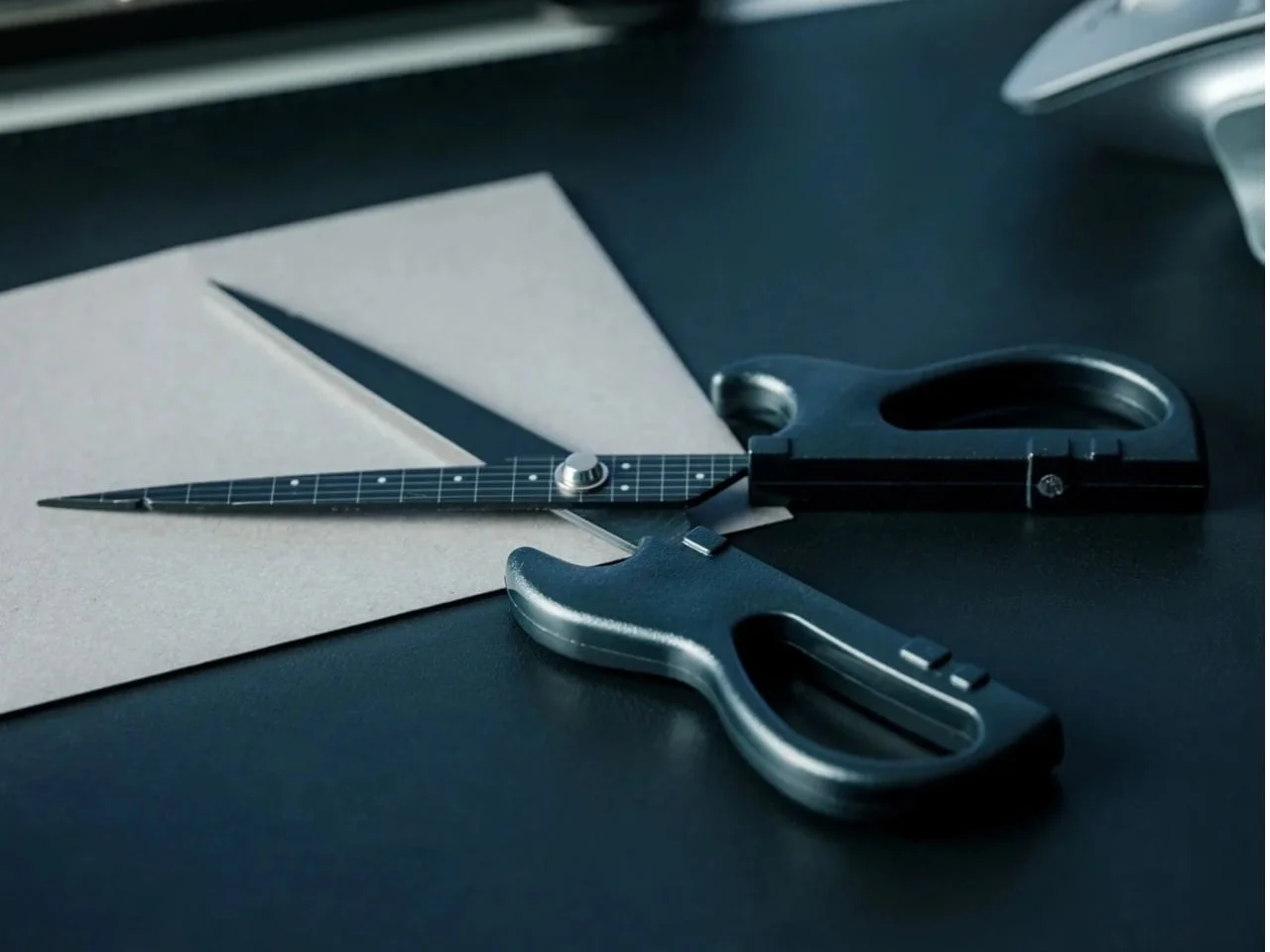
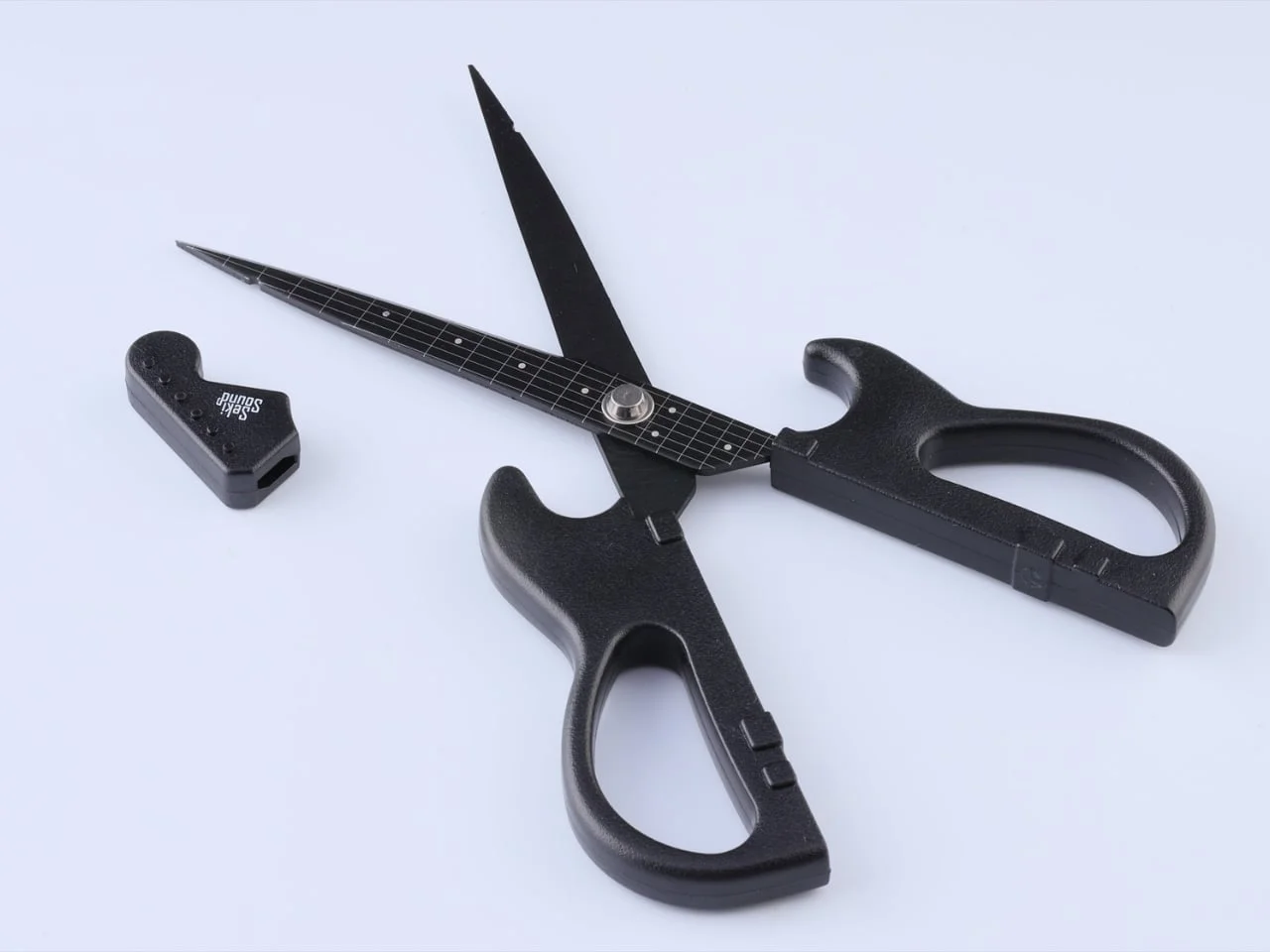
For stationery fans who also like music, the design carries the guitar idea through the tool itself. The body forms the handles, with finger openings integrated into its lower section; the neck splits into the blades. Six strings and frets add detail, while a removable ABS cap completes the headstock when the scissors are closed. It’s a recognizable silhouette, but one that still has to function as a handheld cutting tool.
Click Here to Buy Now: Starting at $30
A safety cap with a second job
The cap does more than finish the silhouette: the store says it covers the sharp tip and keeps the scissors from opening while it’s fitted. That gives the decorative headstock a practical role in storage, rather than leaving the guitar theme as surface decoration. A cover that also holds the blades shut can make a desk display feel less exposed, particularly if the scissors are kept within easy reach.
It’s a small design decision, but a telling one. Novelty stationery can lean heavily on appearance and leave ordinary handling as an afterthought. Here, the cap connects the look to how the scissors are stored. That said, the available product details don’t explain how firmly it stays attached, so buyers shouldn’t assume more about its security than the store claims.
Materials and cutting claims
Nikken Cutlery makes the scissors in Japan, where they’re also known as Seki Sound. The blades are stainless steel, and Nikken says craftspeople in Seki sharpen them individually. The company also describes a fluorine-coated finish designed to limit adhesive sticking when cutting tape. That could be handy for journaling and paper projects, though it doesn’t mean the blades will never need cleaning. Sticky residue can still affect a cutting tool, and the product description doesn’t establish how the coating performs over time.
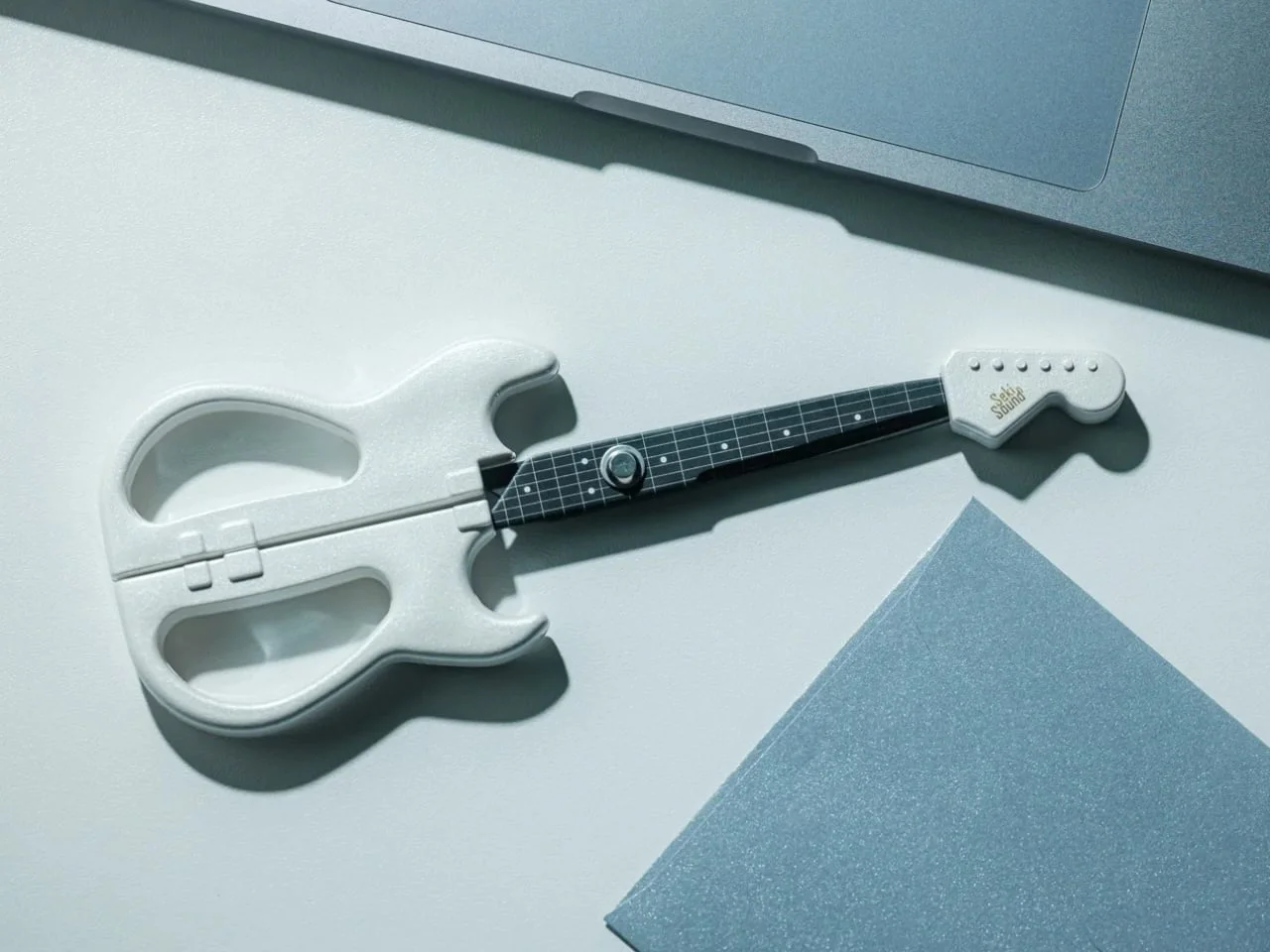
The handles and cap are ABS plastic, and the stand is elastomer. The scissors measure about 7.8 inches long. YD Select lists the black version at US$30, with metallic blue and pearl white priced at US$40 each. The price difference puts the color choice directly into the buying decision: the black option is the least expensive, while the brighter finishes carry a premium. The listed details don’t say whether those finishes change anything beyond appearance.
A desk display with a practical trade-off
The stand is the key to the product’s appeal, and its limitation. It gives the scissors a dedicated home and keeps them within sight, but it takes up more room than storing a conventional pair in a drawer. This looks best suited to a desk where display matters as much as compact storage. For a shared or crowded workspace, the stand’s footprint could be more noticeable than the novelty is useful.
The comparison with mainstream scissors is mostly about priorities. Fiskars sells models with SoftGrip handles, spring-assisted Easy Action opening and nonstick blades, while its MoMA collection adds artwork to familiar scissor shapes. Rockstar takes a different route: the guitar form extends from the handles to the blade cover and stand. The available details don’t establish that it cuts better or feels more comfortable than those alternatives; its distinction is the way its design shapes both use and storage.
This is more significant than it looks for a product in the gift-and-stationery category: the design isn’t confined to a printed motif or a color choice. It changes where the scissors live and how they’re put away. And yet, that integration only pays off if the owner likes seeing the object on the desk. A conventional pair may be the more sensible pick for someone who cares chiefly about easy storage or has no interest in the guitar theme.
Who the scissors are for
At US$30 to $40, the Rockstar Guitar Scissors are a specialty pick rather than an obvious replacement for every pair in a stationery drawer. Their appeal is more specific: a useful cutting tool with enough personality to earn a visible spot. For someone who enjoys both music and stationery, that mix could make a memorable small gift—and one that still has a job after the wrapping comes off.
For everyday use, the available information leaves practical questions open, including how the handle feels during longer cutting sessions and how the blades hold up with repeated use. Those details matter more than the guitar theme once the scissors are in hand. Still, their intended appeal is clear: a functional object designed to be seen, with the stand and cap carrying the concept beyond the shape of the blades. A desk accessory with a job.
What this means for you is fairly simple: if you want scissors that disappear into a drawer, this design asks you to make room for its display. If you’d enjoy keeping a guitar-shaped tool on view—and you have a use for a pair of scissors—the added presence may be the point. The numbers here are underwhelming as a case for performance, since the listed features don’t show a cutting advantage over standard options. The case for personality is stronger.
The post These Japanese-Made Guitar Scissors Come With Their Own Mini Stand first appeared on Yanko Design.



Discussion
Sign in to join the discussion.